Pay in installments of $6.87 with
 ,
,
 and
and

Shipping Estimate
USA
- USA
- CAN
- USA
- CAN
Ships within 48 hours · Estimated delivery Oct 18 - Oct 23
 Promo Codes Available:
For Your Every Summer RSVP, with Code: SUMMER15
Description
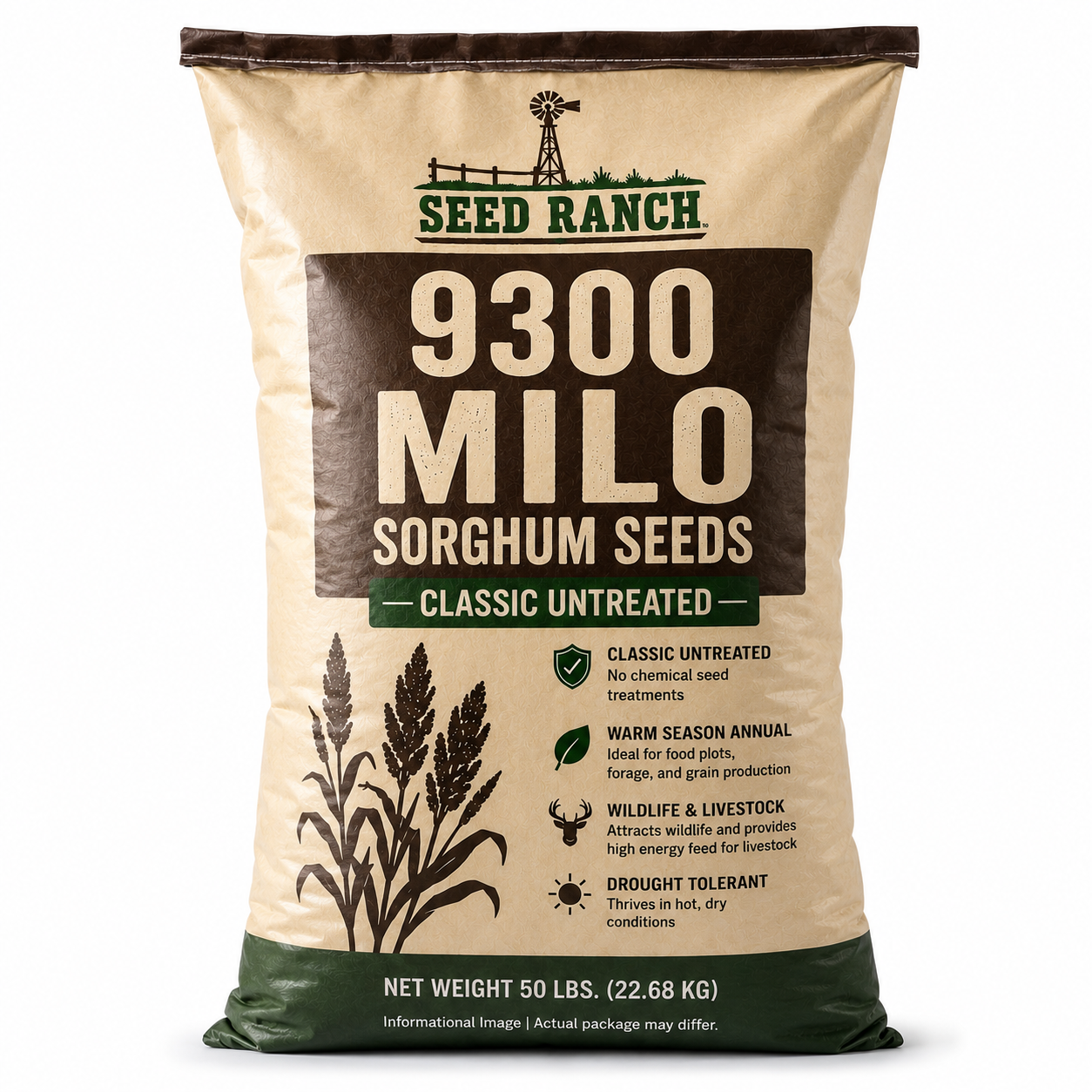
milo seeds for planting 9300 Milo Grain Sorghum Seed9300 Milo Grain Sorghum Seed Red Sorghum Please choose between Concept Treated OR Untreated. 9300 Milo Grain Sorghum Seed is a reliable warm season annual sorghum variety designed for growers, land managers, and wildlife plotters who need a hardy grain crop that performs well in challenging conditions. Also called grain sorghum or milo, 9300 produces attractive deep red seed heads, reaches approximately 4448 inches in height, and offers strong stalk
9300 Milo Grain Sorghum Seed | Red Sorghum
Please choose between Concept-Treated OR Untreated.
9300 Milo Grain Sorghum Seed is a reliable warm-season annual sorghum variety designed for growers, land managers, and wildlife plotters who need a hardy grain crop that performs well in challenging conditions. Also called grain sorghum or milo, 9300 produces attractive deep-red seed heads, reaches approximately 44–48 inches in height, and offers strong stalk quality for dependable field performance.
This variety is well adapted to a range of soil types and is valued for its ability to handle hot, dry growing conditions. Grain sorghum is widely recognized as a drought-tolerant, high-energy crop that can be grown as grain, forage, or a multipurpose field crop, making 9300 a practical option for livestock operations, wildlife food plots, and warm-season cover crop systems.
The concept-treated seed treatment helps protect grain and forage sorghum from crop injury caused by certain S-metolachlor-containing herbicides. Always follow the seed tag and herbicide label directions before planting or applying herbicides.
Product Overview Chart
| Feature | Details |
|---|---|
| Product Name | 9300 Milo Grain Sorghum Seed |
| Also Known As | Milo, Grain Sorghum, Red Sorghum |
| Seed Treatment | Concept-treated / sorghum safener-treated |
| Crop Type | Warm-season annual grain sorghum |
| Maturity | Medium-plus maturity |
| Plant Height | Approximately 44–48 inches |
| Seed Head Color | Large deep-red seed heads |
| Best Uses | Food plots, livestock feed grain, cover crop, ground cover, silage |
| GMO Status | Non-GMO |
| Sun Requirement | Full sun; best with 8+ hours daily |
| Germination Time | 7–14 days under favorable conditions |
| Ideal Soil pH | 5.5–7.5 |
| Planting Season | Spring to summer, after warm conditions are consistent |
Planting Guide
| Planting Method | Recommended Rate |
|---|---|
| New Seeding / Bare Ground | 20–25 lbs. per acre |
| Overseeding | 10–15 lbs. per acre |
| Drilling | 5 lbs. per acre |
| Small Area Rate | 0.5 lb. per 1,000 sq. ft. |
| Overseeding Small Areas | 0.25 lb. per 1,000 sq. ft. |
| Suggested Seeding Depth | 1/4 inch |
| Soil Temperature Guidance | Plant when soils are warm; many agronomists recommend waiting until daily minimum soil temperature is around 60°F for stronger sorghum emergence. |
Best-Fit Use Chart
| Use | Why 9300 Milo Works Well |
|---|---|
| Wildlife Food Plots | Produces grain heads that attract birds and wildlife. |
| Livestock Feed Grain | Grain sorghum is commonly used in feed programs for livestock. |
| Cover Crop / Ground Cover | Provides warm-season growth and soil coverage. |
| Silage / Forage Systems | Can be used in multipurpose sorghum-based operations. |
| Dryland or Hot-Weather Plantings | Sorghum is known for strong heat and drought tolerance compared with many other agronomic crops. |
Key Benefits
Dependable warm-season performance: 9300 Milo Grain Sorghum Seed is built for spring and summer planting when soil temperatures and nighttime conditions are consistently warm.
Strong stress tolerance: This variety is suited for challenging field conditions and hot, dry climates where dependable establishment matters.
Versatile farm and land-management use: Plant it for grain production, wildlife food plots, livestock feed grain, ground cover, silage, or warm-season cover crop programs.
Deep-red grain heads: The large red seed heads provide visual appeal and practical grain production value.
Concept-treated protection: The seed safener helps reduce injury risk from compatible S-metolachlor herbicide programs when used according to label directions.
FAQ
Frequently Asked Questions
What is 9300 Milo Grain Sorghum Seed used for?
It is commonly planted for wildlife food plots, livestock feed grain, cover crops, ground cover, silage, and warm-season grain sorghum production.
Is milo the same as grain sorghum?
Yes. Milo is a common name for grain sorghum, especially red or bronze grain-producing sorghum varieties.
What does concept-treated mean?
Concept-treated sorghum seed has been treated with a safener designed to help protect sorghum from injury caused by certain S-metolachlor-containing herbicides. It does not replace reading and following herbicide labels.
When should 9300 Milo be planted?
Plant in spring or summer once soil and nighttime temperatures are consistently warm. Sorghum generally performs best when planted into warm soil with adequate moisture.
Can treated seed be used as animal feed?
No. Treated seed is intended for planting only. Do not use treated seed itself for food, feed, or oil purposes; follow all seed tag and label instructions.
Shipping Notes
- Free Standard Shipping on $100+ Orders to the USA.
- Except Preorder products are shipped in 48 hours.
- Delivery to the USA:
- Standard Shipping : 3-10 business days
- If time is of the essence, please consider selecting expedited delivery for faster service.
Exchange/Return Notes
- We offer a 30-day return/exchange service after receiving.
- Final sale items are not eligible for returns or exchanges.
- To process your return/exchange, please contact us at [email protected]
- Please click here for more details>>> Return & Exchange Policy