Pay in installments of $5.83 with
 ,
,
 and
and

Shipping Estimate
USA
- USA
- CAN
- USA
- CAN
Ships within 48 hours · Estimated delivery Oct 27 - Nov 1
 Promo Codes Available:
For Your Every Summer RSVP, with Code: SUMMER15
Description
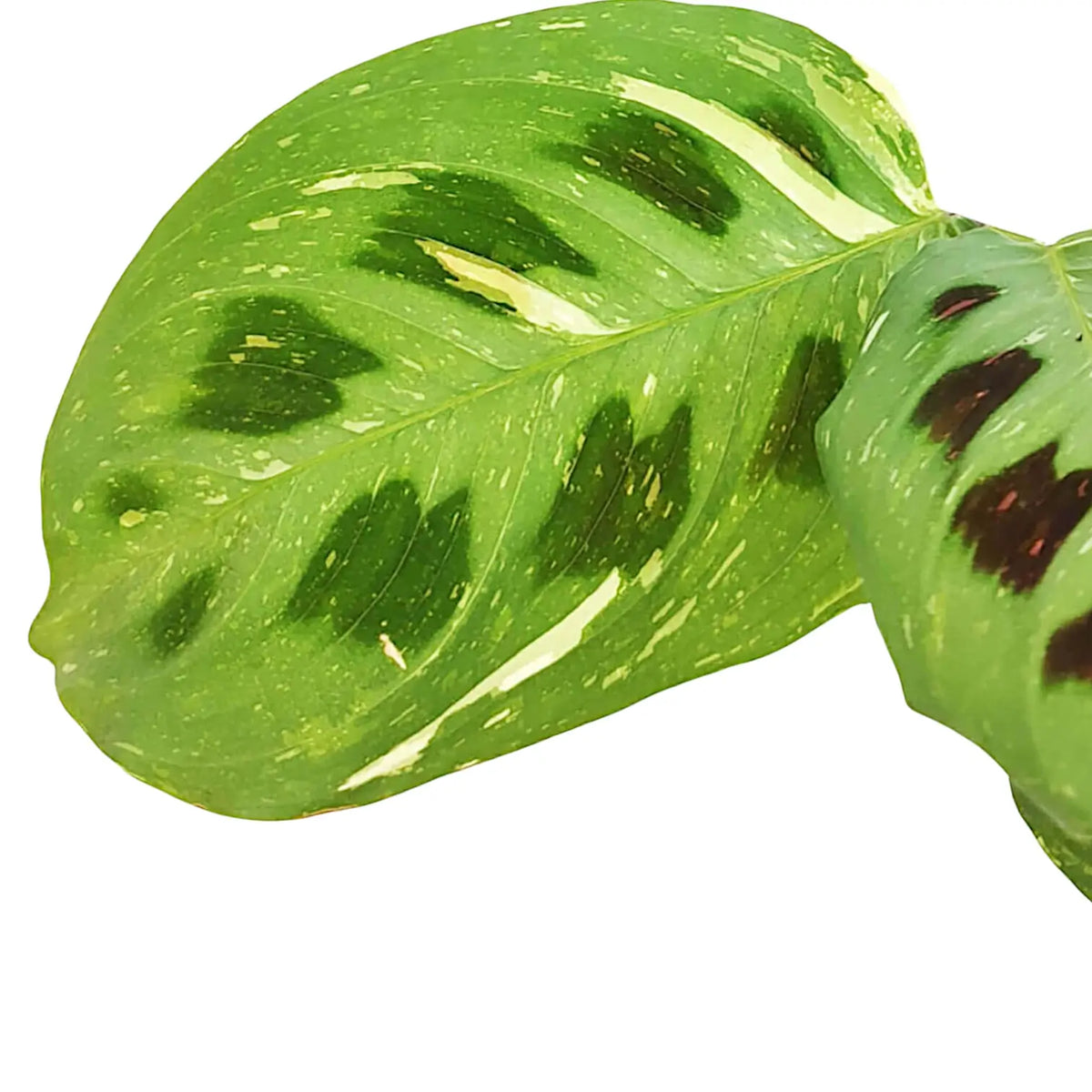
variegated prayer plant Maranta 'Beauty Kim'Maranta leuconeura Kerchoveana Variegata ('Beauty Kim', 'Fiesta') Maranta leuconeura Kerchoveana Variegata ('Beauty Kim', 'Fiesta') is a variegated rabbit track Maranta with oval leaves, paired dark blotches near the midrib, and irregular cream to pale green markings. Some leaves carry broader pale sectors, while others show smaller speckles or narrow streaks beside the darker markings. The plant grows as a low rhizomatous Maranta, spreading more than
Maranta leuconeura Kerchoveana Variegata ('Beauty Kim', 'Fiesta')
Maranta leuconeura Kerchoveana Variegata ('Beauty Kim', 'Fiesta') is a variegated rabbit-track Maranta with oval leaves, paired dark blotches near the midrib, and irregular cream to pale green markings. Some leaves carry broader pale sectors, while others show smaller speckles or narrow streaks beside the darker markings.
The plant grows as a low rhizomatous Maranta, spreading more than it rises. A healthy pot becomes fuller through basal growth, creeping stems, and repeated leaf production rather than a tall central stem. The leaves also lift and lower through the day-night cycle, adding movement to the variegated pattern.
Rabbit-track variegation on Maranta Kerchoveana Variegata
- Leaf pattern: Cream and pale green variegation over rabbit-track markings.
- Dark markings: Paired dark blotches sit in rows near the midrib.
- Growth habit: Low, spreading, and clump-forming from shallow rhizomes.
- Pattern variation: New leaves can differ noticeably in the amount and placement of pale tissue.
- Leaf movement: Blades sit more open in daylight and lift again as light drops.
Brazilian forest conditions for variegated Kerchoveana Maranta
Maranta leuconeura is native to warm, wet tropical parts of Brazil, where filtered light, organic ground material, and steady humidity shape its low growth. Variegated Kerchoveana Marantas need the same basic conditions indoors: warmth, bright indirect light, stable moisture, and an airy root zone.
The rabbit-track markings come from the darker blotches placed in rows near the midrib, while the variegated parts add cream and pale green breaks across the blade. Variegation is naturally uneven from leaf to leaf. Pale sectors contain less chlorophyll than green tissue, so mixed green-and-variegated growth usually produces new leaves more reliably than very pale shoots.
Care for Maranta Kerchoveana Variegata
- Light: Provide bright indirect light for clean leaf expansion. Direct sun can scorch the pale leaf sections.
- Watering: Water when the top 20–35% of the substrate is dry. Repeated full dry-downs can cause curled leaves and brown edges.
- Water quality: Use rainwater, filtered water, or low-mineral water where possible, as hard water and fertilizer salts can mark the soft leaf edges.
- Substrate: Use a fine, airy, moisture-retentive mix with drainage material so the shallow roots receive both moisture and oxygen.
- Drainage: Empty excess water after watering and avoid pots where the lower mix stays wet, sour, or airless.
- Humidity: Aim for 50–60% humidity or higher if the home is very dry.
- Temperature: Keep the plant at 18–27°C and protect it from cold draughts, cold windowsills, and wet substrate below about 15°C.
- Feeding: Feed lightly during active growth. Heavy feeding can stress roots and mark leaf tips.
- Pruning: Remove tired stems and trim overly long growth above a node to encourage a denser pot.
- Repotting: Repot only one size up, preferably during active growth, because oversized pots hold too much moisture around the rhizomes.
- Propagation: Use divisions or node cuttings that include healthy green tissue and active growth points.
- Mineral substrates: In semi-hydro or inert substrates, keep moisture steady, maintain warmth, and flush regularly to prevent mineral buildup around the fine roots.
- Placement: Keep it away from hot glass, radiators, cold draughts, and exposed shelves where the soft leaves dry too quickly.
- Growth rate: This Maranta usually spreads at a moderate pace in warmth and steady humidity, with slower side growth in cool or dry conditions.
Stress signs on Maranta Kerchoveana Variegata leaves
- Brown patches on pale areas: Check direct sun, dry air, irregular watering, and heat near glass.
- Crispy margins: Review humidity, repeated dry-downs, hard water, and fertilizer buildup.
- Soft yellowing leaves: Inspect the root zone for overwatering, compacted substrate, poor drainage, or a pot that stays wet too long.
- Root rot risk: Soft stems, sour-smelling substrate, and collapsing lower growth point to wet roots and low oxygen around the rhizomes.
- Leaves curling lengthwise: Check dry roots, cold exposure, or heat near windows and radiators.
- Mostly green new leaves: Variegation can shift by shoot. Trim persistent all-green runners only when the plant still has enough mixed green-and-variegated growth to stay strong.
- Leaf spots: Remove marked leaves if needed, keep the foliage from staying wet for long periods, and improve airflow around dense pots.
- Pests: Check for spider mites, thrips, mealybugs, and scale-like pests, especially around stems and leaf undersides. Fine webbing, pale speckling, sticky residue, or white clusters respond best to early cleaning and isolation.
Pet-friendly handling for Maranta Kerchoveana Variegata
Maranta leuconeura Kerchoveana Variegata is generally regarded as pet-friendly and is not treated like calcium-oxalate aroids. Repeated chewing can damage the soft leaves and may upset a pet’s stomach, so keep it out of reach of animals that nibble plants.
The name behind Maranta leuconeura Kerchoveana Variegata
Maranta leuconeura É.Morren is an accepted species in Marantaceae and was published in 1874. The genus name Maranta honours Bartolomeo Maranta, a 16th-century Italian physician and botanist. The species epithet leuconeura refers to pale or white veining. Kerchoveana is recognised by the paired rabbit-track blotches arranged near the midrib.
Shipping Notes
- Free Standard Shipping on $100+ Orders to the USA.
- Except Preorder products are shipped in 48 hours.
- Delivery to the USA:
- Standard Shipping : 3-10 business days
- If time is of the essence, please consider selecting expedited delivery for faster service.
Exchange/Return Notes
- We offer a 30-day return/exchange service after receiving.
- Final sale items are not eligible for returns or exchanges.
- To process your return/exchange, please contact us at [email protected]
- Please click here for more details>>> Return & Exchange Policy