SKU: 15471393938
light snake plant

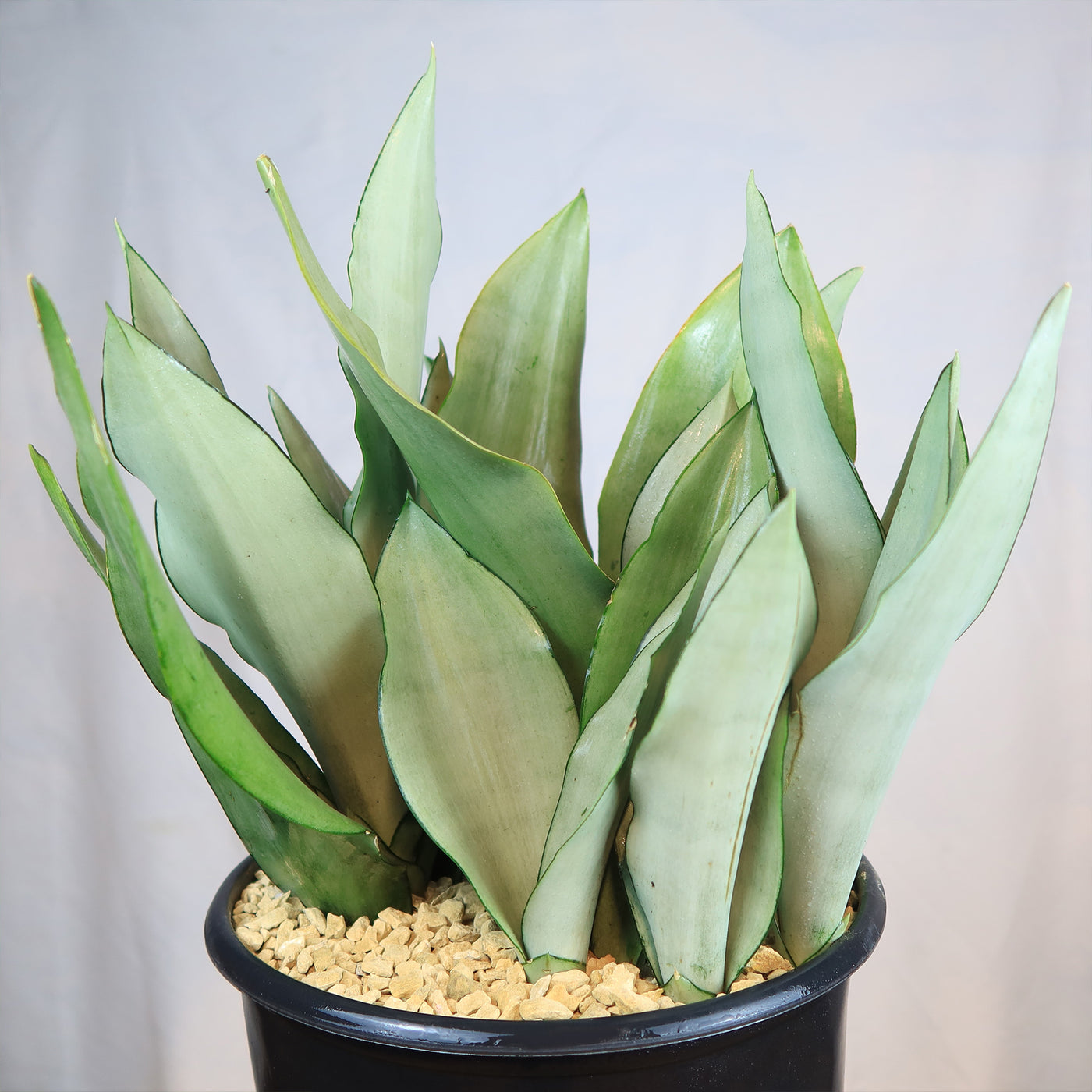
light snake plant Moonshine Snake Plant

Sale price$24.38 Regular price$27.09
Save 10%

Pay in installments of $6.77 with ShopPay, AfterPay and Klarna

Shipping Estimate
USA
  • USA
  • CAN

Ships within 48 hours · Estimated delivery Jul 23 - Jul 28

Promo Codes Available:

For Your Every Summer RSVP, with Code: SUMMER15

Description

light snake plant Moonshine Snake PlantIntroducing, the moonshine snake plant, known as Sansevieria Moonshine, a popular houseplant that belongs to the Sansevieria genus. Native to West Africa, it is a variety of the Sansevieria trifasciata. It has several other common names such as the Sansevieria trifasciata Moonshine, Silver Snake Plant, Silver Sansevieria, Sansevieria moonglow, or Dracaena moonshine, highlighting its attractive silver coloration. The Moonshine Snake Plant is a popular

Introducing, the moonshine snake plant, known as Sansevieria Moonshine, a popular houseplant that belongs to the Sansevieria genus. Native to West Africa, it is a variety of the Sansevieria trifasciata. It has several other common names such as the Sansevieria trifasciata Moonshine, Silver Snake Plant, Silver Sansevieria, Sansevieria moonglow, or Dracaena moonshine, highlighting its attractive silver coloration. The Moonshine Snake Plant is a popular choice for indoor plant enthusiasts, with its silvery-green leaves that have a moonlight glow. 

This moonshine snake plant features long, upright leaves that grow in a rosette pattern. The leaves are thick with a smooth texture of a beautiful silvery-green hue and bold green edges. They have a unique cylindrical shape, narrowing towards the tips, which adds to their visual appeal. The Moonshine Snake Plant can grow up to 4 feet tall in its natural habitat and 2 feet tall indoors, making it suitable for both small and large spaces. 

Sansevieria Moonshine blooms in spring and summer, with fragrant green and white flowers on tall spikes. These sweet-smelling flowers will last 2 to 3 weeks. While the blooms are not the main attraction of these indoor plants, they can add a touch of elegance to their overall appearance. 

Propagating Snake Plant moonshine is relatively easy. It can be propagated through leaf cuttings or by dividing the plant's rhizomes. Leaf cuttings can be placed in water or directly in well-draining soil until they develop roots. Dividing the plant involves separating the offshoots or rhizomes and planting them in separate pots to get new plants. 

Moonshine Snake plants, known for their hardiness, low maintenance, and style, are commonly found in offices, lobbies, stores, and homes. The most common types of snake plants include Sansevieria trifasciata (Mother in law’s tongue plant), Sansevieria trifasciata 'Laurentii' (Variegated snake plant), and Sansevieria zeylanica (Zeylanica snake plant), which is gaining popularity in various settings. 

Watering Needs 

Like other tropical plants, this drought-tolerant Sansevieria Moonshine prefers moderate watering. Allow the soil line to completely dry out between waterings. Overwatering can lead to root rot, so it's best to err on the side of underwatering rather than overwatering. Before watering, check the moisture level of the soil by sticking your finger about an inch deep into the soil. If it feels dry at that depth, it's time to water. If it's still slightly moist, wait a bit longer. 

In the spring and summer months, during the growing season, water your Sansevieria Moonshine every 2-3 weeks. While in the fall and winter months, during the dormant period, reduce watering to once every 4-6 weeks. 

When watering, make sure to thoroughly saturate the soil in the pot, allowing water to seep out of the drainage holes. This ensures that the roots receive adequate moisture without sitting in stagnant water. 

These moonshine snake plants are known for their ability to tolerate drought, so they can handle periods of dryness. Observing the moisture level of the soil and adjusting your watering accordingly will help keep your Sansevieria Moonshine happy and healthy. 

Light Requirements 

If you are growing your Sansevieria moonshine indoors, it prefers bright, indirect light for at least 4-6 hours a day. If you have a spot near a window with filtered or indirect sunlight, that would be ideal. However, this moonshine snake plant can also thrive in areas with medium light, making it a perfect choice for those with less sunny spaces in their homes. 

If you decide to move your Sansevieria Moonshine outdoors, it's important to consider its light requirements. Your moonshine snake plant can tolerate full sunlight, but it's best to provide it with bright indirect light or partial shade. Too much direct sun can scorch the leaves, so finding a spot with filtered sunlight or placing it under a shade structure would be beneficial. If you live in a region with intense sunlight, it's a good idea to acclimate the plant gradually to prevent leaf burn. 

Remember, finding the right balance of light is crucial for this beautiful plant. Too little light can result in leggy growth, while too much direct sunlight can cause leaf damage. Observing your snake plant's moonshine response to its current light conditions and adjusting accordingly will help ensure its health and growth. 

Optimal Soil & Fertilizer Needs 

The Sansevieria moonshine prefers very airy, porous, nutrient-rich soil with a pH of 6.5 - 7.5. Succulents require fast-draining soil that dries completely between waterings. Your soil must have a sandy texture and a low water-holding capacity, just like desert soil. Soggy wet soil can damage your moonshine snake plant and contribute to bacterial and fungal rot. In addition, because of a lack of oxygen, soggy soil substitutes air pockets with water, resulting in an anaerobic environment that can kill your snake plant. 

As an alternative, you can create your own potting mix by combining equal portions of perlite, coarse sand, and good natural potting soil. Ideally, you want to use our specialized succulent potting mix that contains 5 natural substrates and organic mycorrhizae to promote the development of a strong root system that helps your succulent to thrive. 

The Sansevieria Moonshine is a relatively low-maintenance plant when it comes to fertilizing. During the growing season in the spring, you can feed your Moonshine Snake Plant with a balanced (5-10-5), water-soluble NPK fertilizer once a year. However, be careful not to over-fertilize, as it can lead to salt buildup in the soil. 

It's important to note that the Sansevieria Moonshine is a slow-growing snake plant, so it doesn't have high nutrient requirements. As long as you provide it with well-drained soil and occasional fertilization during the growing season, it should thrive. 

Remember, it's always a good idea to observe your plant's response to the soil and fertilizer you provide. Adjusting the watering and fertilizing routine based on its growth and overall health will help ensure its well-being. 

Hardiness Zones & More 

When growing indoors, the Sansevieria Moonshine can tolerate a warm temperature between 60°F to 85°F. It's important to avoid exposing it to extreme temperature fluctuations, as this can stress the plant. Keep it in a spot where the temperature remains relatively stable throughout the day. 

If you decide to move your Sansevieria Moonshine outdoors, it can thrive in USDA zones 10-11, where the average temperature stays above 50°F. If you live in a colder zone, it's important to protect the plant from freezing temperatures by keeping it indoors during the winter months. It can tolerate higher temperatures, but it's important to protect it from scorching direct sunlight, especially in hotter climates. 

The Sansevieria Moonshine is a relatively low-humidity plant. It can tolerate a range of humidity levels, from dry to moderate. It's well-suited for indoor environments with average humidity levels. If you live in a particularly dry climate, you can increase humidity around the plant by placing a tray of water nearby or using a humidifier. This snake plant is one of the hardiest houseplants and is extremely adaptable. 

Remember, providing the Sansevieria Moonshine with the appropriate temperature and humidity conditions will contribute to its overall health and growth. Whether you choose to keep it indoors or move it outdoors, maintaining a suitable environment will help ensure its well-being. 

Final Thoughts 

Overall, the Sansevieria Moonshine (Moonshine Snake Plant) is a low-maintenance snake plant for succulent plant lovers of all levels. With its striking silvery-green leaves, easy propagation methods, and ability to thrive in various indoor conditions, this moonshine snake plant adds a touch of elegance to any space. While it occasionally produces small, fragrant flowers, its main allure lies in its unique foliage. It thrives in bright, indirect light and only needs to be watered when the top inch of soil is dry. Additionally, it is important to avoid overwatering as this can lead to root rot. You can grow your plant indoors in warm temperatures between 60°F to 85°F, and outdoors in USDA zones 10-11. We think you will love this snake plant order your very own Sansevieria moonshine snake plant for sale today and start enjoying its beauty in no time! 

Shipping Notes
  • Free Standard Shipping on $100+ Orders to the USA.
  • Except Preorder products are shipped in 48 hours.
  • Delivery to the USA:
  1. Standard Shipping : 3-10 business days
  • If time is of the essence, please consider selecting expedited delivery for faster service.
Exchange/Return Notes
  • We offer a 30-day return/exchange service after receiving.
  • Final sale items are not eligible for returns or exchanges.
  • To process your return/exchange, please contact us at [email protected]
  • Please click here for more details>>> Return & Exchange Policy
SKU: 15471393938

Discover Niche Categories That Outsell light snake plant

Top-Converting Item to Boost Your Average Order

4.8 ★★★★★
Based on 10 reviews
Sort
Highest Rating
Newest First
Oldest First
Product Reviews
P
Verified Purchase
Patrick S.
Alexandria, US
★★★★★ 5
A fun and fulfilling book - would love to own the series
Format: Paperback
I had a lot of fun with this book. About a year ago, I really came down on the side of presuppositionalism and have studied the approach, see if it was useful against two of the leading atheistic books (God Is Not Great and The God Delusion), and now I wanted to match it up against four other views of apologetics. I will try to not go into too much detail here as I think the book is an important read for developing an apologetic standpoint. The book follows the 1)"model of Approach X is presented" then 2) "Response from other 4 approaches to counter Approach X" and then move on to the next approach. The book allows final statements from each writer for a final opportunity. Steven Cowan has a good introduction and epilogue that bookends the book well. Craig (Classical Approach) really surprised me as he brings in the role of the Holy Spirit early into the conversation. I really thought I was going to just be reading the finer points of the Kalam argument he's known for. The role of the Holy Spirit is reflected in the other authors' approaches as well and that was nice to see. It's also nice to see Craig debating with Christians for once and it's here that you really get to see his thought process contrasting with other people with the same worldview. There are issues that Craig tries to bring up against the presuppositionist view point that could be applied for him. He doesn't seem to get that all foundations are, by definition, circular because if you can appeal to something more foundational, then your foundation isn't your foundation at all. Craig seems to bring in some higher concepts about probability to make some of his points and I think that's really a miss for anyone who's not a high level philosopher (and even some philosophers might have issues understand what he's talking about here). Habermas (Evidential Approach) seems to have an undue hatred for presuppositionalism. He's also another person who doesn't realize that the approach he uses isn't really the foundation he is starting from. I think he resents doing the hard work that the other approaches then build up to. Feinberg (Cumulative Case Approach) seems to miss the point of presuppositionalism entirely. He's got the approach of what I call the "shotgun approach" in the sense that he wants to use everything possible and sees what he hits. Frame (Presuppostional Approach) does an ok job with presenting the method. I don't think he would be my first choice in representing the approach. He doesn't do a good job of explaining the "problem of circularity" isn't a problem. He just does an "ok" job. Clark (Reformed Epistemological Approach) is one I was excited to read. I liked some of his points he made when talking about the other approaches. Then I read his approach and was extremely disappointed. The biggest flaw is that he states literally that his approach doesn't help to show the Christian God is real. I would say then your apologetic method is worthless and not a real method at all. I understand the R.E. approach but if I went only with Clark's explanation and argumentation, I wouldn't have even considered it a real area of focus. The book is well laid out, the footnotes are at the bottom of the pages (SO helpful!), Cowan does a good job of wrangling the writers and offering expanded reading and other authors for each area of focus. Myself and my mentor spent from January to August every other week going over and discussing the book. Finding flaws, comparing and contrasting, and seeing where points were made and where points were missed. I think the biggest deficit we found was that the writers tended to assume agreement on definitions of words that played a big role (for example - the word "evidence" NEEDED to be defined right off the bat by every author and it wasn't until Frame in his response to the objections raised did we even have one person define it). My suggestion for this book to maximize the fun is to pick a method and try and defend that method throughout; even with the writer arguing your side. My book is filled with notes and highlights that just made this book a great enjoyment to meet and discuss with a fellow Believer about. It does not settle all the issues, but it does help you focus on the fact that we still aren't done learning yet. Final Grade - A-
WAS THIS REVIEW HELPFUL?YesReportShare
Reviewed in the United States on November 13, 2013
L
Verified Purchase
Lyndon Unger
Bozeman, US
★★★★★ 4
Great Introduction to the Various Schools of Apologetics
Format: Paperback
In reading "Five Views on Apologetics", I first had to wonder why the book was called "Five Views" and not "Three Views", since the first three authors admittedly had so much in common with each other that it seemed that their positions were subcategories of a singular system of apologetics. In fact, Habermas claimed Craig as an evidentialist on multiple occasions and admitted they had relatively minor disagreements. Feinberg was also an evidentialist, but he differed from Habermas and Craig in supposing that any one argument could possibly be persuasive to a skeptic. All three individuals definitely agreed on so much though that their three essays proved to be slightly disappointing as in the end, I figured that any one of them practically utilized a combination of all three approaches (I've heard Craig make cumulative case presentations...). I wondered exactly why they were representing different apologetic camps. Don't get me wrong: I like Craig and Hambermas and Feinberg; they're brothers in the Lord. I just find that evidentialism's off-shoots are so similar to each other that taking three chapters for the various forms of evidentialism didn't seem that worthwhile. Ironically, it seemed that the other two views of were related by what seemed like a mutual distaste for the other, Frame wrote that he "was rather disappointed at Clark's treatment of the role of the Bible in determining apologetic principles" (310) and the suggestion that Clark might not have "tried hard enough to find out what the Bible says" (310) also seemed like a needless jab, but Frame still commended Clark on plenty and suggested that "presuppositionalists too are Reformed epistemologists" (312). On the other hand, Clark wrote that Frame's essay is "the best version of presuppositionalism I have ever read" but then went on to suggest that presuppositionalism (at least as presented by Van Til) was either too confusing for him or was "obviously false" (255). Clark parroted the often repeated gross misunderstanding of presuppositionalism that "non-christians cannot know anything" (256), suggested that Frame implied this concept (257) and then spent several paragraphs refuting an obviously silly postulate; it's strange how Clark would insinuate that Frame would be so plainly stupid and I got the idea that Clark thought that all presuppositional apologists were somehow mentally lacking. Even in my early reading of Van Til, I understood that he was writing about how unbelievers cannot account for how they know anything, not whether or not they can know anything. What was even more alarming was Clarks' confession that "anyone can find some support for his or her position in Scripture" (275), as if scripture lacks a clear meaning and is somehow malleable enough to consistently conform to anyone's presuppositions. I was left dissatisfied by how Clark didn't seem to exhibit reformed theology and I was also puzzled why Frame didn't present the Transcendental Argument for the Existence of God (the main positive argument of presuppositionalism). What was even more humerous was how Craig presented a fairly solid version of the transcendental argument and gave Frame a slight poke for not presenting the "main course" of presuppositionalism. On the whole, I found "Five Views" to be reflective of much of my general feelings of the current state of apologetics; too distracted, too unscriptural, and too confusing. It was a difficult read at times; William Lane Craig's constant scampering into symbolic logic was frustrating and made me wonder whether the publisher clearly communicated the target audience to the authors. I was disappointed that none of the authors attempted to establish any component of their case from scriptural exegesis but instead presented philosophical constructs aided by proof texts (i.e. Habermas referenced Romans 8:16 on page 97 as `proof' that the Holy Spirit may work through apologetics to bring "full assurance to believers", arguably not the meaning of Romans 8:16). I also found myself wondering if the authors were agreeing on theological points due to lack of clarity (i.e. Craig's writing about the inner witness of the Holy Spirit was general enough that it sounded Mormon...). The book was good, and it DID expose me to five (arguably) different apologetic systems, but I hesitate to give it 5 stars due to some of the weak/unclear presentations of the systems and the thought that this isn't the best that evangelicalism has to offer. It's still a worthwhile buy and I'm likely being too hard on it. I'd recommend it as an intro book for a college level Apologetics class, or for someone who's already familiar with theology and the concept of apologetics but isn't familiar with it in depth.
WAS THIS REVIEW HELPFUL?YesReportShare
Reviewed in the United States on November 4, 2009
J
Verified Purchase
J. E. Lindsey
Port Orchard, US
★★★★★ 5
Great Contrasts
Format: Paperback
Cowan tells us, "This is a book about apologetics methodology, not a book of apologetics per se. That is, it is not a book that seeks to do apologetics as much as a book that discusses how one ought to do apologetics" (8). Cowan has achieved the stated purposes of this book in many ways, but due to limited space I will stay focused on three examples; Glossary of Key Terms and Concepts, format, and conclusion by Cowan. Glossary of Key Terms and Concepts (21-24) in this initial section of the book provide a clear and useful starting place for persons who are not academically familiar or comfortable with many terms used in the book. The fact that the key terms section included and defined conceptual terms supports the stated purpose of the book being a methodological rather than an apologetic book with multiple views from various writers' specific understandings and preferred styles of apologetics. As a new person to formal apologetics, this section helped launch me smoothly into the methodological discussions. I returned to these pages a few times to reacquaint myself with meaningful concepts. The format of the discussion with proponents making a methodological case for their form of apologetic followed by critiques from supporters of other apologetic systems brought clarity to the five methods addressed in this book. This format help to highlight both strengths and weaknesses in methods. Cowan as the general editor achieved the goal of keeping the writers away from apologetics and on the goal of providing defense and critiques of these five methods. Each supporter had a unique "tee-up" to their sections. Craig starts by stating, "...methodology in Christian apologetics...raising the age-old issue of the relationship between faith and reason." He goes on further in his introduction to tell a story about his struggle at Wheaton College and why his methodology was helpful to his faith (26). Habermas clarifies that his form of evidential apologetics is, "...characterized as the one-step approach..." (92).This initial piece of information was insightful to me and a helpful clarification between classical and evidential methods. Feinberg on Cumulative Apologetics points out, "A good place to begin the discussion of apologetic methodology is to ask about the nature of the case for theism and Christianity" (148). Frame was probably the most direct in his initial statement by saying, "In apologetics, as in every aspect of the Christian life, the most important thing is to glorify God. Therefore, it is important for us to look in God's Word, the Bible, to see if our Lord gives us any directives relevant to the apologetic task" (208). In principle agree, but I will admit, I find his form of apologetics to be too circular in nature to be convincing to an unbelieving skeptic - as a standalone method. Christians I think would all say, well of course. Clark's section begins with stories meant to set the stage that it is reasonable have faith. Clark writes, "My suppose-this and suppose-that stories are intended to raise the problem of the relationship of our important beliefs to evidence" (267). Each of the five supporters of their method successfully introduced their unique method of apologetics. Cowan regarding to his conclusions says, "Hopefully, this will not only help you, the reader, make your own decisions regarding apologetic methodology, but will also provide a basis for further discussion of the topic among scholars. Cowan's conclusions assured that main points of agreement and disagreement were clear. Here as with the other sections, the textual comments were method focused. My criticism is pointed at the spirit of the debate. The writers did not draw enough contrasting between apologetic methods to clearly show that their individual method should be favored. I think the tone was a little too stilted in the direction of "playing" nice. In a book that purports to have five methods, there were times it seemed like only three or four methods. I guess this is inescapable give that each apologetic style can share some parts in common with another. Yet Craig shares my feeling here, I believe, based on his statement, "Pity our poor editor! Ideally he would like to find a wild-eyed fideist on one end of the spectrum and a hard-nosed theological rationalist on the other. Instead he winds up with a presuppositionalist who argues like an evidentialist..." (122). Overall Five Views on Apologetics provides a good compare and contrast resource for anyone interested in these five common methods of apologetics.
WAS THIS REVIEW HELPFUL?YesReportShare
Reviewed in the United States on March 18, 2011
M
Verified Purchase
Mimi
Grantham, US
★★★★★ 5
Condense Analysis of 5 of the most notable Apologist
Format: Paperback
Looking for a quick reference guide to the major theorist of Apologic study, this book is a great resource.
WAS THIS REVIEW HELPFUL?YesReportShare
Reviewed in the United States on October 12, 2024
W
Verified Purchase
Will L.
Pawtucket, US
★★★★★ 5
Not an Intro to Apologetics
Format: Paperback
This book is not for the first-time student of apologetics. It's deep and, at times, difficult. However, for anyone with a serious interest in apologetics, this is a great way to find out which method suits your apologetic style and why. It was eye-opening for me. I am confident that God can use most (if not all) of the five distinct methods covered in the book. But it was very helpful to me to consider pros and cons of each and decide which approach seemed appropriate for me. Great book, if you feel ready for it!
WAS THIS REVIEW HELPFUL?YesReportShare
Reviewed in the United States on July 25, 2006

recommand products