SKU: 17389262424
pink panther indoor plant

pink panther indoor plant Shop 'Pink Panther Plant - Tradescantia Callisia repens Pink Panther' Care and Info

Sale price$18.89 Regular price$20.99
Save 10%

Pay in installments of $5.25 with ShopPay, AfterPay and Klarna

Shipping Estimate
USA
  • USA
  • CAN

Ships within 48 hours · Estimated delivery Jul 23 - Jul 28

Promo Codes Available:

For Your Every Summer RSVP, with Code: SUMMER15

Description

pink panther indoor plant Shop 'Pink Panther Plant - Tradescantia Callisia repens Pink Panther' Care and InfoIntroducing the low maintenance trailing pink panther plant also known as Callisia repens' Pink panther', is sure to turn heads. This pink panther plant was previously categorized under the genus Tradescantia; it's possible that some websites are using the name "Tradescantia Callisia repens." The correct scientific name for the plant is Callisia repens pink panther, because it has since been reclassified under the genus CallisiaGo to Callisia. The

Introducing the low-maintenance trailing pink panther plant– also known as Callisia repens' Pink panther', is sure to turn heads. This pink panther plant was previously categorized under the genus Tradescantia; it's possible that some websites are using the name "Tradescantia Callisia repens." The correct scientific name for the plant is Callisia repens pink panther, because it has since been reclassified under the genus CallisiaGo to Callisia.  

The Pink Panther plant is named after the famous Pink Panther cartoon character, which resembles the pink stripes on its green leaves. It also has several other common names, such as pink lady turtle vine, tradescantia pink panther, pink turtle vine, Callisia pink panther, or Callisia tricolor. 

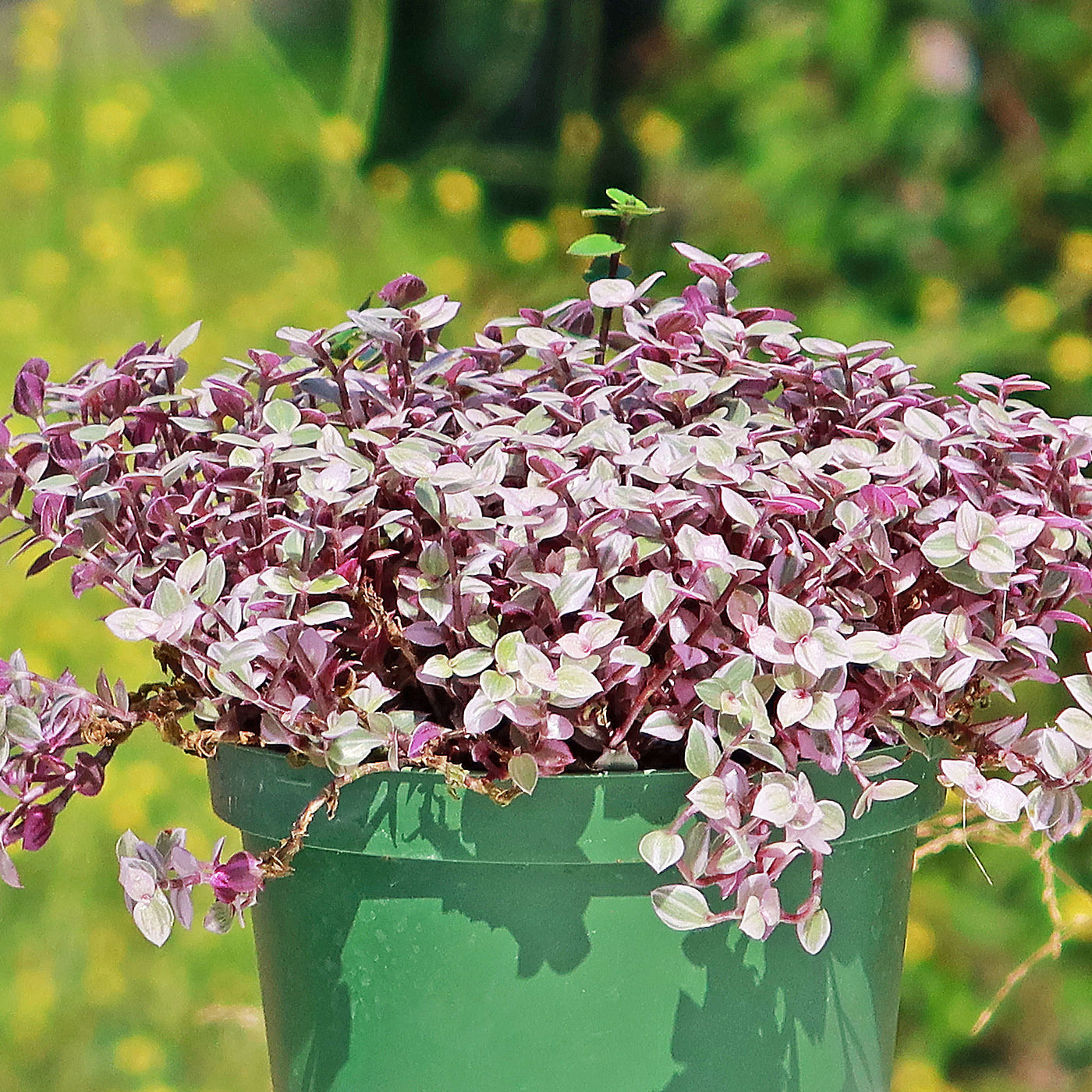
The image features the Pink Panther Plant with its variegated pink, purple, and green foliage, cascading gracefully over the pot in a soft, trailing form.

The cool part is its vibrant pink leaves with a mix of pink, green, and white stripes, making the pink panther plant a popular choice among indoor plant enthusiasts for its unique appearance and ease of care.

It's perfect for tiny spaces like your home, office, or even your desk.

This tropical houseplant is like a burst of joy with its stunning, small lavender-green leaves that turn bright pink and variegate in bright sunlight, with a velvety texture that adds to their appeal.

The foliage is densely packed along the stems, creating a lush and cascading effect when grown in hanging baskets or allowed to trail down from shelves or tabletops.

Your pink panther plant, with its reddish stems, can grow up to 12 inches tall and 24 inches wide. Its delicate but vibrant leaves puff out and shoot off consistently, giving your space a lush and beautiful touch in no time. 

The flowers of the pink panther plant bloom during the summer, with tiny white flowers. However, it's worth noting that the Pink Panther plant is primarily grown for its striking foliage rather than its blooms.

The Callisia repens pink panther plant is distinguished by the striking golden leaves of Callisia repens GoldGo to Callisia repens gold turtle vine and a unique combination of pink and green variegated leaves of the Pink Lady Callisia repens variegated.

When and How to Water Your Pink Panther Plant 

The Pink Panther plant is drought-tolerant, which means it can go for extended periods without water once established. However, to keep it thriving, especially in containers, it’s best to follow the “soak and dry” method: give the plant a deep, thorough watering, then allow the soil to completely dry out before watering again. The trailing pink panther prefers watering once every 2-3 weeks and once a month in the dormant season.

In spring and summer, during the growing season, water once every 2-3 weeks, or whenever the top inch of soil feels dry. Use a water meter or your finger to test moisture levels. Always ensure the plant is in porous, well-draining soil and placed in a container with drainage holes to prevent standing water and root rot.

In fall and winter, during dormant period, the plant enters a dormant period and requires watering once a month. If kept outdoors, withhold watering during rainy spells or cold snaps. Indoors, reduce watering to only when the soil is completely dry. Overwatering during dormancy is one of the most common causes of root rot.

Light Requirements - Where to Place Your Pink Panther Plant

When grown indoors, the pink panther plant also requires brighter, indirect light for at least 6-8 hours a day.

Placing it near a north or east-facing window is usually ideal. Avoid exposing the plant to direct, intense sunlight as it can scorch the leaves.

If you don't have access to ample natural light, you can also use artificial grow lights, such as fluorescent or LED lights, to provide the necessary light for the Callisia repens pink panther plant's growth.

When grown outdoors, the Pink Panther plant enjoys partial shade or dappled sunlight. These plants require at least 4-6 hours of strong light each day to survive, although partial shade in the afternoon is often preferable - especially in hotter climates where the plant might become stressed by the intense heat of the afternoon sun.  

In bright light, its lavender-green leaves turn pink and variegated, making it a true showstopper. It's crucial to place your pink panther succulents away from any areas with constant direct sunlight, as doing so could result in burned foliage.

If the pink panther plant is not getting enough light, it may become leggy, which means that the stems will become long and thin, and the leaves may lose their variegated color. To prevent this, it's important to keep the plant in a location where it can receive plenty of light, but not direct sunlight. 

Optimal Soil & Fertilizer Needs 

Callisia requires a fast-draining potting mix that dries completely between waterings, and should be fertilized once a year in spring. The pink panther likes very airy, porous, nutrient-rich soil with a pH of 5.6- 6.5. Your soil must have a sandy texture and a low water-holding capacity, just like desert soil. Ideally, you want to use our specialized succulent potting mix that contains 5 natural substrates and organic mycorrhizae to promote the development of a strong root system that helps your succulent to thrive.   

When it comes to fertilizer, a small amount of water-soluble fertilizer with lower doses of NPK (5-10-5) applied once a year in the springtime encourages branching and nutrient absorption. Remember, never fertilize your pink panther if it has recently been replanted or if it is experiencing problems, as it is not a medicine. Analyze the plant and make adjustments as needed. 

Hardiness Zones & More 

In the United States, your Callisia repens Pink Panther is mostly an indoor plant, but if you live in southern Florida or Hawaii, then you can cultivate it outdoors in USDA zones 10-12.

They are not cold- or frost-tolerant, so you should plant them indoors or put them in a pot and move them indoors during the winter if you live outside of these regions.  

The Pink Panther plant appreciates moderate to high humidity levels, similar to its tropical origins. Aim for a humidity range of 50% to 60% for optimal growth. If the air in your home is dry, especially during winter months when indoor heating is used, you can increase humidity by placing a tray of water near the plant or using a humidifier. Misting the foliage occasionally can also help provide some moisture.

Remember, frost can damage the leaves, causing them to turn brown and lose their vibrant pink color.  It's important to protect the plant pink panther from further damage by keeping it in a warm place away from cold, drafty windows and air vents if you are growing it indoors in a cold climate.

How to Grow the Best Pink Panthers Plant Indoors 

When grown indoors, the ideal temperature range for your Pink Panther is between 64°F and 72°F. It prefers a warm and cozy environment, so try to avoid exposing it to extreme temperature fluctuations or drafts. It should be fine even if the temperature drops to 50°F at night.

Wildlife - Pink Panther Plant Attracts the Following Friendly Pollinators

The Pink Panther Plant is known to attract a variety of friendly pollinators, including butterflies, bees, and hummingbirds. These pollinators play a crucial role in the plant's reproduction process by transferring pollen from one flower to another, ultimately helping the plant to produce seeds and fruit.

Butterflies
Bees
Hummingbirds
Lady Bugs
Multi Pollinators
Other Birds

According to ASPCA, the Pink Panther plant is considered mildly toxic to pets and humans if consumed. However, it is safe to touch and handle, making it a popular choice for indoor houseplants.

How to Propagate Your Pink Panther Plant

The Pink Panther plant can be propagated through stem cuttings. Take healthy stem cuttings, ensuring they have a few nodes, and remove the lower leaves. Place the cuttings in water or moist soil, providing them with indirect light and regular moisture. Over time, roots will develop, and you can transplant the cuttings into their own pots or a larger container.

Key Takeaways

  1. The Pink Panther plant is ideal for hanging baskets, with trailing stems that spill gracefully over the edges, making it a decorative choice for shelves, windows, or patio planters.
  2. The foliage of Callisia repens 'Pink Panther' is what gives it its name—soft pastel leaves in pink, green, and silver tones that resemble the color palette of the classic Pink Panther cartoon.
  3. The Pink Panther plant is drought-tolerant, needing only occasional watering once established, especially when grown using the "soak and dry" method in well-draining soil.
  4. This compact succulent stays under 6 inches tall but spreads or trails quickly, making it a beautiful indoor accent or a creeping ground cover in warmer climates.
  5. The Pink Panther thrives in bright, indirect light, and under the right conditions, it can produce tiny star-shaped flowers, adding a delicate detail to its already striking appearance.

Final Thoughts

Overall, the Pink Panther plant (Callisia repens Pink Panther) is a delightful and popular choice for indoor gardening enthusiasts. With its vibrant pink and green foliage, it adds a touch of beauty to any space. This trailing plant thrives in average room temperatures between 64°F and 72°F and appreciates moderate humidity levels. When it comes to light, it prefers bright, indirect light indoors and partial shade or dappled sunlight outdoors. Whether you choose to grow it indoors or outdoors, providing the right conditions will ensure the Pink Panther plant's healthy growth and stunning appearance. 

Don't miss out on adding the Callisia repens pink panther to your garden! Order now and enjoy its beauty for years to come. 

Shipping Notes
  • Free Standard Shipping on $100+ Orders to the USA.
  • Except Preorder products are shipped in 48 hours.
  • Delivery to the USA:
  1. Standard Shipping : 3-10 business days
  • If time is of the essence, please consider selecting expedited delivery for faster service.
Exchange/Return Notes
  • We offer a 30-day return/exchange service after receiving.
  • Final sale items are not eligible for returns or exchanges.
  • To process your return/exchange, please contact us at [email protected]
  • Please click here for more details>>> Return & Exchange Policy
SKU: 17389262424

Discover Niche Categories That Outsell pink panther indoor plant

Top-Converting Item to Boost Your Average Order

4.3 ★★★★★
Based on 22 reviews
Sort
Highest Rating
Newest First
Oldest First
Product Reviews
F
Verified Purchase
Farley
Charlottesville, US
★★★★★ 4
3 considerations for IQ BALL. FUN, DURABILITY & COST to TIME VALUE
Size: 4 INCH, Pattern Name: IQ TREAT BALL 4", Size: 4 INCH, Pattern Name: IQ TREAT BALL 4"
3 Points to consider buying IQ BALL : FUN, SAFETY & COST. IQ BALL out of the well packed box: It is a good toy depending on your dogs' SIZES, TOY DESTRUCTION QUOTIENT & Cost to PlayTime ratio 1) FUN--Great fun for playful dogs who like chasing balls & learning treat rewards for rolling it. 5 Stars FUN & for puppies learning to problem solve. Fun will depend on dog's size, especially if they're mouthy (chew-wise) & how big they open--can the dog get the ball in its mouth to break it? Overall our experience is FUN=5 Stars 2) SAFETY: Our 5 month, 22" high, 30# Australian Pup spent 2 hours of continuous play, first time w IQ Ball. He could not hold or carry it in his small puppy mouth...this is not a problem but a good thing. Larger dogs wont necessary get the pt. if all they do is carry it around. Also---Reckon, any larger dog e.g. Germ. Shep., Rottie., Malamute & esp. Staffordshire Bull, Pit Bull Terriers, or larger mouth dogs could easily crush this lightweight plastic into shattered sharp bits. If the dog is easy going on toys it may be okay. Otherwise I'd worry about it breaking in the dog's mouth. 3) Cost to Time ratio is likely very good if, dog is not too "mouthy" with their toys. Rate it at a 3 overall for Med. to Large Dogs & 5 for pups & smaller dogs. Cost not worth it if dog crushes it in a minute. Our little guy just started playing with IQ Ball again 5 hrs. after unpacking it. At first he chased it around the house for almost 2 hrs. So Cost/Time used ratio depends on your dog's food motivation & love for balls that toss kibble out at various intervals. Set-up's a breeze. Delivery opening is adjustable, depending on kibble size & how much you want to reward the dog. We set delivery hole wide open the first 15 min. Then adjusted it smaller as he figured out, the more I roll this ball, the more treats come out. SAFETY CAN BE AN ISSUE BUT OVERALL, WITH CERTAIN DOGS & DOG SIZE, THIS IQ BALL IS A GOOD 4 STARS. 1 other caveat: uneaten kibble left on floor can be a calling card for little "Mickies" who just LOVE dog kibble. We vacuumed a few times already.
WAS THIS REVIEW HELPFUL?YesReportShare
Reviewed in the United States on November 28, 2015
Y
Verified Purchase
Yahtzee
Houston, US
★★★★★ 5
Great for keeping dog busy and for rescues
Size: 3 INCH, Pattern Name: IQ TREAT BALL 3"
We got our dog from a shelter -- we don't know much about her history, but we imagine that she has never been socialized to play with toys because she has no interest in objects whatsoever. We've tried squeaky toys, chew toys, and ropes but to no avail. Other than her Kong (and she only plays with that because she wants the food; she has no interest in the Kong itself), this IQ Treat Ball is the only other toy that she plays with. It took us a day and a couple of meals to teach her how to use it. In fact, we started out by making the toy a bit easier by removing the disk in the center altogether. The disk is still out, but we'll be sure to add it when we feel that she needs the challenge. I LOVE the concept of this toy because it teaches dogs how to play, using food as a motivator, and allows them to really think and problem solve (especially for older rescue dogs who have never really been taught). My dog started out constantly getting the ball stuck under the couch and between furniture, but she now knows how to navigate around the house and how to avoid these "problem areas." She originally had no idea how to push the ball around, but now she noses it around eagerly for her kibble. Aside from that, it is easy to open and easy to clean. I see some negative reviews here, which is unfortunate because even though the toy is made of plastic, it IS well-made. (I should note here that my fiance and I have both dropped the ball from kitchen-counter height to the tile on multiple occasions because we're clumsy, and there are no dents or cracks from the impact.) Even on the packaging, the manufacturer gives you the warning that the ball is NOT for aggressive chewers and should absolutely only be given to a dog under guardian supervision. Giving the IQ Treat Ball to an aggressive chewer, not supervising him, and then blaming the manufacturer for injuries is irresponsible. My dog is not a chewer, and I always watch her while she is playing with this toy, so I think that it's a great product. If you have a rescue/shelter dog who doesn't know how to play with toys, I think this is a fantastic start! I highly recommend! UPDATE (7/15/2014): This toy has lasted a whole month since we started using it mid-June. We use it twice a day for breakfast and dinner, and it's still in good shape. The ridges around the ball do have some minor teeth marks on on them, but that's something that I expected would happen. As far as I'm concerned, it's still in great working order. I am ecstatic with this toy because it has functioned as a segue for our rescue. As I mentioned above, she showed absolutely ZERO interest in toys before. However, we've slowly started getting her out of her anti-toy-socialization shell, and I think this IQ Treat Ball has served a part in that. We've had her for about two months, and in that time we've taught her out to play tug-of-war, how to chase after a ball (Very short distances for now, but hey! Baby steps, right?), and how to chew on ropes and other toys. Now, a lot of hard work has gone into shaping these behaviors on our part, but I really do think that the IQ Treat Ball has improved her appetite, not only for food, but for games as well. My original verdict still stands -- I highly recommend!
WAS THIS REVIEW HELPFUL?YesReportShare
Reviewed in the United States on June 30, 2014
L
Verified Purchase
Leslie
Massapequa, US
★★★★★ 5
Fun for your dog and fun for you to watch their antics with this Interactive IQ Treat Ball
Size: 3 INCH, Pattern Name: IQ TREAT BALL 3"
This delightful ball is both a feeding utensil and a workout all in one! Your dog not only eats its calories, it burns them off at the same time! I have a little dachshund, Sophi, who loves her treat ball. They call it a treat ball but I use it for kibble that fits inside. Sophi doesn't need more treats than just a few every few days. If you fill this with treats, it's too much in my opinion, unless you have a really playful dog who needs to gain weight. You place the treats or kibbles inside one half of the ball (the one without the hole in it). Then you adjust the size of the hole in the white center piece to allow either one or a few pieces to fall into the chamber at a time. You place the white flat part over top of the kibbles and then screw on the other half. There is a hole in the end of the ball and once the kibble/treats roll around in the chamber and make their way through the one hole inside to the opposite chamber and then reach that hole, they fall out. Sounds complicated but it's not. This ball teaches the dog that rolling the ball makes treats/kibble fall out and they get to enjoy them. This is where IQ in the name comes in. It doesn't take long for a dog to figure out that they get treats by rolling the ball around and making them fall out. Not only does the dog get exercise pushing the ball around your floor, it really is entertaining to watch. Our Sophi hears the kibbles fall out and if she doesn't immediately see them, because the ball continues to roll, we get to see that "where are they?" and the floppy dachshund ears frantically searching. We have hardwood floors so the ball rolling quickly and bumping into table legs and furniture, Sophi trying to get the kibbles--it's quite a show that has us laughing a lot. It's a sturdy plastic ball, easy to fill and easy to put together. Small enough to tuck into a bag for travel--about the size of a baseball, or smaller. Will roll easy on carpet with a dog pushing it with their nose or very quickly on hardwood. Rather noisy on hardwood floors with the assertiveness of the dog and it bumping into things, so watching something on TV can be difficult. But the entertainment you get, who needs TV? It'll only hold about 1/2 c or a little more of small kibbles (you cannot pack it full) so it's more for multiple feedings, snacking or play. I ordered 2 of these so that when one was used and needed cleaned, there was always a clean one. I throw them in dish water or the dishwasher, top rack with no problem. No cracks or breaks in almost a yr of use. Highly recommend this interactive treat ball. Not only will your dog enjoy it, you will enjoy watching your dog enjoy it.
WAS THIS REVIEW HELPFUL?YesReportShare
Reviewed in the United States on November 22, 2015
K
Verified Purchase
Katie K
Boise, US
★★★★★ 5
Great Energy Outlet for an Active Dog!
Size: 4 INCH, Pattern Name: IQ TREAT BALL 4"
I have a 1 year old Australian Shepherd/Border Collie/Cattle Dog mix named Josie. When you look up "hyper-active dog" in the dictionary, you'll find her picture. She could run for days if she wanted to. I am always looking for things to help keep her from getting bored, and this treat ball is great! She was only about 3 or 4 months old when I got this and introduced it to her. With a little help from me, she figured it out in no time. Now she's a pro, and knows exactly how to paw at the ball to make it spin and fling food out. I have the 5-inch ball. Josie's not a big dog (40lbs) and she can get her mouth around the ball to pick it up. She only does this when it rolls onto the linoleum floor in the kitchen. I think it gets too loud for her (and me too!). I always put it away when the food is gone so she doesn't use it as a chew toy. She has never gotten bored of pushing it around and decided to chew on it. She can hear the food rattling around inside and continues to play with it until it is empty. This isn't the type of toy that you would give to your dog, and then leave them unsupervised. The ball is made out of hard plastic, and does make a loud banging when it runs into walls, chairs, etc., but it has never left any marks on my walls or furniture. I actually prefer she use it on the carpet because it's quieter and she always gets all of the food pieces (it works just as well on carpet as it does on a hard floor, fyi). If I lived on the bottom floor or in my own house, I wouldn't have a problem with her using it on hard floors, however she always brings it back to the carpet on her own when it rolls off. I like that the hole on the middle divider is adjustable, and you can also just take the middle part out of the ball so you can fit more food inside, the dog can see the food so they're more motivated to get it, or to make it easier for a younger/older dog to get food out. My dog loves this ball. She gets excited when I take it out and start filling it with food. With the divider it has enough room for half of her portion. She always goes for the ball first, empties it, then to her dish. When she's done eating she always lays down and takes a nice long nap. I know that she enjoys it, and it definitely gives her 15-20 minutes of good, mentally-stimulating indoor exercise. It also taps into their prey-drive, and I think that helps make your dog feel like a dog. Overall this is another great buy from Amazon. I did see it at the pet store (after I had gotten mine) for double the price! ***If you have a dog that is food-motivated and needs something to do, buy this. It's worth it.***
WAS THIS REVIEW HELPFUL?YesReportShare
Reviewed in the United States on October 26, 2011
A
Verified Purchase
A.Q.
Omaha, US
★★★★★ 3
Great toy while it lasts
Size: 3 INCH, Pattern Name: IQ TREAT BALL 3"
We purchased one of these for our 10 pound Malshipoo as she gets bored easily and this thing definitely keeps her busy for awhile while she tries to get the treats out. She rolls and kicks it hard enough that I'm sometimes fearful it will break but after having owned it for 14 months it's actually held together quite nicely to my surprise. I think it came apart once and that's probably because I didn't have it screwed on correctly. The only reason I didn't rate it higher was two things: First, I don't like that the top section is in two parts and you have to fit them together just right for it to screw on. Why not make it one solid piece on the top? The second reason I didn't rate it higher is the white plate with the hole you twist to make the hole bigger or smaller is now a lot looser so when our dog bangs this against a wall or anything hard the hole shifts and makes it bigger thus the game doesn't last as long. So I'm purchasing a new one and hoping this doesn't happen again. I guess it's just wear and tear but I would have like it to last longer than 14 months. Maybe I guess my expectations aren't realistic. Hopefully the next one lasts longer.
WAS THIS REVIEW HELPFUL?YesReportShare
Reviewed in the United States on February 18, 2025

recommand products