SKU: 17508613201
order snake plant online

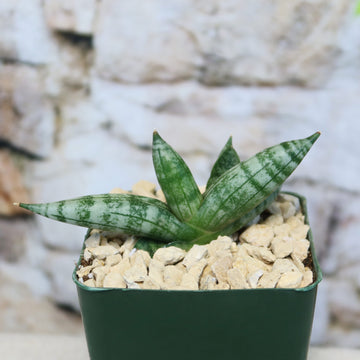
order snake plant online African Spear Plant 'Sansevieria cylindrica'

Sale price$18.30 Regular price$20.33
Save 10%

Pay in installments of $5.08 with ShopPay, AfterPay and Klarna

Shipping Estimate
USA
  • USA
  • CAN

Ships within 48 hours · Estimated delivery Sep 19 - Sep 24

Promo Codes Available:

For Your Every Summer RSVP, with Code: SUMMER15

Description

order snake plant online African Spear Plant 'Sansevieria cylindrica'Get ready to be amazed by the African Spear plant, also known as Sansevieria cylindrica (Dracaena angolensis), one of the snake plant varieties and a vibrant member of the Sansevieria genus! It has many other common names, including cylindrical sansevieria, the cylindrical snake plant, the Starfish sansevieria, the bow string hemp, dragon fingers, and pencil Sansevieria. This snake plant does not have ordinary upright, dark green leaves; they are

Get ready to be amazed by the African Spear plant, also known as Sansevieria cylindrica (Dracaena angolensis), one of the snake plant varieties and a vibrant member of the Sansevieria genus! It has many other common names, including cylindrical sansevieria, the cylindrical snake plant, the Starfish sansevieria, the bow-string hemp, dragon fingers, and pencil Sansevieria. 

This snake plant does not have ordinary upright, dark-green leaves; they are horizontally striped and have an extraordinary cylindrical fan shape that tapers to a fine point at its tips.The single leaf of this spear sansevieria can grow up to 7 feet tall and up to 1.4 inches wide. 

In the right conditions, these extraordinary Sansevieria plants might surprise you with a small creamy-white flower spike shooting up from their center. While the cylindrical snake plant flower is not the largest or most colorful among its succulent family, it does have a distinct, sweet-smelling, and pleasing fragrance. These delicate white blooms dance in the air like tiny fairies spreading joy and enchantment everywhere they go. It's simply magical! 

Remember, these cylindrical snake plants are mildly toxic for humans and pets, so, it's important to keep them away from children and pets. It is the simplest way to multiply and propagate Sansevieria cylindrica plants. You can either adopt the division or the leaf-cuttings method of Sansevieria cylindrica propagation. While this slow-growing succulent is known to live longer than most other succulents provided it is kept in a warm and well-lit position. 

Watering Needs 

Native to Africa, the African spear succulent plant doesn't need much water to thrive. In fact, it's best to water the Sansevieria cylindrica plant only when the soil is completely dry, which can be once every two to three weeks. When you do water your Sansevieria plants, be sure to do so thoroughly, allowing the water to soak into the soil. Be careful not to overwater it, as this can cause root rot, which can be fatal to the plant. 

But come wintertime (dormant period), you can cut back to every two weeks or less. And get this - any type of water (except hard water) will work just fine! So, whether you use tap or filtered, or even rainwater, your cylindrical snake plant will thrive in no time. Just remember to avoid hard water since this African spear plant doesn't like lime very much. 

Light Requirements 

The African spear plant, or Sansevieria cylindrica survives in bright full sunlight but can also tolerate low light conditions. It's best to avoid direct afternoon sunlight, as this can burn the leaves. 

If you're growing the African spear indoors, place it near a north-facing window that gets plenty of bright, indirect light. If you're growing it outdoors, be sure to provide it with some shade during the hottest part of the day. Without enough light, photosynthesis rates drop, leaves become thin, colors appear dull, there is an unhealthy look to the plant, and growth is stunted. 

Optimal Soil Needs 

The Sansevieria cylindrica prefers soil that's well-drained and rich in organic matter. A good potting mix for this African spear should be a combination of peat moss, perlite, and sand. You can also add some compost or aged manure to the soil to provide additional nutrients. Planet Desert has got your back with our specialized succulent potting mix that includes 5 natural substrates with organic mycorrhizae perfect for promoting healthy roots and happy plants. 

When it comes to fertilizing this Sansevieria, it's best to use a slow-release fertilizer that's high in nitrogen. You can fertilize the plant once a year during the growing season, which is typically from spring to fall. Avoid over-fertilization as it can lead to the death of your stunning succulent. 

Hardiness Zone & More 

Typically grown in hot, arid desert regions, the Sansevieria cylindrica thrives indoors in warm, dry surroundings. If you live in USDA regions 9 to 11, you can also grow these Sansevieria plants outdoors year-round, but they are not cold- or frost-tolerant, so you should plant them indoors or put them in a pot and move them indoors during the winter if you live outside of these regions. 

Keep your African spear plants away from cold, drafty windows and air vents if you are growing them indoors in a cold climate. 

We think you will love this Sansevieria plant order your very own Sansevieria cylindrica - African spear or cylindrical snake plant today and start enjoying its beauty in no time! 

Shipping Notes
  • Free Standard Shipping on $100+ Orders to the USA.
  • Except Preorder products are shipped in 48 hours.
  • Delivery to the USA:
  1. Standard Shipping : 3-10 business days
  • If time is of the essence, please consider selecting expedited delivery for faster service.
Exchange/Return Notes
  • We offer a 30-day return/exchange service after receiving.
  • Final sale items are not eligible for returns or exchanges.
  • To process your return/exchange, please contact us at [email protected]
  • Please click here for more details>>> Return & Exchange Policy
SKU: 17508613201

Discover Niche Categories That Outsell order snake plant online

Top-Converting Item to Boost Your Average Order

4.1 ★★★★★
Based on 16 reviews
Sort
Highest Rating
Newest First
Oldest First
Product Reviews
J
Verified Purchase
John Ferguson
Carnegie, US
★★★★★ 1
small comic book
Format: Paperback
more like a pamphlet than a book... very disappointing
WAS THIS REVIEW HELPFUL?YesReportShare
Reviewed in the United States on November 18, 2020
L
Verified Purchase
Linda Doyen
Waukegan, US
★★★★★ 3
Booklet.
Format: Paperback
Book was depicted like a comic book. Disappointed in the content and how it was presented.
WAS THIS REVIEW HELPFUL?YesReportShare
Reviewed in the United States on December 5, 2024
H
Verified Purchase
Heidi Grange
Chelsea, US
★★★★★ 5
Well-told, fascinating history of an important event.
Format: Hardcover
There are many books available about the D-Day Invasion of World War II. But because so many people were involved, there are endless ways for the story to be told. In addition, for the same reason, authors have to pick and choose what information to share, there is simply too much to share in any one book. Plus, no two authors tell the story in the same way. Thus, there is a place for Hopkinson's book on the subject. And she's done a fabulous job in sharing the information in a way that works for adolescent readers. The book starts with the experience of a young man flying over France as one of the thousands of paratroopers proceeding the sea-based invasion. This makes for a great beginning as it pulls the reader right into the story. Following a brief description of what D-Day was and how the U.S. Army was organized (helpful for those with little military or World War II background), Hopkinson goes back and tells the story of the major events that led up to the invasion itself. The book is divided up into 7 parts as follows: The Plan, The Gods of War, Night Into Day, Utah, Omaha, Aftermath: More than Courage, Quartermaster's Department. Each section includes important information related to the general plans and some of the individuals involved in creating those plans. As this book is written for American youth, it focuses on the two invasion sites that the Americans helped invade, the beaches code named Utah and Omaha. I especially appreciated the widespread use of quotes and experiences from individuals who were there. The story feels more real when one reads the words of an actual person. The inclusion of 'dispatches' and 'Reader's Invasion Briefings' helped create context in relation to specific issues that came up during the invasion. All in all Hopkinson has created a compelling account of a day that changed the world forever. A day that young history buffs will want to know about. This is a book that would be easy to recommend to young readers who want a glimpse into the experiences of those involved in both the planning and executing of D-Day.
WAS THIS REVIEW HELPFUL?YesReportShare
Reviewed in the United States on October 3, 2018
S
Verified Purchase
Sunday C
Lowell, US
★★★★★ 5
Read for yourself. Then book talk and get in the hands of students.
Format: Hardcover, Format: Hardcover
The kind of book you don’t want to put down. For sophisticated YA and adult readers. I thought I knew about D-Day, but as I began to read this book, I realized I had no idea what a complex operation this was--the covert planning and the freaking size of this plan. 13,000 U.S. paratroopers jumped out of planes. Some 57,000 stormed the beaches at Normandy. Others were brought in on "horsas" --airplane "gliders" made of balsa wood that were pulled by bigger planes and then let go to glide into enemy territory - with hundreds of men and equipment including jeeps aboard. Even though they'd planned and planned, the implementation was a debacle. Paratroopers and gliders landed off course. Amphibious vehicles, loaded with men, beached in the wrong spot or were hit by German weaponry and sank, leaving soldiers to drown or swim to shore, loaded down with 75 pounds of equipment. The Germans had lined the coast with explosives and were nested in to bunkers, ready to attack. The U.S. attempted to destroy some of this before men landed but were not successful. The men landing did not know this until they came upon well-fortified, heavily armored and waiting Germans (especially at Omaha Beach). It was a mess. And yet, they got a "toehold" onto the German occupied territory. A toehold that allowed the Allied forces to start moving against Hitler's army. I’m writing all of this to say that Hopkinson expertly conveys the gravity and enormity of the situation. She does not pretend to know the feelings or thoughts of individuals involved in this experience. Instead she uses well-established facts and primary sources including many quotes from oral histories to tell the story of this day. Honestly, I finished this book thinking, “OMG” and feeling incredibly indebted to these soldiers and any other person who has served our country. IN A CLASSROOM – My first thought is “Why do we still rely on textbooks in any kind of high school history class?” Book talk this. And then recruit a group of students to read, engage in student-led conversations, learn from additional sources, and then share their learning (and even their gratitude). Questions that might serve as a guide: • “What made this endeavor enormous?” This kind of question includes the literal numbers, but also thinking critically about the emotional and mental weight of this plan on key individuals that Hopkinson alludes to and thinking beyond the text to the planning that Hopkinson does not describe, but that must have had to happen to get the troops ready. • “How does Hopkinson weave complex details together in a way that makes the enormity of what happened accessible to the reader?” This could include a discussion of how she includes statistics, but also oral histories. What is the role of each of these types of details? • “What does Hopkinson leave out?” or “What choices did Hopkinson clearly make about what to include and what not to include?” or “How does Hopkinson establish accuracy and authority throughout the text?” IF YOU BOOK TALK THIS, a couple of tips: • I would not take for granted the value of students previewing this text before reading, of students thinking through the design of the text (looking carefully at the table of contents) and the PURPOSE of special features (e.g., sidebars like “reader’s invasion briefing” and “dispatch”). This will help them navigate and make sense of the information. Even sophisticated readers could benefit from this. • Also, for me, the narrative really picked up in Part 2 after Hopkinson develops the context for D-Day and describes initial planning. Keep an eye on (striving) readers during Part 1 or until you feel like they are on a roll. It wouldn't hurt to provide extra scaffolds like a current map of Europe, readers can reference as they move through the book or a chance to explore the topic (with video, etc) before they read. • The technical language that Hopkinson includes early on related to service members' rank, division, etc. may bog some readers down. Do not let this deter them. You may need to think aloud in front of students about how you make sense of these terms as a reader and continue moving forward. This lightens up and becomes easier to navigate a little bit into the book. The courage it took to face that day (and many others that we have asked service members to face since then) is stunning. As a reader of this book, YOU FEEL THIS. Towards the end of reading this book, I went to lunch with family and as we entered the restaurant, I saw a group of service members eating at a table nearby. I couldn't help it...I quietly paid for their lunch. I asked to be anonymous, but the wait staff gave me away. When the service members came over to say thank you and shake my hand, I nearly wept. I live in a freaking silo—I know no one serving in the military. This book strengthened by gratitude to anyone who has served our country. Thank you, Deborah Hopkinson.
WAS THIS REVIEW HELPFUL?YesReportShare
Reviewed in the United States on November 11, 2018
A
Verified Purchase
Aly
Alexandria, US
★★★★★ 5
Good read for young history lover
Format: Hardcover
My 10 year old WWII buff loved this book.
WAS THIS REVIEW HELPFUL?YesReportShare
Reviewed in the United States on May 25, 2020

recommand products