Pay in installments of $5.51 with
 ,
,
 and
and

Shipping Estimate
USA
- USA
- CAN
- USA
- CAN
Ships within 48 hours · Estimated delivery Sep 17 - Sep 22
 Promo Codes Available:
For Your Every Summer RSVP, with Code: SUMMER15
Description
elephant ear plant types uk 20Caladium bicolour Plant Description Caladium bicolour, often simply called Caladium or Angel Wings, is the most widely grown and recognised species of the Caladium genus, belonging to the Araceae family. Native to the tropical rainforests of South America, especially Brazil, this species has been cultivated for centuries for its decorative foliage. What makes C. bicolour so remarkable is its diversity. From this species, hundreds of cultivars have
Caladium bicolour – Plant Description
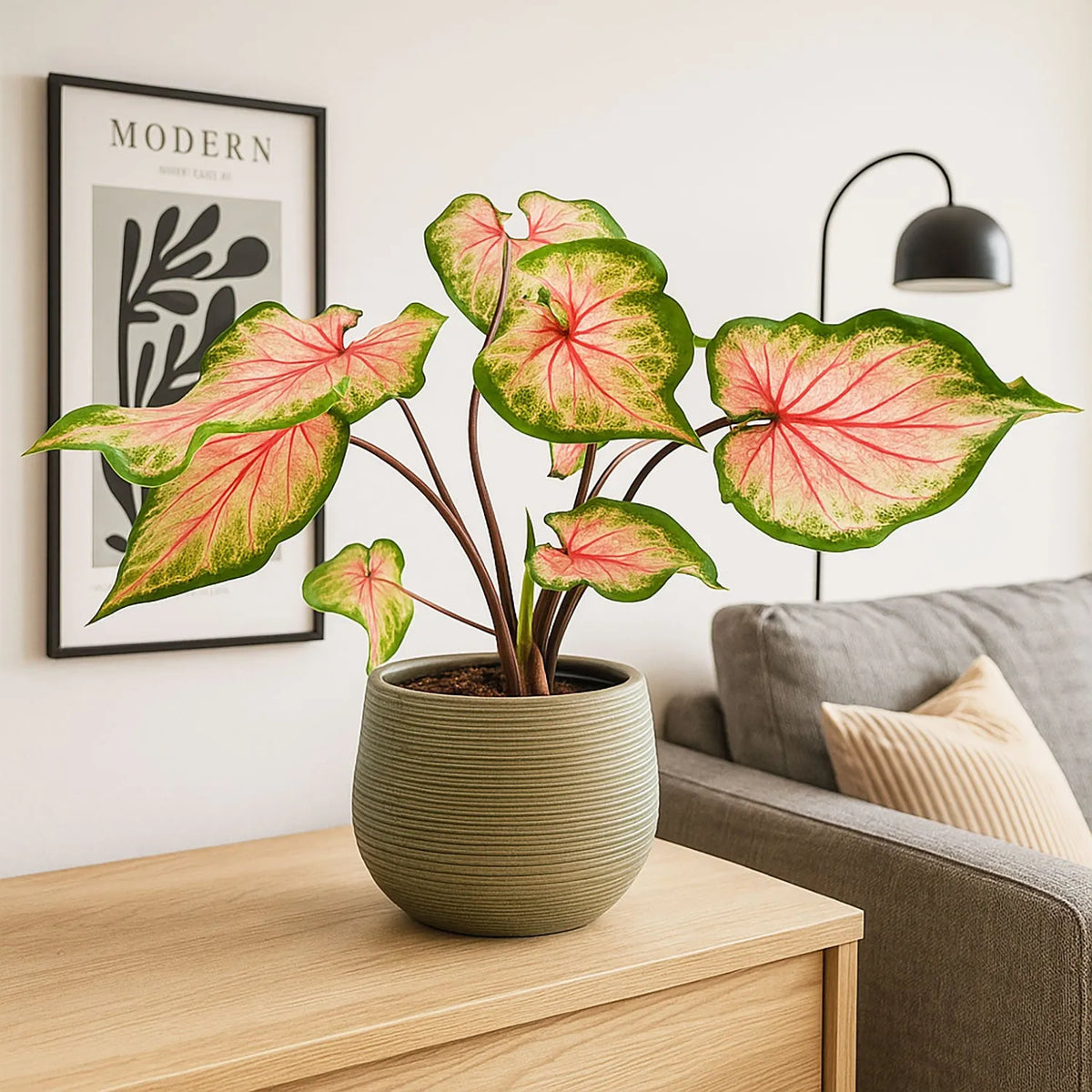
Caladium bicolour, often simply called Caladium or Angel Wings, is the most widely grown and recognised species of the Caladium genus, belonging to the Araceae family. Native to the tropical rainforests of South America, especially Brazil, this species has been cultivated for centuries for its decorative foliage.
What makes C. bicolour so remarkable is its diversity. From this species, hundreds of cultivars have been developed, offering leaves in a spectacular range of colours – from pure white and soft pink to vivid red and green combinations. The heart- or arrowhead-shaped leaves are thin, papery, and semi-translucent, often patterned with contrasting veins, freckles, or mottling. No two cultivars are alike, making this species endlessly varied and collectable.
In its natural habitat, Caladium bicolour grows in the shaded understory, thriving in warmth and humidity. As a cultivated plant, it is prized for bringing tropical drama to shaded patios, conservatories, and indoor displays. Mature plants typically reach 40–60 cm in height, with tubers producing a clump of large, colourful leaves each season.
Caladium bicolour – Care Guide
Light
Prefers bright, indirect light indoors. Outdoors, it thrives in partial or dappled shade. Too much direct sunlight will scorch the delicate leaves, while insufficient light may cause colours to fade.
Watering
Keep the soil consistently moist during the growing season (spring to early autumn). Water when the surface begins to dry, ensuring good drainage to prevent tuber rot. During dormancy in winter, drastically reduce watering or stop altogether until new shoots emerge in spring.
Temperature and Humidity
-
Temperature: Thrives in 18–26°C. Protect from draughts and avoid exposure below 15°C.
-
Humidity: Requires high humidity. Mist leaves regularly or use a humidifier to prevent crispy edges. Ideal for terrariums, bathrooms, or warm conservatories.
Soil and Potting
Use a rich, well-draining peat-free compost, blended with perlite or orchid bark to improve aeration. Plant tubers shallowly, just beneath the soil surface, in spring. Repot annually to refresh the soil at the beginning of the growing season.
Feeding
Apply a balanced liquid fertiliser every 2–3 weeks during the growing season. Stop feeding once the leaves begin to die back in autumn.
Growth and Dormancy
-
Growth: Tubers produce multiple large, heart-shaped leaves in a variety of colours.
-
Dormancy: In late autumn, foliage dies back as the tubers rest. Store tubers in their pot with minimal moisture, or lift and store in a cool, dry place until spring.
Pruning and Maintenance
Remove yellowing or fading leaves at the base. Do not cut healthy leaves, as they provide energy for the tuber.
Common Issues
-
Leaf scorch: Caused by direct sun exposure.
-
Crisping edges: From low humidity or irregular watering.
-
Yellowing leaves: Often a sign of overwatering or poor drainage.
-
Pests: May attract thrips, aphids, or spider mites. Inspect regularly.
Background and Benefits
Caladium bicolour is the foundation of nearly all cultivated caladium varieties grown worldwide. Its extraordinary variation in leaf pattern and colour makes it one of the most versatile ornamental foliage plants. Beyond its aesthetic appeal, it brings a sense of tropical richness and artistic flair to any setting.
✅ Quick Care Summary
-
Light: Bright, indirect indoors; shaded outdoors
-
Water: Moist during growth; minimal in dormancy
-
Temperature: 18–26°C; avoid below 15°C
-
Humidity: High; mist regularly
-
Soil: Rich, well-draining peat-free compost
-
Feed: Every 2–3 weeks in spring/summer
-
Growth: 40–60 cm; heart-shaped colourful leaves in a wide range of cultivars
Shipping Notes
- Free Standard Shipping on $100+ Orders to the USA.
- Except Preorder products are shipped in 48 hours.
- Delivery to the USA:
- Standard Shipping : 3-10 business days
- If time is of the essence, please consider selecting expedited delivery for faster service.
Exchange/Return Notes
- We offer a 30-day return/exchange service after receiving.
- Final sale items are not eligible for returns or exchanges.
- To process your return/exchange, please contact us at [email protected]
- Please click here for more details>>> Return & Exchange Policy