SKU: 199302959
parlour palm house plant

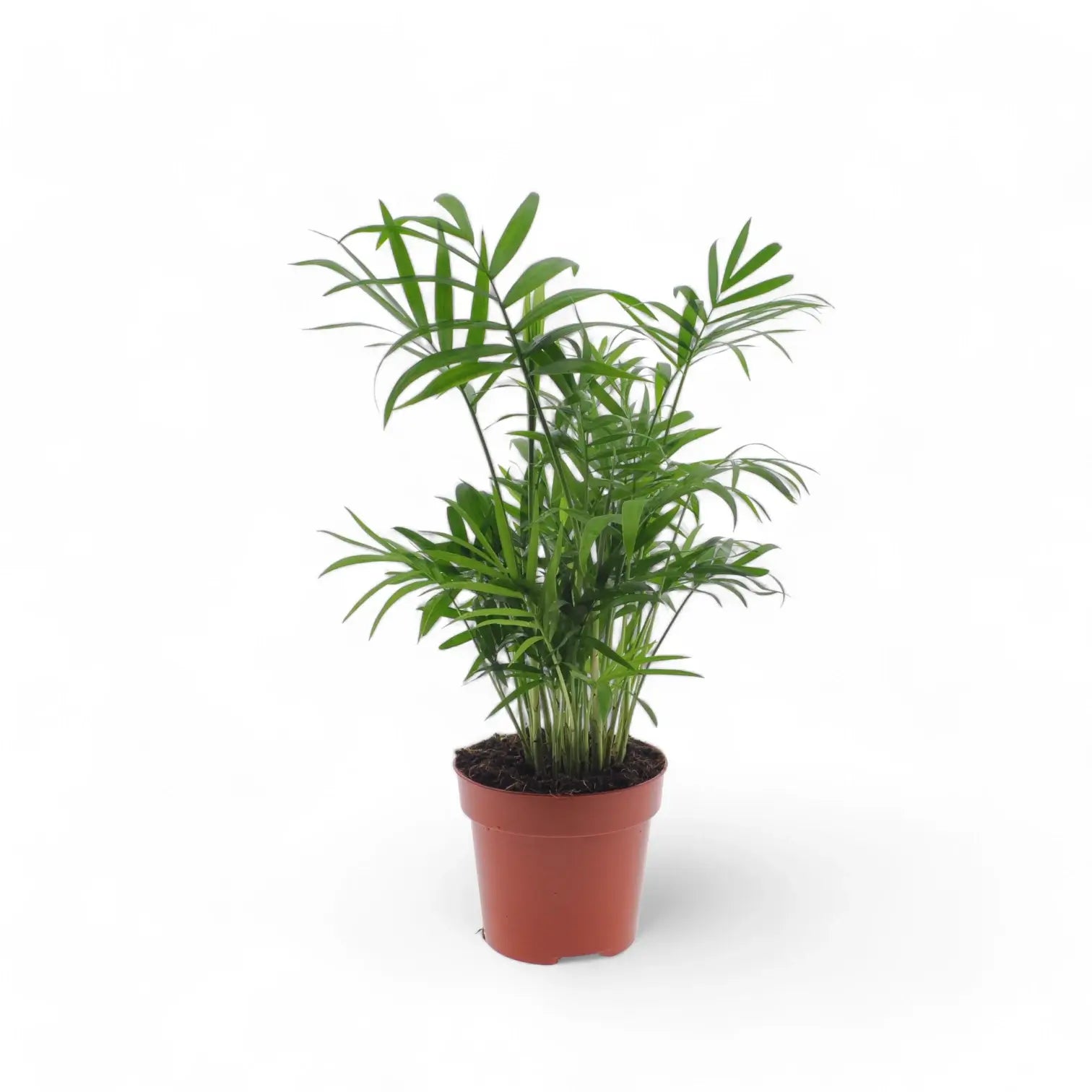
parlour palm house plant Chamaedorea elegans

Sale price$20.92 Regular price$23.24
Save 10%

Pay in installments of $5.81 with ShopPay, AfterPay and Klarna

Shipping Estimate
USA
  • USA
  • CAN

Ships within 48 hours · Estimated delivery Jul 15 - Jul 20

Promo Codes Available:

For Your Every Summer RSVP, with Code: SUMMER15

Description

parlour palm house plant Chamaedorea elegansChamaedorea elegans Chamaedorea elegans, widely known as the Parlour Palm, is a small understory palm with fine, feathered fronds and a naturally compact habit. Slender green stems carry narrow leaflets along arching fronds, giving the plant a soft layered outline as it matures. Several young plants are often grown together in one pot to create a fuller crown from an early stage. Growth is slow and steady: older stems gain height gradually while fresh

Chamaedorea elegans

Chamaedorea elegans, widely known as the Parlour Palm, is a small understory palm with fine, feathered fronds and a naturally compact habit. Slender green stems carry narrow leaflets along arching fronds, giving the plant a soft layered outline as it matures.

Several young plants are often grown together in one pot to create a fuller crown from an early stage. Growth is slow and steady: older stems gain height gradually while fresh fronds rise from the crown. Indoors, Chamaedorea elegans stays manageable for many years when the root zone remains lightly moist, airy, and protected from cold stress.

Fine fronds and parlour palm habit

  • Small palm with fine, pinnate green fronds and a soft upright crown
  • Slow-growing container plant, often grown as several young stems together
  • Native to Mexico and Central America, where it grows as an understory palm
  • Adapts to bright indirect light and lighter shade indoors
  • Pet-friendly according to ASPCA listings for cats and dogs

Growth habit, origin and frond detail

Chamaedorea elegans belongs to the palm family, Arecaceae. Its native range extends from Mexico into Central America, where it grows below taller vegetation. Its slim stems, shade-tolerant fronds and steady response to filtered indoor light match that understory habitat.

The fronds are pinnate, with narrow leaflets arranged along a central axis. Each new frond adds height and width gradually, so the plant develops by layering fresh leaves above older ones. Mature plants may flower under good conditions, producing small yellowish inflorescences, although indoor flowering depends on plant age, light and overall growth.

Keeping Chamaedorea elegans evenly green

  • Light: Keep in bright indirect light to light shade. Direct midday sun can scorch the thin leaflets.
  • Watering: Allow the top layer to partly dry before the next thorough watering. Keep the root ball lightly moist, then let excess water drain fully.
  • Substrate: Use a loose houseplant mix with good drainage. Fine bark, coco fibre, perlite, or mineral particles help keep oxygen around the roots.
  • Temperature: Hold temperatures above 15°C for steady indoor growth. Protect from cold draughts, cold windowsills, and sudden temperature drops.
  • Humidity: Average indoor humidity is usually tolerated, but dry air can increase brown leaf tips. A humidifier or grouped plants can help during heated months.
  • Feeding: A diluted balanced fertiliser every 4–6 weeks in spring and summer is enough for this slow palm.
  • Repotting: Move up only once the pot is well filled with roots. Move up by one pot size and keep the stem bases at the same level.
  • Pruning: Remove fully dry lower fronds at the base. Keep cuts away from the central growing point of each active stem.
  • Warm-season outdoor placement: A sheltered, shaded position can suit it during warm weather above 15°C. Acclimate gradually and bring it indoors before cool nights return.
  • Propagation: Commercial propagation is mainly by seed. Multi-planted pots can be separated when stems divide cleanly with their own roots.

Brown tips, yellow fronds and mite checks

  • Brown leaflet tips: Often linked to dry air, irregular watering, salts in the substrate, or cold draughts. Check the watering pattern and flush the pot occasionally with clean water.
  • Yellowing lower fronds: A single ageing frond is normal. Several yellow fronds at once point to waterlogged roots, cold substrate, or depleted conditions.
  • Pale, stretched growth: Very low usable light produces weaker, looser fronds. Move the plant closer to a bright window with filtered light.
  • Fine webbing or speckled leaves: Check for spider mites, especially in warm dry air. Rinse foliage and treat early before damage spreads.

Cane clump and pruning notes

Young Chamaedorea elegans plants are often planted in groups for a fuller pot. In a shared container, stronger stems may gain more light and space while smaller stems slow down. This is a normal part of how grouped palms develop over time.

Pet safety and handling

ASPCA lists Chamaedorea elegans as non-toxic to cats and dogs. Chewed fronds can still upset sensitive stomachs, so trim damaged growth and discourage pets from grazing.

Name origin and species background

The accepted botanical name is Chamaedorea elegans Mart., in the family Arecaceae. The genus name Chamaedorea is derived from Greek elements commonly interpreted as “ground” and “gift”, referring to the low stature of many species in the genus. The species epithet elegans means elegant, matching the plant’s fine fronds and restrained growth habit.

Chamaedorea elegans shows soft feathered fronds, slender green stems and a compact palm profile.

Shipping Notes
  • Free Standard Shipping on $100+ Orders to the USA.
  • Except Preorder products are shipped in 48 hours.
  • Delivery to the USA:
  1. Standard Shipping : 3-10 business days
  • If time is of the essence, please consider selecting expedited delivery for faster service.
Exchange/Return Notes
  • We offer a 30-day return/exchange service after receiving.
  • Final sale items are not eligible for returns or exchanges.
  • To process your return/exchange, please contact us at [email protected]
  • Please click here for more details>>> Return & Exchange Policy
SKU: 199302959

Discover Niche Categories That Outsell parlour palm house plant

Top-Converting Item to Boost Your Average Order

4.1 ★★★★★
Based on 13 reviews
Sort
Highest Rating
Newest First
Oldest First
Product Reviews
R
Verified Purchase
Rich
Charlottesville, US
★★★★★ 5
Buy it.
This is not merely another guide to intensive care. Well-organized and detailed, it hits the right note between the things a beginner has to know (and probably has some idea about) and the things a beginner needs to know (but is clueless). It even includes a chapter on burnout. Recommended for everyone new to the ICU, and also everyone who has been around awhile. I’m going to get a lot of use from this text, I can already tell.
WAS THIS REVIEW HELPFUL?YesReportShare
Reviewed in the United States on June 19, 2018
W
Verified Purchase
W. Lonfrost
San Leandro, US
★★★★★ 3
A little too beginner; doesn't translate well to USA patterns of practice
Format: Paperback
The book title really says it all, it really is the BEGINNER'S guide to the ICU for junior doctors and allied health professionals - more like an introduction to important concepts rather than a guide really. The strengths of the text come from its stated purpose of being a absolute, beginner's guide to critical care. The book would be appropriate for perhaps a 4th year med student or a intern who is very early in residency w/ little ICU experience or a newly minted APP; there's little to be gained by a advanced resident, fellow or practicing physician. The chapters are very short which provide a mere grazing-the-surface of important critical care concepts - some chapters are too short to really be useful (e.g. the paltry coverage of ultrasound in crit care (p. 159) is only 10 pages including pictures). The book, editors and authors are UK-based which makes the units of measurement, choice of drugs and some practice patterns, not consistent with what is typical in the USA. For this reason I cannot recommend this text for American learners; e.g. blood glucoses are measured in mmol/L internationally, however USA, Germany use mg/dL where a normal BG in UK may be "4.4" but in the US one might consider a normal BG "80". This carries over again with concepts of ABG's and their utility in ventilator settings, respiratory emergencies and sepsis, etc. which become more confounding when using the PaCO2/PaO2 kPa instead of the mmHg used in American ICU's. When a BEGINNER is trying to learn the FUNDAMENTALS of crit care I recommend that a learner be introduced to the concepts using data measurement they are expected to utilize in practice rather than going through the mental gymnastics of doing conversions and THEN making a treatment decision. The theme of UK and USA differences continues into drug therapy. For example when covering RSI and sedation the authors discuss the utility of sodium thiopental, however this drug has not been available in the USA for many years. In addition there were some other areas where some recommended drugs did not correlate w/ typical USA patterns and others that received hardly any mention (e.g. little mention of vasopressin as an adjunct in pressor support, other paralytics in RSI such as succinyl choline, rocuronium, CCB's and BB's in atrial fibrillation). Least of all there are multiple areas where drug/device names that refer to the same agent but would confuse a beginner starting in the USA (e.g. albuterol = salbutamol, aceteminophen = paracetamol, norepinephrine = noradrenaline, Guedel = OPA etc.). Lastly, on the topic of UK vs worldwide differences the epidemiologic data mentioned refers to UK populations making it somewhat of an abstraction of the prevalence of disease in your area of practice if you're outside the UK. Which is fine, just be aware of that. The chapters, however, are well organized and majority begin with a clinical case which I find is a approach that cements concepts in learner. If anything I feel that some are much to short, even for a beginner. I'm specifically referring to the Cardiac Arrythmias chapter (p 233). There is much to cover on this topic and the 5 pages dedicated to it is simply not enough and there is no further recommended reading. And importantly, the EKG figures were switched around on p234 and p235, which again does a beginning learner a disservice. I did find the chapters dedicated specifically to ICU concepts useful such as "Fighting the Ventilator" and "Endotracheal tube and tracheostomy problems" which cover just enough ground for the trainee. Unfortunately, none of the chapters have in-text citations with little primary references - I did have some questions regarding some chapter authors recommendations and I'm unable to look up where the works cited to review the quality of evidence. There are multiple chapter authors and unfortunately this creates some redundancies. I could only find one area where there was a contradiction between authors which one author stated there is no contraindication for insertion of a NPA in setting of base-of-skull fracture (p.79) and on the next chapter another author stating that "nasopharyngeal airway is contraindicated if there is the possibility of a base of skull injury!" (p.87) - less than 10 pages apart. Again, there's no primary texts referenced and I can't confirm where the best, up to date evidence lies. In SHORT: this is a useful text to the BEGINNER who is looking to obtain a broad overview of critical care CONCEPTS. It is pretty easy to read through and simple to digest where I a motivated learner could get through the full 440 pages relatively quickly and gain a good grasp & appreciation of the concepts of critical care. The text accomplishes its goal of being a BEGINNER'S GUIDE to ICU and explicitly identifies its target audience in the title: . . . . A Handbook for Junior Doctors and Allied Professional. I do NOT recommend the text to American trainees for the reasons above (drugs, units, differences in practice patterns) and I don't recommend the text to practicioners who have more experience.
WAS THIS REVIEW HELPFUL?YesReportShare
Reviewed in the United States on January 19, 2021
J
Verified Purchase
Jose
West Palm Beach, US
★★★★★ 3
Material
Format: Paperback
The material is not the greatest very basic and it is all UK based
WAS THIS REVIEW HELPFUL?YesReportShare
Reviewed in the United States on February 2, 2020
O
Verified Purchase
Olivia Lee
Draper, US
★★★★★ 5
Good
Format: Spiral-bound
Good quality book
WAS THIS REVIEW HELPFUL?YesReportShare
Reviewed in the United States on May 8, 2026
S
Verified Purchase
shrima
Phoenix, US
★★★★★ 5
Essential Tool for Efficient and Accurate Medical Coding
Format: Spiral-bound
The book arrived in excellent condition. The pages are made with high quality paper The color coded sections makes it easy to find the information you need The Pros- Up to date user friendly features durable built. The Cons- The book is so big is it hard to carry around The book is an investment so I did not mind the price. Also in my opinion if you are taking the CPC exam it is best to have the latest version of the CPT book as most of the questions are about this section. I highly recommend the 2024 edition as some things have changed and it's best to have the up- to- date edition especially for class or testing. Tips- Use tab dividers to help you find the sections quicker during testing.
WAS THIS REVIEW HELPFUL?YesReportShare
Reviewed in the United States on April 15, 2024

recommand products