Pay in installments of $5.97 with
 ,
,
 and
and

Shipping Estimate
USA
- USA
- CAN
- USA
- CAN
Ships within 48 hours · Estimated delivery Aug 28 - Sep 2
 Promo Codes Available:
For Your Every Summer RSVP, with Code: SUMMER15
Description
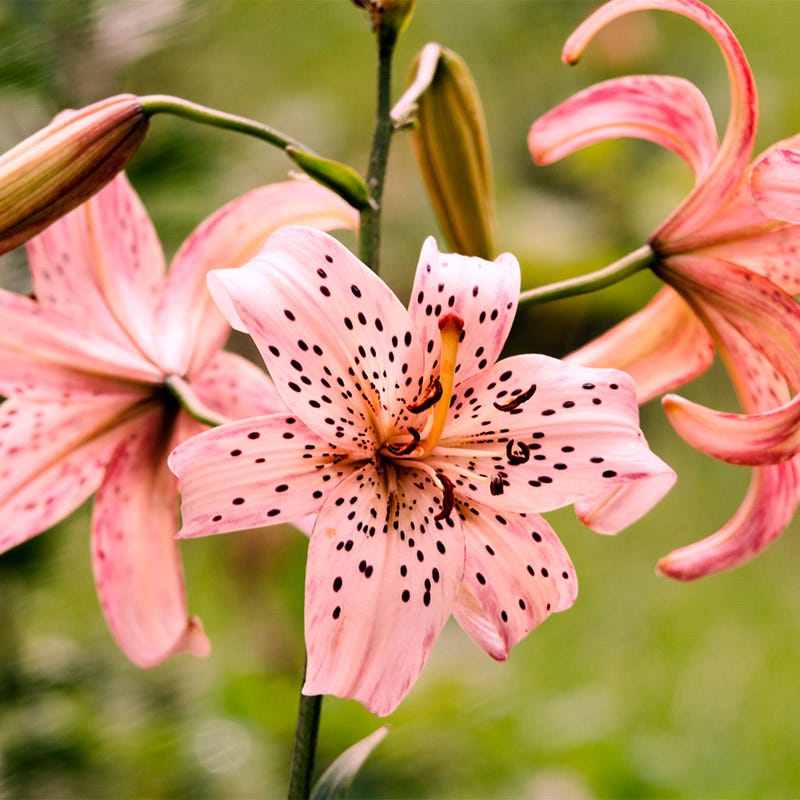
can you plant tiger lilies in the spring Pink Tiger Lily Bulbs, LiliumIn more recent years, the hybridizers have managed to create new colors in the Tiger Lily group, maintaining the large flowers, the easy culture, the perennial qualities, and even the handsome black spots of the original Orange Tiger.' The true Tiger Lilies: Don't make a common mistake, and call just any old spotted orange lily a 'Tiger Lily.' Only one group is descended from the real thing. Like most Asian species lilies, this old reliable was a
In more recent years, the hybridizers have managed to create new colors in the Tiger Lily group, maintaining the large flowers, the easy culture, the perennial qualities, and even the handsome black spots of the original Orange Tiger.'
The true Tiger Lilies: Don't make a common mistake, and call just any old spotted orange lily a 'Tiger Lily.' Only one group is descended from the real thing. Like most Asian species lilies, this old reliable was a staple in the Oriental diet for centuries. The bulbs were--and are--cooked for foods and soups. But it's not the taste that made this lily bulb world famous. It's the beautiful flowers and the ease of growing them.
The true Tiger Lily is native to Korea, but today, gardeners the world over enjoy the beautiful big flowers on strong stems that return year after year. In fact, Tiger lilies are now so common in the US, many people think they're native.
As long as you have well-drained soil, they will grow for you, perfectly perennial even in some of America's coldest climates.
This is the lily with little black 'bulbils' (baby bulbs) that form up and down the stem in the leaf axils. These little bulbs drop to the ground naturally, and spring up the next year as baby tiger lily plants. Over the years, you'll have an expanding clump.
This is the perfect no-maintenance lily to add to your flower border or particularly, your wildflower meadow. A few towering lilies over a wild meadow in full bloom is a wonderful mid-summer sight.
Growing Lilies: True lilies (which don't include daylilies and others which are not in the genus Lilium) are easy to grow today, and more popular every season. Since they are upright and take practically no space at ground level, it's easy to plant lilies between other established perennials and shrubs. Most can also tolerate some shade, which adds versatility for the gardener. There are many lily groups, but to keep it simple, we will consider only a few of the main types that are important to gardeners. Each lily we ship includes complete instructions for planting. So don't hesitate. You can easily bring the spectacular beauty of lily flowers to any summer meadow or garden.
'Wild' Lilies or 'Species' Lilies These are the true wildflowers from the world over. They are the ones all the glamorous hybrids are descended from. We're fortunate to have some of these botanical treasures on our list of lilies this season.
Oriental Hybrid Lilies are the now famous, very fragrant ones with large, flattened flowers such as red Stargazer and white Casa Blanca. These are the ones now so popular in the floral trade, but are also very easy to grow. They bloom from mid-summer through early fall. Most have very large, outward-facing, fragrant flowers.
Asiatic Hybrid Lilies are today's largest group of garden lilies, quite easy to 'naturalize'. This growing group of lilies was begun by hybridizers in the US, and were first called 'Mid-Century Hybrids.' Compared to Orientals, the Asiatic Hybrid lilies bloom earlier (early to mid summer), the plants are shorter, the flowers a bit smaller, and most blooms are upward-facing and star-shaped. Some of the most famous Asiatic Hybrids are yellow 'Connecticut King,' and the famous red, 'Gran Paradiso.'
Tiger Lilies. This group is led by the famous old orange wild lily, which used to be called Lilium tigrinum. Botanists have changed that to Lilum lancifolium, but that doesn't stop most people (including us) from using the old name 'tigrinum.' From the original orange, the hybridizers have created new colors from white to pink. All have the large flowers, black spots, and tough perennial qualities of the original. (By the way, don't call any old spotted orange lily 'tiger lily'. This one is the real thing, and no lily common name is more mis-used.)
Trumpet Lilies Sometimes called 'Aurelian Hybrids' or other names, the large, tall trumpet lilies are all descended from The Regal Lily, a white wild species lily from China. All are incredibly fragrant, and wonderful for cutting. They grow tall, and often need staking, since a well-grown stalk can have over 15 huge flowers.
Shipping Notes
- Free Standard Shipping on $100+ Orders to the USA.
- Except Preorder products are shipped in 48 hours.
- Delivery to the USA:
- Standard Shipping : 3-10 business days
- If time is of the essence, please consider selecting expedited delivery for faster service.
Exchange/Return Notes
- We offer a 30-day return/exchange service after receiving.
- Final sale items are not eligible for returns or exchanges.
- To process your return/exchange, please contact us at [email protected]
- Please click here for more details>>> Return & Exchange Policy