SKU: 22897395356
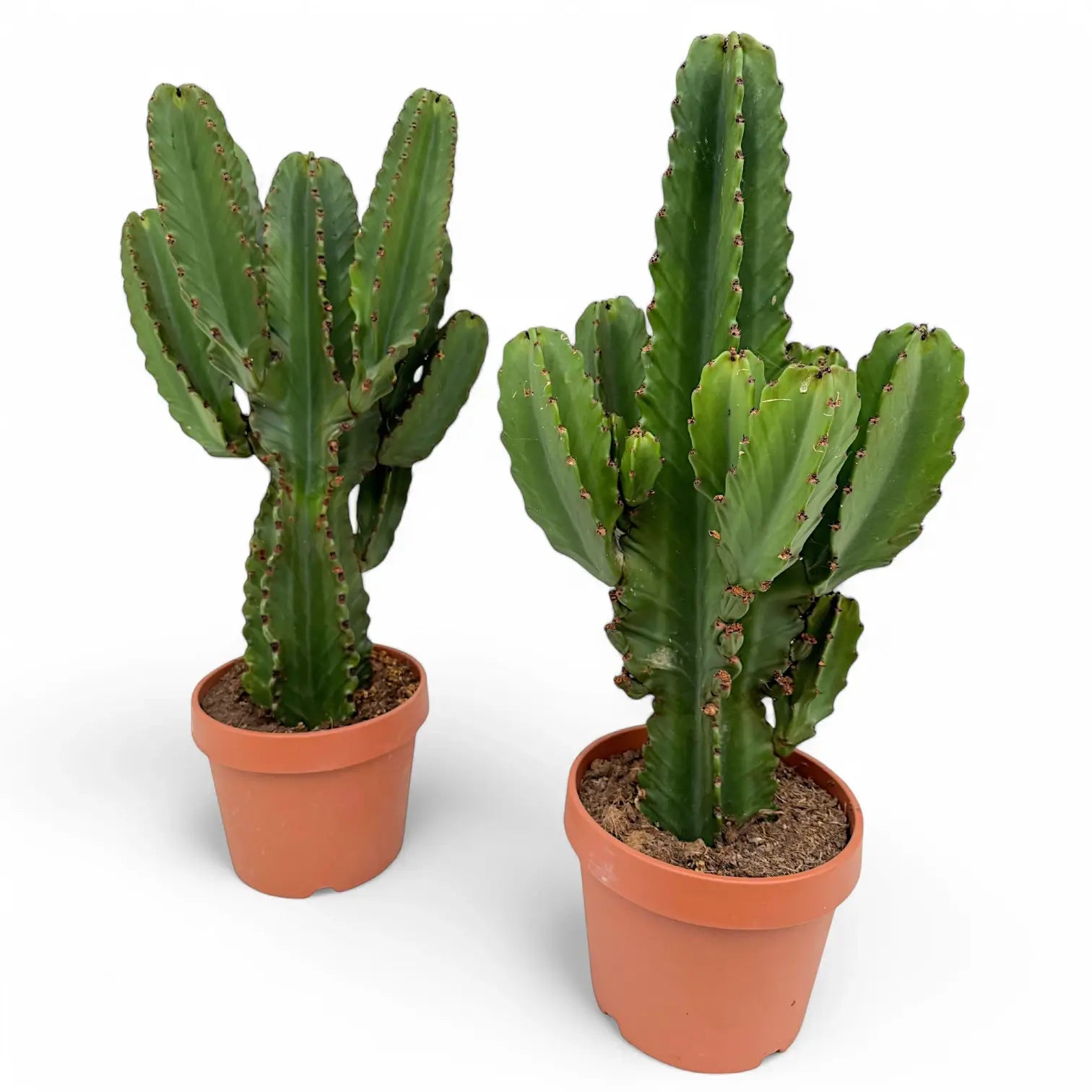
euphorbia hanging plant

euphorbia hanging plant Euphorbia ingens

Sale price$26.84 Regular price$29.82
Save 10%

Pay in installments of $7.46 with ShopPay, AfterPay and Klarna

Shipping Estimate
USA
  • USA
  • CAN

Ships within 48 hours · Estimated delivery Jul 20 - Jul 25

Promo Codes Available:

For Your Every Summer RSVP, with Code: SUMMER15

Description

euphorbia hanging plant Euphorbia ingensEuphorbia ingens Euphorbia ingens is a tree forming succulent Euphorbia with thick green stems, shallow ribs and small paired spines along the ridges. Young plants often begin as upright columnar stems, then branch gradually with age into the candelabra like form this species is known for. The green stems store water and carry out most of the plants photosynthesis, while the leaves remain small and short lived. In containers, Euphorbia ingens grows

Euphorbia ingens

Euphorbia ingens is a tree-forming succulent Euphorbia with thick green stems, shallow ribs and small paired spines along the ridges. Young plants often begin as upright columnar stems, then branch gradually with age into the candelabra-like form this species is known for.

The green stems store water and carry out most of the plant’s photosynthesis, while the leaves remain small and short-lived. In containers, Euphorbia ingens grows much smaller than habitat trees, but it can still become a tall, heavy specimen that needs strong light, a stable pot and a fast-drying root zone.

Euphorbia ingens stem features

  • Growth habit: Succulent shrub or tree species with thick branching stems and a candelabra-like form.
  • Stem detail: Green ribbed stems with shallow angles and small paired spines along the ridges.
  • Leaves: Small, temporary leaves may appear near fresh growth, but the stems remain the main photosynthetic surface.
  • Container growth: Slow to moderate indoors, with height, weight and branching increasing gradually over time.
  • Plant family: A member of Euphorbiaceae; like other Euphorbias, it produces milky latex and cyathia.

Euphorbia ingens origin and dryland growth

Euphorbia ingens is native from Eritrea to South Africa, where it grows as a succulent tree in seasonally dry tropical habitats. Mature wild plants can become large branching trees, while indoor plants develop more slowly because light, root space and warmth are limited in containers.

The stems hold stored water, while the roots need oxygen after each watering. A mineral-heavy substrate, strong light and full drying between waterings keep the base firm and the new stem sections compact.

Care for Euphorbia ingens

  • Light: Place in very bright light with direct sun where possible. Acclimate gradually after darker transport, shade-grown conditions or lower-light periods.
  • Watering: Water thoroughly, then let the substrate dry almost completely before watering again. Longer dry intervals are normal when light and warmth are lower.
  • Humidity: Average indoor humidity is suitable. Airflow and a dry stem surface are more important than high humidity.
  • Substrate: Use a mineral-heavy succulent mix with pumice, lava rock or coarse grit so the root zone drains quickly.
  • Pot choice: Choose a stable pot with drainage holes, as tall stems can become top-heavy as they gain height.
  • Temperature: Keep warm, ideally above 18 °C during active growth, and avoid cold, wet conditions below about 10 °C.
  • Repotting: Repot only when the plant is root-bound, unstable or drying too quickly for its pot size. Use a heavier container as stems gain weight.
  • Placement: Give the plant a bright, open position with enough space around the spines and room for gradual height increase.
  • Feeding: Feed lightly during active growth so new stem tissue stays firm and compact.
  • Growth rate: Slow to moderate indoors, depending on light, warmth, root space and watering intervals.
  • Pruning and grooming: Cut only when necessary for damage, size control or unsafe growth. Wear gloves, use clean tools and let cut surfaces callus before moisture reaches them.
  • Propagation: Stem cuttings are possible, but the latex, size and rot risk make this a careful job. Let cut sections callus fully before potting into a dry mineral mix.
  • Semi-hydro and mineral substrates: Mineral substrates can work when oxygen stays high and the root zone dries between waterings. Constantly wet reservoirs are risky for this succulent Euphorbia.

Stem and root problems on Euphorbia ingens

  • Soft base: A soft or darkened base usually points to root or stem rot. Check drainage, remove standing water and keep the plant warmer and drier.
  • Leaning stems: Leaning often comes from one-sided light or an unstable pot. Rotate gradually and use a heavier container if needed.
  • Pale stretched growth: Narrow, weak new stem sections usually mean light is too low during active growth.
  • Sun patches: Dry tan or brown marks can follow sudden exposure to stronger sun. Increase direct light in stages.
  • Dry scars: Firm corky marks can come from old handling damage or contact along the ribs. Spreading softness or dark wet tissue needs quick action.
  • Mealybugs: White cottony clusters can hide along ribs and spine points. Isolate the plant and clean affected areas carefully.
  • Scale insects: Check older stems and woody areas for small fixed bumps, especially near ribs and branching points.
  • Spider mites: Fine webbing, dull surfaces or tiny speckling can appear in hot, dry conditions with poor airflow.

Latex and handling safety

Euphorbia ingens contains white latex sap that can irritate skin and eyes and is toxic if ingested. Keep it away from pets and children, wear gloves when handling cut or damaged stems, and wash tools and skin after contact with sap. Rinse eyes immediately and seek medical advice if sap gets into the eyes.

Name and botanical background of Euphorbia ingens

Euphorbia ingens E.Mey. ex Boiss. was published in A.P. de Candolle, Prodr. 15(2): 87 in 1862. The genus name Euphorbia is traditionally linked to Euphorbus, physician to King Juba II of Mauretania. The species epithet ingens means huge, matching the large tree size this species can reach in its native range.

Euphorbia ingens develops thick green ribbed stems, paired spines and candelabra-like branching as it matures.

Shipping Notes
  • Free Standard Shipping on $100+ Orders to the USA.
  • Except Preorder products are shipped in 48 hours.
  • Delivery to the USA:
  1. Standard Shipping : 3-10 business days
  • If time is of the essence, please consider selecting expedited delivery for faster service.
Exchange/Return Notes
  • We offer a 30-day return/exchange service after receiving.
  • Final sale items are not eligible for returns or exchanges.
  • To process your return/exchange, please contact us at [email protected]
  • Please click here for more details>>> Return & Exchange Policy
SKU: 22897395356

Discover Niche Categories That Outsell euphorbia hanging plant

Top-Converting Item to Boost Your Average Order

4.4 ★★★★★
Based on 10 reviews
Sort
Highest Rating
Newest First
Oldest First
Product Reviews
A
Verified Purchase
Ashley
Omaha, US
★★★★★ 5
Finally, a practical parenting book!
Format: Kindle
Prior to reading this book, I didn’t feel confident in my approach to discipline. I would read parenting advice from different sources and sway back and forth from one extreme to the other—overly strict to too lenient. The approach of grace based disciple is balanced. The author recognizes that children will act like children and we shouldn’t expect them all to act like little robots. However, they still need discipline (not punishment!) for their misbehavior. She gave very practical lists of what consequences work best at each age and for each personality type, and went beyond that to say how to truly address the deeper issues associated with the misbehavior. If you are wondering about her view on spanking (because most authors take a very strong stance on this) I think this book is very beneficial no matter which camp you are in. In the appendix, the author addresses spanking in a nonjudgmental way. She gives cautions if you decide to use spanking, and gives cautions if you decide not to use it. My only criticism of this book is that one chapter talks about how we need to recognize the “home country” (personality) of each member of our household and she suggests using an assessment to determine what “country” your child is from. However, you must pay separately for the assessment and it isn’t cheap. This idea of what “country” you and your children are from is referenced again and again in the book so I feel like it should have been included in the appendix. However, this book is still worth it. Don’t let that keep you from buying it.
WAS THIS REVIEW HELPFUL?YesReportShare
Reviewed in the United States on June 29, 2018
E
Verified Purchase
E Tolentino
Pawtucket, US
★★★★★ 3
Mixed feelings
Format: Paperback
I had the opportunity to finish this book in one day of reading, while my 3 kids spent the day with grandparents. It is a very easy read, very accessible. Karis' style is very informal and she employs a lot of humor (and hyperbole), and that may be refreshing for some, though I found it distracting. I hope my criticisms will not be taken too harshly, and am certainly glad that others have found it inspiring or enlightening! We desperately need more grace based parenting in our homes and churches as we strive to undo the influence and damage of the punitive methods that have marred the face of Christian culture for so long! We need more books like this, that can reach every believing parent where they are, and inspire them to parent with the same grace and wisdom our Heavenly Father employs! All that said, this was my experience reading the book: I felt the numerous anecdotes take up valuable space and time that would be better spent digging into passages of the Word and working through practical application. I was disappointed to not find a whole lot of either. If you are well-read on child development and "alternative" methods of discipline and childrearing (from those considered to be in the "anti-spanking camp"), you will find nothing new here. I didn't care for the rebranding of the classic four temperments and promoting supplemental Family Matters products... You can easily find many free tools and information reguarding personality psychology on the internet, and you will have a much deeper understanding. But personality is a shifty thing in youth anyway, and if you are not inclined to pursue that kind of study, I promise that simply resolving to spend more unstructured time with your children, to slow down and observe them at work or play, to listen with full attention, considering their perspective before answering or judging, you will learn more than what could ever be summerized in a personality type. Pegging a child in any brand of personality typing has it's own drawbacks. It can promote unfair assumptions, lead to misunderstandings, and cause confusion when trying to understand more subtle or complex behaviors and attitudes. I appreciate her reasoning for not digging into the spanking issue in the main content of the book, setting that aside in the appendix in the back. She does a good job highlighting what gracious spanking looks like if you choose to do so. I am of a similar opinion that it is not a crucial point of doctrine and isn't always an issue of abuse or neglect either. It truly is a parent's prerogative and responisibility to consider the Word and the research and their own consience on the matter. If you do spank, follow her guidelines and you will not go wrong! I did find her characterizations of non-spankers, like myself, a bit condescending ("lazy", "fearful"), but to be fair she is addressing the extreme. If only you knew how much effort and time in research and reflection many of us sacrifice to employ better methods! It is very proactive approach and it is difficult work! I think she could have done a better job to include an objective summery of arguments in both camps for better understanding, but I really appreciate her exhorting those in both camps to avoid contention and judgement. It should never be an issue that causes us to break fellowship with a brother or sister! There is a good chapter on what she calls the "3 P's", a helpful framework for discerning the whole truth of God's word. But as far as parenting goes, personally, I didn't find anything new or particularly helpful here. I will be gifting this to a good friend/newer mom who will likely get more out of it than I did. Maybe you will too!
WAS THIS REVIEW HELPFUL?YesReportShare
Reviewed in the United States on July 24, 2018
J
Verified Purchase
J. M. Magrini
Alexandria, US
★★★★★ 5
Excellent, succinct, intro to Marxism...
Format: Paperback
Richard Wolff’s Understanding Marxism is an excellent and highly accessible populist work that introduces Marx’s critique of the inherent contradictions and inevitable problems that plague – and will continue to plague – capitalism. So, he sets out to show how the contemporary experience and understanding of the relationship between employer-employee emerge from because it is the modern manifestation of the historical distinction, which is hierarchical, oppressive and ultimately “exploitative, between master-slave and Lord-serf - Zizek, in his small text The Relevance of the Communist Manifesto, offers a unique response to this line of critique and reasoning. Above I mention the accessibility of the writing – in fact, there is a crystalline clarity to it - and if you have watched Wolff’s show or listened to his interviews, it’s as if Wolff is speaking in his usual manner that avoids academic jargon and communicates his ideas directly. This is an extremely helpful and useful guide to understanding Marx, and I am hoping many young intelligent politically-minded university students will read it – e.g., those who might be unfamiliar with Marx - because it offers a sensible corrective to the ill-informed Marxist critics on the so-called “intellectual dark web” (IDW) who repeatedly, without properly understanding Marx, scapegoat him and employ him as a bogeyman to enhance the arousal of fear and alarm with their rhetoric. Ultimately, and here I agree with Wolff, Marx might be said – bound intimately with Marx’s notion of “species being” (a term Wolff avoids) – to show why “ending exploitation [is] necessary to actualize social commitments to liberty, equality, brotherhood, and democracy” (36-37). So, instead of a utopian (end-of-history) communist or socialist model for society, Wolff, through his reading of Marx, offers what might be termed a philosophical or even commonsensical (and achievable!) model of what a more socially aware and humanly grounded workplace might look like – one that is Marxist in nature and instantiates people coming together in more “democratic, egalitarian ways.” (71). Wolff also directs readers to primary source material for further study - so, all the quotations included are traced to Marx's original writings, which readers are encouraged to seek out. To conclude, readers must be aware that this pamphlet – indeed, this is what Wolff calls it – does not attempt to serve as a broad or sprawling introduction to Marx and his writings. Thus, when ordering it, be aware that it is not akin to academic introductions and critiques of Marx such as Peter Singer’s Marx: a Very Short Introduction (OUP) or Allen Wood’s Karl Marx (Routledge).
WAS THIS REVIEW HELPFUL?YesReportShare
Reviewed in the United States on May 20, 2019
A
Verified Purchase
Agamemnon
Lowell, US
★★★★★ 5
Excellent Essay
Format: Paperback
Wolff is a one of the best people I know of to deliver a quick handbook to Marx. He delivers a master class on this complicated subject and I have long respected his views on economics and politics.
WAS THIS REVIEW HELPFUL?YesReportShare
Reviewed in the United States on December 15, 2025
C
Verified Purchase
CL
Omaha, US
★★★★★ 5
Awesome Introduction. A quick, easy read.
Format: Paperback
Very good overview and a quick little read! I was able to read this in a day, despite having ADHD. That, in my opinion, is a testament to the engaging, straight-forward writing style. I now feel well-versed enough in thd basics to read more in-depth texts. Highly recommended.
WAS THIS REVIEW HELPFUL?YesReportShare
Reviewed in the United States on October 19, 2025

recommand products