SKU: 24361629196
swiss cheese plant for sale

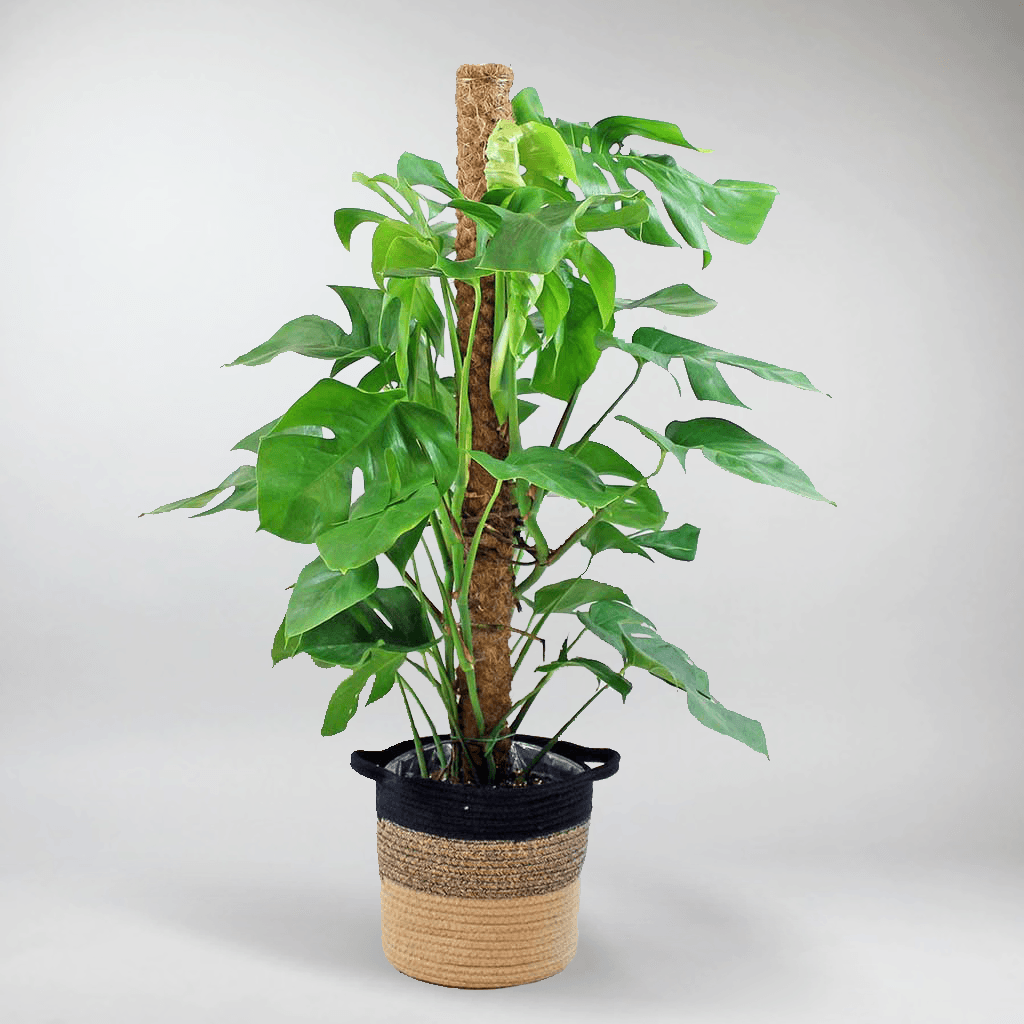
swiss cheese plant for sale Tall Swiss Cheese Plant with Moss Pole

Sale price$21.84 Regular price$24.27
Save 10%

Pay in installments of $6.07 with ShopPay, AfterPay and Klarna

Shipping Estimate
USA
  • USA
  • CAN

Ships within 48 hours · Estimated delivery Oct 21 - Oct 26

Promo Codes Available:

For Your Every Summer RSVP, with Code: SUMMER15

Description

swiss cheese plant for sale Tall Swiss Cheese Plant with Moss PoleQuick Care & Product Information: Feature Details Botanical Name Rhaphidophora tetrasperma Other Names Mini Monstera, Monstera Ginny Plant Type Hanging Plants Eventual Height 1. 2 1. 5m indoors (with support) Growth Style Climbs when trained trails when free growing Light Requirements Bright, indirect light (tolerates moderate, avoid deep shade) Watering Needs Water when top 3 5 cm of soil is dry Soil Preference Well draining mix enriched with perlite

Quick Care & Product Information:

Feature Details
Botanical Name Rhaphidophora tetrasperma
Other Names Mini Monstera, Monstera Ginny
Plant Type Hanging Plants
Eventual Height 1.2-1.5m indoors (with support)
Growth Style Climbs when trained / trails when free-growing
Light Requirements Bright, indirect light (tolerates moderate, avoid deep shade)
Watering Needs Water when top 3-5 cm of soil is dry
Soil Preference Well-draining mix enriched with perlite or bark
Feeding Monthly during spring & summer
Pet Friendly? Not pet-safe - keep away from pets and small children
Air Purifying Yes - contributes to improved humidity and a soothing environment
Included Support Comes with a moss pole for structured climbing growth
Size at Dispatch ~80 cm tall in a 19 cm pot
Care Level Easy Care

Monstera Minima – Compact, Lush, and Quite the Looker!

Monstera Minima brings sculptural elegance to any nook with its lush, split-heart leaves and climbing traits. When you add this plant to spaces, it doesn’t overwhelm… Quite simply, it’s perfect for plant lovers craving a bold focal point without taking over small spaces.

Plant Personality & Aesthetic Appeal

The glossy green leaves of the Monstera Minima look familiar? The deep, narrow splits mimic its giant cousin on a smaller scale. The slender vines weave and climb, hugging poles or trailing from elevated planters. Thankfully, you’re getting yours with a moss stick. We think that adds some vertical allure, don’t you think? Its refined leaf structure complements contemporary, Scandinavian or eclectic interiors alike. Display it as it comes, cascade it from a high shelf, or let it drape gracefully over a decorative stand. Let the plant work with you!

Growth Habit & Size Potential

This tropical viner typically reaches 1.2 to 1.5m when grown indoors. Depending on the conditions, this plant could gain up to 30cm every growing season. The Monstera Minima also climbs via aerial roots or trails when unsupported. New fenestrated leaves emerge every 4 to 6 weeks in spring and summer. You can start them in a 12cm pot, then graduate to 15 to 20cm pots as the root ball fills. Train stems on a slim moss pole (included!) or trellis to showcase its upward growth habit.

Light & Location Needs

The Monstera Minima thrives in bright, indirect light and handles moderate light. Just don’t go too dark. Too little light yields smaller leaves and fewer splits, and who wants that? The Monstera Minima also tolerates fluorescent office lighting (yes, you can breathe life into the workplace!) and can gracefully live on a covered patio or shaded balcony in temperatures above 12°C. Rotate your plant monthly to promote even leaf development on all sides!

Care Level & Maintenance Tips

The Monstera Minima only needs watering when the top 3 to 5 cm of soil dries. That’s around once a week in the warmer months. Use a well-draining, peat-rich mix with perlite or bark chips. You may also feed monthly in spring and summer with a balanced liquid fertilizer or a slow-release granule. See? That’s what makes this plant easy to care for. Just keep your Monstera Minima out of reach of pets and children. The leaves contain calcium oxalate crystals and can cause irritation if ingested.

Boost Your Wellness, Your Mind, and Your Ambience

Surrounding yourself with foliage like Monstera Minima cultivates calm and focus. Studies show that indoor greenery lowers stress hormone levels, reduces mental fatigue and enhances productivity. One might say that this is perfect for work-from-home setups or meditation corners. Its high transpiration rate also boosts local humidity, soothing dry air and supporting respiratory comfort. Place a specimen by your bedside to promote restful sleep or beside your desk for midday refocus; its gentle presence turns any room into a tranquil oasis.

Why You’ll Love the Aglaonema Arctic Lime

  • Adore You: Sculptural split leaves, dynamic texture
  • It’s the Climb: Climbing habit fits poles, trellises or hanging planters
  • Doctor: Easy-care routine
  • Don’t Call Me Angel: Enhances mood and focus
  • Best of Both Worlds: Striking yet approachable

Send the Monstera Minima On!

Check out the Monstera Minima now, both from the cart and in its physical form. It is a beauty to behold. Whether you seek a low-maintenance showpiece or a stress-easing green companion, this compact climber checks every box. Get one for your home today!

What You’ll Receive

  • Size at dispatch: 80 cm in height, and comes in a 19 cm pot
  • Care level: Easy
  • Pet safety: Toxic
Shipping Notes
  • Free Standard Shipping on $100+ Orders to the USA.
  • Except Preorder products are shipped in 48 hours.
  • Delivery to the USA:
  1. Standard Shipping : 3-10 business days
  • If time is of the essence, please consider selecting expedited delivery for faster service.
Exchange/Return Notes
  • We offer a 30-day return/exchange service after receiving.
  • Final sale items are not eligible for returns or exchanges.
  • To process your return/exchange, please contact us at [email protected]
  • Please click here for more details>>> Return & Exchange Policy
SKU: 24361629196

Discover Niche Categories That Outsell swiss cheese plant for sale

Top-Converting Item to Boost Your Average Order

4.7 ★★★★★
Based on 7 reviews
Sort
Highest Rating
Newest First
Oldest First
Product Reviews
N
Verified Purchase
Navy87Guy
Port Orchard, US
★★★★★ 5
Paleo Perfected - With the Science to Back It Up!
Format: Hardcover
After experimenting with other versions of the paleolithic-based diet, I was happy to finally come upon Paul and Shou-Ching's book, The Perfect Health Diet. It's a scholarly treatment of a complex subject, but presented in a way that's easy to follow and understand. It combines the best parts of old-time wisdom with cutting edge science to lay out a lifestyle and an approach to health that treats the body holistically. The authors systematically lay out the scientific and evolutionary basis for their approach to health. The fact that they both suffered from serious medical conditions - which were cured by taking this new approach - lends a great deal of sincerity to the writing. In a logical, orderly fashion the book walks through the basis for the diet, then tackles each of the major energy sources (proteins, carbohydrates and fats). Once that groundwork is laid, they address the hidden toxins that are present in most of the foods that comprise the Standard American Diet (SAD - a rather appropriate acronym) and help the reader understand HOW the foods contribute to poor health. Throughout the book, the authors use simple but effective "call out" boxes to highlight some key science behind the diet. They also sprinkle in just the right amount of reader testimonials to highlight how their lives were changed by following the Perfect Health Diet. Those examples are placed in just the right spots so the reader can see how the concept being discussed relates to real people in the real world. The inclusion of a Takeaway at the end of each chapter helps tie all the concepts together perfectly. My only complaint is that they use the word "diet" in the title. While they use it in the academic sense (i.e., the foods that you habitually eat to provide sustenance), too many people only think of "diet" as a restriction in your food intake to promote weight loss. I prefer to think of the authors' book as a "lifestyle", rather than simply a prescription for changing your food intake. That view is reinforced by the holistic treatment of the impacts of circadian rhythm disruption on health - a fascinating chapter that probably could have as much impact on your overall health as your choice of food! I think it's very telling that only a short chapter is actually devoted to the discussion of weight loss -- because it is based upon all of the other principles that have already been outlined. The discussion in the weight loss chapter on the scientific origins of obesity is fascinating and sobering at the same time. Overall, the Jaminets have done a fabulous job of scouring the scientific literature and tying together some popular concepts (the whole Paleo movement continues to gain steam in mainstream society) with a solid scientific underpinning that will go a LONG way toward helping people understand not just WHAT to eat (or not eat) but also WHY. I highly recommend this book to anyone who wants to understand how their body functions and how the food you eat impacts your health and longevity. It is well-written, thorough and very convincing!
WAS THIS REVIEW HELPFUL?YesReportShare
Reviewed in the United States on January 8, 2013
J
Verified Purchase
JetsYankees1971
Birmingham, US
★★★★★ 5
Really enjoyed this book and found it helpful
Format: Kindle
The first night after starting this diet I found myself eating a juicy half pound hamburger without the bread, a sweet potato with butter, a small salad with fresh lemons squeezed on top and some sparkling water. Life could be a lot worse!!!! This book was written by 2 Harvard educated scientists. It is thoroughly researched and made a ton of sense to me. I've dieted a lot in my life. I always lost weight and always gained it back. That's a pretty frustrating way to live. The weight gain and loss roller coaster is awful. Over the last 20 years I've tried Atkins, Paleo Diet, Zone Diet, Weight Watchers, Nutrisystem, South Beach Diet, Mediterranean Diet, Blood type Diet etc etc etc....They all work and they all have flaws which ultimately caused me to stray from them for one reason or another. As an example Nutrisystem is convenient but I don't want to eat that food forever. Atkins and Paleo cut out major food groups PERMANENTLY! They are way too extreme for me. Zone Diet was too much work. Weight watchers with the points was too time consuming. South Beach Diet was a nice fad but I got tired of that also. Anyway, without dragging on too much longer I want to say that the best part of the Perfect Health Diet is its SIMPLICITY! This way of eating doesn't require much thought, planning, or effort. The authors give you a list of foods to eat without asking you to eliminate carbs, fatty foods, meat or dairy. I was taught what carbs to eat and avoid and in what portions. I learned what fatty foods to eat and how often to eat them. I learned about about protein and was taught the right amounts of protein to eat. Most importantly i never feel hungry on the Perfect Health Diet! This diet WILL reduce your food cravings. You are fed well. You eat a lot of fatty foods and still lose weight. You can have dairy in the form of yogurt. You can have starches. You eat fruits and veggies along with lots of eggs, meat, and some fish. Basically you feel healthy because your body gets everything it NEEDS to make you feel GOOD! This diet is the only one I've tried that eliminates food cravings and hunger. I'd give this book 10 stars if I could
WAS THIS REVIEW HELPFUL?YesReportShare
Reviewed in the United States on June 8, 2015
C
Verified Purchase
CelticPhoenix
Boise, US
★★★★★ 5
The Best, Readable Single-Source Book On Diet and Health
Format: Hardcover
As other reviewers have said, this is really the best "Paleo 2.0 book" available. For those who haven't yet jumped on the bandwagon, eating like our ancient Paleolithic (and Mesolithic) ancestors will help us avoid many of our chronic diseases and feel good doing it! And yet, the Jaminets also take the approach that a straight meat and veggies diet is simply too low in carbs for a properly functioning immune system and proper thyroid level (carbs are required for basic immune functions like phagocytic attack and mucus secretion, as well as neurological and immune energy which feeds back to thyroid output). They like carb sources found in the paleolithic and mesolithic cultures such as tubers, fruit, dairy (for some) and low-in-antinutrient white rice. Now, to the practical: on this diet my family and I have seen an increased level of energy and overall spunk (skin shine, sleep quality, etc.) compared to when we were on, in sequence, a paleo Zone type of diet (Barry Sears' Zone diet using paleo foodstuffs), and a lower carb Mark Sisson-style primal diet. Basically, this has more saturated fat than the former and more carbs than the latter. We are as lean as we were, but feeling better and without any problems, whatsoever. For those who have chronic infections (read: "lingering health issues"), this book also explains how you can fine-tune your diet and supplementation to fight these infections, whether they are viral, fungal, or bacterial (a different approach for each). The same for athletes. My only criticism is that they only give 1 sentence to the classes of diseases which fare better avoiding starch and, instead, getting their carbs from fruit and honey (such as Ankylosing Spondylitis, Psoriatic Spondylitis, and other within the class; as well as some other diseases). While this diet/lifestyle is very easy to combine with a GAPS approach, with carbs from simply sugars and not starch, this goes unsaid and the authors tend to prefer starches for most. In short, this is the best book out there for a well-researched, unbiased view on diet and how it impacts our lives and health. I actually recommend for those who really care to read their blog, and then go buy the book for the relatives who probably won't read the blog on their own.
WAS THIS REVIEW HELPFUL?YesReportShare
Reviewed in the United States on January 17, 2013
V
Verified Purchase
V. Toniolo
Natrona Heights, US
★★★★★ 3
One of the better food, diet, and health books available, but with significant drawbacks
Format: Kindle
Paul and Shou-Ching Jaminet present the most cogent argument in favor of ancestral-style eating that I have ever read. In fact, I never really understood the logic behind Paleo until I read Perfect Health Diet. I applaud their scientific rigor and willingness to challenge dietary dogma, Paleo or otherwise. There is no question that removing all grains and legumes from one's diet is incredibly effective for people with autoimmune diseases and some other chronic, intractable health conditions. But when taking the evolutionary perspective on human diets it's also important to recognize that many cultures have thrived on grains and legumes for millennia, and humans have evolved some clever ways to extract nutrients from foods that would otherwise be toxic through the use of prolonged soaking, sprouting, and fermentation, all techniques that are very effective at reducing seed toxicity. I think that properly prepared grains and legumes can be a nutritious part of our diets, at least for those of us who do not suffer from autoimmunity. Stephen Guyenet has written excellent posts on legumes (wholehealthsource.blogspot.com/2013/11/beans-lentils-and-paleo-diet.html) and grains (wholehealthsource.blogspot.com/search/label/lectins). I also wish that the Jaminets had delved a little bit deeper into the subject of fatty fish from a sustainability standpoint. They recommend that we eat fatty fish, but make no mention of seafood sustainability and the importance of avoiding farmed fish, especially farmed (aka "Atlantic") salmon. Farmed fish are fed soy, corn, and pellets made of smaller fatty fish like anchovies and sardines. Entire small fish fisheries off the coast of Western South America are being destroyed in order to feed our hunger for farmed salmon, while we have plenty of small fatty fish we can eat (but choose not to) here on the west coast of North America (herring, sardines, anchovies, etc.). I bet that the fat profile (3:6 ratio) of farmed salmon is not nearly as good as that of wild salmon and smaller cold water fish. That said, I highly respect and follow their writing and will continue to look forward to their excellent work.
WAS THIS REVIEW HELPFUL?YesReportShare
Reviewed in the United States on January 28, 2014
J
Verified Purchase
Jean
Phoenix, US
★★★★★ 5
Understanding and Making the Best of Our Emotions
I am honored to write a review on this book, as I am heartfully thankful for how my mind was opened to a better consciousness of emotions. It was amazing to realize that our emotions are not an innate part of us, but have been established from interactions with others, especially early in our life by learning from our parents and siblings. Learning emotions is a part of our thinking process. With this knowledge, my approach to emotions has fundamentally changed. Emotions are how we react and how we perceive truth. Emotions become a part of who we are and how others perceive us. The book enlightened my perception and gave me a whole new way of viewing myself and how my emotions may not have matured. With this understanding, the book gives us advice on how to learn to improve (mature) our emotions. First by knowing and followed by determination to learn. The presentation of methods to make improvements with planning and accountability to oneself gives hope and is reassuring. We can learn to mature our emotions. When we have achieved our goals of self-emotional maturity, the book further has methods to share with others (especially family) to bring us together in a positive open way. This book has been a real eye-opening to me. I recommend the reading of this book to spread this awareness. A positive way forward with means to achieve a better life. The book is very thorough and provides documented ways to do the planning and accountability to accomplish goals. Always thinking positively. My thanks to the Author.
WAS THIS REVIEW HELPFUL?YesReportShare
Reviewed in the United States on September 30, 2025

recommand products