SKU: 25674358306
planting jade beans

planting jade beans Jade Green Bean

Sale price$21.28 Regular price$23.64
Save 10%

Pay in installments of $5.91 with ShopPay, AfterPay and Klarna

Shipping Estimate
USA
  • USA
  • CAN

Ships within 48 hours · Estimated delivery Oct 26 - Oct 31

Promo Codes Available:

For Your Every Summer RSVP, with Code: SUMMER15

Description

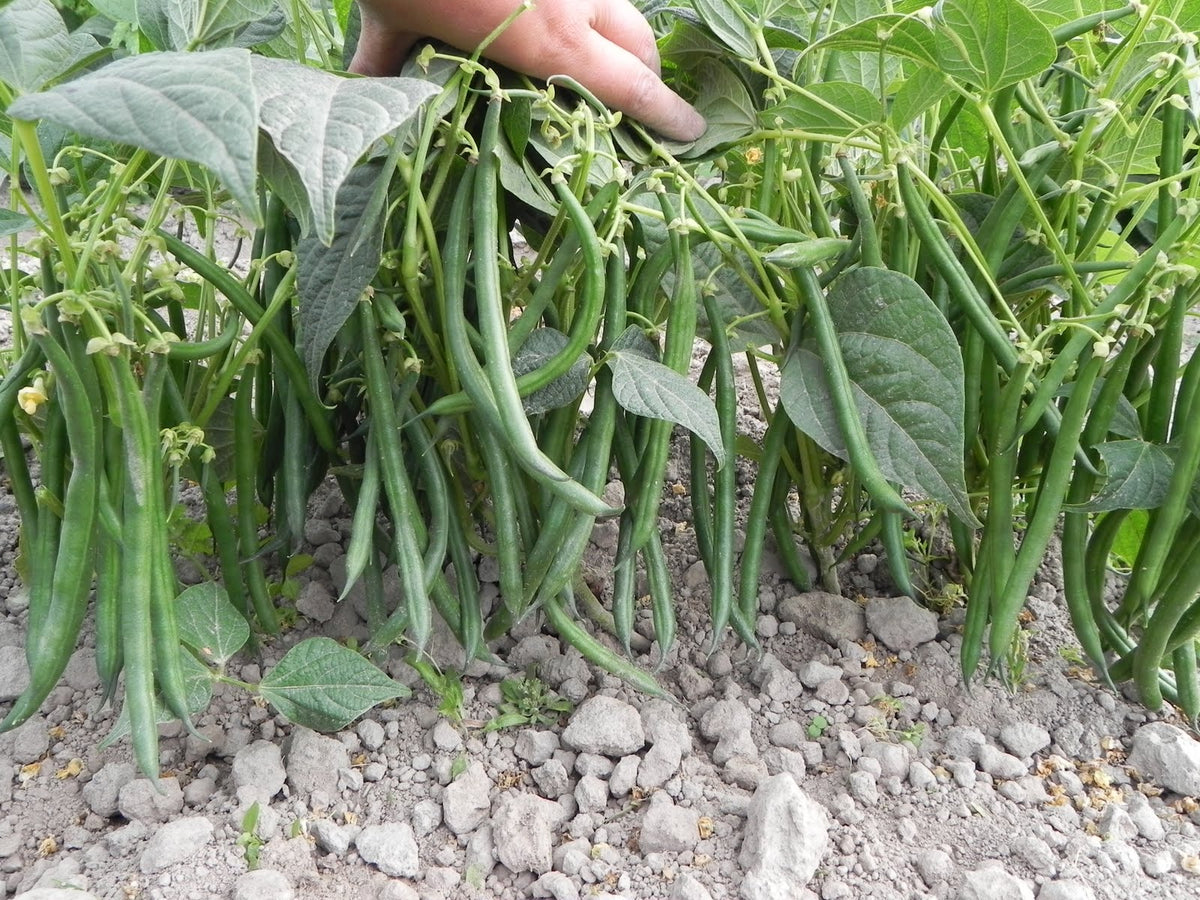
planting jade beans Jade Green BeanJade Green Bean is a top tier variety known for its exceptional flavor, smooth texture, and robust plant growth. This variety produces high quality slender 6 7 inch snappy dark jade green beans! The plants are highly productive, offering an abundant harvest of long, straight pods that are easy to pick and require minimal care. These delicate beans are made to be shown off! Jade beans rarely curl or curve and are sweet for snacking right off the bush.

Jade Green Bean is a top-tier variety known for its exceptional flavor, smooth texture, and robust plant growth. This variety produces high-quality slender 6-7-inch snappy dark jade-green beans! The plants are highly productive, offering an abundant harvest of long, straight pods that are easy to pick and require minimal care. These delicate beans are made to be shown off! Jade beans rarely curl or curve and are sweet for snacking right off the bush. Whether grown in the garden or containers, this variety thrives in various conditions and is known for its impressive yield. The beans maintain their vibrant color and texture making them a favorite in stir-fries, salads, or simply steamed. With their consistent performance, delicious taste, and ease of care, Jade Green Beans are a must-have for any gardener seeking a reliable, high-quality green bean variety.

Also Known As: Jade Bean, Jade 2 Bush Bean, Jade Snap Bean, Jade Stringless Bean, Jade Green Bush Bean.

Plant Name: Bean, Jade
Latin Name: Phaseolus vulgarus
Days to Germinate: 6-10
Days to Harvest: 55
Plant Height: 18 - 24 Inches
Spread: 12 - 18 Inches
Growth Habit: Bush
USDA Zones: 3-11
Lifespan: Annual
Brand: TomorrowSeeds
Sunlight: Full Sun, Partial Shade
Pollination: Heirloom, Open-Pollinated
GMO: No
Fungicide-Treated Seeds*: No
Seeds Packed For**: 2026
*Fungicide-treated seeds protect the seedlings from diseases until they are up and growing. Do not eat treated seeds.
**Seeds are freshly packed for the growing season of the year listed. Seeds are still viable beyond pack date. Store in a cool and dry location such as the refrigerator or basement to best preserve germination rates.


Planting Instructions:

Soil Preparation:

Choose an area with heavy, well-draining soil that receives at least 6 hours of sunlight each day. Remove weeds, large rocks, and litter from the planting area. Leave small weeds and dead grass, they will enrich the soil when turned under. Spade or till the soil 8-12 inches deep. Loosening the soil will help the plant establish strong roots.

Plants grow best in soil with lots of organic matter. You may optionally add fertilizer or organic material such as compost, leaves, or rotted hay to mix into the soil at this point. For small gardens, scatter 2-3 tablespoons of a low-nitrogen fertilizer evenly and work into the top 2-3 inches of soil for each hill or 2 foot by 2 foot planting area. For larger gardens, scatter 2-3 pounds of a low-nitrogen fertilizer for each 100 square feet of planting area. Work fertilizer or organic material into the soil and leave the surface smooth.

Form rows of soil beds 4-6 inches high and at least 18 inches apart. This formation of ridges will help with drainage.

Planting:

Green beans grow best in temperatures between 65F-85F. Direct-sowing is recommended. Plant green beans in the spring after all danger of frost has passed and the soil temperature reaches at least 60F. For fall crops, direct sow seeds outdoors 7-9 weeks before the first frost. To plant, make holes 1 inch deep and spaced 4 inches apart down the rows of raised beds. Plant 1 seed per hole. If choosing to thin to the strongest plant, plant 2-3 seeds per hole, determine the strongest and healthiest plant, then remove all other plants, narrowing to a single plant per hole. Cover seeds thinly with soil and water after planting.


Planting Depth: 1 inch
Within-Row Spacing: 4 inches
Between-Row Spacing: 18-24 inches


Care During the Season:

Watering: Water the plants deeply, soaking the soil to a depth of 6-8 inches, once a week. If there is no rainfall, water 2-3 times a week. Water especially during flowering and pod formation. Sandy soils may need to be watered more often than heavy clay soils. Mulching around plants can help retain moisture.

Weeding: Keeping plants weed-free improves production. If plowing or hoeing, do not dig deeper than 1 inch to prevent from cutting the feeder roots.

Fertilizing: Once plants start forming pods, you may optionally apply 2 tablespoons of a low-nitrogen fertilizer around each hole, or 1-2 pounds per 100 square feet, without letting the fertilizer touch the plants. Water plants after fertilizing.

Insecticides: Insecticides may be used to protect plants. Bt-based insecticides and sulfur are organic options that can be used for prevention. Sulfur also has fungicidal properties and helps in controlling many diseases. Before using a pesticide, read the label and follow cautions, warnings and directions.

Diseases: If spots or mold appear, treat plants with an approved fungicide. Neem oil, sulfur, and other fungicides may be used. When using fungicides always follow label directions.

Harvesting:

Green Beans can be harvested when the pods are firm, well-filled, and still tender, but before they become too mature and tough, about 50-60 days after planting. For the best flavor and texture, harvest green beans when they are young and the seeds inside have not yet fully developed. The beans should be bright and crisp, and the pods should snap easily when bent. To harvest, gently pick the beans by hand or use garden shears to cut the stem, leaving the pod intact. Be sure to harvest regularly, as this encourages the plant to continue producing more beans. If beans are left too long on the plant, they can become tough and stringy. Green beans can be eaten fresh, frozen for later use, or preserved through canning.

Shipping Notes
  • Free Standard Shipping on $100+ Orders to the USA.
  • Except Preorder products are shipped in 48 hours.
  • Delivery to the USA:
  1. Standard Shipping : 3-10 business days
  • If time is of the essence, please consider selecting expedited delivery for faster service.
Exchange/Return Notes
  • We offer a 30-day return/exchange service after receiving.
  • Final sale items are not eligible for returns or exchanges.
  • To process your return/exchange, please contact us at [email protected]
  • Please click here for more details>>> Return & Exchange Policy
SKU: 25674358306

Discover Niche Categories That Outsell planting jade beans

Top-Converting Item to Boost Your Average Order

4.3 ★★★★★
Based on 5 reviews
Sort
Highest Rating
Newest First
Oldest First
Product Reviews
H
Verified Purchase
Harrison Carter
Draper, US
★★★★★ 5
Long lasting
Size: 12 Pack, Color: Optic Yellow
The best balls on the market, they break after about 10 hours of play, so great value!
WAS THIS REVIEW HELPFUL?YesReportShare
Reviewed in the United States on March 25, 2026
A
Verified Purchase
Andy Bui
Lake Worth, US
★★★★★ 4
Great Outdoor Pickleballs for Practice and Games
Size: 6 Pack, Color: Multi
These pickleballs have been great overall for outdoor play. The colors are bright and easy to see on the court, which is especially helpful during evening games or when playing on darker surfaces. They have a consistent bounce and feel durable compared to some cheaper pickleballs I’ve tried before. I also like that they fly pretty true and don’t wobble too much during rallies. They work well for both casual games and more competitive practice sessions. The balls feel solid off the paddle and provide a good balance of speed and control. The only reason I’m giving 4 stars instead of 5 is because a couple of the balls started showing small cracks after extended outdoor use on rough courts. They still lasted longer than many other brands, but I expected slightly better durability considering the price. They can also feel a bit harder than some softer outdoor balls, especially in colder weather. Overall though, these are reliable pickleballs and definitely a good choice for outdoor play. I’d buy them again for practice and recreational matches.
WAS THIS REVIEW HELPFUL?YesReportShare
Reviewed in the United States on May 6, 2026
R
Verified Purchase
Reader
Lowell, US
★★★★★ 5
The best outdoor pickleballs.
Size: 12 Pack, Color: Optic Yellow
These pickleballs are much cheaper than found in stores. Great quality. Rates at the top when researching the best outdoor pickleballs. This a no brainer, a must buy if you play the game. Well packaged. Fast delivery. The best price!
WAS THIS REVIEW HELPFUL?YesReportShare
Reviewed in the United States on May 2, 2026
C
Verified Purchase
CE
Carnegie, US
★★★★★ 5
Good quality
Size: 3 Pack, Color: Optic Yellow
These are really good quality. The color is easy to see on the outdoor court, especially when the sun is bright. Definitely has good bounce to them.
WAS THIS REVIEW HELPFUL?YesReportShare
Reviewed in the United States on May 28, 2026
T
Verified Purchase
Trevor & Tiffany G
Los Angeles, US
★★★★★ 5
Franklin X-40 vs. Dura Fast 40 (vs. Onix)
Size: 12 Pack, Color: Optic Yellow, Size: 12 Pack, Color: Optic Yellow
Review order: Review summary (quick read) Review update (4-13-2021) Full review (long read) Summary: This review might save you a lot of time researching balls, but here's the summary if you don't want to read the full review... For 4.0+ play consider the Dura Fast 40 when preparing for certain tournaments, but expect only about 2 games per ball, which is quite annoying in my opinion... for 95% of players, definitely go with the Franklin X-40 (except when preparing for a Dura only tournament of course). If you just want the ball to last and last year after year and don't care at all about egging or quality of play consider the much softer and much slower and much bouncier Onix ball. The Onix ball is so soft that I can't recommend it for typical play, but it is actually an excellent choice when introducing new players to the game and it is often the preferred ball in 65+ play if mobility becomes a common issue because extra bounce = extra time to get there, but in my area many older players seem to play the X-40 just fine. * * * * * * * * * * * * * * * * * * * * * * * * Update: 4-13-2021: Popularity: Almost everyone in my area is playing the Franklin X-40 in every park. I finally saw a Dura in play yesterday, but it's been a long time! Outdoor tournaments in my state are now about 60% X-40 and about 40% Dura (Washington), so even in tournament play the Dura seems to be going out pretty quick. Seasonal durability of X-40: for the first year I don't think my group cracked a single X-40 (despite having a faster paced game), but using that same batch of balls this Spring, they've all been dropping like flies so now my 1 year old batch of X-40's probably isn't much more durable than brand new Dura's (very annoying to deal with those cracks). I just bought new X-40's yesterday and I'll be discarding the few X-40's that are left from last year when the new stock arrives. It will be new X-40's for me once a year from now on assuming quality doesn't slide... fresh manufacturing is apparently very important, so hopefully Franklin will keep their runs moderate, and maybe that's what Dura did wrong.(?) * * * * * * * * * * * * * * * * * * * * * * * * Full review: This review will focus largely on the physical & quality comparisons between the Franklin Outdoor X-40 pickleball and the Dura Fast 40 pickleball, but I'll also give a summary of my impressions from the mouth of experts and supplement also by my own amateur impressions and measurements. Dura hole specs: 16 drilled holes @ 0.325" & 24 drilled holes @ .264" Franklin hole specs: 40 drilled holes @ 0.288" Both balls have 40 holes with an average hole size of 0.288", but the Dura ball has a far more randomized hole pattern. I personally didn't notice any difference in spin characteristics or any notable advantage to the randomized hole pattern of the Dura. Franklin weight: 26g Dura weight: 25g Both balls are rotationally molded in one continuous piece so the seam is just as strong as the rest of the ball on either ball... the appearance of a seam is on the outside of the ball only but the visual molding mark is not actually separated in any way in the middle of the ball and the inside of the ball will likewise appear 100% seamless on either ball, so no true seam exists (both balls are true "1-piece" balls). The Dura ball has much smoother molding marks w/ no plastic flashing like the Franklin... this is primarily cosmetic but quality in this regard definitely goes to the Dura. Subjective color preference: in the shade I think the Dura "Neon" color looks better (see pic), but in typical full sun the green tint looks dingy on the Dura ball in my opinion, and I feel the Franklin "Optic Yellow" is a crisper color that's probably a little more visible. These are the only 2 ball colors I have to compare. I would prefer more dye to be used for a green ball so it still looks green in full sun because in my experience with disc golf and ball golf neon green is the most visible color and neon pink is good too... with these 2 options I'd pick the yellow... the green tint on the Dura is so subtle in full sun it ends up looking more like a dingy yellow rather than a green. A more apples to apples comparison would be Dura's yellow option but I'm pretty confident Franklin would win that contest also based on the notably higher translucency in the plastic used by Dura. Color: Franklin wins. Franklin X-40 country of origin: China Dura Fast 40 country of origin: Vietnam - - EXPERT INSPIRED IMPRESSIONS - - From what I've gathered, expect much longer play per dollar out of the Franklin and expect very little life out of the Dura. Dura's are supposed to be a little harder/better/faster, but they often only last a few games based on everything I've read and heard. For older players consider the Onix over either of these balls... softer balls bounce higher and hit slower which allows more time to get to the ball for longer rallies... the Onix seems to be the favorite for play in older aged groups. Based on expert advise from the "pickleball kitchen" youtube channel... Best performance award (fastest, hardest): Dura Fast 40 Best Value (also w/ great performance): Franklin Outdoor X-40 - - - except high level players should opt for the Dura due to tournament requirements (note: this observation may be outdated... check tournaments in your state to verify what local tournaments are still using the Dura in your area and which tournaments have switched to the X-40) Longest lasting, but soft and bouncy: Onix Note: I have not seen a single outdoor tournament publish the Onix as their ball. My personal recommendation for most players based on a lot of reviews and some research and a close look would be to skip the Dura and go straight to the Franklin X-40 until you're playing tournaments... if/when you advance to the level of playing serious tournament play I don't think it would take long to transition muscle memory and power from the Franklin outdoor ball to the Dura ball and a lot of money and annoyance can be saved w/ the Franklin over the very brittle Dura... Franklin X-40 balls don't last very long either (according to some... possibly old stock), but compared to the Dura it's a notable improvement strongly worth considering even if you're a quality buff like myself. Manufacturing quality: Dura wins Material durability: Franklin easily wins and Onix lasts much longer still if you don't mind a notably slower game (more similar to indoor) and more egging. Quality of play: Mixed... many elite players prefer the extra speed of the Dura, but I prefer the consistency of virtually everyone using the same ball and even more notably, I'd rather sacrifice just a little speed to get the higher consistency / predictability / reliability of an uncracked ball and I find it distracting to look for cracks all the time. Value (w/o sacrificing much): Franklin Despite the long read, I'm hoping this helps the reader save some time in selecting a pickleball, especially for players new to the game.
WAS THIS REVIEW HELPFUL?YesReportShare
Reviewed in the United States on August 15, 2020

recommand products