Pay in installments of $7.34 with
 ,
 and

Shipping Estimate
USA
- USA
- CAN
- USA
- CAN
Ships within 48 hours · Estimated delivery Oct 25 - Oct 30
 Promo Codes Available:
For Your Every Summer RSVP, with Code: SUMMER15
Description
types of monkey tail cactus Monkey Tail Cactus – Cleistocactus colademononisIntroducing the Monkey Tail Cactus, known as Cleistocactus colademononis, which is perfect for hanging baskets. This unique cactus features long, trailing stems that resemble a monkey's tail, making it a fun and eye catching addition to any indoor or outdoor space. Native to the high altitude regions of Bolivia and Argentina, the Cleistocactus colademononis gets its name "Monkey Tail" due to its long, slender, and hanging stems. Sometimes it is also
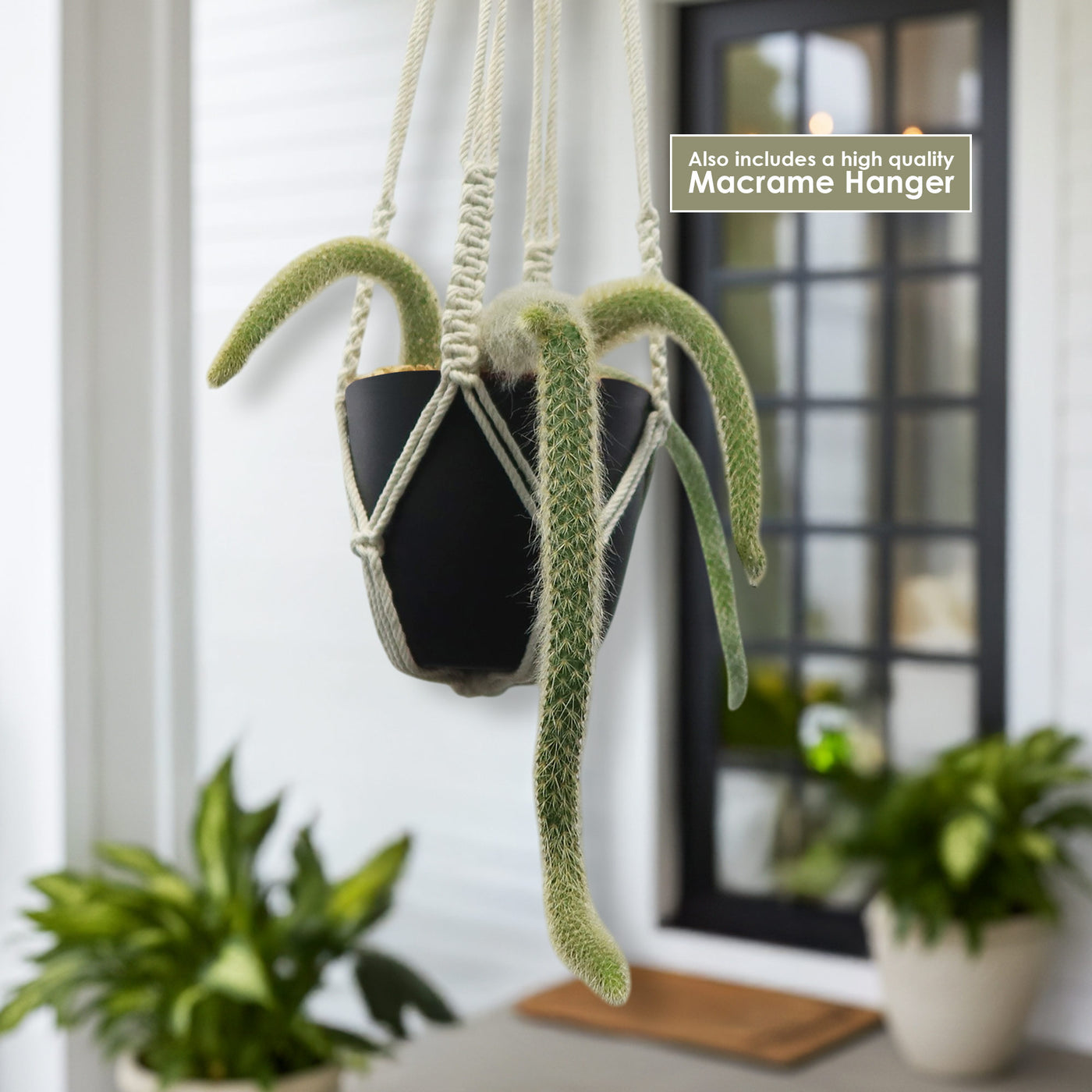
Introducing the Monkey Tail Cactus, known as Cleistocactus colademononis, which is perfect for hanging baskets. This unique cactus features long, trailing stems that resemble a monkey's tail, making it a fun and eye-catching addition to any indoor or outdoor space.
Native to the high-altitude regions of Bolivia and Argentina, the Cleistocactus colademononis gets its name "Monkey Tail" due to its long, slender, and hanging stems.
Sometimes it is also known as, cleistocactus winteri or Hildewintera colademononis.
This monkey tail species is known for its long, thin stems covered in soft, white fuzzy hair-like spines.
Its young form is upright, but as it matures, the stems develop a trailing habit.
The money tail plant is suitable for hanging baskets or tall planters as the "tails" can grow over 5 feet long.
The Monkey tail cactus flowers are bright red to orange and tubular in shape. The monkey tail cactus is a free-flowering species, displaying short-lived blooms in warm spring and summer months. However, it can repeat its blooms throughout the growing season when conditions are right.
When and How to Water Your Monkey Tail Cactus
When it comes to watering your monkey tail plant, it's important to strike the right balance. Often, people worry they aren't giving their plants enough water when in reality they are over-watering them. This is especially the case with cacti as they don't do well in moist soil which can result in root rot. Before watering, make sure that the top two inches of soil are completely dry.
In the spring and summer growing seasons, you can water your monkey tail cactus thoroughly, allowing the water to soak the soil completely. But remember, it's crucial to let the soil dry out before watering again. Overwatering can lead to root rot, which is not good for the cactus.
During the dormant period in fall and winter, you'll want to reduce watering. The cactus enters a rest phase during this time, so it requires less water. You can water it sparingly, allowing the soil to dry out between waterings. Just keep an eye on the cactus and adjust the watering schedule based on its needs.
Remember, every cactus is unique, so it's essential to observe your Monkey Tail Cactus closely. If the stems start to shrivel or turn yellow, it may be a sign of underwatering. On the other hand, if the stems become mushy or discolored, it could indicate overwatering. Adjust the watering accordingly to keep your cactus happy and healthy!
Light Requirements - Where to Place Your Monkey Tail Cactus
When growing your monkey tail cactus indoors, it thrives in bright but indirect light. Find a spot near a window where it can receive plenty of sunlight throughout the day. However, be careful not to expose it to direct sunlight, especially during the hottest parts of the day, as it can scorch the delicate stems. If you notice the stems stretching towards the light, it may be an indication that it needs more bright light. You can consider using a grow light to supplement the natural light if necessary.
If you decide to grow your Monkey Tail Cactus outdoors, it will appreciate a spot with full sun exposure.
Place it in an area where it can receive at least 4-6 hours of direct sunlight each day. This Cleistocactus colademononis loves warmth and can tolerate high temperatures, so it will do well in a sunny outdoor location.
Just make sure to acclimate it gradually to the outdoor conditions to avoid sunburn. Start by placing it in a partially shaded area and gradually increase the exposure to the full sun over a few weeks.
Remember, light is essential for the growth and health of your monkey tail plant, but it's crucial to find the right balance. Too little light can cause the stems to become weak and elongated, while too much direct sunlight can lead to sunburn. Observe your cactus closely and adjust its placement accordingly to ensure it receives the optimal amount of light.
Optimal Soil & Fertilizer Needs
For the soil, the monkey tail cactus prefers a well-draining cactus soil that replicates its natural habitat. Planting them in ordinary soil will result in compacted roots, stunted growth, and most likely root rot. Instead, make or buy a well-draining potting mix, or ideally use our specialized cactus potting mix that contains 5 natural substrates and mycorrhizae to promote the development of a strong root system that helps your monkey tail cactus to thrive.
When it comes to fertilizing your monkey tail plant, it doesn't require a lot of nutrients. During the growing season in the spring, you can fertilize it once a year using a balanced (5-10-5) NPK fertilizer. Follow the instructions to determine the appropriate dosage. It's important not to over-fertilize, as this can cause damage to the Cleistocactus colademononis. During the dormant period in fall and winter, it's best to withhold fertilization.
Additionally, it's a good practice to water your cactus thoroughly before applying fertilizer. This helps prevent any potential damage to the roots. Always remember to dilute the fertilizer in water and apply it to moist soil. Avoid applying fertilizer to dry soil, as it can lead to fertilizer burn.
Common Naming Confusion
This plant is commonly confused with rat tail cactus due to its trailing nature. Both have long, trailing stems resembling tails, but the monkey-tail cactus has thicker stems and spines, while the rat-tail cactus has thinner, more delicate stems and no spines. Additionally, the rat tail cactus has larger, showier flowers with a wider range of colors.
Hardiness Zone & More
When growing indoors, the monkey tail cactus thrives in temperatures ranging from 60-80°F during the growing season. However, it can tolerate slightly colder temperatures down to 50°F. It's important to avoid exposing it to extreme cold or sudden temperature drops, as this can cause damage to the plant.
For outdoor cultivation, your monkey cactus is well-suited to USDA zones 9-11, mostly in Southern California and Florida.
So, if you live in a colder zone, it's best to keep Cleistocactus colademononis cactus as a houseplant or in a controlled environment where you can maintain the ideal conditions.
In terms of humidity, the monkey tail plant is native to the arid regions of South America and can tolerate low humidity levels. It prefers dry air, similar to what you would find in desert environments. Indoor humidity levels are usually higher, but as long as you provide good airflow and avoid excessive moisture around the plant, it should be fine.
In terms of temperature, the Monkey Tail Cactus enjoys warm weather and can withstand temperatures up to 100°F in its natural habitat. However, it's always a good idea to provide some shade during the hottest part of the day to prevent sunburn.
Wildlife - Monkey Tail Cactus Attracts the Following Friendly Pollinators
The Monkey Tail Cactus attracts a variety of pollinators such as bees, butterflies, and hummingbirds with its bright flowers and sweet nectar. These friendly pollinators play a crucial role in the cactus's reproduction and overall ecosystem health.
According to the ASPCA, the Monkey Tail Cactus is not toxic to humans or pets, but if handled incorrectly, its spines can cause skin irritation.
How to Propagate Your Monkey Tail Cactus
The Monkey Tail Cactus can be propagated through stem cuttings. Simply allow the cuttings to dry for a few days before placing them in well-draining soil. With proper money tail cactus care and time, the cuttings will develop roots into new growth.
Pruning
The Monkey Tail Cactus is a low-maintenance plant that doesn’t require regular pruning, but you can remove broken, dying, or dead stems to keep it healthy. However, since the tails can grow up to 5 feet long, you can trim them shorter if they become too lengthy, such as clipping them to around 3 feet. Interestingly, the trimmed sections can be used for propagation by allowing the cuttings to callous over and then planting them in well-draining soil, giving you a chance to grow new plants from the trimmings.
Key Takeaways
- The Monkey Tail Cactus is an excellent choice for hanging baskets, thanks to its long, trailing stems covered in soft, silvery-white spines. Its cascading growth habit creates a stunning visual display, especially when adorned with its vibrant red flowers.
- The Monkey Tail Cactus, named for its trailing stems resembling a monkey's tail, grows up to 5 feet and is covered with soft, hair-like spines.
- The plant produces vibrant red, tubular flowers in spring and summer, which attract hummingbirds for pollination, adding to its charm.
- Native to Bolivia, this cactus is an epiphytic species, often growing on rocks or trees in its natural habitat. It's perfect for hanging baskets, where its trailing stems can be showcased.
- This drought-tolerant Monkey tail Cactus should be watered sparingly and allow the soil to dry completely between waterings.
The Bottom Line
Overall, the Monkey Tail Cactus (Cleistocactus colademononis) is a captivating cactus with long, hanging stems that resemble a monkey's tail. Its unique features, such as the transition from spines to a smooth stem and vibrant tubular flowers, make it a standout plant. Taking care of your monkey tail plant involves providing it with well-drained soil, ample sunlight, and occasional watering. With its striking appearance and relatively easy care, the Monkey Tail Cactus is a fantastic addition to any cactus collection or as a hanging plant that adds a touch of natural beauty to your space. We think you will love this plant – order your very own monkey tail cactus for sale today and start enjoying its beauty in no time!
Shipping Notes
- Free Standard Shipping on $100+ Orders to the USA.
- Except Preorder products are shipped in 48 hours.
- Delivery to the USA:
- Standard Shipping : 3-10 business days
- If time is of the essence, please consider selecting expedited delivery for faster service.
Exchange/Return Notes
- We offer a 30-day return/exchange service after receiving.
- Final sale items are not eligible for returns or exchanges.
- To process your return/exchange, please contact us at [email protected]
- Please click here for more details>>> Return & Exchange Policy