Shipping Estimate
USA
- USA
- CAN
- USA
- CAN
Ships within 48 hours · Estimated delivery Jul 13 - Jul 18
 Promo Codes Available:
For Your Every Summer RSVP, with Code: SUMMER15
Description
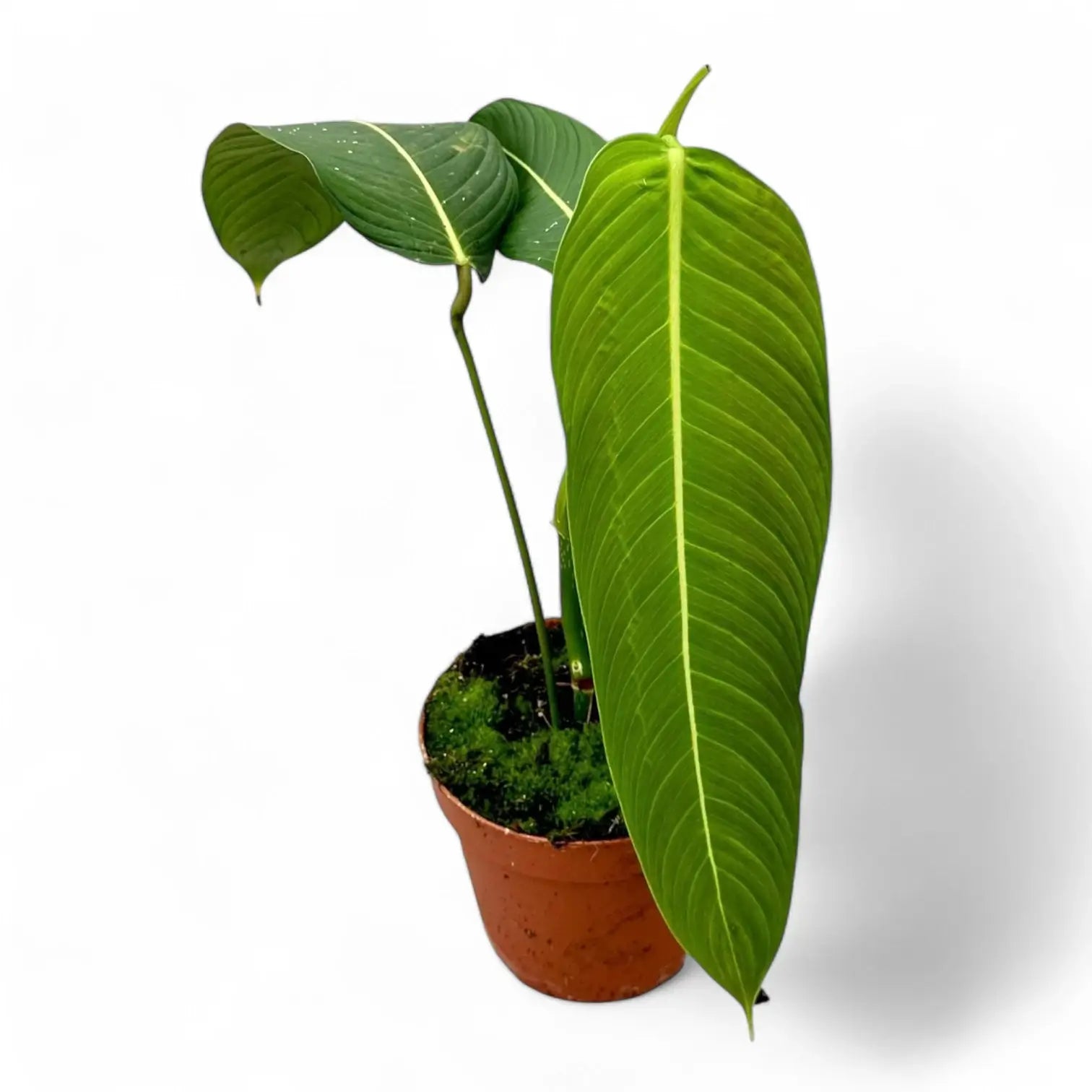
heterocraspedon philodendron Philodendron heterocraspedon – Long Ribbed, Scalloped LeavesPhilodendron heterocraspedon Croat and D. C. Bay rare South American climbing aroid with elongated, veined foliage Philodendron heterocraspedon Croat and D. C. Bay is a scarce canopy climbing aroid from the rainforests of Colombia and Ecuador. Described in Aroideana (2006), it is recognised for its long, slightly undulating leaves with deeply impressed primary veins. In cultivation, this species responds to firm vertical support, bright filtered
Philodendron heterocraspedon Croat and D.C.Bay – rare South American climbing aroid with elongated, veined foliage
Philodendron heterocraspedon Croat and D.C.Bay is a scarce canopy-climbing aroid from the rainforests of Colombia and Ecuador. Described in Aroideana (2006), it is recognised for its long, slightly undulating leaves with deeply impressed primary veins. In cultivation, this species responds to firm vertical support, bright filtered light, and stable humidity with increasingly dramatic, well-textured foliage.
What makes Philodendron heterocraspedon unique
- Leaf form: Elongated blades with a smooth matte-gloss finish, undulating margins, and distinct venation.
- Climbing habit: Anchors to fibrous or moss-covered supports via aerial roots for vertical growth.
- Ontogeny: Juvenile leaves are narrower with simpler form; mature foliage develops greater width, stronger venation, and margin undulation.
- Collector appeal: Rarely seen in cultivation, valued for its upright growth and leaf architecture.
From South America’s canopy to your collection
Native to wet lowland and lower montane forests in Colombia and Ecuador, typically between 100 – 800 m elevation. P. heterocraspedon climbs large tree trunks in filtered to low canopy light, benefiting from constant moisture, warm temperatures, and moving air. In situ, its leaves are adapted to intercept dappled sunlight while minimising water loss.
How Philodendron heterocraspedon differs from similar narrow-leaf species
Compared to Philodendron elongatum, heterocraspedon shows more pronounced primary venation and slightly more undulate leaf margins. Unlike P. atabapoense, it lacks the pronounced bicolour contrast between the adaxial (upper) and abaxial (lower) leaf surfaces. It can resemble juvenile P. pedatum, but heterocraspedon maintains a narrower, more elongated blade shape into maturity.
Size and form at dispatch
- Pot size: 12 – 15 cm nursery pot
- Approximate height: 25 – 40 cm excluding support
- Leaf count: Typically 4 – 7 leaves; size varies with growth stage
Images may depict mature plants. Shipped specimens may have smaller juvenile leaves; with strong light, humidity, and a firm pole, foliage will gradually increase in size and complexity. Newly shipped plants may pause growth temporarily while acclimating.
Care guide – keeping Philodendron heterocraspedon thriving
- Light: Bright, indirect light encourages compact internodes and strong venation; avoid harsh midday sun.
- Water: Water when the top 2 – 3 cm of substrate are dry; fully saturate, then allow excess to drain.
- Humidity: Best above 60%; stable high humidity supports larger leaves and better texture.
- Temperature: Ideal 18 – 28 °C; avoid prolonged drops below 15 °C.
- Substrate: Airy aroid blend (~35% fine orchid bark, 25% coco coir, 20% perlite/pumice, 10% compost, 10% horticultural charcoal).
- Feeding: Balanced liquid fertiliser at 25 – 50% label rate every 4 – 6 weeks during active growth.
- Support: Moss or fibre poles provide texture for aerial root adhesion; secure the stem at each node.
Propagation and growth notes
- Propagation: Stem cuttings with at least one node and root nub; root in moist sphagnum, airy substrate, or semi-hydro with nutrient solution.
- Growth rate: Moderate; faster with bright light, warm temperatures, and regular feeding.
- Hydroponics: Adapts to semi-hydroponic systems if transitioned gradually.
Flowering and inflorescence
Mature plants produce a greenish to pale spathe enclosing a spadix, typical of Philodendron. While ornamental value is minor compared to foliage, flowering indoors is possible in stable, long-term culture.
Common issues and solutions
- Yellowing leaves: Usually linked to overwatering or compacted substrate; improve drainage and adjust watering frequency.
- Slow or stunted growth: Increase light (still indirect) and ensure firm pole contact at each node.
- Pests: Watch for thrips, spider mites, and mealybugs; treat promptly with targeted controls.
Science-based notes
- Venation function: Prominent primary veins facilitate water transport in long, narrow blades.
- Ontogeny: Morphological shift from narrow juvenile leaves to more textured mature blades occurs progressively with climbing height.
- Ecological role: Adds vertical structure in rainforest understories, offering microhabitats for invertebrates.
Etymology
Philodendron derives from Greek phílos (“loving”) and déndron (“tree”), referring to its climbing nature. The species epithet heterocraspedon comes from Greek for “different edge,” referencing variation in the leaf margins.
Order Philodendron heterocraspedon
Add Philodendron heterocraspedon to your collection for a rare canopy climber with elegant, elongated foliage. With stable humidity, bright filtered light, and firm support, this species will reward you with increasingly architectural leaves over time.
Shipping Notes
- Free Standard Shipping on $100+ Orders to the USA.
- Except Preorder products are shipped in 48 hours.
- Delivery to the USA:
- Standard Shipping : 3-10 business days
- If time is of the essence, please consider selecting expedited delivery for faster service.
Exchange/Return Notes
- We offer a 30-day return/exchange service after receiving.
- Final sale items are not eligible for returns or exchanges.
- To process your return/exchange, please contact us at [email protected]
- Please click here for more details>>> Return & Exchange Policy