SKU: 28658265785
costco lavender plants

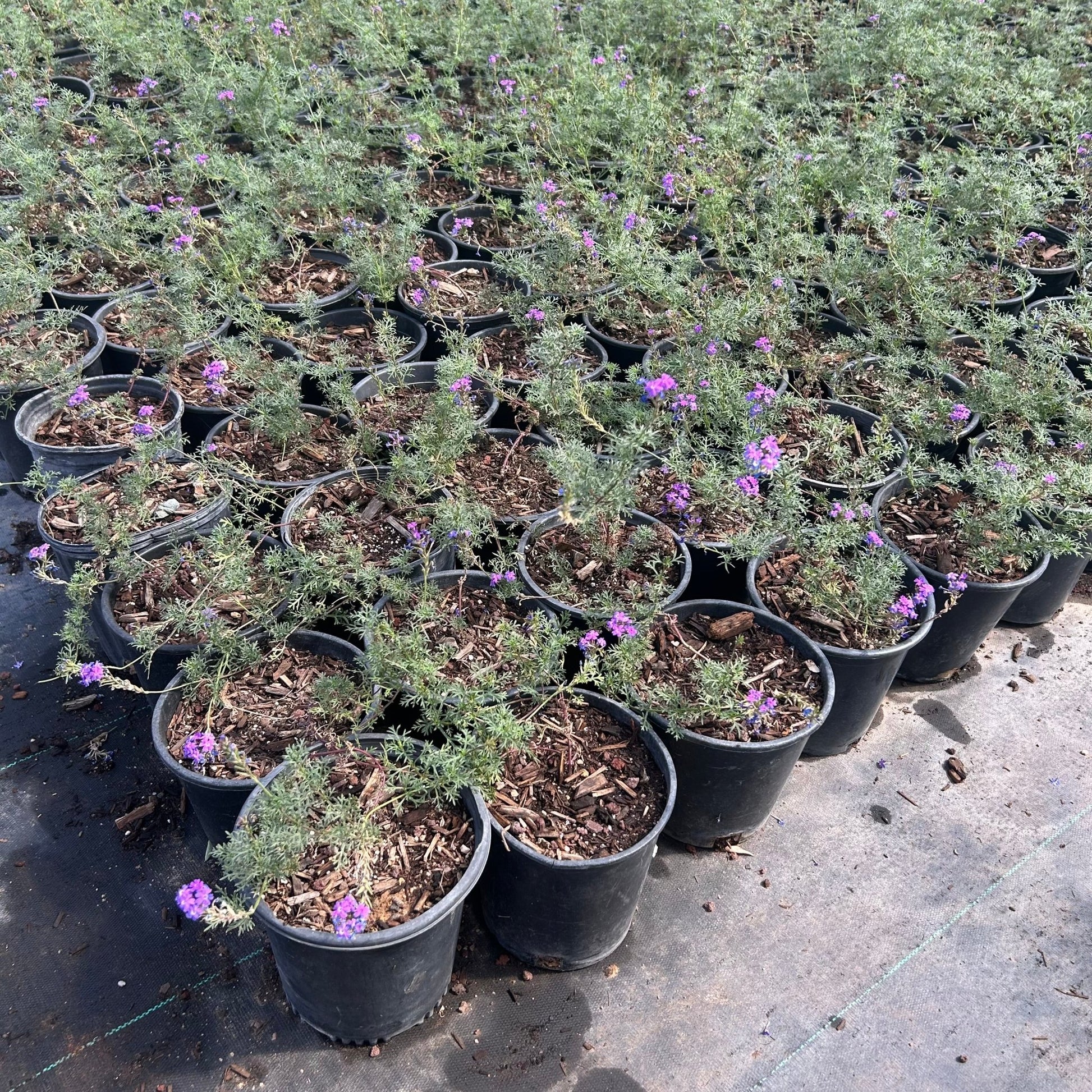
costco lavender plants Buy Moss Verbena Phoenix, AZ | Verbena tenuisecta

Sale price$18.75 Regular price$20.83
Save 10%

Pay in installments of $5.21 with ShopPay, AfterPay and Klarna

Shipping Estimate
USA
  • USA
  • CAN

Ships within 48 hours · Estimated delivery Oct 24 - Oct 29

Promo Codes Available:

For Your Every Summer RSVP, with Code: SUMMER15

Description

costco lavender plants Buy Moss Verbena Phoenix, AZ | Verbena tenuisectaPhoenix's Best Low Water Ground Cover for Color and Texture Moss Verbena Moss Verbena (Verbena tenuisecta) is Phoenix's top performing flowering ground cover for gardeners who want season long color with almost no effort. This tough South American perennial produces an endless cascade of purple, pink, or white blooms from spring through fall, thriving in the desert heat that stresses most flowering plants. Its finely dissected, moss like foliage stays

Phoenix's Best Low-Water Ground Cover for Color and Texture — Moss Verbena

Moss Verbena (Verbena tenuisecta) is Phoenix's top-performing flowering ground cover for gardeners who want season-long color with almost no effort. This tough South American perennial produces an endless cascade of purple, pink, or white blooms from spring through fall, thriving in the desert heat that stresses most flowering plants. Its finely dissected, moss-like foliage stays low and lush while needing minimal water. Whether you're filling a rock garden in Scottsdale, carpeting a desert slope in Mesa, or creating a colorful border in Chandler — Moss Verbena delivers.

Moss Verbena Plant Details

Attribute Detail
Scientific Name Verbena tenuisecta
Common Names Moss Verbena, Moss Vervain, Fine-Leaf Verbena
Mature Height 6–12 inches
Mature Width 18–36 inches (trailing ground cover)
Growth Rate Fast — spreads quickly in warm Phoenix conditions
Sun Full sun (6+ hrs). Handles reflected heat from walls and hardscape.
Water Low once established. Highly drought-tolerant after first season.
USDA Zones 8–11 (Phoenix is Zone 9b–10a)
Soil Well-draining. Adapts to Arizona caliche soils; avoid wet or clay soils.
Foliage Semi-evergreen — stays green in mild winters; may die back in hard freezes
Bloom Color Purple, pink, or white (depending on variety)
Bloom Season Spring through fall; near year-round in mild Phoenix winters
Attracts Butterflies, bees, and hummingbirds

Moss Verbena Uses in Phoenix Landscapes

Flowering Ground Cover for Rock Gardens and Desert Slopes

Moss Verbena is one of the best flowering ground covers for Phoenix rock gardens and sloped desert landscapes. Its low trailing form hugs the ground and fills gaps between boulders and decomposed granite, creating a colorful carpet that suppresses weeds naturally. In Gilbert and Peoria, it's a popular choice for covering dry slopes where erosion is a concern and irrigation is limited.

Colorful Border Plant and Bed Edging

Its compact height and sprawling habit make Moss Verbena a natural border plant for raised beds, walkway edges, and garden paths. Use it as a low front-of-border plant with taller companions like Texas Sage, Autumn Sage, or Cassia behind it for a layered desert perennial garden. Spacing plants 18–24 inches apart creates a solid flowering carpet in one growing season.

Pollinator and Wildlife Garden

Moss Verbena is a butterfly magnet. Its small, clustered flower heads are irresistible to native pollinators, painted ladies, monarchs, and queen butterflies common throughout the Phoenix Valley. Plant drifts of it alongside Desert Marigold, Blackfoot Daisy, and Brittlebush for a full-season butterfly garden. It's a standout for eco-conscious Tempe and Scottsdale gardens designed to support local wildlife.

Container and Patio Accent

In 1-gallon or 3/5-gallon containers, Moss Verbena works beautifully as a trailing accent in patio pots and mixed planters. Its fine-textured foliage contrasts well with bold succulents and ornamental grasses. Drop a few into window boxes or the edges of large urns for a flowing splash of color that's easy to maintain through Phoenix summers.

Best Time to Plant Moss Verbena in Phoenix

Fall planting (October–November) is ideal for Moss Verbena in Phoenix. The cooler temperatures reduce transplant stress while the soil stays warm enough for root development through winter. By spring, plants are established and ready to explode into bloom. Spring planting (February–April) is also excellent — get plants in the ground before temperatures push past 95°F so they can root before the summer heat intensifies.

How to Plant Moss Verbena

  1. Dig wide, not deep — excavate a hole 2–3x the root ball width, same depth as the container.
  2. Check for caliche — break through any hardpan layer beneath to ensure good drainage; Moss Verbena hates wet roots.
  3. Backfill with native soil — a 20% organic compost blend is fine; avoid heavy amendment in well-draining native soils.
  4. Spacing — 18–24 inches apart for ground cover; 12–15 inches for a faster-filling border.
  5. Water basin — build a small 2–3 inch soil ring around each plant to direct irrigation to roots during establishment.
  6. Mulch — apply 1–2 inches of bark or gravel mulch around plants (avoid piling against stems) to retain moisture and regulate soil temperature.

Watering Moss Verbena in Phoenix

First Year Watering Schedule

  • Weeks 1–2: Every 1–2 days, deep and slow
  • Months 1–2: Every 3–4 days
  • Months 3–6: Every 7–10 days (every 5–7 days during peak summer)
  • After Year 1: Every 10–14 days in summer; every 3–4 weeks in winter

Drip Irrigation

Place 1 GPH drip emitters 12–18 inches from plant stems. Run for 20–30 minutes per cycle. Once established, Moss Verbena is very drought tolerant and often thrives on rainfall supplemented by occasional deep watering during Phoenix's dry pre-monsoon months.

How fast does Moss Verbena spread in Phoenix?
Moss Verbena spreads quickly in Phoenix's warm climate — expect 18–24 inches of spread in the first season under full sun with regular watering. By the second year, a single plant can cover 2–3 square feet of ground.

Is Moss Verbena drought tolerant?
Yes — once established after the first growing season, Moss Verbena is highly drought tolerant. It's well adapted to low-desert conditions and can survive extended dry periods, making it ideal for low-water Phoenix landscapes. During monsoon season, many established plants need no supplemental irrigation at all.

Does Moss Verbena come back every year in Phoenix?
In Phoenix's Zone 9b–10a climate, Moss Verbena often behaves as a perennial and returns each spring. In mild winters it may stay semi-evergreen. A hard freeze below 20°F can kill it back to the roots, but it typically regrows vigorously from the root crown when temperatures warm up in spring.

What's the difference between Moss Verbena and other verbena varieties?
Moss Verbena (Verbena tenuisecta) stands out for its ultra-fine, fern-like foliage and its exceptional drought and heat tolerance compared to common garden verbenas. It forms a denser, lower mat than upright verbena species, making it better suited as a ground cover. Its bloom time is also longer — often 8 months per year in Phoenix conditions.

Can Moss Verbena grow in full reflected heat?
Absolutely. Moss Verbena is one of the most heat-tolerant flowering perennials available for Phoenix landscapes. It thrives against south- and west-facing walls where reflected heat pushes soil temperatures well above 100°F. This makes it an excellent choice for areas where other flowering plants struggle.

You May Also Like

Brittlebush — Native desert perennial with golden yellow blooms in spring; similar low-water needs and perfect companion to Moss Verbena in naturalistic desert gardens.

Desert Marigold — Long-blooming yellow perennial that pairs beautifully with the purple tones of Moss Verbena in pollinator borders.

Blackfoot Daisy — Another low-water flowering perennial with white daisy blooms; similar size and use case as Moss Verbena for rock gardens and edges.

Autumn Sage — Upright red, pink, or bicolor flowering perennial that complements Moss Verbena as a taller back-of-border companion.

Gooding's Verbena — A related native verbena with similar purple blooms and excellent drought tolerance for naturalistic Phoenix landscapes.

How Many Moss Verbena Do I Need?

As a fast trailing groundcover with an 18 to 36-inch spread, plant on 18 to 24-inch centers and let it knit into a solid flowering mat within a season. Tighten to 12 to 15 inches for a quicker border fill. Use this guide:

Area to Cover Plants at 18 in spacing Plants at 24 in spacing
25 sq ft 11 6
50 sq ft 22 13
100 sq ft 44 25
Border edge (per 10 ft) 7 5

On a dry slope or rock garden, 24-inch spacing fills in fine. For front-of-border color fast, drop to 12 to 15 inches.

Moss Verbena Season-by-Season in Phoenix

  • Spring (Feb-Apr): Explosion of purple, pink, or white bloom and rapid spreading growth. The best planting and dividing window, and butterflies arrive in force.
  • Summer (May-Sep): One of the most heat-proof flowering groundcovers in the Valley. Blooms right through reflected heat against south and west walls, then flushes again with the monsoon.
  • Fall (Oct-Nov): Strong continued bloom as nights cool. Prime planting season and a good time to trim back leggy runners.
  • Winter (Dec-Jan): Semi-evergreen and often still flowering in mild Valley winters. A hard freeze below about 20°F can cut it to the ground, but it regrows vigorously from the root crown in spring.

At a Glance

✔ Pollinator-Friendly   ✔ Hummingbird-Friendly   ✔ Heat-Loving (Reflected-Heat Tolerant)   ✔ Drought-Tolerant   ✔ Low-Maintenance   ✔ Cold-Hardy to 20°F

Plant It With

  • Brittlebush: a native golden-flowering mound that anchors a purple-and-gold low-water drift.
  • Desert Marigold: long-blooming yellow daisies that pop against the verbena's purple.
  • Gooding's Verbena: a native verbena cousin with the same purple bloom and spreading habit for a layered carpet.
  • Autumn Sage Furman's Red: an upright red-flowering back-of-border companion that adds height behind the low mat.

Is Moss Verbena Right for Your Yard?

Moss Verbena thrives in full sun and intense reflected heat on well-drained caliche, carpeting slopes, rock gardens, and low borders with purple bloom on very little water once established. It is one of the toughest flowering groundcovers for hot, dry exposures. It is not a fit for a wet or clay-heavy spot that drains slowly, since it resents soggy roots, and it spreads, so give it room rather than crowding it into a tight formal bed.

Shipping Notes
  • Free Standard Shipping on $100+ Orders to the USA.
  • Except Preorder products are shipped in 48 hours.
  • Delivery to the USA:
  1. Standard Shipping : 3-10 business days
  • If time is of the essence, please consider selecting expedited delivery for faster service.
Exchange/Return Notes
  • We offer a 30-day return/exchange service after receiving.
  • Final sale items are not eligible for returns or exchanges.
  • To process your return/exchange, please contact us at [email protected]
  • Please click here for more details>>> Return & Exchange Policy
SKU: 28658265785

Discover Niche Categories That Outsell costco lavender plants

Top-Converting Item to Boost Your Average Order

4.6 ★★★★★
Based on 5 reviews
Sort
Highest Rating
Newest First
Oldest First
Product Reviews
T
Verified Purchase
tfabglam5
Carnegie, US
★★★★★ 5
Sustained Energy on Demand
I am always on the lookout for a high quality supplement that provides me with energy, focus and brain support. And ... at a reasonable price. This is it! I am post menopausal and also have hypothyroid disease, so I need any kind of extra help I can get to keep me going without crashing. I take 2 capsules on an empty stomach first thing in the morning before I leave for work. By the time I get to work, I am "ready and rarin' " to go. If I miss taking Awakening, I feel tired, sluggish and unmotivated. This really helps to keep me going throughout a very long day. I usually leave home before 7 am and return home after 7 pm nearly 5 days a week. Don't hesitate to give this a try and see for yourself how good and energized you will feel. It's that extra help that will keep you going so that you can get things done and stay on-task.
WAS THIS REVIEW HELPFUL?YesReportShare
Reviewed in the United States on February 28, 2021
K
Verified Purchase
Karen Joan
Chelsea, US
★★★★★ 5
A Martian Named Smith
There is no question that Robert Anson Heinlein is one of the Fathers of Science Fiction. There is also no question that STRANGER IN A STRANGE LAND is his most famous work, having been called "the most famous science fiction novel ever written." Is it his best? Perhaps not. But it is a ground breaking classic, one that I enjoy reading again and again. STRANGER IN A STRANGE LAND is the story of Valentine Michael Smith (Mike), a male born of human parents on the first Earth colony ship to Mars. Literally born as the ship landed on Mars, Mike's parents and the rest of the crew died, and Mike was raised by Martians. 25 years later, a second Earth colony ship lands on Mars, and discovers Mike, the native inhabitants of Mars, and a host of unanswered questions. Mike returns to Earth, and STRANGER IN A STRANGE LAND is the detailed chronicle of his introduction to, interaction with, and transformation of human culture. STRANGER IN A STRANGE LAND was Heinlein's first truly adult science fiction novel, and he took on some pretty heady topics. Politics, religion, sex, equality, and the concept of a truly un-human culture (which happened to be superior), to name a few. Heinlein wove these themes into STRANGER IN A STRANGE LAND, each of which contributed to his idealistic vision of a perfect world.He intermixed shock value, logic, and plain good storytelling to get his points across, and I think he did so quite wonderfully. 1. Religion. Heinlein was not an atheist, as some have claimed. He did believe in a higher power; what he did not have any use for was organized religion. He believed in faith. If you had faith, true faith, then the trappings of religion were unnecessary and superfluous. They just did not matter. The Church of All Worlds in STRANGER IN A STRANGE LAND was set up to show that no matter what the religious trapping were, it was faith that really mattered. He also created a religion where happiness and self-belief were the main drivers, rather than fire, brimstone, and fear. Makes great sense to me. 2. Sex. Contrary to popular belief, STRANGER IN A STRANGE LAND did not promote promiscuity or free love. What Heinlein did was to create a world where people were open about sex, where it was enjoyable and exciting, but with it came great responsibility. In this world, sex wasn't hidden, secret, or naughty; rather it was honest and pure and fun. People who could develop this utopian attitude became happier, healthier, less jealous, more caring, and, yes, more sexual. Responsibility to partners, offspring, and an entire extended family became the norm. In his own way, by exploring sexuality, Heinlein was exploring and redefining the meaning of family. He was also trying to define sex as a miraculous union, and to show that humans should treat it as the miracle of bonding and "growing closer" that it is. 3. Equality. Before the sexual revolution and equality for women, Heinlein clearly believed in equality of the sexes, equality of the races, equality of faiths...basically the equality of all humans. Yes, he felt women should be treated with respect and reverence and be protected and nurtured because they gave birth and perpetuated the species, but he clearly believed that they were intelligent and capable. He also believed that women had sexual needs equal to those of men and had the right to pursue those needs. 4. Politics. In STRANGER IN A STRANGE LAND, Heinlein clearly had little use for government, politics, or politicians. He believed that government in general was a necessary evil, but preferred that it be kept small and out of his business. He didn't care what it was based on or what guided it - astrology was the ridiculous example used in STRANGER IN A STRANGE LAND - as long as it left him alone. Works for me. He also had little use for entitlements, and expected human beings to work for what they received. Again, works for me. 5. Un-Human, Superior Culture. Heinlein did a remarkable and revolutionary thing when he created the Martian culture of STRANGER IN A STRANGE LAND. The Martians of this novel are clearly not humanoids from another planet. They do not think like humans, act like humans, look like humans, reproduce like human, live like humans, or do anything like we do here on the planet Earth. There is nothing remotely recognizable about these Martians; they are completely alien. We can't them, and they can't understand us. They are older, more advanced, and can perceive the universe around them in ways that humans do not. But humans can, if properly taught, learn some of the things that Martians do. What a marvelous concept. In 1962 the original version of STRANGER IN A STRANGE LAND won the Hugo Award for the Best Science Fiction Novel of the Year. After Heinlein's death in 1988, his wife Virginia discovered the original uncut manuscript and arranged to have it published in 1991. It is interesting to read the two books side by side, to see the differences, and to compare them. I enjoy both versions very much, and am still not sure which is my favorite. Whatever version you choose, I HIGHLY RECOMMEND STRANGER IN A STRANGE LAND. Whether you have read it before or not, whether you love it or not, you will find it to be an interesting and thought-provoking read.
WAS THIS REVIEW HELPFUL?YesReportShare
Reviewed in the United States on June 20, 2009
M
Verified Purchase
Marcel Dupasquier
Draper, US
★★★★★ 4
A strange book I don’t grok
I have started to read this book directly after I had read “The Moon is a harsh Mistress” and after the first chapter, I almost stopped reading again. The first chapter starts promisingly enough, after a Mars expedition with only four couples, finding the fitting couples that contained all the required capabilities in themselves had been difficult enough, had failed, years later, another expedition is started, and this time, the flight takes much shorter. They find a young man there and bring him back, but how they treat him here, locked and no women allowed, for the first time really showed me how old Robert Heinlein’s books really are and here, for the first time, it was an annoyance. What would happen if a woman would visit him? We find out in the second chapter, and the answer is, basically, nothing. Then, for about 10% of the book, we get Jill, working in the hospital where the Man from Mars is kept, discussing with Ben, a journalist, about the implication of the Man from Mars. Once he owns the whole Mars, once he owns a majority of Lunar Enterprises. In any case, the government under the Secretary General cannot keep him alive. Then, finally, some action occurs: Ben tries to get the Man released, but fails miserably; Jill subsequently tries to prisonbreak with the Man. They escape to Ben’s place but the henchmen are not far away. They ring at the door, there is a confrontation and... it’s over. They go to another benefactor, Jubal, who keeps Jill and the Man hidden for rest of almost half of the book. There, Jubal thinks about how to help the Man, together with getting Ben back, while he tries to learn as much as possible about the Martian and Mars. Then, the henchmen appear again, ready to arrest everybody, and after the Martian makes the policemen disappear once more, Jubal eventually manages to bluff the Secretary General into calling back the second arresting team and agreeing to meet with the Man from Mars with him, Jubal, as the official delegate for the Martian. At the meeting, Jubal does what he can to make the Man’s live safe: He gives the Secretary General the mandate the manage the money of the Martian with the payment as much money as he sees fit. Having thus secured the Martian’s safety, the Martians keeps living at Jubal’s place and learning. They visit a service of the Fosterite church, where people gamble, visit the bar and have stories with women but when the archbishop wants to have one-to-one talk with the Martian, latter recognizes former’s evilness and discorporates him. Eventually, the Man from Mars has learned all he can at Jubal’s and he and Jill set out for the world. They join a circus troupe where the Martian performs a levitating trick with Jill, only it is not a trick, he really does so. But they are unsuccessful, the marks see right through it. They leave again, but not before they have listened to a snake charmer sermon about the Fosterites and before they make her a water brother. They next move to Las Vegas where Jill works in a show and the Martian as croupier and they elucidate naughty pictures. Thereafter, they go to San Francisco, where the Martian reads all the books about the various religions without grokking anything. They then visit a zoo where the Martian breaks out laughing as he, observing monkeys, finally groks people. They founded their own church, but it’s not a religion. The Martian had hereto shown some extraordinary capabilities, such as being able to enter a trance state where he could stay under water for hours, telekinesis and the ability to discorporate things or beings at will. Had the reader so far been wondering how he could do that, if the Old Ones on Mars has changed him somehow on Mars, now it become clear that this was not the case. Everybody can do it but, in order to facilitate such deeds, which were connected to Martian creed, one had to understand the Martian concepts, which one could only by firstly learning the Martian language. The Martian church was thus foremost a Martian language school. That was however not all it was. The Martian idea was that there was no God than God in everyone of us. All other religions were considered as truths, only that they were kind of hiding that God was each of us, and thus the creed was “Thou are God.” In the Martian church, also free love was practiced. We get hence a chapter where Ben was shocked by this and fled the church most hurriedly to report to Jubal, only to join it again the next chapter. And of course, we get Fosterites who try to start a persecution against their competitors. The end then also makes sense, but I don’t understand why. It was on one hand logical but on the other hand why was it necessary? This is thus not really a work of science fiction and but rather a theological treatise. I think it could have shortened somehow, then realized, that what the original editors thought as well. It was my third book I read from Robert Heinlein, Starship Troopers was a good concept which Joe Haldeman made into a good book, the Moon is a harsh Mistress was a quick read that kept me hooked, but considering, it is basically a story of the American struggle for independence, just on the Moon, and it will also be my last. There are other science fictions authors out there.
WAS THIS REVIEW HELPFUL?YesReportShare
Reviewed in the United States on November 15, 2022
B
Verified Purchase
b slev
Battle Creek, US
★★★★★ 5
seekers paradise
Format: Kindle
Some of this book disturbed me a little but overall I found it amazing and fascinating. Possibilities abound in fantasy and can be just the thing you need to open up. Enjoy! I sure did.
WAS THIS REVIEW HELPFUL?YesReportShare
Reviewed in the United States on May 22, 2026
J
Verified Purchase
Jenni DaVinCat
Pawtucket, US
★★★★★ 3
We Should All Be a Little Stranger.
I understand why this book is often cited as one of the most important sci-fi books of all time. While reading it, you might begin to question why it’s lumped into the sci-fi category because the themes are very human. It is science fiction, that cannot be argued, but it’s also a coming of age story, a religious story and at its very core, a story about love. Valentine Michael Smith was born and raised on Mars, but he is a human. He is brought back to Earth to learn what it means to be a human. This causes the reader to be forced to think outside of the box because Michael is not just coming from a different human culture, he has never learned what it means to be a human so any chapter told from his perspective is like an outsider, looking in on human culture. It’s wildly fascinating to think about ourselves in this manner. As Michael progresses in his grokking of humans, he gets out to explore the world and to challenge it. Our concepts of God/religion and sex/love are strange to him. We tend to not really think about it from an outside perspective because this is just the way life is, but being forced to think about it, makes for a very fascinating read. I’d never really considered myself to be a “prude” but there were times that this book made me feel that way. At times, the reader must take a step back and remember that Heinlein did intend for many of the themes to be viewed as satire of what is commonly accepted. There were a few negatives when reading this book, however. It was written in the sixties, which was a very different time from today in terms of the way women are spoken to/about and how they are treated. Heinlein wasn’t too bad in this regard, but there were a few sentences that made me stop for a second. Heinlein also has some of his characters go on these long drawn-out speech tangents that go on for pages and pages. I felt it was a little unnecessary to go on for that long, especially considered the length of the uncut version. It took me a little while to get through this book and normally I’m a pretty quick reader. Negatives aside, I do feel like this book is important. The story itself is not challenging, but as I stated before, it challenges the reader to think about humans from an outside perspective and that is fascinating. He really doesn’t seem to rely too much on Sci-fi elements, preferring to focus on the human elements of the story (love, religion etc.). If you’re looking for something long and fulfilling, this may just be the sci-fi book for you!
WAS THIS REVIEW HELPFUL?YesReportShare
Reviewed in the United States on September 29, 2016

recommand products