SKU: 32572857060
plants to climb trellis

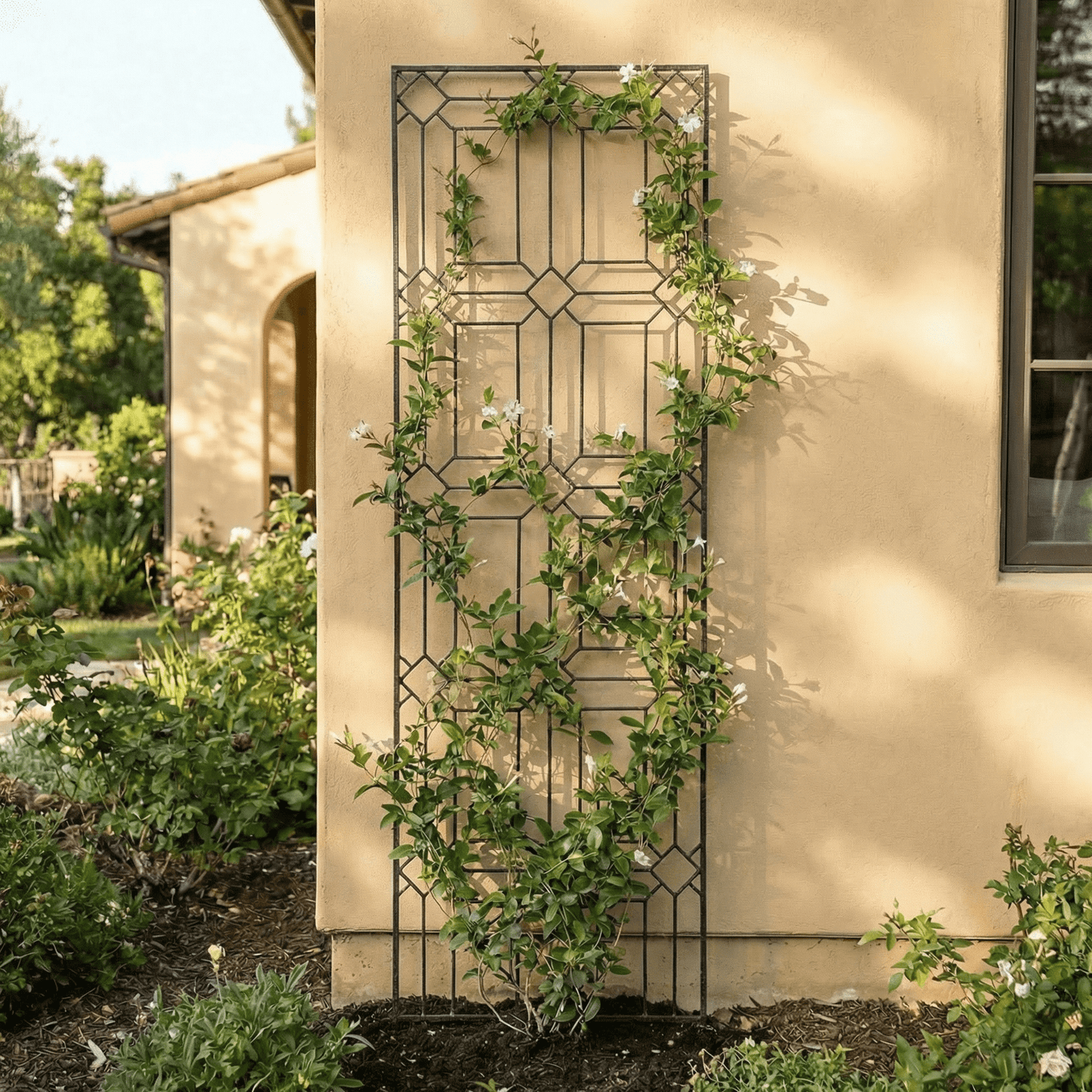
plants to climb trellis H Potter Diamond Garden Trellis

Sale price$25.25 Regular price$28.06
Save 10%

Pay in installments of $7.01 with ShopPay, AfterPay and Klarna

Shipping Estimate
USA
  • USA
  • CAN

Ships within 48 hours · Estimated delivery Jul 23 - Jul 28

Promo Codes Available:

For Your Every Summer RSVP, with Code: SUMMER15

Description

plants to climb trellis H Potter Diamond Garden TrellisPremium Garden Trellises Built to Last Outdoors A functional and decorative iron garden trellis from H Potterdesigned to add vertical structure, reliable climbing support, and classic garden character. The diamond grid pattern gives this trellis a more architectural look than basic lattice, making it equally useful as plant support and outdoor wall style garden art. Use it in a garden bed, against fencing or brick, or as a freestanding support for

Premium Garden Trellises — Built to Last Outdoors

A functional and decorative iron garden trellis from H Potter—designed to add vertical structure, reliable climbing support, and classic garden character. The diamond grid pattern gives this trellis a more architectural look than basic lattice, making it equally useful as plant support and outdoor wall-style garden art.

Use it in a garden bed, against fencing or brick, or as a freestanding support for climbing roses, clematis, jasmine, mandevilla, ivy, and more. It brings definition to the landscape in every season and remains beautiful even before plants fill in.

Why trust H Potter: Since 1997, H Potter has designed premium garden products built for real outdoor conditions—crafted to look refined, perform season after season, and supported by responsive customer care.
At a Glance

Product Details

  • Overall size: 24" W × 69" H
  • Ground spikes: 13" included
  • Weight: approx. 22 lbs
  • Material: heavy-duty iron
  • Finish: charcoal brown powder coat + hand-rubbed faux black + protective clear coat
  • Assembly: ships in 2 pieces; minor assembly required
  • Use options: freestanding in garden beds or styled against walls, fences, or brickwork

Best For

  • Climbing roses, clematis, jasmine, mandevilla, honeysuckle, and ivy
  • Courtyards, narrow beds, patio edges, and vertical garden accents
  • Adding privacy, structure, and height without overwhelming the space
  • Decorative wall-style placement or standalone climbing support
Design note: Unlike a 3D obelisk, this flatter trellis style is especially effective along walls, fences, and bed lines—where you want coverage, structure, and a clean vertical plane.
Why You’ll Love This Diamond Garden Trellis
  • Architectural diamond pattern: Adds more design interest than a basic garden trellis and reads beautifully even without a plant.
  • Heavy-duty support: Built from iron for gardeners who want real climbing support, not a lightweight seasonal accent.
  • Ground spikes included: 13" spikes help anchor the trellis securely in garden beds and landscape areas.
  • Versatile placement: Works well as a freestanding trellis, against a wall or fence, or in pairs for a more defined planting area.
  • Four-season structure: Adds vertical rhythm and garden character in spring, summer, fall, and winter.
Dimensions & Specifications
Spec Details
Overall size 24" wide × 69" high
Ground spikes 13" included
Weight Approximately 22 lbs
Assembly Ships in 2 sections; minor assembly required
Material + finish Heavy-duty iron with charcoal brown powder coat, hand-applied faux black finish, and protective clear coat sealer
Placement Garden beds, fences, exterior walls, brickwork, patios, and courtyards
Installation note: This trellis is substantial enough for mature climbers, but still manageable for home installation. Place carefully and use the included spikes for best stability in soil.
What Can I Do With This Trellis?

The H Potter Diamond Garden Trellis can be used as a decorative plant support, a vertical garden accent, or a wall-adjacent architectural feature. Its flatter profile makes it especially useful where you want climbing support without the footprint of a larger freestanding structure.

  • Support climbing plants: Train roses, clematis, jasmine, mandevilla, or ivy upward for height and bloom.
  • Soften hard surfaces: Style against fencing, brick, or exterior walls to create a planted vertical focal point.
  • Create privacy and layering: Use individually or in pairs to add screening and visual structure.
  • Add year-round design: Even without foliage, the iron pattern brings shape and character to the garden.
Recommended Climbing Plants

Flat trellises work especially well for climbers that benefit from directional training along a wall, fence, or garden edge.

Flowering Favorites

  • Climbing roses
  • Clematis
  • Jasmine
  • Mandevilla
  • Honeysuckle

Foliage & Coverage

  • Ivy
  • Star jasmine
  • Virginia creeper
  • Other decorative climbing vines suited to your region
Training tip: Guide young stems toward the diamond framework and secure gently with soft plant ties until the vine begins attaching or weaving on its own.
Complete Garden Trellis Guide Series

📚 Complete Garden Trellis Guide Series

Explore our comprehensive trellis resources:

🏡 Shop Garden Trellis | Trellis Buying Guide | Climbing Plants Guide | Trellis Installation Guide | Seasonal Trellis Decor Guide | How It's Made
Trellis Guides by H Potter
Materials & Care

Materials: Heavy-duty iron construction designed for outdoor use.

Finish: Powder-coated charcoal brown with a hand-applied faux black finish and a high-grade clear coat protective sealer.

Care tip: If you’d like extra protection, apply a coat or two of clear spray paint annually. If small hairline cracks or scratches occur, touch up the area with a clear outdoor spray to help seal exposed metal.
  • Anchoring: Use the included 13" ground spikes for secure garden installation.
  • Wall-adjacent use: If styling the trellis near a wall or fence, installation needs may vary depending on the surface and whether you want the trellis freestanding or mounted with optional brackets.
  • Assembly note: Use care during assembly to avoid marring the finish; touch up with clear spray paint if needed.
Product FAQs

What is a diamond garden trellis used for?

A diamond garden trellis is used as a vertical support structure for climbing plants while also adding decorative height and architectural detail to the garden.

Which plants grow best on this trellis?

Popular choices include climbing roses, clematis, jasmine, mandevilla, honeysuckle, and ivy. It is especially useful for vines that benefit from directional training along a flatter support.

Does this trellis include ground spikes?

Yes—this trellis includes 13" ground spikes for anchoring in soil.

Does this trellis require assembly?

Yes—minor assembly is required. The trellis ships in 2 pieces.

What is the finish and how do I protect it?

This trellis features a charcoal brown powder coat with a hand-rubbed faux black finish and a protective clear coat. If scratches occur, touching up with a clear outdoor spray can help protect exposed areas.

Can this trellis be used against a wall or fence?

Yes. This style is especially well suited for placement against walls, brick, fencing, and narrow garden beds, where you want coverage and vertical structure without a deep footprint.

Shipping Notes
  • Free Standard Shipping on $100+ Orders to the USA.
  • Except Preorder products are shipped in 48 hours.
  • Delivery to the USA:
  1. Standard Shipping : 3-10 business days
  • If time is of the essence, please consider selecting expedited delivery for faster service.
Exchange/Return Notes
  • We offer a 30-day return/exchange service after receiving.
  • Final sale items are not eligible for returns or exchanges.
  • To process your return/exchange, please contact us at [email protected]
  • Please click here for more details>>> Return & Exchange Policy
SKU: 32572857060

Discover Niche Categories That Outsell plants to climb trellis

Top-Converting Item to Boost Your Average Order

4.5 ★★★★★
Based on 24 reviews
Sort
Highest Rating
Newest First
Oldest First
Product Reviews
J
Verified Purchase
Jerry Saperstein
Whiting, US
★★★★★ 5
A valuable book for non-lawyers and lawyers
Why would non-lawyers want to read a book on persuading judges? For several reasons actually. First, many of us are involved in work that requires persuading others to adopt our views. While legal argument is substantially more formal and rule-driven than what most of us do, learning how to construct a logical argument as if it were to be delivered to the court, that Is governed by deadlines, restrictions on length, the need to adhere to established fact (or to establish those facts) and to be neither groveling nor inflammatory can be applied to selling your widgets. Perhaps more important is the fact that most people don't understand the impact of the court's decisions on our daily lives, our pocketbooks and our freedoms. Nine people sit on the Supreme Court. They cannot be removed except for the most grievous crimes and then only if Congress were to agree. More than one Justice has demonstrated that you can be senile and sit on the nation's highest court. Going down the food chain, the same applies to the federal appellate and trial courts. It is unlikely that one person in a hundred can even name a local federal district court judge and probably not one in a thousand could name the nine Supreme Court justices. Yet these men and women have tremendous impact on our lives, as do the thousands of state court justices. I am not a lawyer, but I consult to them and am not a stranger to the courtroom, writing drafts for legal briefs, doing legal research and the like. I have seen a lot of judges in action and have learned, in general, to fear them. They can - and do - cause tremendous harm through ill-considered decisions, making decisions with insufficient facts, assuming they know more than they do and myriad other reasons. They are gods in their courtrooms and if your lawyer fails to persuade them of the justness of your cause, you lose. Just how do these people reach their decisions? While justice is supposed to be blind (fat chance!), the justices are human and thus persuadable. Bryan Garner is a noted writer on legal writing. He is actually quite witty as he explains the use of the English language to lawyers who have had their understanding of words driven out of them in law school. Antonin Scalia is a hero to many for the courageousness of his decisions and dissents, his belief that the Constitution is to be strictly interpreted and his generally brilliant writing style. In 115, frequently witty, short chapters the two authors (who occasionally openly disagree) lay down their thoughts on how judges can be persuaded. It is not all about legal writing; e.g, advice to not chew your fingernails and dressing appropriately for court. They advise on giving your oral argument, which a lot of sales and marketing people would do well to read, especially the guidance to "never speak over a judge". In a sales situation, I am surprised at how often the sales person displays his or her contempt for me by not only not listening to me, but presuming they understand the point I was going to make before they spoke over me. I don't know about you, but a lot of salespeople have lost business with me for doing that. Some of the points the authors make are points of contention themselves: i.e., "swear off substantive footnotes - or not". None of the material in this book is truly new. Law students get elements of it in their first year as do some college students. A lot can be found in books on to be a better salesperson: i.e., don't chew your fingernails, etc. And a lot of it is plain commonsense. But that doesn't mean this book is unhelpful. First, it reveals in tiny part how Scalia evaluates the briefs he reads and arguments he hears, which in itself is a fascinating peek. The authors also put things many people may have forgotten through lack of use into perspective. Finally, they remind lawyers and non-lawyers alike that you often have only one shot at winning your argument so you had best put your best foot forward. Scalia and Garner show you how to do it. Overall, this is a fun, informative and helpful read. Jerry
WAS THIS REVIEW HELPFUL?YesReportShare
Reviewed in the United States on February 8, 2010
R
Verified Purchase
Rod Sullivan
Bozeman, US
★★★★★ 5
Like Having an Expert Looking over Your Shoulder
I am a law professor who spent 25 years as a Plaintiff's lawyer before deciding to teach. I've been before the U.S. Circuit Courts of Appeal many times and state appellate courts a few times. One caveat to consider: I expect to be arguing before the United States Supreme Court in the future. I hesitate to be too ebullient, lest you think that I'm trying to curry favor. However, I think that this book is great. Why do I recommend it? First, it is short. This book will accomplish much of what other books try to teach about advocacy, but in many fewer pages. Secondly, it is practical. It teaches writing skills, speaking skills, and how to be persuasive with limited time. Finally, it is not just for lawyers. Anyone trying to be persuasive can apply the same skills to other situations. For those of you who are politically opposed to Justice Scalia (which, believe it or not, includes some law professors)this is a joint effort by Garner and Scalia, and they frequently disagree. Hearing both sides of the argument on how to write or speak persuasively will help you decide how you want to present your arguments. How do my political opinions and Justice Scalia's opinions mesh? Can I be fair? I think so. He's a Federalist, I consider myself an Anti-Federalist. He as supporter of administrative delegation, I think delegation of congressional responsibilities to administrative agencies is congressional abdication. In short, I'm not recommending this book because Justice Scalia and I agree on policy, because on many policy matters we don't. I'm recommending it because I think it will help you. You wont be disappointed with the book.
WAS THIS REVIEW HELPFUL?YesReportShare
Reviewed in the United States on January 29, 2009
X
Verified Purchase
xiwaeo
Charlottesville, US
★★★★★ 5
Great Read
Great book, I enjoyed reading it. I am non-lawyer so I spent time having to read and re-read sentences and paragraphs but darn good book. Highly recommend it. Sometimes a person can be in discussion with an official, doctor, lawyer, cop ..whatever--it helps to remember arguments made in this book. Most folks just try to explain a situation, heaven forbid standing in front of a court or judge in a legal matter. But, this type of reading builds confidence, a strong vocabulary and so forth. It matters most trying to persuade a person or an institution..just winning, making your point in a clear coherent and cognizant way. This book can teach you these things.
WAS THIS REVIEW HELPFUL?YesReportShare
Reviewed in the United States on June 20, 2025
J
Verified Purchase
Jeff Wade
Lake Worth, US
★★★★★ 4
You don't have to like Justice Scalia to like his book.
Perhaps an appellate brief that you wrote would have been perfect if only the judge had read it. The lesson you learned, hopefully, was that there is no guarantee that a judge will read your brief. The lesson you can learn from "Making Your Case" is how to write so that the judges will read what you wrote - preferably before your oral argument. Writing in a quite candid, lucid and entertaining style, Scalia and Garner serve up tips that even the most experienced lawyers can learn from. If you find yourself approaching the court's word limit, for example, you may be minimizing the chances of having your brief read, as judges really do favor brevity. How do you write for a court that is notoriously dismissive of higher court precedents? How do you best respond to a judge who asks whether you would be content with a remand? These and other critical questions are addressed simply yet insightfully. If your legal education stressed the IRAC approach (Issue, Rule, Application, Conclusion), Scalia and Garner take you a step further by stressing a syllogistic approach. Even if you have already been exposed to all the best ideas about persuading appellate judges, you are still likely to gain much rom reading "Making Your Case" because the authors organize all those ideas in a way that makes them much easier to remember and keep them in mind as you prepare your written and oral arguments. Justice Scalia calls his approach to legal reasoning and argument "textualism," which I understand to mean that his decisions are driven by the language of the law and of the case. My impression from reading many of his decisions is that he is often driven by ideology, so I can't quite square his book with his decisions. I also question the book's fundamental statement that the overriding objective of a brief is to make the court's job easier, as I prefer to write primarily for the purpose of winning the case. My criticisms of "Making Your Case" are miniscule compared to those thrown at it by Richard Posner. But although I find Judge Posner's decisions generally more fair than those of Justice Scalia, I prefer the clarity of Justice Scalia's writing - especially when he teams up with Bryan Garmer. Judge Posner notwithstanding, Scalia and Garner have put together a gem that is likely to prove invaluable for law students as well as for trial and appellate lawyers who are still interested in improving their game. If you fall into either category, buy this book, read it two or three times, and then keep it handy as a reference. It should help you make your case.
WAS THIS REVIEW HELPFUL?YesReportShare
Reviewed in the United States on December 18, 2012
F
Verified Purchase
Fig&Friday
Fort Morgan, US
★★★★★ 5
A Great Read... (for those in the legal field)
A great gift for those in the legal field. We ordered several for gifts throughout the year.. Made a great little gift basket with a bottle of whiskey :)
WAS THIS REVIEW HELPFUL?YesReportShare
Reviewed in the United States on January 20, 2026

recommand products