SKU: 34724581031
philodendron acutatum

philodendron acutatum Philodendron squamiferum – Foliage Factory

Sale price$22.11 Regular price$24.57
Save 10%

Pay in installments of $6.14 with ShopPay, AfterPay and Klarna

Shipping Estimate
USA
  • USA
  • CAN

Ships within 48 hours · Estimated delivery Jul 20 - Jul 25

Promo Codes Available:

For Your Every Summer RSVP, with Code: SUMMER15

Description

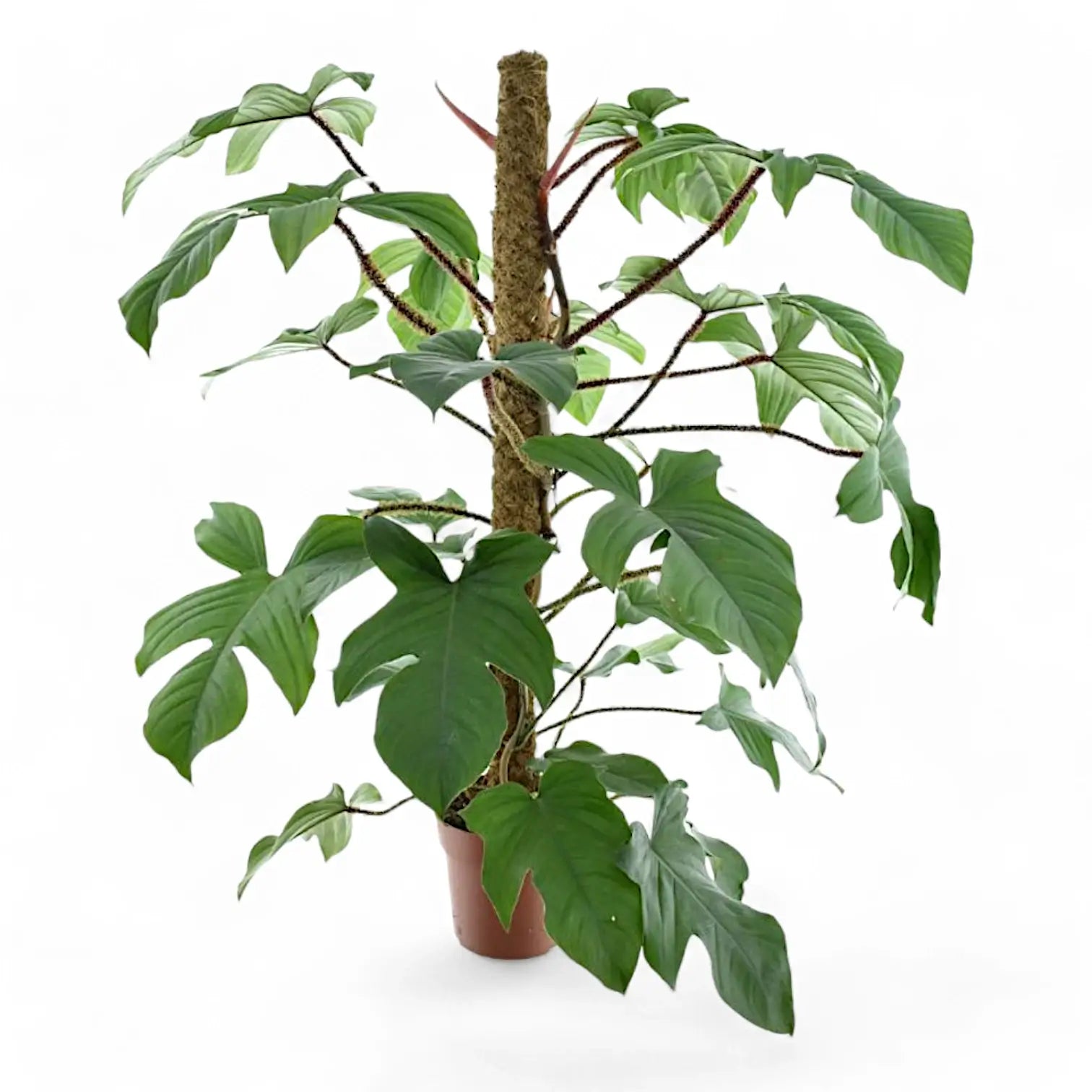
philodendron acutatum Philodendron squamiferum – Foliage FactoryPhilodendron squamiferum Philodendron squamiferum combines green climbing foliage with red, bristly petioles. Young plants can produce simpler leaves, while mature climbing growth develops a more divided outline. The plant grows from a climbing stem with nodes and aerial roots. A pole guides the stem upward, while open space around the support lets the lobed blades expand. Red bristly petioles and mature lobing in Philodendron squamiferum Petioles:

Philodendron squamiferum

Philodendron squamiferum combines green climbing foliage with red, bristly petioles. Young plants can produce simpler leaves, while mature climbing growth develops a more divided outline.

The plant grows from a climbing stem with nodes and aerial roots. A pole guides the stem upward, while open space around the support lets the lobed blades expand.

Red bristly petioles and mature lobing in Philodendron squamiferum

  • Petioles: Red bristly petioles add texture below the leaf blades.
  • Leaf shape: Green leaves become more lobed as the plant matures.
  • Growth habit: Climbing stem with aerial-root development at the nodes.
  • Juvenile growth: Young leaves may be simpler before mature lobing becomes clearer.
  • Indoor outline: Upright growth leaves open space for lobed leaves around the climbing stem.
  • Origin: A botanical species recorded from the Guianas and northern Brazil in wet tropical conditions.

How Philodendron squamiferum develops on support

Philodendron squamiferum is a climbing species with red bristly petioles and leaves that become more divided as the plant matures. When aerial roots attach to a coarse surface, the stem can climb upward and leave more space for the lobed blades.

The red bristly petioles sit below the leaves along the upright stem. A vertical surface also keeps mature foliage from crowding the pot as the stem gains height.

Philodendron squamiferum care for climbing growth

  • Light level: Keep it in bright indirect light so developing leaves receive enough light with lower scorch risk.
  • Watering: Let the upper substrate partly dry between waterings, especially when room temperatures are lower.
  • Humidity: Moderate to high humidity helps new lobed leaves expand with fewer dry edges.
  • Temperature: Warm, stable conditions keep new roots and climbing nodes active.
  • Potting mix: Use a chunky mix to keep oxygen around the roots after watering.
  • Climbing support: A moss pole or coarse vertical surface lets aerial roots attach as the stem climbs.
  • Repotting: Repot when the root system fills the pot or the support can no longer hold the stem securely.
  • Fertilising: Feed lightly during active growth, especially when the plant is producing larger lobed leaves.
  • Pruning: Remove damaged foliage and guide side shoots back toward support before the stem becomes awkward to train.
  • Semi-hydroponics: Mineral culture can work if the roots are well aerated and the climbing stem remains stable above the pot.

Philodendron squamiferum leaf and root problems

  • Simple new leaves: Low light, weak attachment or juvenile growth can keep leaves less divided.
  • Brown tips: Check humidity and watering consistency before increasing water volume.
  • Root rot: Wet, compacted substrate can damage roots and yellow older leaves.
  • Aerial roots: Smooth supports may not give aerial roots enough grip as the stem gains weight.
  • Crowded foliage: Lobed leaves can mark or bend if the plant is pressed against shelves or neighbouring plants.
  • Pests: Inspect bristly petioles, leaf backs and new growth for mites, mealybugs and scale.

Philodendron squamiferum safety

Philodendron squamiferum contains irritating calcium oxalate crystals and should not be chewed or ingested.

Published description and name of Philodendron squamiferum

Philodendron squamiferum was described by Eduard Friedrich Poeppig and published in Nova Genera ac Species Plantarum in 1845. The species name squamiferum means scale-bearing, matching the bristly texture on the petioles.

With a stable support, Philodendron squamiferum can mature from simpler juvenile leaves into more lobed foliage on an upright stem.

Shipping Notes
  • Free Standard Shipping on $100+ Orders to the USA.
  • Except Preorder products are shipped in 48 hours.
  • Delivery to the USA:
  1. Standard Shipping : 3-10 business days
  • If time is of the essence, please consider selecting expedited delivery for faster service.
Exchange/Return Notes
  • We offer a 30-day return/exchange service after receiving.
  • Final sale items are not eligible for returns or exchanges.
  • To process your return/exchange, please contact us at [email protected]
  • Please click here for more details>>> Return & Exchange Policy
SKU: 34724581031

Discover Niche Categories That Outsell philodendron acutatum

Top-Converting Item to Boost Your Average Order

4.5 ★★★★★
Based on 22 reviews
Sort
Highest Rating
Newest First
Oldest First
Product Reviews
H
Verified Purchase
Hay1212
Dallas, US
★★★★★ 5
Perfect for homeschooling!
Format: Paperback
Just finished up reading this as part of our homeschooling curriculum this year. What a gem this book is! Both my boys (9 & 13) were super interested in it and it kept their attention. Great way to learn about Indigenous cultures and traditions through story. Highly recommend!
WAS THIS REVIEW HELPFUL?YesReportShare
Reviewed in the United States on January 19, 2026
B
Verified Purchase
Braunschweig
Omaha, US
★★★★★ 5
This was a favorite fourth grade class book club book during a study of Native Americans.
Format: Paperback
This year my fourth grade class read the book Children of the Longhouse as a book club book. They were divided into groups of 4 and 5, and each day they would prepare a section of the book to read, and discuss it. Then the leader that day of each group shared what they thought. I don't want to spoil the story, but we were examining the relationships that the characters and the community in the book had to nature, and my students loved that. They found it interesting to learn about the beliefs, and that the challenges people had to face and overcome. They loved the climax and the ending too. Characters that they had felt were "bad guys" led to discussions of what options people in another culture might have which would necessitate them doing things that seem bad to us, like disobeying adult advice. I love the way this book fleshes out a pre European existence in the Northeast that helps us picture what life might have been like in an Iroquois village. We love the role that LaCross plays. My students use the Iroquois word for it. I pointed out the glossary at the back with pronunciations for Mohawk words, and my students loved using them and would even discuss how to correctly pronounce them. The book introduced my students to many ideas that they had never been exposed to, and they cared about the characters a lot. They also loved discussing the book more in an in depth way, and then hearing what other groups had had to say. I was interesting how similar the things that each group shared were. We can see that we need to shift our attitudes and be more connected to the natural world all around us.
WAS THIS REVIEW HELPFUL?YesReportShare
Reviewed in the United States on December 17, 2019
D
Verified Purchase
David
Chelsea, US
★★★★★ 5
museum quality
Format: Paperback
This is a kid's book, which is well illustrated, and useful. I have worked as a storyteller in schools. Kids of all backgrounds love native stories! All of Joseph Bruchac's books are high quality, museum pieces, just really good, the apotheosis [ideal] of what a storybook could be like. gives a very good description of the native lifeways around stories, and gives another view of native storytelling. is another book that gives you native context, by an author who also has native storybooks in print, including . Entering into native lifeways is not necessarily judgeable by white man culture, as shows. One thing one notices in native cultures is that they ask new questions, something like one sees in . I find native metaphysics to be similar to Quantum Mechanics. While not a native book, gives some ideas on how life would work, from that perspective. has stories about tricksters, which are not dissimilar to native stories. teachingdrum.org used to have a list of books of native stories, which is the most comprehensive I've seen. That is a nonprofit, and I have no connection with them, this cites the info resource only. All storytelling is fascinating. is one example of European stories about animals, which are not totally dissimilar. Stories are fascinating. If you want to entrance, train, entertain, educate, and improve children, nothing is faster or easier than storytelling.
WAS THIS REVIEW HELPFUL?YesReportShare
Reviewed in the United States on April 28, 2012
S
Verified Purchase
sswan
Omaha, US
★★★★★ 4
Great gift for a new teacher
Format: Paperback
Bought this book for a new teacher building up her book collection for her new classroom. It was a hit!
WAS THIS REVIEW HELPFUL?YesReportShare
Reviewed in the United States on December 24, 2021
A
Verified Purchase
Amazon Customer
Dallas, US
★★★★★ 5
Wonderful book for many reasons
Format: Paperback
I recommend this book for its story, cultural accuracy, and high interest action. First it is an exciting story of how conflicts arise and can be resolved with an exciting lacrosse game at the end. How cool is that? But the cultural and historical details make this a fascinating read for all ages. If you want to know about the lives of Native Americans in the New York area, written by a Native American, and put into an historically accurate story, this is a great read. I would recommend this as a high interest type of reader for middle school readers, one that would challenge them as well. The story could be about conflicts today, but the action is naturally more intense. If you are looking for an accurate portrait of Native American life, Bruchac is a wonderful author for you to choose. It is hard to find good books about northeastern Native Americans.
WAS THIS REVIEW HELPFUL?YesReportShare
Reviewed in the United States on October 12, 2013

recommand products