Shipping Estimate
USA
- USA
- CAN
- USA
- CAN
Ships within 48 hours · Estimated delivery Jul 14 - Jul 19
 Promo Codes Available:
For Your Every Summer RSVP, with Code: SUMMER15
Description
black walnut natural herbicide Black Walnut TreeTrees in general are an investment in our future, but none more so than the beautiful, valuable Eastern Black Walnut (Juglans nigra). The story of the Eastern Black Walnut like many native trees is a fascinating one! The leaves will turn vibrant yellow in the fall well before any of your neighbor's trees. The contrast between the fall color and the deep, dark trunks is eye catching and memorable. Eastern Black Walnut trees are renowned for their tasty
Trees in general are an investment in our future, but none more so than the beautiful, valuable Eastern Black Walnut (Juglans nigra). The story of the Eastern Black Walnut - like many native trees - is a fascinating one!
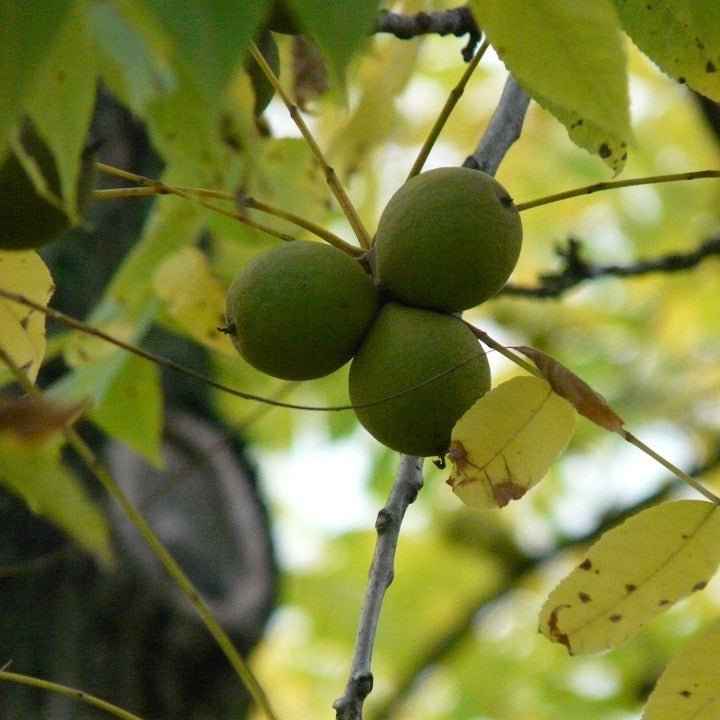
The leaves will turn vibrant yellow in the fall well before any of your neighbor's trees. The contrast between the fall color and the deep, dark trunks is eye-catching and memorable. Eastern Black Walnut trees are renowned for their tasty nuts that typically grow in clusters of three.
The decay-resistant heartwood is extremely durable and features a very attractive color! During the Civil War, Eastern Black Walnut was the wood of choice for soldiers' gunstocks. Entire forests in the Northeast were cut down to build the cabinets in the homes in our founding cities. With no major replanting plan in place until after the 1970s, this national treasure tree became harder to find.
Plant two, three, or more for best cross-pollination. The Eastern Black Walnut produces round nuts that fall to the ground in September and October. After 5 or 6 years, you will be collecting bushels of delicious nuts that store well once they're cured. If you don't collect them, the neighborhood squirrels and wildlife will go crazy for them!
Eastern Black Walnuts have a rich flavor and a protein level that is almost 20 times higher than milk. They are high in edible oil which can be used in cooking or as a wood polish. In-shell nuts keep for over a year in the freezer or airtight container. Shelled nuts can be kept in the freezer for two years or sold. It's even possible to tap the Eastern Black Walnut in spring to produce syrup like that of Maples.
Growing into a majestic 50-70 feet in height and width, and looks fantastic all growing season! The compound leaves almost look exotic and cast gorgeous shade throughout landscapes in USDA growing zones 4 to 9.
Planting and Application:
The magnificent, fine, close-grained wood is loved by woodworkers, and furniture makers, and for production into veneer, gunstocks, and musical instruments. Overall, it's estimated that an acre of Eastern Black Walnut timber produces $100K in revenue when mature in 30 years. Single trees have fetched $20K, so this tree should be seriously considered by hobby farmers and entrepreneurs.
Now, enterprising souls have realized the revenue potential of this large shade tree. Why not plant a grove, orchard, or even plantation on an unused corner of your property? You'll reap rewards, and nutritious nuts and eventually sell unequaled hardwood. Plant an orchard 15 to 20 feet apart on center. Measure from trunk to trunk.
Plant a Black Walnut nut orchard or larger timber plantation as an investment crop on large properties. The nut is prized for its high quality and is quite often harvested for commercial sale. It's estimated you can achieve 6,000 pounds of nuts per managed acre.
In the meantime, you and your family can enjoy the open, airy, dappled shade of the feathery, alternate compound leaves. Eastern Black Walnut trees will give you cool shade in the summer and an incredible focal point for your landscape.
When grown in a forest, Eastern Black Walnut grows straight up to 100 feet tall. Left uncut, this amazingly stately tree will be standing for your great-great-grandchildren to enjoy! What a legacy. On large properties, the Eastern Black Walnut can be used as a beautiful, broad shade tree in the lawn to screen the hot afternoon sun.
Let's talk about those plant competitors, shall we? Eastern Black Walnut is one of the botanical world's most interesting trees. The roots produce a natural herbicide called juglone, which prevents many plant species from growing nearby and gives a big advantage to the Walnut.
Allelopathy is the name of this strategy, and it's effective. The roots spread out about 50 feet from the trunk of the tree, and only juglone-tolerant plants can grow in that boundary. Interplant new orchard rows with other, smaller cash crops until the Black Walnut trees reach size.
Avoid planting these trees near your patios or pavement as the nuts have three layers, one of them being a green husk that will stain fingers and concrete. Use gloves when preparing walnut harvests.
- Very Valuable Lumber & Cash Crop
- High Protein, Rich Tasting Nuts
- Gorgeous, Large Shade Tree
- Native Wildlife Tree
- Interesting Botanical Apex Plant!
- Shade Tree, Specimen, Lawn Tree & Grand Legacy
#ProPlantTips for Care:
Growing primarily in the more humid parts of the country, the Eastern Black Walnut likes full sun. Plant in well-drained soil. It prefers rich, moist loam. However, if given regular water, it can be grown in drier soils. Prune either in the late winter to remove crossing branching and open the interior, or in mid-summer to control size if needed.
In a managed stand, Black Walnuts will self-prune their lower limbs and leave a straight trunk soaring up to the sky. Site the plants carefully, and don't try to move them once it's planted. With a deep taproot, the Eastern Black Walnut won't transplant well.
De-hull the soft green husk using a specialized tool or take them to a processor. Next, wash the furrowed black hulls to remove all traces of the green husk. Then, dry the nuts in-shell outdoors to cure the nut and improve the flavor.
- Full Sun Trees
- Well-Drained Soil
- Regular Moisture For Young Trees
- Drought-Tolerant Once Established
- Prune When Dormant In Early Spring
- Very Long-Lived & Resilient
With its bold look, fascinating history, and value, it makes a great choice! It can take years for a hardy native Black Walnut tree to grow from seed, but Nature Hills has done all of the hard work for you! Buy from Nature Hills today and leave your mark for generations.
Explore More from Nature Hills
The Black Walnut Tree makes an excellent addition to any landscape, serving dual purposes as both productive fruit trees and impressive shade trees that thrive among other hardy native plants and zone 4 plants, trees & shrubs. For comprehensive growing information, check out our Walnut Trees - A Gardener's Complete Guide and discover the Top Walnut Trees For Home & Orchard to help you select the perfect variety for your space.
Shipping Notes
- Free Standard Shipping on $100+ Orders to the USA.
- Except Preorder products are shipped in 48 hours.
- Delivery to the USA:
- Standard Shipping : 3-10 business days
- If time is of the essence, please consider selecting expedited delivery for faster service.
Exchange/Return Notes
- We offer a 30-day return/exchange service after receiving.
- Final sale items are not eligible for returns or exchanges.
- To process your return/exchange, please contact us at [email protected]
- Please click here for more details>>> Return & Exchange Policy