Pay in installments of $7.10 with
 ,
,
 and
and

Shipping Estimate
USA
- USA
- CAN
- USA
- CAN
Ships within 48 hours · Estimated delivery Oct 20 - Oct 25
 Promo Codes Available:
For Your Every Summer RSVP, with Code: SUMMER15
Description
giant elephant ear plant bunnings Alocasia macrorrhizosAlocasia macrorrhizos Alocasia macrorrhizos is a large tropical Alocasia with broad glossy green leaves, strong upright petioles and a thickened base that gains real weight as it matures. It forms broad green blades, a sturdy base and floor plant scale indoors when warmth, light and root space are strong enough. The species is native from Central Malesia to Queenslands Murray Group and grows primarily in wet tropical conditions. It can form an erect
Alocasia macrorrhizos
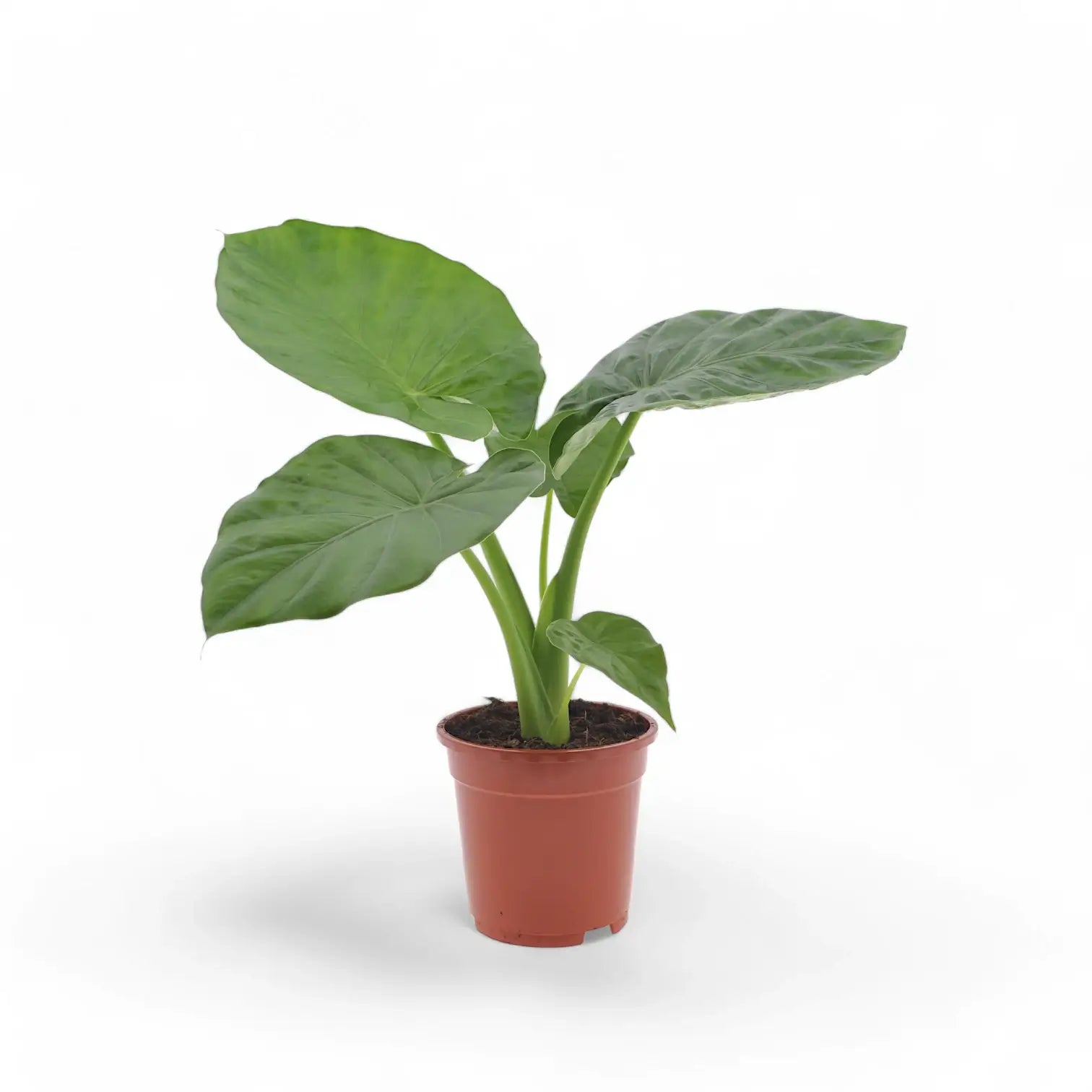
Alocasia macrorrhizos is a large tropical Alocasia with broad glossy green leaves, strong upright petioles and a thickened base that gains real weight as it matures. It forms broad green blades, a sturdy base and floor-plant scale indoors when warmth, light and root space are strong enough.
The species is native from Central Malesia to Queensland’s Murray Group and grows primarily in wet tropical conditions. It can form an erect stem to around 1.5 m, with leaves clustered near the stem tips on petioles that can reach around 1.3 m. Species descriptions record light green, ovate-sagittate blades up to around 120 × 50 cm in favourable tropical growth. Indoor plants usually stay smaller, but even young specimens show the same structural direction: large leaves, strong petioles and large roots that need room, warmth and air.
Giant taro leaf structure
The leaves are broad, glossy and arrow- to shield-shaped, with a firm surface and prominent veins. Mature blades are carried on thick petioles and can angle outward from the base, creating a wide canopy as the plant gains height. The base thickens with age, and larger plants can develop a visible trunk-like stem with leaves clustered toward the top.
Alocasia macrorrhizos grows with more physical mass than compact Alocasias. The plant needs a stable pot, enough clearance around the leaves and a position where new blades can open clear of walls, glass and shelving. Large leaves collect dust quickly, so regular gentle cleaning helps the surface stay clear and makes pest checks easier.
- Leaf shape: broad ovate-sagittate blades with a strong green surface and prominent veins.
- Leaf size: species descriptions record blades up to around 120 × 50 cm in suitable tropical conditions.
- Growth habit: upright, stem-forming and heavy above the pot as it matures.
- Petioles: thick, green and capable of holding large blades on established plants.
- Indoor scale: a large floor-plant Alocasia with bold tropical structure.
Wet-tropical range and indoor behaviour
Alocasia macrorrhizos comes from warm, humid tropical regions and has also been moved widely through cultivation. Giant taro develops a strong root system, thick base and large foliage. Indoors, warm roots, bright filtered light and a substrate that holds moisture while allowing air back into the pot keep the plant moving.
This plant uses water quickly in warm active growth, especially as leaves gain size. At the same time, large indoor pots can stay wet deep down for longer than the surface suggests. Pot weight, root warmth and the firmness of the petioles give better guidance than a fixed watering day. A heavy, stable pot with drainage is important as the plant gains height.
Root space for macrorrhizos
- Light: Give filtered daylight or soft filtered morning sun. Strong diffused light helps leaves size up and keeps petioles upright, while harsh midday sun can mark glossy tissue.
- Watering: Check below the surface before watering; let a cool, heavy pot dry further before watering.
- Substrate: Use a coarse, moisture-retentive mix with bark, coco husk and mineral drainage for large active roots. Large roots need moisture and air together.
- Temperature: A cold pot is riskier after watering, so keep the plant away from chilly surfaces.
- Humidity: Keep air moisture moderately high so broad new leaves can open smoothly. Higher humidity helps large leaves expand cleanly and reduces dry edge stress.
- Feeding: Use diluted balanced fertiliser while the plant is actively making large leaves. Larger leaves need steady nutrition when light and root warmth are strong.
- Pot choice: Use a stable pot with drainage holes and enough weight to balance the base. Repot gradually as roots occupy the container.
- Mineral substrates: Alocasia macrorrhizos can adapt to inert mineral or semi-hydro substrates after careful transition, with warmth and balanced nutrients.
Size, repotting and growth cycle
As Alocasia macrorrhizos grows, new leaves need clearance while they open, and older leaves may spread wider than the pot itself. Rotate the plant gradually if growth leans toward the light, and keep the pot stable enough for the height of the base. A larger plant usually needs floor placement or a wide plant stand.
Repot when new leaves are forming when roots have filled the container or the substrate has lost its open structure. A modest size increase is usually better than a dramatic jump in pot volume, because the lower mix should still dry at a sensible pace. Through the low-light season, growth may slow and watering intervals usually stretch. Keep the root zone warm and reduce feeding while new leaf production is quiet.
Large-leaf root response
- Yellow lower leaves: One older leaf can fade as the base changes. Several yellow leaves together call for a check of roots, pot weight and temperature.
- Soft petioles: Review pot temperature, drainage and root condition. Large petioles need active roots to stay firm.
- Crisp margins: Check humidity, watering consistency, heat load and mineral build-up. Large leaf margins show stress early.
- Small new leaves: Low light, cold roots, root restriction or recent repotting can reduce leaf size for one cycle.
- Leaning base: Rotate the pot gradually, improve light direction and use a heavier container if the plant has become top-heavy.
- Pest inspection: Spider mites, thrips, mealybugs and scale can hide along veins, petiole bases and leaf backs. Large leaves should be checked from both sides.
Vegetative growth and leaf replacement
Remove fully yellowed leaves close to the base once they have faded. Keep healthy green leaves in place because each large blade feeds the roots and next leaf. Clean mature leaves gently with a damp cloth, supporting the blade if the petiole is long or heavy.
Propagation is usually by division, offsets, basal shoots or firm stem/rhizome sections in the growing season. Each section needs firm tissue, active roots and warmth to restart well. Mature plants can flower with a green spathe and pale spadix, and thermogenic flowering has been documented in giant taro. Indoors, the broad tropical foliage and upright size remain central.
Handling a large oxalate-rich aroid
Alocasia macrorrhizos contains irritating oxalate crystals. Place the large leaves safely away from pets and young children. Use gloves when cutting large leaves or dividing the base if sap irritates your skin.
Large-root meaning in macrorrhizos
The accepted name is Alocasia macrorrhizos (L.) G.Don, published under Alocasia in 1839, with Arum macrorrhizon L. as the basionym. The epithet macrorrhizos comes from Greek roots meaning large or long root, referring to the plant’s substantial root and rhizome structure. “Giant taro” is a common English name connected with its large size and cultivated history.
Shipping Notes
- Free Standard Shipping on $100+ Orders to the USA.
- Except Preorder products are shipped in 48 hours.
- Delivery to the USA:
- Standard Shipping : 3-10 business days
- If time is of the essence, please consider selecting expedited delivery for faster service.
Exchange/Return Notes
- We offer a 30-day return/exchange service after receiving.
- Final sale items are not eligible for returns or exchanges.
- To process your return/exchange, please contact us at [email protected]
- Please click here for more details>>> Return & Exchange Policy