Pay in installments of $5.23 with
 ,
,
 and
and

Shipping Estimate
USA
- USA
- CAN
- USA
- CAN
Ships within 48 hours · Estimated delivery Aug 15 - Aug 20
 Promo Codes Available:
For Your Every Summer RSVP, with Code: SUMMER15
Description
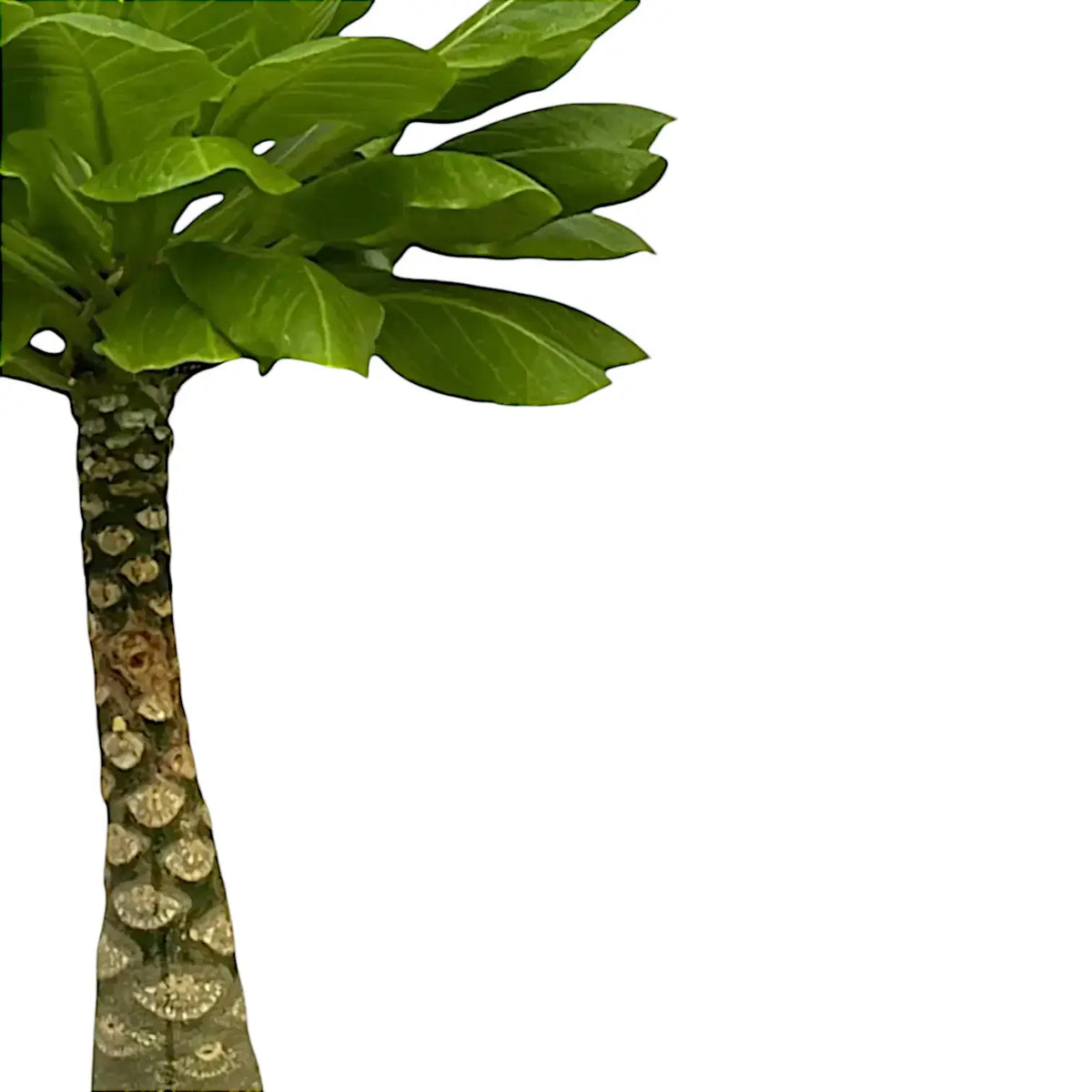
hawaiian palm indoor plant Brighamia insignis 'Hawaii Palm' – Foliage FactoryBrighamia insignis 'Hawaii Palm' Brighamia insignis, often called Hawaii Palm in cultivation, is a Hawaiian lobelioid with a swollen succulent stem and a compact crown of glossy green leaves. The palm like common name comes from its shape; botanically, it belongs to Campanulaceae, the bellflower family. The plant grows from a thickened trunk that stores water and narrows toward the top, where the leaves gather into a rounded rosette. Mature leaves are
Brighamia insignis 'Hawaii Palm'
Brighamia insignis, often called Hawaii Palm in cultivation, is a Hawaiian lobelioid with a swollen succulent stem and a compact crown of glossy green leaves. The palm-like common name comes from its shape; botanically, it belongs to Campanulaceae, the bellflower family.
The plant grows from a thickened trunk that stores water and narrows toward the top, where the leaves gather into a rounded rosette. Mature leaves are spoon-shaped, slightly fleshy and bright to dark green, giving the plant a clean upright outline in a pot. Established plants may produce fragrant cream to yellow tubular flowers from the crown under suitable conditions.
Bottle-stem traits
- Succulent, bottle-shaped stem topped with a leafy crown
- Glossy spoon-shaped leaves arranged in a compact rosette
- Hawaiian endemic species from rocky coastal cliff habitats
- Fragrant pale yellow flowers on mature plants under suitable conditions
- Best grown warm and bright in a sharply draining potting mix
Stem form, island origin and growth pattern
Brighamia insignis is endemic to Hawai‘i, with a natural range recorded from Kaua‘i and Niʻihau. In habitat it grows on rocky ledges and steep coastal cliffs with limited soil, exposed air movement and fast drainage. Its thick stem suits fast drainage, exposed air movement and a potting mix that dries predictably after watering.
In containers, Brighamia usually stays much smaller than wild plants described from natural habitats. The plant forms a single-stemmed or lightly branching succulent shrub with leaves held mostly at the top. Older lower leaves naturally yellow and drop as the crown renews, gradually revealing more of the trunk.
Care for Brighamia insignis 'Hawaii Palm'
- Light: Set it in bright indirect light with gentle direct morning or late-afternoon sun. In too little light, the crown can thin and lean toward the window.
- Watering: Soak the mix fully, then allow it to dry well before the next watering. The stem stores water, so constantly damp roots are the main risk indoors.
- Substrate: Use a mineral, cactus-style or very airy succulent mix with pumice, lava rock, coarse sand or similar drainage material.
- Pot choice: Choose a pot with drainage holes. A heavier pot helps balance the top-held rosette and reduces tipping as the stem gains height.
- Temperature: Maintain steady warmth around 18–26 °C and avoid cold draughts or drops below 15 °C.
- Humidity: Normal household humidity is suitable when airflow is steady and the substrate dries correctly.
- Feeding: Apply a weak balanced fertiliser during active growth, then stop or reduce feeding while winter growth is slow.
- Repotting: Refresh the pot when roots fill the container or the mix has broken down. Move up one pot size and keep the crown stable after repotting.
- Leaf care: Remove fully yellowed lower leaves by hand once they detach easily. Pulling firm green tissue can damage the crown.
- Outdoor summer placement: A sheltered outdoor position can suit warm summer weather after gradual acclimation, with protection from heavy rain, cold nights and harsh midday sun.
What to watch on Brighamia
- Yellow lower leaves: A few older leaves dropping from the base of the crown is normal. Many yellowing leaves at once can point to cold, root stress or repeated overwatering.
- Soft stem base: Check the root zone immediately. A soft, dark or collapsing base usually means the mix has stayed wet too long.
- Thin crown growth: Increase light gradually and rotate the pot so the stem stays upright.
- Spider mites: Fine webbing, stippled leaves or dull new growth can appear in warm dry conditions. Rinse the crown carefully and treat early.
- Leaf drop after shipping: Temporary shedding can happen after transport. Keep the plant warm, bright and evenly managed while the crown resumes growth.
Conservation-linked growing notes
Brighamia insignis has become strongly associated with conservation horticulture because wild populations declined severely and cultivated plants help preserve the species. In cultivation, the most important signs to watch are a firm stem, active crown growth and a root zone that stays airy between waterings.
Safe handling
Brighamia insignis is an ornamental plant and should not be eaten. Place it out of reach of pets and children that chew plants. If sap or plant material contacts sensitive skin, wash the area with water.
Name origin and botanical background
The accepted name is Brighamia insignis A.Gray. The genus Brighamia honours William Tufts Brigham, the first director of the Bernice Pauahi Bishop Museum in Honolulu. The Latin epithet insignis means outstanding, remarkable or distinguished, referring well to the plant’s unusual stem and crown form.
Brighamia insignis 'Hawaii Palm' holds a glossy green crown above a swollen bottle-shaped base.
Shipping Notes
- Free Standard Shipping on $100+ Orders to the USA.
- Except Preorder products are shipped in 48 hours.
- Delivery to the USA:
- Standard Shipping : 3-10 business days
- If time is of the essence, please consider selecting expedited delivery for faster service.
Exchange/Return Notes
- We offer a 30-day return/exchange service after receiving.
- Final sale items are not eligible for returns or exchanges.
- To process your return/exchange, please contact us at [email protected]
- Please click here for more details>>> Return & Exchange Policy