SKU: 42041869849
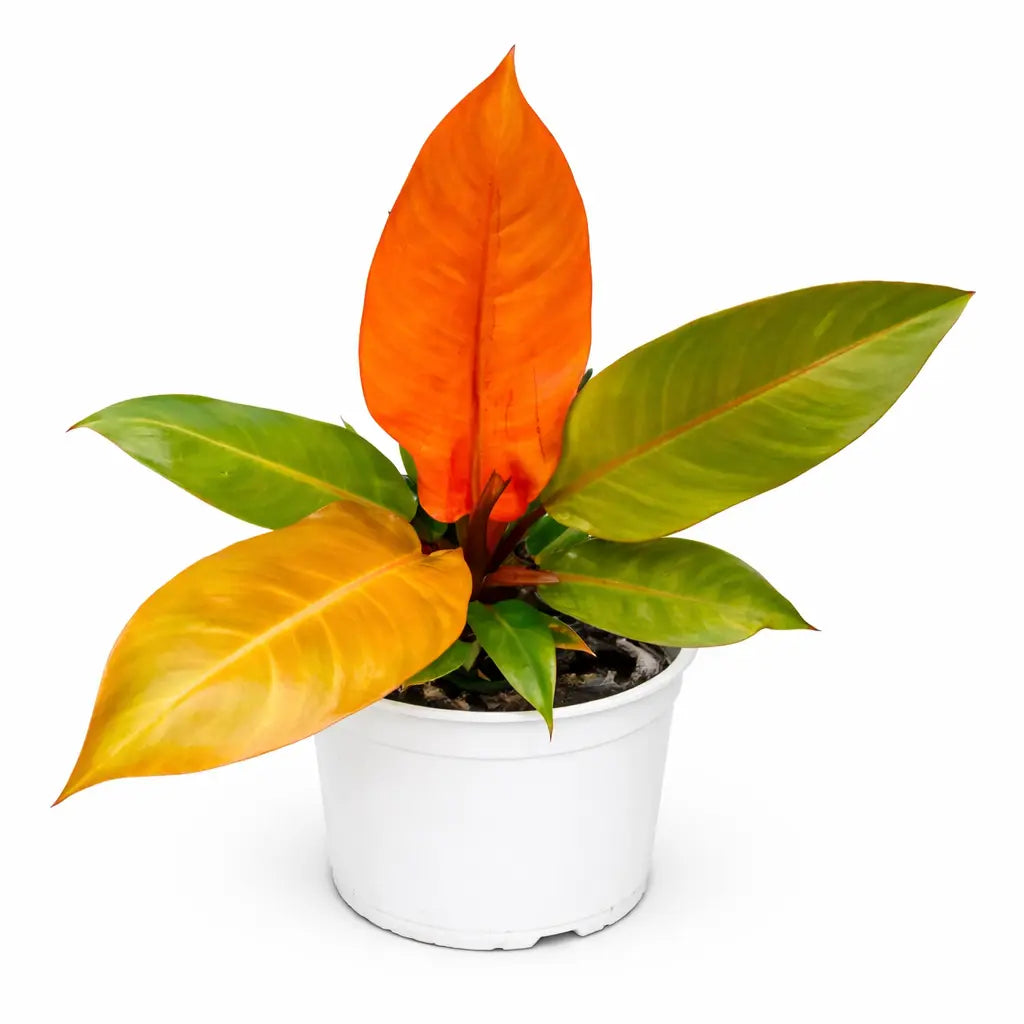
prince of orange hybrid philodendron

prince of orange hybrid philodendron Philodendron 'Prince of Orange'

Sale price$25.52 Regular price$28.35
Save 10%

Pay in installments of $7.09 with ShopPay, AfterPay and Klarna

Shipping Estimate
USA
  • USA
  • CAN

Ships within 48 hours · Estimated delivery Jul 20 - Jul 25

Promo Codes Available:

For Your Every Summer RSVP, with Code: SUMMER15

Description

prince of orange hybrid philodendron Philodendron 'Prince of Orange'The Philodendron 'Prince of Orange' is one of those rare plants that earns its name without any exaggeration. Every new leaf that unfurls does so in vivid orange deep, saturated, genuinely the colour of a ripe citrus then spends the following weeks travelling through copper and amber and chartreuse before settling into the rich, glossy dark green of a mature leaf. Because the plant pushes new growth continuously, multiple stages of this journey are

The Philodendron 'Prince of Orange' is one of those rare plants that earns its name without any exaggeration. Every new leaf that unfurls does so in vivid orange — deep, saturated, genuinely the colour of a ripe citrus — then spends the following weeks travelling through copper and amber and chartreuse before settling into the rich, glossy dark green of a mature leaf. Because the plant pushes new growth continuously, multiple stages of this journey are always visible simultaneously: a fully orange new spear at the centre, copper leaves mid-transition, and deep green mature leaves forming the outer canopy. No two moments in the growing season look quite the same. A hybrid of the *Philodendron erubescens* lineage — *erubescens* meaning "blushing" in Latin, a name suddenly made literal by the Prince of Orange's extraordinary leaf colour — it is entirely self-heading: it grows as a compact, symmetrical rosette without climbing, without needing a moss pole, and without taking over a room. At 60–90 cm at maturity it is perfectly scaled for desks, shelves, and tabletops, and it is one of the fastest-growing self-heading Philodendrons available.

💡 Stable Colour — This Is Not Variegation The orange colouration of the Prince of Orange is genetically locked into the plant's growth cycle — it is not chimeric variegation and it does not revert. Every new leaf this plant produces will emerge orange, without exception. The colour is driven by pigment expression in new growth that fades as chlorophyll develops and the leaf matures — a reliable, repeatable process. The intensity of the orange phase is directly controlled by light: brighter indirect light = more vivid, longer-lasting orange before the leaf greens up. Lower light = the orange phase is shorter and the leaf transitions to green faster. More light is the single most effective tool for keeping the display as vivid as possible.
🌿 Self-Heading Habit — No Pole, No Climbing, No Drama Unlike the majority of collector Philodendrons, the Prince of Orange does not climb and does not need support. It grows as a compact, upright rosette, producing new leaves from the central growing point and expanding outward symmetrically. This makes it one of the most practical collector aroids available — ideal for desks, console tables, windowsills, and shelves where a climbing vine would be out of place. Simply rotate the pot a quarter turn every few weeks to ensure even light exposure and a balanced, symmetrical form.
☀️

Light

Bright indirect light — the most important factor for a vivid, long-lasting orange display. An east or west-facing window is ideal; a south-facing window with a sheer curtain works well. The orange phase is most intense and lasts longest in bright conditions — in lower light the new leaves transition to green quickly and the distinctive colour display loses much of its impact. No direct harsh afternoon sun — it scorches and bleaches the leaves. Gentle morning sun is fine and beneficial. A grow light at 12–14 hours is excellent and produces the most consistently colourful new growth.

💧

Watering

Allow the top 3–5 cm to dry before watering thoroughly. The Prince of Orange prefers to dry out a little more between waterings than moisture-loving aroids — consistent soggy soil causes root rot faster in self-heading forms. Use room-temperature filtered water where possible. Empty the saucer after watering; never allow to sit in standing water. Reduce frequency slightly in winter but never allow to dry out completely. Check weekly; water when the top layer is clearly dry rather than just slightly dry.

💦

Humidity

50–70% preferred — a humidifier is beneficial but not essential. The Prince of Orange is more humidity-tolerant than many collector aroids and adapts well to typical Indian indoor conditions. Keep away from cold AC drafts and heating vents. Do not mist directly onto the leaves — water sitting on the new orange leaves encourages brown spotting, particularly on the tender young growth. India's tropical climate is naturally adequate for outdoor or semi-outdoor growing.

🌱

Growing Media

Well-draining aroid mix — 40% quality potting soil, 25% orchid bark, 25% perlite, 10% coco coir. pH 5.5–7.0. The mix must drain freely; self-heading Philodendrons are more susceptible to root rot from compacted, moisture-retentive mixes than climbing forms. Repot every 1–2 years in spring, one pot size up — the plant prefers to be slightly snug rather than over-potted. A pot with drainage holes is essential; terracotta is a good option for extra drainage insurance.

🌾

Feeding

Balanced liquid fertilizer at half strength every 2–3 weeks in spring and summer. The fast growth rate means consistent feeding during the growing season is visibly rewarded — larger leaves and more frequent new growth flushes. Apply to moist soil only. Flush every 3 months to prevent mineral salt build-up. Stop feeding in autumn and winter. Avoid high-nitrogen formulas — they push very fast leafy growth that outpaces the plant's structural development.

⚠️ Common Issues & Quick Fixes

New Leaves Coming Out Green, Not Orange

Insufficient light — the most common complaint. The orange phase shortens and fades dramatically in low light; in deep shade new leaves can emerge barely orange at all. Move to a significantly brighter indirect position or add a grow light. The colour will return to full intensity within 1–2 new growth cycles in better light. This is not reversion — the plant cannot revert; it is purely a light response.

Brown Spots on New Orange Leaves

Water contact on tender new leaves — do not mist; ensure watering does not splash onto unfurling leaves. Also check for thrips, which target new growth specifically: silver streaking or distorted unfurling leaves indicate thrips. Treat with spinosad spray every 5–7 days for 4 weeks and quarantine immediately.

Yellow Leaves

Overwatering or root rot — allow the top 3–5 cm to dry before watering. One older lower leaf yellowing as new growth pushes is normal cycling. Widespread yellowing with soggy soil: unpot, inspect roots, trim any blackened or mushy sections, repot in fresh well-draining mix, and water less going forward.

Leaves Staying Small

Insufficient light, underfeeding, or the plant being too root-bound to support larger leaf production. Move to a brighter position, begin consistent feeding every 2–3 weeks, and check whether the plant needs repotting — roots circling the base of the pot indicate it is ready for the next size up.

Leggy or Lopsided Growth

The plant is reaching toward its light source — rotate a quarter turn every 2–3 weeks to maintain even, symmetrical growth. If the plant has become significantly lopsided, increase overall light levels and begin regular rotation to gradually correct the form.

📋 Quick Plant Profile

Botanical Name Philodendron erubescens 'Prince of Orange'
Name Meaning erubescens = Latin for "blushing" — the vivid orange-red new leaf colour taken to its most dramatic expression
Common Names Prince of Orange, Orange Splendor (Indian market trade name)
Family Araceae
Colour Journey Vivid orange → copper → amber → chartreuse → deep glossy green; all stages visible simultaneously
Colour Type Stable genetic trait — not variegation; every new leaf will be orange; does not revert
Colour Key More light = longer, more vivid orange phase; less light = faster transition to green
Growth Habit Self-heading rosette — does not climb; no moss pole needed; compact and symmetrical
vs. erubescens Emerald Queen Same lineage; Emerald Queen is a climber with cream variegation; Prince of Orange is self-heading with orange new growth
Light Bright indirect; no direct harsh sun; grow light excellent; low light fades orange phase
Watering Top 3–5 cm dry between waterings; well-draining mix essential; do not sit in water
Humidity 50–70%; adaptable; no misting on leaves; humidifier beneficial but not essential
Temperature 18°C–30°C; no cold drafts; thrives in Indian indoor conditions
Mature Size 60–90 cm height and spread; compact; ideal for desks, shelves, and tabletops
Growth Rate Fast for a self-heading Philodendron — new leaves in frequent succession with good light and feeding
Rotation Quarter turn every 2–3 weeks for even, symmetrical growth
Ideal For Desks, Shelves, Tabletops, Bright Rooms, Collectors, Gifting, Beginners and Experts Alike
Care Level Easy to intermediate — bright light is the one non-negotiable; everything else is forgiving
Shipping Notes
  • Free Standard Shipping on $100+ Orders to the USA.
  • Except Preorder products are shipped in 48 hours.
  • Delivery to the USA:
  1. Standard Shipping : 3-10 business days
  • If time is of the essence, please consider selecting expedited delivery for faster service.
Exchange/Return Notes
  • We offer a 30-day return/exchange service after receiving.
  • Final sale items are not eligible for returns or exchanges.
  • To process your return/exchange, please contact us at [email protected]
  • Please click here for more details>>> Return & Exchange Policy
SKU: 42041869849

Discover Niche Categories That Outsell prince of orange hybrid philodendron

Top-Converting Item to Boost Your Average Order

4.9 ★★★★★
Based on 20 reviews
Sort
Highest Rating
Newest First
Oldest First
Product Reviews
A
Verified Purchase
Amazon Customer
Battle Creek, US
★★★★★ 5
Great quality for price after 3 years of use
Color: Matte Navy, Size: 6-Quart, Color: Matte Navy, Size: 6-Quart
I’m 3.5 years in and use it weekly. So far it’s been a great product especially for the price. We are really into soups, roast, and I bake bread a lot. This thing is amazing and a great quality. It’s easy to clean, does great in the oven, and stands up great to constant use. I only have a small amount of staining at the bottom, and a couple scratches from metal utensils. The lid is solid and the handle is really secure still, which is a problem I’ve had with other brands I’ve tried.
WAS THIS REVIEW HELPFUL?YesReportShare
Reviewed in the United States on February 2, 2026
G
Verified Purchase
Gwen Jones
Bozeman, US
★★★★★ 5
Quality product
Color: Navy, Size: 6-Quart
I absolutely LOVE my Dutch oven! The reduced cooking time for certain cuts of meat for stews, pot roast, etc., is a definite game changer!! The meat comes out so juicy and tender. I made curry and did the "burning" of the curry and was hesitant because I didn't want the pot to be stained. There were no stains left at all. I've used it numerous times since purchasing and it still looks new. It's very durable and the color is beautiful. If you're looking for a functional, quality, and durable Dutch oven without breaking the bank, this is it! I highly recommend.
WAS THIS REVIEW HELPFUL?YesReportShare
Reviewed in the United States on February 9, 2026
S
Verified Purchase
Serhii
Louisville, US
★★★★★ 5
Exactly what I wanted
Color: Blue, Size: 6-Quart
Amazing! Looks beautiful, high quality, good price. Well packaged, no defects. Heavy of course :) Blue color is amazing!
WAS THIS REVIEW HELPFUL?YesReportShare
Reviewed in the United States on April 26, 2026
B
Verified Purchase
Booksalottle
Bozeman, US
★★★★★ 4
Nothing Exceptional but Gets the Job Done
Color: Blue, Size: 4.3-Quart, Color: Blue, Size: 4.3-Quart
I’ve owned this 4.5 Qt. Amazon Enameled Cast Iron Dutch Oven for almost two months and have used it three times to date. Upon arrival and at first glance, the gradient blue color is beautiful and super glossy; most importantly, the pot is heavy for its size - as it should be. It looks exactly like the product pictures, with a globular shape than square shape as others. Unfortunately, I also noticed that there was one pin hole and two tiny uneven protrusions on the enamel inside the pot. I own three other enameled cast iron cookware from two other brands (photos attached for size comparison) and performance wise, this cast iron by Amazon performs equally to them. The pot isn’t exceptional or special but it gets the job done. Other than the pin holes and protrusions, I have no complaints. This isn’t my first rodeo so when heating up the pot and while cooking, I have zero issues. I am starting the pan off at 4-Stars and will update my review as time progresses, or if I have any major issues with its durability or performance in subsequent months. For the amateur home cook, or for anyone who is new to cast iron cooking, below I’ve included tips that you may find useful while using this or any other enameled cast iron cookware. ================================ Regarding the 3 Photos and 1 video I've Attached: (Note: all photos were taken with an iPhone under kitchen lights during the evening. Photos have not been edited nor enhanced.) Photo 1: Size comparison of this Amazon Enameled Cast Iron Dutch Oven compared to three other enameled cast iron cookware that I own from two other brands. From left to right: 7 qt. Tramontina, 4.5 qt. Amazon, 3 qt. Lodge 4 qt. Tramontina. Photos 2 and 3: fresh produce shown next to 4.5qt Amazon Dutch Oven for color and size contrast. Video: 4.5 qt. Amazon Enameled Cast Iron Dutch Oven on gas stove over medium heat, with food cooking. ================================ TIPS THAT YOU MAY FIND USEFUL While Using your cast iron dutch oven: (Note: I included these similar tips in my review of a different enameled cast iron pot from a different brand. My tips can apply to all enameled cast iron cookware) 1. If you find that you have issues with food sticking, it could be that you are not heating up your cast iron pot properly to prevent undue hot spots. I heat my pot up gradually starting at low, then medium, then high heat. After my pot is very hot is when I add my fat/cooking oil. As the oil is heating up in the pot, I lift it and swirl the oil around to coat all sides of the pot that will come in contact with food. 2. Take into consideration the temperature of the items you are adding to your heated pot. As a general rule for cooking: when ever possible, ensure that the items you are adding to a hot pot are at room temperature, rather than ice cold from the fridge; this will assist with even cooking. 3. Also, get comfortable with adjusting your heat by lowering and raising it based on what you’ve added to the pot. In general, you will need more heat at the beginning of the cooking process, and less heat towards the end. If you cook by recipe, I highly recommend that you read all the steps ahead before starting, so that you become familiarized with all the procedures, allowing you to maneuver accordingly when you start cooking. 4. At the exception of searing meat to achieve a brown crust, deep frying, or when caramelizing onions, you should be stirring your pot (I recommend using a wooden spoon) every few minutes when cooking in cast iron that is placed over high heat. If you are braising on the stove at low heat versus braising in the oven, the frequency of your stirring will need to be adjusted. No matter how you’re cooking though, a watchful eye on the pot plus stirring, should both be a habit not an afterthought. 5. For all cooking vessels in general but especially for cast iron: after cooking, allow your pot to cool down completely before cleaning. NEVER immerse a hot cast iron pot into cold water, nor pour cold dish water into hot pot. You risk not only being scald by dangerous steam, but you also risk weakening the enamel, therefore lessening the durability of your pots over time. 6. This cookware and others like it from Tramontina and Lodge are economical and if used correctly, will perform well for most cooking; if used correctly, they should also last for years. Nonetheless, if you can afford it, authentic enameled cast iron cookware made in France by Le Creuset is the best way to go. Le Creuset is the gold standard in cast iron cookware and their quality is second to none. I definitely recommend this Amazon dutch oven but if you can afford to splurge, Le Creuset's reputation is stellar. As a professional chef, I've used them in high end kitchens and their quality and performance is premier.
WAS THIS REVIEW HELPFUL?YesReportShare
Reviewed in the United States on July 2, 2018
N
Verified Purchase
Nicholas Wilson
Belleville, US
★★★★★ 5
Nice BIG enameled cast iron dutch oven. like LeCreuset but costs less
Color: Blue, Size: 6-Quart
This is nice quality, similar to the far more costly French LeCreuset brand. I was surprised how big this model is, possibly too big for my small kitchen and limited storage space. I store it in the oven. It would be great for baking sourdough boule bread.
WAS THIS REVIEW HELPFUL?YesReportShare
Reviewed in the United States on May 13, 2026

recommand products