Pay in installments of $5.88 with
 ,
,
 and
and

Shipping Estimate
USA
- USA
- CAN
- USA
- CAN
Ships within 48 hours · Estimated delivery Oct 17 - Oct 22
 Promo Codes Available:
For Your Every Summer RSVP, with Code: SUMMER15
Description
philodendron colombia sp Philodendron sp. Colombia – Foliage FactoryPhilodendron sp. Colombia Philodendron sp. Colombia is a crawling Philodendron with large, heart shaped green leaves and a quilted surface. The relatively thick blades give the leaf surface a firm texture. The stem creeps across the pot surface rather than climbing upward. A wider pot gives the crawling stem room to extend and keeps the growing points close to the surface. Quilted leaves and crawling growth in Philodendron sp. Colombia Leaf shape:
Philodendron sp. Colombia
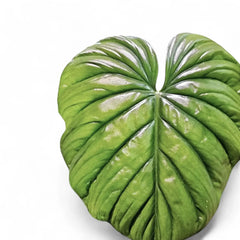
Philodendron sp. Colombia is a crawling Philodendron with large, heart-shaped green leaves and a quilted surface. The relatively thick blades give the leaf surface a firm texture.
The stem creeps across the pot surface rather than climbing upward. A wider pot gives the crawling stem room to extend and keeps the growing points close to the surface.
Quilted leaves and crawling growth in Philodendron sp. Colombia
- Leaf shape: Large, heart-shaped leaves with a broad, rounded outline.
- Texture: Quilted leaf surface with a relatively thick blade.
- Growth habit: Crawling stem that moves across the pot surface.
- Pot behaviour: Wider containers give the creeping stem more usable room than narrow upright pots.
- Stem position: The crawling stem should rest at substrate level so air can reach the tissue between rooting points.
- Surface room: Open space around the pot gives the quilted leaves and creeping stem room to extend.
How the crawling stem behaves indoors
Philodendron sp. Colombia grows from a creeping stem that should sit at the substrate surface. New roots can enter the mix from the nodes, while the stem itself needs air around it.
The thick quilted leaves give the plant a firm blade texture. A creeping stem needs surface room, so a shallow or wider container is usually more useful than a tall narrow pot once the plant starts extending sideways.
Philodendron sp. Colombia care for a creeping stem
- Light placement: Bright indirect light keeps the thick leaves firm, with the broad surface protected from harsh direct sun.
- Watering: Keep the substrate lightly moist, then let the upper layer dry before watering again.
- Air moisture: Moderate to high humidity keeps expanding quilted leaves from hardening with dry edges.
- Temperature: Warm indoor conditions keep new roots active along the creeping stem.
- Root zone: Choose a chunky mix so the crawling stem and roots stay away from dense wet pockets.
- Pot choice: Place the creeping stem at substrate level so new roots can enter the mix while the stem remains exposed to air.
- Repotting: Move to a wider pot when the stem reaches the rim or new growth starts pressing against the pot edge.
- Fertilising: Feed lightly during active growth, especially while new roots form along the creeping stem.
- Pruning: Remove damaged leaves close to the petiole base and avoid cutting the main crawling stem unless propagation is planned.
- Semi-hydroponics: Mineral culture needs careful stem placement, with the creeping stem above the wet zone and roots entering the medium below.
Crawling-stem issues in Philodendron sp. Colombia
- Stem rot: A crawling stem can soften if it is covered by wet, compacted substrate.
- Yellow leaves: Overwatering and poor air around the roots can stress the plant before the stem shows damage.
- Dry edges: Thick leaves can still mark at the edges when humidity drops or watering becomes too uneven.
- Stalled growth: A cramped pot rim can stop the creeping stem from extending cleanly.
- Leaf dullness: Dust can settle into the quilted surface; wipe leaves gently so the texture stays visible.
- Pests: Inspect leaf backs and the base of petioles, especially where the crawling stem rests near the substrate.
Philodendron sp. Colombia safety
Philodendron sp. Colombia should be kept away from pets and children, as chewed Philodendron tissue can cause mouth and stomach irritation.
With a wider pot and an airy surface around the stem, Philodendron sp. Colombia develops thick, quilted leaves along a creeping stem.
Shipping Notes
- Free Standard Shipping on $100+ Orders to the USA.
- Except Preorder products are shipped in 48 hours.
- Delivery to the USA:
- Standard Shipping : 3-10 business days
- If time is of the essence, please consider selecting expedited delivery for faster service.
Exchange/Return Notes
- We offer a 30-day return/exchange service after receiving.
- Final sale items are not eligible for returns or exchanges.
- To process your return/exchange, please contact us at [email protected]
- Please click here for more details>>> Return & Exchange Policy