Pay in installments of $6.60 with
 ,
,
 and
and

Shipping Estimate
USA
- USA
- CAN
- USA
- CAN
Ships within 48 hours · Estimated delivery Jul 16 - Jul 21
 Promo Codes Available:
For Your Every Summer RSVP, with Code: SUMMER15
Description
valencia peanut seeds for planting Tennessee Red Valencia - Peanut SeedsDating back to before 1890 and native to the fertile plains of Tennessee, the Tennessee Red Valencia peanut is celebrated for its rich taste and distinctive red skinned kernels. Despite being a short season variety, maturing in about 110 days, it produces a generous yield, making it an ideal choice even for more northerly climates. In the garden, Tennessee Red Valencia peanuts adapt easily to different environments, particularly thriving in well
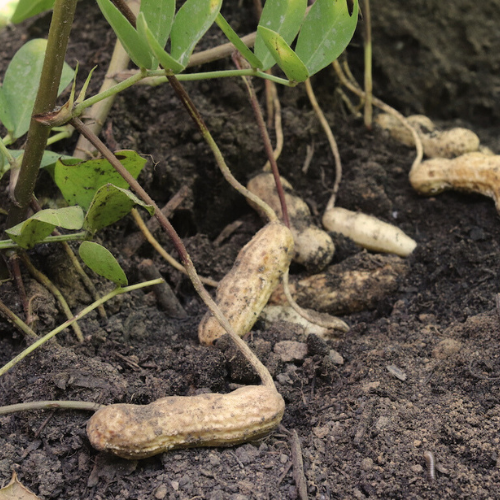
Dating back to before 1890 and native to the fertile plains of Tennessee, the Tennessee Red Valencia peanut is celebrated for its rich taste and distinctive red-skinned kernels. Despite being a short-season variety, maturing in about 110 days, it produces a generous yield, making it an ideal choice even for more northerly climates.
In the garden, Tennessee Red Valencia peanuts adapt easily to different environments, particularly thriving in well-drained soil and full sun. This bush-type plant, a member of the Valencia class of peanuts, is known for its smaller size and sweeter taste compared to Virginia types. It flourishes in minimal hilling up and can tolerate heavier clay soils than most other varieties. The plants, spreading in growth habit, reach about 18 inches tall at maturity, producing shells that contain 3-6 red-skinned kernels each.
Whether roasted, boiled, or used in homemade peanut butter, Tennessee Red Valencia peanuts bring a distinctively sweet flavour and crunchy texture to the table. By growing this heirloom variety, you are not only treating yourself to gourmet-quality, homegrown produce but also participating in a long-standing agricultural tradition.
- Latin Name: Arachis Hypogaea
- Days to Maturity: 110-120
- Life Cycle: Annual
- Canada Hardiness Zone: 9
- Start Indoors or Cold Frame: 4-6 weeks before last spring frost
- Direct Sowing: After last spring frost
- Planting Depth: 2-4 cm
- Days to Germination: 5-12
- Optimal Soil Temperature During Germination: 18-21°C
- Seed Spacing: 10-15 cm
- Thinning Seedlings: 20-30 cm apart
- Row Spacing: 90-120 cm
- Plant Height: 30-40 cm
- Average Seeds Needed Per 10 m Row: 75
- Average Yield Per 10 m Row: 1-2 lb.
- Approx. Seeds per lb: 900
GROWING INSTRUCTIONS
Perfectly snackable peanuts can be grown right at home started from seed. The popular “nut,” commonly crushed into butter and enjoyed at ballgames is actually not a nut at all but a legume, related to beans and peas. Typically grown in warmer climates like the southern US, with the right care peanuts can be cultivated in colder regions as well.
Because of their long growing season, peanuts can be started indoors 4-6 weeks before the last frost date. If planting outdoors, seed directly into a south-facing slope, after all danger of frost has passed.
To start seeds indoors, fill a large container with potting soil to a depth of about 10 cm. Peanuts develop under the surface of the soil so make sure they have enough space to grow. Place 3-4 seeds on the surface of the soil and cover them with 3 cm of soil. Water the seeds well and maintain even moisture throughout germination and the seedling phase. Provided seeds receive about 8 hours of light per day, they should sprout and grow quickly. Peanuts can be kept inside permanently as an indoor plant, or transplanted outside in the garden.
After the danger of frost has passed, and the soil has warmed to at least 18 degrees, seedlings can be transplanted outside in a sunny location. Use a raised bed, organic mulch or clear plastic to help the soil warm up more quickly in the spring. Seedlings should be spaced about 20 cm apart in well-drained soil. Compost and sand can be added to help loosen up the planting site.
When plants are 15 cm tall, gently cultivate the soil, loosening it for easy entry of the developing pegs. The plants can then be hilled like potatoes and a layer of mulch should be applied to protect the roots. Along the base of the stem small, yellow flowers will form and eventually fade, transforming into swollen pods. The pods will reach toward the ground and plant themselves into the earth.
Plants are harvested all at once as they fade and turn yellow. Before a frost hits, use a garden fork to pry it out from under the roots. Carefully shake out all the loose soil and hang the plant in a sheltered place for about a month to dry. Then, separate the peanut pods from the stems. At this point, they’re ready to be stored for future use or eaten straight away!
The nuts can be eaten raw or roasted in the oven, shelled or unshelled, at 175 degrees for 20 minutes.
QUICK FACTS
- George Washington Carver significantly revolutionized agriculture with his work on peanuts. Carver was a pioneering agricultural scientist and inventor born into slavery during the American Civil War. Rising against considerable adversity, he dedicated his life to teaching farmers, especially in the South, sustainable farming practices that enriched the soil and provided food and commodities for self-sufficiency.
During a time when cotton crops were depleting Southern soils, he championed peanuts as an alternative crop. Peanuts had the dual benefit of restoring nitrogen to the soil and providing a new source of food and other products.
He is perhaps most famous for his bulletin, "How to Grow the Peanut and 105 Ways of Preparing it for Human Consumption," published in 1916. This guide gave farmers valuable advice about peanut cultivation and introduced numerous recipes, transforming the perception of peanuts across the United States.
- Peanuts are unique as they flower above the ground, but fruit below the soil. After flowering, their stems, called pegs, extend down into the soil where the peanuts develop.
- Despite the name, peanuts are not actually nuts. They are legumes, more closely related to beans and peas.
- Peanut seeds will remain viable for three years if stored in a cool, dark place, ideally between 4 and 10⁰C. After that, the germination rate may start to go down.
Shipping Notes
- Free Standard Shipping on $100+ Orders to the USA.
- Except Preorder products are shipped in 48 hours.
- Delivery to the USA:
- Standard Shipping : 3-10 business days
- If time is of the essence, please consider selecting expedited delivery for faster service.
Exchange/Return Notes
- We offer a 30-day return/exchange service after receiving.
- Final sale items are not eligible for returns or exchanges.
- To process your return/exchange, please contact us at [email protected]
- Please click here for more details>>> Return & Exchange Policy