Pay in installments of $5.72 with
 ,
 and

Shipping Estimate
USA
- USA
- CAN
- USA
- CAN
Ships within 48 hours · Estimated delivery Oct 27 - Nov 1
 Promo Codes Available:
For Your Every Summer RSVP, with Code: SUMMER15
Description
lavender tree plant costco Buy Moss Verbena Phoenix, AZ | Verbena tenuisectaPhoenix's Best Low Water Ground Cover for Color and Texture Moss Verbena Moss Verbena (Verbena tenuisecta) is Phoenix's top performing flowering ground cover for gardeners who want season long color with almost no effort. This tough South American perennial produces an endless cascade of purple, pink, or white blooms from spring through fall, thriving in the desert heat that stresses most flowering plants. Its finely dissected, moss like foliage stays
Phoenix's Best Low-Water Ground Cover for Color and Texture — Moss Verbena
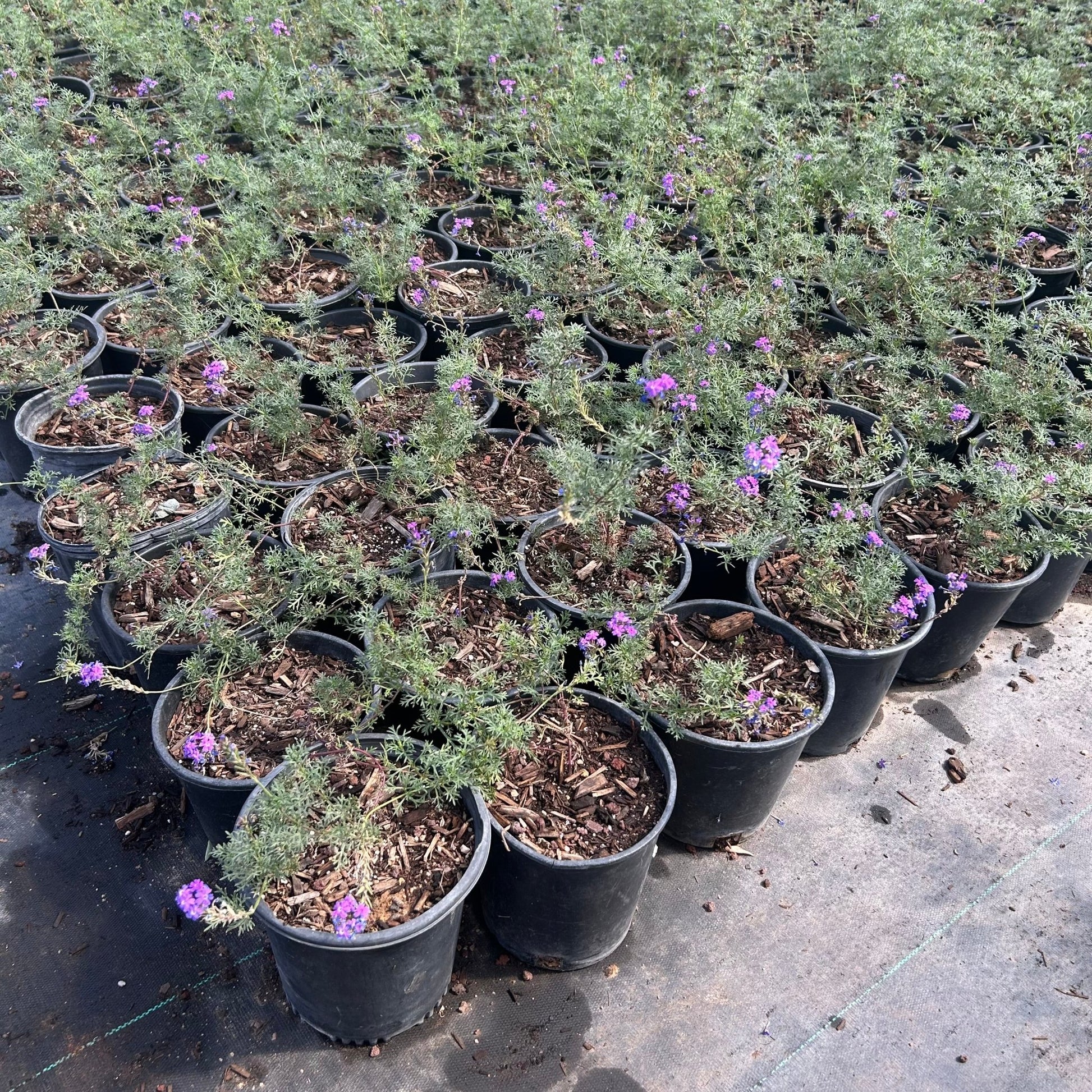
Moss Verbena (Verbena tenuisecta) is Phoenix's top-performing flowering ground cover for gardeners who want season-long color with almost no effort. This tough South American perennial produces an endless cascade of purple, pink, or white blooms from spring through fall, thriving in the desert heat that stresses most flowering plants. Its finely dissected, moss-like foliage stays low and lush while needing minimal water. Whether you're filling a rock garden in Scottsdale, carpeting a desert slope in Mesa, or creating a colorful border in Chandler — Moss Verbena delivers.
Moss Verbena Plant Details
| Attribute | Detail |
|---|---|
| Scientific Name | Verbena tenuisecta |
| Common Names | Moss Verbena, Moss Vervain, Fine-Leaf Verbena |
| Mature Height | 6–12 inches |
| Mature Width | 18–36 inches (trailing ground cover) |
| Growth Rate | Fast — spreads quickly in warm Phoenix conditions |
| Sun | Full sun (6+ hrs). Handles reflected heat from walls and hardscape. |
| Water | Low once established. Highly drought-tolerant after first season. |
| USDA Zones | 8–11 (Phoenix is Zone 9b–10a) |
| Soil | Well-draining. Adapts to Arizona caliche soils; avoid wet or clay soils. |
| Foliage | Semi-evergreen — stays green in mild winters; may die back in hard freezes |
| Bloom Color | Purple, pink, or white (depending on variety) |
| Bloom Season | Spring through fall; near year-round in mild Phoenix winters |
| Attracts | Butterflies, bees, and hummingbirds |
Moss Verbena Uses in Phoenix Landscapes
Flowering Ground Cover for Rock Gardens and Desert Slopes
Moss Verbena is one of the best flowering ground covers for Phoenix rock gardens and sloped desert landscapes. Its low trailing form hugs the ground and fills gaps between boulders and decomposed granite, creating a colorful carpet that suppresses weeds naturally. In Gilbert and Peoria, it's a popular choice for covering dry slopes where erosion is a concern and irrigation is limited.
Colorful Border Plant and Bed Edging
Its compact height and sprawling habit make Moss Verbena a natural border plant for raised beds, walkway edges, and garden paths. Use it as a low front-of-border plant with taller companions like Texas Sage, Autumn Sage, or Cassia behind it for a layered desert perennial garden. Spacing plants 18–24 inches apart creates a solid flowering carpet in one growing season.
Pollinator and Wildlife Garden
Moss Verbena is a butterfly magnet. Its small, clustered flower heads are irresistible to native pollinators, painted ladies, monarchs, and queen butterflies common throughout the Phoenix Valley. Plant drifts of it alongside Desert Marigold, Blackfoot Daisy, and Brittlebush for a full-season butterfly garden. It's a standout for eco-conscious Tempe and Scottsdale gardens designed to support local wildlife.
Container and Patio Accent
In 1-gallon or 3/5-gallon containers, Moss Verbena works beautifully as a trailing accent in patio pots and mixed planters. Its fine-textured foliage contrasts well with bold succulents and ornamental grasses. Drop a few into window boxes or the edges of large urns for a flowing splash of color that's easy to maintain through Phoenix summers.
Best Time to Plant Moss Verbena in Phoenix
Fall planting (October–November) is ideal for Moss Verbena in Phoenix. The cooler temperatures reduce transplant stress while the soil stays warm enough for root development through winter. By spring, plants are established and ready to explode into bloom. Spring planting (February–April) is also excellent — get plants in the ground before temperatures push past 95°F so they can root before the summer heat intensifies.
How to Plant Moss Verbena
- Dig wide, not deep — excavate a hole 2–3x the root ball width, same depth as the container.
- Check for caliche — break through any hardpan layer beneath to ensure good drainage; Moss Verbena hates wet roots.
- Backfill with native soil — a 20% organic compost blend is fine; avoid heavy amendment in well-draining native soils.
- Spacing — 18–24 inches apart for ground cover; 12–15 inches for a faster-filling border.
- Water basin — build a small 2–3 inch soil ring around each plant to direct irrigation to roots during establishment.
- Mulch — apply 1–2 inches of bark or gravel mulch around plants (avoid piling against stems) to retain moisture and regulate soil temperature.
Watering Moss Verbena in Phoenix
First Year Watering Schedule
- Weeks 1–2: Every 1–2 days, deep and slow
- Months 1–2: Every 3–4 days
- Months 3–6: Every 7–10 days (every 5–7 days during peak summer)
- After Year 1: Every 10–14 days in summer; every 3–4 weeks in winter
Drip Irrigation
Place 1 GPH drip emitters 12–18 inches from plant stems. Run for 20–30 minutes per cycle. Once established, Moss Verbena is very drought tolerant and often thrives on rainfall supplemented by occasional deep watering during Phoenix's dry pre-monsoon months.
How fast does Moss Verbena spread in Phoenix?
Moss Verbena spreads quickly in Phoenix's warm climate — expect 18–24 inches of spread in the first season under full sun with regular watering. By the second year, a single plant can cover 2–3 square feet of ground.
Is Moss Verbena drought tolerant?
Yes — once established after the first growing season, Moss Verbena is highly drought tolerant. It's well adapted to low-desert conditions and can survive extended dry periods, making it ideal for low-water Phoenix landscapes. During monsoon season, many established plants need no supplemental irrigation at all.
Does Moss Verbena come back every year in Phoenix?
In Phoenix's Zone 9b–10a climate, Moss Verbena often behaves as a perennial and returns each spring. In mild winters it may stay semi-evergreen. A hard freeze below 20°F can kill it back to the roots, but it typically regrows vigorously from the root crown when temperatures warm up in spring.
What's the difference between Moss Verbena and other verbena varieties?
Moss Verbena (Verbena tenuisecta) stands out for its ultra-fine, fern-like foliage and its exceptional drought and heat tolerance compared to common garden verbenas. It forms a denser, lower mat than upright verbena species, making it better suited as a ground cover. Its bloom time is also longer — often 8 months per year in Phoenix conditions.
Can Moss Verbena grow in full reflected heat?
Absolutely. Moss Verbena is one of the most heat-tolerant flowering perennials available for Phoenix landscapes. It thrives against south- and west-facing walls where reflected heat pushes soil temperatures well above 100°F. This makes it an excellent choice for areas where other flowering plants struggle.
You May Also Like
Brittlebush — Native desert perennial with golden yellow blooms in spring; similar low-water needs and perfect companion to Moss Verbena in naturalistic desert gardens.
Desert Marigold — Long-blooming yellow perennial that pairs beautifully with the purple tones of Moss Verbena in pollinator borders.
Blackfoot Daisy — Another low-water flowering perennial with white daisy blooms; similar size and use case as Moss Verbena for rock gardens and edges.
Autumn Sage — Upright red, pink, or bicolor flowering perennial that complements Moss Verbena as a taller back-of-border companion.
Gooding's Verbena — A related native verbena with similar purple blooms and excellent drought tolerance for naturalistic Phoenix landscapes.
How Many Moss Verbena Do I Need?
As a fast trailing groundcover with an 18 to 36-inch spread, plant on 18 to 24-inch centers and let it knit into a solid flowering mat within a season. Tighten to 12 to 15 inches for a quicker border fill. Use this guide:
| Area to Cover | Plants at 18 in spacing | Plants at 24 in spacing |
|---|---|---|
| 25 sq ft | 11 | 6 |
| 50 sq ft | 22 | 13 |
| 100 sq ft | 44 | 25 |
| Border edge (per 10 ft) | 7 | 5 |
On a dry slope or rock garden, 24-inch spacing fills in fine. For front-of-border color fast, drop to 12 to 15 inches.
Moss Verbena Season-by-Season in Phoenix
- Spring (Feb-Apr): Explosion of purple, pink, or white bloom and rapid spreading growth. The best planting and dividing window, and butterflies arrive in force.
- Summer (May-Sep): One of the most heat-proof flowering groundcovers in the Valley. Blooms right through reflected heat against south and west walls, then flushes again with the monsoon.
- Fall (Oct-Nov): Strong continued bloom as nights cool. Prime planting season and a good time to trim back leggy runners.
- Winter (Dec-Jan): Semi-evergreen and often still flowering in mild Valley winters. A hard freeze below about 20°F can cut it to the ground, but it regrows vigorously from the root crown in spring.
At a Glance
✔ Pollinator-Friendly ✔ Hummingbird-Friendly ✔ Heat-Loving (Reflected-Heat Tolerant) ✔ Drought-Tolerant ✔ Low-Maintenance ✔ Cold-Hardy to 20°F
Plant It With
- Brittlebush: a native golden-flowering mound that anchors a purple-and-gold low-water drift.
- Desert Marigold: long-blooming yellow daisies that pop against the verbena's purple.
- Gooding's Verbena: a native verbena cousin with the same purple bloom and spreading habit for a layered carpet.
- Autumn Sage Furman's Red: an upright red-flowering back-of-border companion that adds height behind the low mat.
Is Moss Verbena Right for Your Yard?
Moss Verbena thrives in full sun and intense reflected heat on well-drained caliche, carpeting slopes, rock gardens, and low borders with purple bloom on very little water once established. It is one of the toughest flowering groundcovers for hot, dry exposures. It is not a fit for a wet or clay-heavy spot that drains slowly, since it resents soggy roots, and it spreads, so give it room rather than crowding it into a tight formal bed.
Shipping Notes
- Free Standard Shipping on $100+ Orders to the USA.
- Except Preorder products are shipped in 48 hours.
- Delivery to the USA:
- Standard Shipping : 3-10 business days
- If time is of the essence, please consider selecting expedited delivery for faster service.
Exchange/Return Notes
- We offer a 30-day return/exchange service after receiving.
- Final sale items are not eligible for returns or exchanges.
- To process your return/exchange, please contact us at [email protected]
- Please click here for more details>>> Return & Exchange Policy