Pay in installments of $5.09 with
 ,
,
 and
and

Shipping Estimate
USA
- USA
- CAN
- USA
- CAN
Ships within 48 hours · Estimated delivery Oct 9 - Oct 14
 Promo Codes Available:
For Your Every Summer RSVP, with Code: SUMMER15
Description
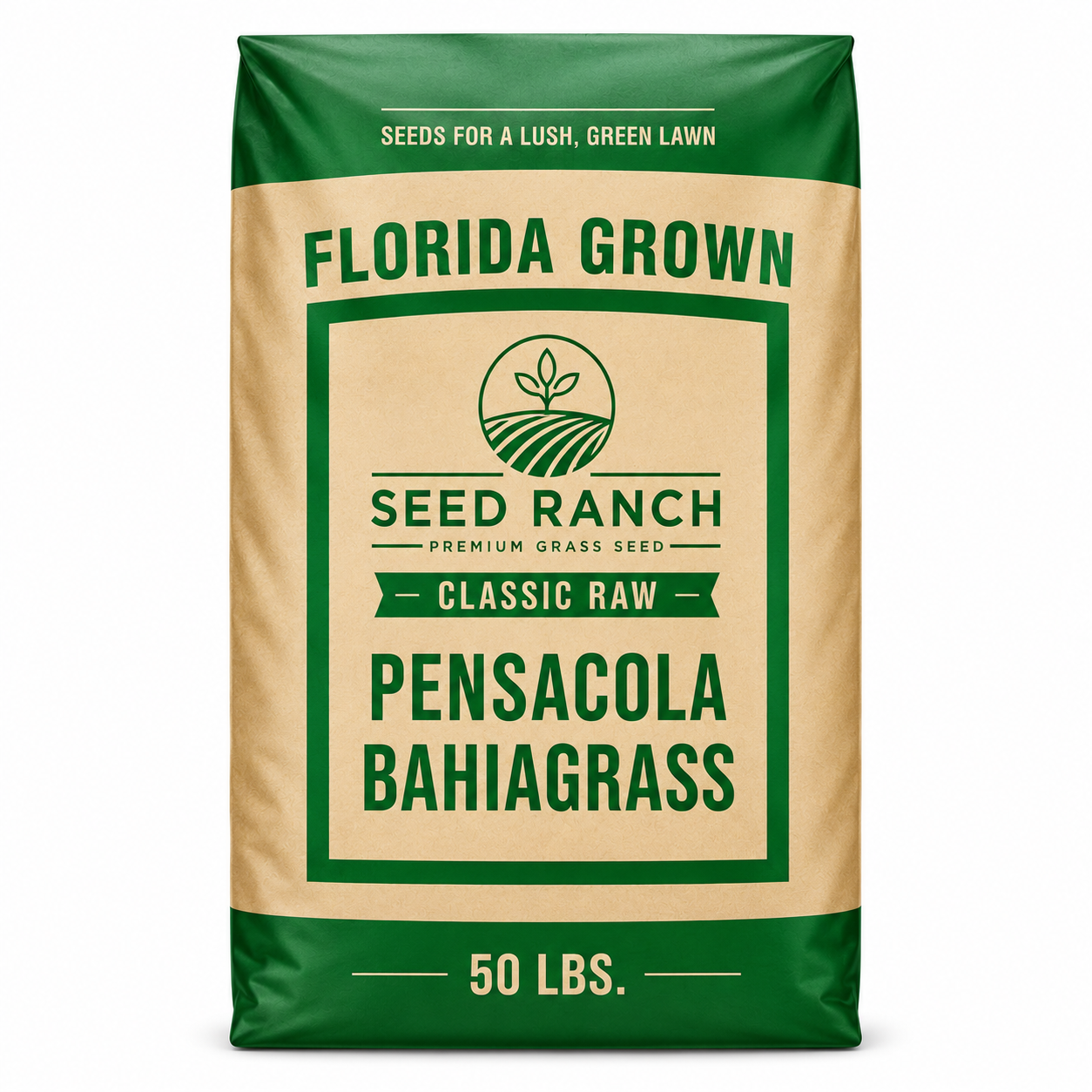
bahia grass seed lowes Pensacola Bahia Grass Seed Coated, 50 LbsPensacola Bahia Grass Uncoated Seed Ranch Classic Pensacola Bahia Grass (Traditional Raw) Seed is a dependable, time tested warm season grass seed designed for southern lawns, pastures, roadsides, utility areas, and erosion control projects. Pensacola Bahia is widely recognized for its excellent drought tolerance, deep root system, and ability to thrive in sandy, low fertility soils where many other grasses struggle. Unlike coated seed products, this
Pensacola Bahia Grass | Uncoated
Seed Ranch Classic Pensacola Bahia Grass (Traditional Raw) Seed is a dependable, time-tested warm-season grass seed designed for southern lawns, pastures, roadsides, utility areas, and erosion control projects. Pensacola Bahia is widely recognized for its excellent drought tolerance, deep root system, and ability to thrive in sandy, low-fertility soils where many other grasses struggle. Unlike coated seed products, this raw, uncoated seed contains only pure seed, with no filler or coating, allowing for accurate seeding rates and maximum seed volume per pound.
Originally developed for the hot, humid climates of the Southeastern United States, Pensacola Bahia grass has become one of the most trusted low-maintenance turf and forage grasses throughout Florida, Georgia, Alabama, Mississippi, Louisiana, Texas, and other Gulf Coast regions. Its extensive root system helps improve drought resistance, reduce soil erosion, and maintain growth during periods of heat and limited rainfall.
Pensacola Bahia grass is especially valued for:
-
Low-maintenance lawns
-
Pastures and grazing areas
-
Roadside and utility applications
-
Sandy soil stabilization
-
Drought-prone properties
-
Large acreage seeding projects
Because these seeds are raw and uncoated, growers receive more actual seed per bag compared to coated alternatives. This makes Seed Ranch Classic Pensacola Bahia Grass Seed an economical option for large lawn installations, acreage restoration, pasture establishment, and commercial seeding applications.
Key Benefits of Seed Ranch Classic Pensacola Bahia Grass Seed
| Feature | Benefit |
|---|---|
| Raw Uncoated Seed | More pure seed per pound with no coating filler |
| Deep Root System | Excellent drought and heat tolerance |
| Warm-Season Perennial | Reliable performance in southern climates |
| Low Maintenance | Requires less fertilizer and irrigation than many turf grasses |
| Sandy Soil Adaptation | Performs exceptionally well in poor, sandy soils |
| Erosion Control | Helps stabilize loose or sloped soils |
| Pasture Friendly | Suitable for grazing and forage applications |
| Traffic Tolerance | Handles moderate foot traffic and open-use areas |
| Heat Tolerance | Thrives in hot, humid climates |
| Large Coverage Potential | Ideal for acreage and large lawn projects |
Recommended Uses
| Application | Recommended |
|---|---|
| Residential Lawns | Yes |
| Acreage Properties | Excellent |
| Pastures & Grazing | Excellent |
| Roadside Seeding | Excellent |
| Utility Areas | Excellent |
| Erosion Control | Excellent |
| Coastal Properties | Very Good |
| Low Maintenance Turf | Excellent |
Why Choose Raw Pensacola Bahia Seed?
Raw Bahia seed contains no fertilizer coating, clay coating, or moisture-enhancing additives. This means:
-
More actual grass seed per pound
-
Lower overall seeding cost
-
Easier calibration for commercial spreaders
-
Preferred choice for large-scale planting projects
-
Better value for acreage applications
Coated seed products may contain significant non-seed material, while raw seed delivers maximum seed content and planting efficiency.
Planting Information
| Specification | Recommendation |
|---|---|
| Grass Type | Warm-Season Perennial |
| Seed Variety | Pensacola Bahia Grass |
| Seed Type | Raw / Uncoated |
| Sun Requirement | Full Sun |
| Soil Types | Sandy, Low Fertility, Well-Drained Soils |
| Germination Time | 14–28 Days |
| Planting Depth | 1/4 to 1/2 Inch |
| Best Planting Season | Spring Through Summer |
| Drought Tolerance | Excellent |
| Shade Tolerance | Moderate |
| Maintenance Level | Low |
Recommended Seeding Rates
| Application Type | Seeding Rate |
|---|---|
| New Lawn Installation | 15–20 lbs. per acre |
| Pasture Establishment | 20–30 lbs. per acre |
| Overseeding | 5–10 lbs. per acre |
| Erosion Control Projects | 25–40 lbs. per acre |
Planting Instructions
-
Prepare the soil by removing weeds, debris, and existing vegetation.
-
Loosen the top layer of soil to improve seed-to-soil contact.
-
Spread seed evenly using a broadcast spreader or drill seeder.
-
Lightly rake or drag the area to cover seed approximately 1/4 to 1/2 inch deep.
-
Roll or cultipack the soil for improved germination.
-
Water lightly and consistently until establishment.
-
Reduce watering frequency once roots are established.
Pensacola Bahia Grass Performance
Pensacola Bahia grass is known for its ability to survive in conditions where higher-maintenance turf grasses often fail. Its deep and extensive root system helps it tolerate drought, infertile soils, and high heat conditions common throughout the Southern United States. University and agricultural extension sources consistently recognize Bahia grass for its durability, low input requirements, and strong adaptation to sandy soils.
Ideal Regions for Planting
Seed Ranch Classic Pensacola Bahia Grass Seed performs exceptionally well in:
-
Florida
-
Georgia
-
Alabama
-
Mississippi
-
Louisiana
-
Texas
-
South Carolina
-
North Carolina
-
Coastal and Gulf Coast regions
Storage Recommendations
Store seed in a cool, dry location away from direct sunlight and moisture. Properly stored raw seed maintains better long-term viability and planting performance.
Frequently Asked Questions
Is this seed coated?
No. This product contains raw, uncoated Pensacola Bahia grass seed with no filler or coating material.
Is Pensacola Bahia grass drought-tolerant?
Yes. Pensacola Bahia grass is highly drought-tolerant due to its deep root system and ability to thrive in sandy soils.
Does Bahia grass grow well in poor soil?
Yes. Bahia grass is widely known for thriving in sandy, acidic, and low-fertility soils.
Is Pensacola Bahia good for pastures?
Absolutely. Pensacola Bahia is commonly used for grazing, hay production, and pasture establishment throughout the southeastern United States.
Shipping Notes
- Free Standard Shipping on $100+ Orders to the USA.
- Except Preorder products are shipped in 48 hours.
- Delivery to the USA:
- Standard Shipping : 3-10 business days
- If time is of the essence, please consider selecting expedited delivery for faster service.
Exchange/Return Notes
- We offer a 30-day return/exchange service after receiving.
- Final sale items are not eligible for returns or exchanges.
- To process your return/exchange, please contact us at [email protected]
- Please click here for more details>>> Return & Exchange Policy