SKU: 4504500192
round leaf jade plant

round leaf jade plant Botany Bay Jade Plant

Sale price$25.79 Regular price$28.65
Save 10%

Pay in installments of $7.16 with ShopPay, AfterPay and Klarna

Shipping Estimate
USA
  • USA
  • CAN

Ships within 48 hours · Estimated delivery Jul 25 - Jul 30

Promo Codes Available:

For Your Every Summer RSVP, with Code: SUMMER15

Description

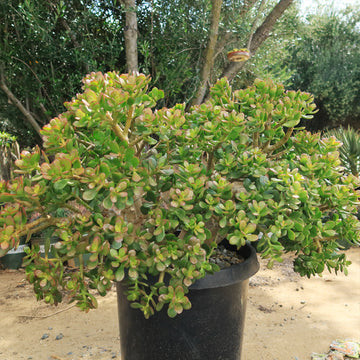
round leaf jade plant Botany Bay Jade PlantThe Botany Bay Jade plant, known as the Crassula ovata 'Botany Bay', is a popular Jade plant known for its unique foliage and low maintenance care. This Crassula succulent is one of the most widely distributed flowering succulents out there. Additionally, "Botany Bay" is the name of a location in Australia where significant botanical discoveries were made. This image features a lush, mature Botany Bay Jade plant with tightly packed, glossy green

The Botany Bay Jade plant, known as the Crassula ovata 'Botany Bay', is a popular Jade plant known for its unique foliage and low-maintenance care. This Crassula succulent is one of the most widely distributed flowering succulents out there. Additionally, "Botany Bay" is the name of a location in Australia where significant botanical discoveries were made.

This image features a lush, mature Botany Bay Jade plant with tightly packed, glossy green leaves forming a dense, bonsai-like canopy.

In Chinese culture, Crassula ovata is known as the "money tree" or "feng shui money tree" and is believed to bring good luck and financial prosperity to those who grow it.

This money plant is often given as a gift during the Chinese New Year or other auspicious occasions.

Native to South Africa and Mozambique, this evergreen beauty can grow up to 3 feet tall and 2 feet wide, depending on its conditions (so make sure you give it plenty of root space!).

During summertime, those glossy green tubular leaves shine brightly, but as we head into cooler temperatures, those edges start turning red - talk about stunning! 

The star-shaped flowers of the jade plant bloom in late winter to early spring with white flowers that create an eye-catching contrast between open blossoms and closed buds. These pollinated flowers produce seeds enclosed in these buds.

Money tree plants are exceptionally easy to propagate by leaf or stem cuttings, so you can quickly grow your collection with just a few simple steps.

The jade succulents typically go dormant during the winter months, from late fall to early spring. During this period, the plant will stop growing and may lose some of its leaves. This is a natural process and is not harmful to the plant. To encourage its growth during dormancy, the plant should be kept in a cool, dark location and reduced watering. 

So, whether you call it a jade plant, lucky plant, or money tree, Crassula ovata is definitely worth adding to your collection! 

When and How to Water Your Botany Bay Jade Plant 

The Botany Bay Jade plant succulent is naturally drought-tolerant, having evolved to store water in its thick, fleshy leaves. This makes it particularly well-suited to indoor environments where frequent watering isn’t ideal. Like most succulents, it thrives when watered using the soak-and-dry method, thoroughly saturating the soil and allowing it to dry out completely before the next watering. The Crassula ovata ‘Botany Bay’ prefers watering 10-14 days once every growing season, and once every 3-4 weeks in the dormant season.

In spring and summer, during the active growing season, the jade plant will appreciate slightly more frequent watering once every 10 to 14 days. Always check the soil moisture before watering. If the top 2 inches are dry and the pot feels noticeably lighter, it’s time to water again. Bright, indirect light and warm indoor temperatures will also cause the plant to use water more quickly during this time.

In fall and winter, during the dormant season, growth slows considerably, and so should your watering routine. Watering once every 3 to 4 weeks is often sufficient, especially in cooler homes where evaporation is slower. Be extra cautious during this period; moist, cold soil is a recipe for root rot. Reduce watering frequency and avoid misting or adding humidity, as this succulent prefers dry air year-round.

Light Requirements - Where to Place Your Jade Plant 

When grown indoors, place your Jade plant in the brightest sunny place in your house, where it gets 4-6 hours of bright light daily.

Direct sunlight can scorch the new leaves off, so placing them near a window that receives filtered or indirect light is best. 

The amount of light the plant receives can affect the color of its leaves. The money tree grown in bright light will have more vibrant, deep green leaves, while the foliage of those grown in lower light conditions may have a lighter, yellow-green color.  

When grown outdoors, the jade plant thrives best in full sun to partial shade, for at least six hours of strong light each day to survive. However, partial shade in the afternoon is often preferable - especially in hotter climates where the plant might become stressed by the intense heat of the afternoon sun.  

The red coloration on the margins of the leaves of a Jade plant is a sign of stress; it's usually not harmful to the plant and will often disappear once the plant is returned to the bright sunlight.  

Optimal Soil & Fertilizer Needs 

The Botany Bay jade plant prefers sandy, well-drained soil and should be fertilized once a year in the spring. Planet Desert specializes in succulents and has specialized succulent potting soil that includes an organic substrate with mycorrhizae to help with the growth of a healthy root system to help your new plants and succulents thrive. 

When it comes to fertilizing your Crassula ovata, it only needs a small amount of fertilizer applied once a year in spring. Succulent plants prefer a fertilizer with lower doses of NPK, with a maximum ratio of 5-10-5, higher in phosphorus than nitrogen.

Hardiness Zone & More

In the United States, this Botany Bay Jade Plant is mostly an indoor plant, but if you live in southern Florida or Hawaii, then you can cultivate it outdoors in USDA zones 9-11.

The jade plant, on the other hand, cannot handle frost, cold, or freezing temperatures, so make sure it doesn't get below 45 degrees F in its environment. 

As desert dwellers, the jade plant enjoys hot temperatures and high humidity, but can tolerate lower humidity as well. They prefer constant temperatures above 70 degrees Fahrenheit and can tolerate triple digits in the summer, so don't worry if your succulents get too hot.

In terms of coloration, Jade plants can display different colors depending on the temperature. When the plants are exposed to cooler temperatures, the leaves may turn reddish or purplish in color. This reddish tint on smooth, fleshy leaves is a natural response to cooler temperatures and is not harmful to the plant.

How to Grow Best Botany Bay Jade Plant Indoors 

Botany Bay Jade plants thrive in temperatures between 65-75°F during the day and slightly cooler temperatures at night. Make sure to place them in a bright, indirect light location to encourage healthy growth. Avoid overwatering by allowing the soil to dry out between waterings to prevent root rot.

Wildlife - Jade Plant Flowers Attract the Following Friendly Pollinators

Jade plant flowers are known to attract a variety of friendly pollinators, including bees, butterflies, and hummingbirds. These creatures are drawn to the sweet nectar and vibrant colors of the flowers, helping to facilitate pollination and promote the growth of new plants. Additionally, the presence of these pollinators can contribute to a healthy ecosystem and biodiversity in the surrounding area.

Butterflies
Bees
Hummingbirds
Lady Bugs
Multi Pollinators
Other Birds

According to ASPCA, the Crassula ovata 'Botany Bay' jade plant is considered mildly toxic to pets and humans. However, it is safe to touch and handle, making it a popular choice for indoor houseplants.

How to Propagate Your Crassula ovata 'Botany Bay' Jade Plant

To propagate your Crassula ovata 'Botany Bay' Jade Plant, you can take stem cuttings from a healthy, mature plant. Make sure the cutting is at least 3-4 inches long and allow it to dry for a few days before planting it in well-draining soil. Water sparingly until roots develop, then gradually increase watering as the plant establishes itself.

Key Takeaways

  1. Botany Bay Jade has a compact, upright growth habit, forming dense clusters of fleshy green leaves with reddish edges in bright light.
  2. This variety is considered a symbol of prosperity and good luck, often used as a Feng Shui “money plant” in homes and offices.
  3. It is highly drought-tolerant, storing water in its thick leaves and requiring only infrequent watering.
  4. The plant responds well to pruning and shaping, making it a popular choice for bonsai-style training and container displays.
  5. Its low-maintenance nature and attractive form make it an excellent choice for beginners or busy plant lovers.

The Bottom Line

Overall, the Botany Bay Jade Plant is a resilient, slow-growing succulent prized for its compact shape and dense clusters of bright green, fleshy leaves that often develop red margins in full sun. Its tidy growth habit makes it ideal for containers, small spaces, or bonsai training. With its drought tolerance, low-maintenance needs, and ornamental appeal, Botany Bay is a reliable and attractive choice for both beginner and experienced plant owners looking to add a touch of structure and vibrant greenery to their indoor collection.

Shipping Notes
  • Free Standard Shipping on $100+ Orders to the USA.
  • Except Preorder products are shipped in 48 hours.
  • Delivery to the USA:
  1. Standard Shipping : 3-10 business days
  • If time is of the essence, please consider selecting expedited delivery for faster service.
Exchange/Return Notes
  • We offer a 30-day return/exchange service after receiving.
  • Final sale items are not eligible for returns or exchanges.
  • To process your return/exchange, please contact us at [email protected]
  • Please click here for more details>>> Return & Exchange Policy
SKU: 4504500192

Discover Niche Categories That Outsell round leaf jade plant

Top-Converting Item to Boost Your Average Order

4.4 ★★★★★
Based on 15 reviews
Sort
Highest Rating
Newest First
Oldest First
Product Reviews
S
Verified Purchase
Steve Dietrich
San Leandro, US
★★★★★ 4
Eyes Wide Open (with a few omissions)
Format: Audiobook
Thought provoking and great insights but with a few material omissions. As others have noted this is an extremely thought provoking book. Perhaps the most disturbing is the discussion of war gaming a war with China and in most every Chinese initiated war China wins. A close runner-up was the lack of widespread commitment of other senate members to be as fully informed as possible on the military side of military affairs including budgets for specific projects. It's hard to document the claim that two issues were serious omissions but I think there were. There are seemingly minor details that are important Robert McNamara worked for Ford not GM. This is important for decisions at Ford by McNamara's accolates took Ford down to one of its smallest market share of the postwar years. McNamara gave Ford the Falcon , his successors brought out the Mustang. His arrogance cost billions and thousands of lives. McCain recognized the political folly of the initial "leased" Boeing Replacement Tanker Program but that is not discussed. Neither is the continuing debacle of the program, felony convictions/pleas of top Boeing execs and the Pentagon's civilian chief of procurement all associated with the ill-fated tanker program. Declared a near emergency need at the turn of the century, twenty later the tankers can not perform the mission and tens of billions over budget. To put the Tanker Program debacle in perspective, In July 1962 the US achieved its first orbital space flight and its first Moon landing 7 years later. In contrast the replacement tanker program has been in process Boeing was awarded the contract in 2002 , 19 years later and the tankers are not fully operational. Along the way both Boeing and a top civilian dod official did some hard time on felony corruption convictions/pleas. The author notes that in the event of an outbreak of war between the US and China the US ships must get far offshore to have even a chance of survival, well beyond the range of existing carrier based aircraft to attack Chinese forces. The lack of tankers, short range attack aircraft and light loads prevents the Navy from going deep inland. Part of the problem is that the Navy was induced to scrap the long range, extremely deadly F-14B and F-14X and replace them with the slower, shorter range , less carrying capacity F-18s (also made by Boeing) . The Navy had available at the time the F-14X upgrade program which would have converted the F-14 to an even more deadly fighter / bomber and equipped them with a follow-on to the Phoenix missiles, so badly needed to defend the fleet against airborne launched cruise missiles. In addition there were further upgrades in the works to give the Phoenix missiles extremely valuable capabilities. A further indication of the suspicious pattern is that DOD required that all F-14 tooling and parts be destroyed. The claim was made that the F-14s were maintenance hogs. Partly true but largely fixed with the F-14X digital conversion and new engines. While the maintenance hours per flight hour were problematical, when looked at in the big picture they were a rounding error in the 6,000 or so sailors in the Battle Group working 10-15 hour days and the thousands onshore supporting the effort. Does this matter, well yesterday the Chinese ran a practice attack on a US carrier as about 15 aircraft approached within 250 nautical miles of the carrier. Most certainly within range to launch enough hypersonic cruise missiles to virtually assure the carrier would be taken out of action or sent to the bottom of the ocean. As the author notes today's strategy requires that the carriers flee the area and standoff about 1,000 miles. Faster, much longer range F-14x aircraft with the next generation Phoenix would significantly reduce this threat. They would also do the same against large Russian aircraft carrying many cruise missiles. The F-35s will help overcome this deficiency but until they are fully operational and our Naval tanker capabilities redeveloped US capabilities are seriously compromised. The author makes many great observations regarding deficiencies in procurement management, in the Pentagon , Congress and White House. Examples discussed include the Army's failed attempt to acquire a new pistol. The 500 page request for proposals and flawed competition would be a joke were in not for the fact that the taxpayers precious dollars were wasted in the failed effort. An illustration of how perverted the situation has become was illustrated today with a note the the US Air Force had issued an RFP for a "modesty curtain" to be installed on our ancient B-52's because there were now female personnel flying missions. This is a need that should be solvable by a few individuals over a bottle of wine who would probably come up with better ideas, reviewed by an engineer on Monday and perhaps fabricated in one of the base shops. As others have noted it was USAF Col John Boyd who revolutionized the air to air combat, was shunned by top Brass while at the Pentagon and left to his own devices prepared his famous day long lecture on Winning and Loosing Wars that in turn helped rewrite the USMC land battle doctrine. Most all of this work done out of sight of his "leaders" . The author might have also given credit to leaders like Admiral Tom Connolly who sacrificed his career to save Naval aviation from the terminally flawed F-111B as an example of the character and courage needed in the Pentagon, Congress and the White House today and into the future. The author's descriptions of the challenges posed by an aggressive and expansive China should be taken to heart by every American. Unless we stop treating military procurement as a Chicago like spoils system and manage both what we buy and what we pay for it we are inviting Chinese military challenges and placing an even greater financial millstone around the necks of American taxpayers and their future generations. Overall , not perfect but a very important must read
WAS THIS REVIEW HELPFUL?YesReportShare
Reviewed in the United States on January 30, 2021
A
Verified Purchase
Amazon Customer
Houston, US
★★★★★ 5
Add this to every DoD Reading List!
Format: Kindle
There were so many great excerpts throughout the book that my highlights filled 16 pages in MS Word. This is a must read for all Pentagon personnel, those in operational commands, the acquisition community, and defense industry. Chris' insights as McCain's advisor were invaluable to understand the nuances and competing incentives of the DoD, industry, and Congressional perspectives. "The problem is that America is playing a losing game. Over many decades we have built our military around small numbers of large, expensive, exquisite, heavily manned, and hard to replace platforms that struggle to close the kill chain as one battle network. China, meanwhile, has built large numbers of multi million dollar weapons to find and attack America’s small numbers of exponentially more expensive military platforms." "It requires a sweeping redesign of the American military: from a military built around small numbers of large, expensive, exquisite, heavily manned, and hard to replace platforms to a military built around large numbers of smaller, lower cost, expendable, and highly autonomous machines." "New technologies alone will not save us. We need new thinking — an ambitious effort to reimagine the ends, ways, and means of US military power, as well as the role of our allies in this effort — to succeed in a future world where America’s military superiority will likely erode further if China’s military technological development continues."
WAS THIS REVIEW HELPFUL?YesReportShare
Reviewed in the United States on May 9, 2020
D
Verified Purchase
Dick Martin
Houston, US
★★★★★ 5
The Real Arms Race
Format: Kindle
I am a life-long Democrat, supposed to bristle at the very idea of military spending. Brose's book convinced me the problem is not how much we spend, but what we're spending it on. "Kill chain" is military-speak for the three phases of combat -- figuring out what's going on, deciding what to do about it, and taking effective action. Brose spells out how technology changed all three phases while the Defense Department and its minders in Congress weren't paying attention. The result has been to significantly undermine our military preparedness and, more importantly, the ultimate goal of deterrence. For all the money we're spending, Brose shows how it's mostly on the wrong things, i.e., large, expensive platforms that are only incremental improvements over prior systems designed for different times. He shows how the military-industrial complex, abetted by a Congress invested in the status quo, is arming our military with technology inferior to what you'd find in a modern automobile. The development of the Internet may have been kick-started by the defense department back in the 1960s, but the information revolution that followed largely left the U.S. military behind. Meanwhile, potential adversaries are compensating for relatively lower defense budgets by exploiting emerging technologies that could change the character of war, raising multiple ethical, geo-political, and governance issues. The Kill Chain is compelling, scary, and must-reading for our political leaders and all intelligent voters.
WAS THIS REVIEW HELPFUL?YesReportShare
Reviewed in the United States on May 28, 2020
P
Verified Purchase
Peter A. Scala
Houston, US
★★★★★ 5
Well written and thought-out approach to change DoD acquisition
Format: Hardcover
I'm a Navy acquisition manager and former Navy officer. I very strongly recommend this book as required reading for Pentagon (especially flag officers and SESs), congressional staffs, defense contractors and those who would be defense contractors, Silicon Valley companies, and everyone who cares about the future of the United States. The author expertly characterizes the current world situation and the issues with DoD acquisition practices. He is not brutal about it, but fair. He explains the background and history behind how we got to where we are, and identifies a path forward. I believe that following the approach recommended is very hard, but very worth while. The author worked for Senator McCain for almost ten years, and it is clear that this book benefits from his experience. My only gripe (and it is a minor one) is that very occasionally the author allows his feelings about Trump to manifest in a negative way. This is often justified, but it shouldn't be so one-sided. Nevertheless, this book is must-read, and deserves five stars.
WAS THIS REVIEW HELPFUL?YesReportShare
Reviewed in the United States on January 2, 2021
C
Verified Purchase
Craig Hart
Draper, US
★★★★★ 4
Very Educational
Format: Paperback
I enjoyed the book. I wish the average American would take more of an interest in these kinds of issues facing the U S in the China sea region of the world.
WAS THIS REVIEW HELPFUL?YesReportShare
Reviewed in the United States on February 7, 2024

recommand products