SKU: 45710412334
tamarind seed planting

tamarind seed planting Tamarind Tree Seeds - For 2026 Planting Tamarindus Indica Tamarindo

Sale price$26.95 Regular price$29.94
Save 10%

Pay in installments of $7.49 with ShopPay, AfterPay and Klarna

Shipping Estimate
USA
  • USA
  • CAN

Ships within 48 hours · Estimated delivery Aug 17 - Aug 22

Promo Codes Available:

For Your Every Summer RSVP, with Code: SUMMER15

Description

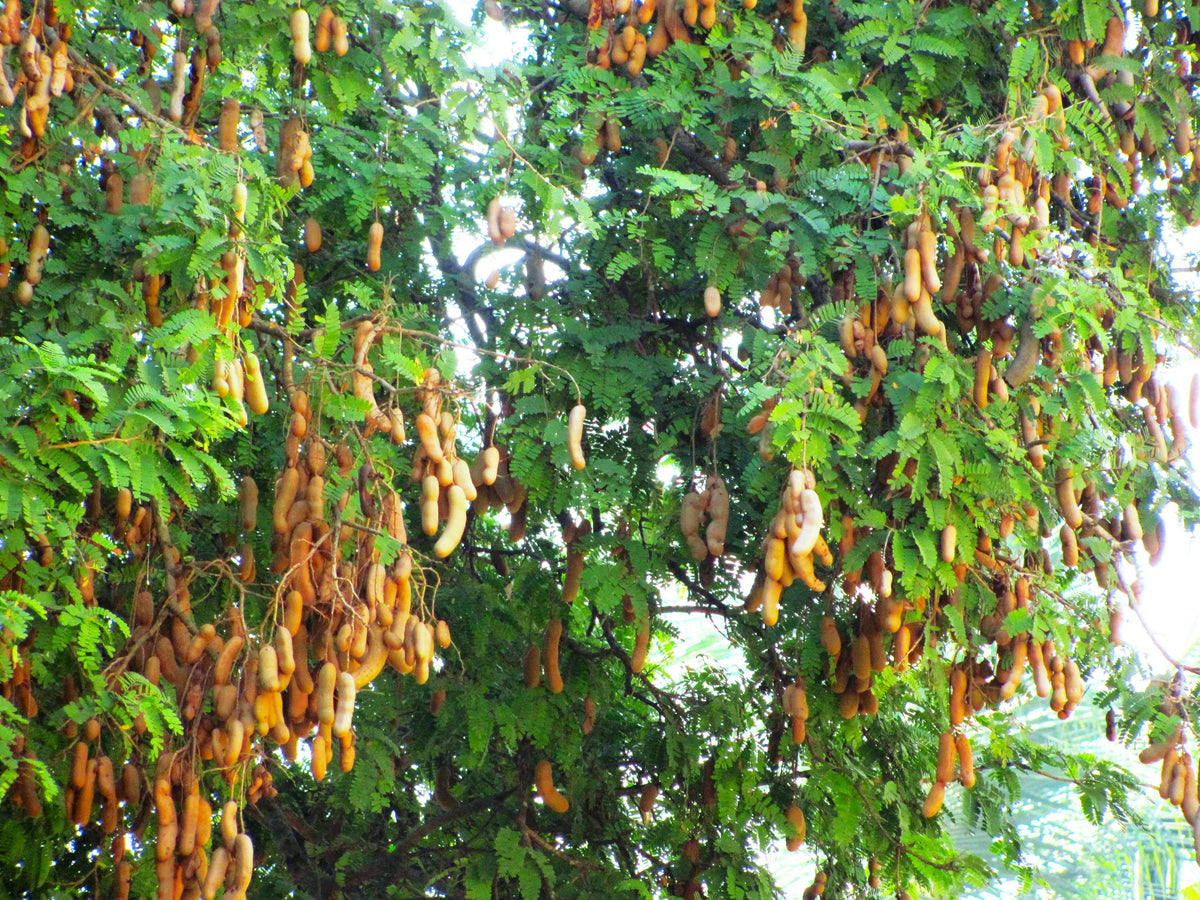
tamarind seed planting Tamarind Tree Seeds - For 2026 Planting Tamarindus Indica TamarindoTamarind features long, brown pods with a delicious sweet tart, sticky, tangy pulp that is essential in many culinary dishes worldwide! Used in favorite dishes and drinks like Pad Thai, Sambar, Chutneys, Agua de Tamarindo, Pho, and Som Tam. Tamarind is a key ingredient in Indian, Thai, Mexican, and many other global cuisines. This exquisite fruit grows on evergreen trees with a broad, dense canopy and small, bright green pinnate leaves that yellow and

Tamarind features long, brown pods with a delicious sweet-tart, sticky, tangy pulp that is essential in many culinary dishes worldwide! Used in favorite dishes and drinks like Pad Thai, Sambar, Chutneys, Agua de Tamarindo, Pho, and Som Tam. Tamarind is a key ingredient in Indian, Thai, Mexican, and many other global cuisines. This exquisite fruit grows on evergreen trees with a broad, dense canopy and small, bright green pinnate leaves that yellow and fall during the dry season. Tamarind Trees can reach height of 30 to 60 feet, with a spread of 30 to 40 feet. Its leaves, bark, and fruit have a long-standing role in herbal remedies. The Tamarind Tree's fruit pulp is often used as a natural remedy for digestive issues and is known for its high levels of antioxidants and vitamins. The Tamarind Tree makes for an attractive addition to tropical and sub-tropical gardens with the added benefit of producing nutritious tangy fruit year after year.

Also Known As: Tamarind Tree, Tamarindus Indica, Tamarindus, Indian Date, Tamarindo, Tamrind, Imli Tree, Assam Tree, Asam Jawa, Javanese Tamarind Plant, Indian Tamarind, Pulp Tamarind.

Plant Name: Tree, Tamarind
Latin Name: Tamarindus indica
Days to Germinate: 14-28
Years to Fruit: 2 - 3 Years
Plant Height: 30 - 60 Feet
Spread: 30 - 40 Feet
Growth Habit: Upright
USDA Zones: 9-11
Lifespan: Perennial
Brand: TomorrowSeeds
Sunlight: Full Sun, Partial Shade
Pollination: Heirloom, Open-Pollinated
GMO: No
Fungicide-Treated Seeds*: No
Seeds Packed For**: 2026
*Fungicide-treated seeds protect the seedlings from diseases until they are up and growing. Do not eat treated seeds.
**Seeds are freshly packed for the growing season of the year listed. Seeds are still viable beyond pack date. Store in a cool and dry location such as the refrigerator or basement to best preserve germination rates.


Planting Instructions:

Soil Preparation:

Choose a clear, sunny location that is not in the shade of other trees and receives at least 6 hours of sunlight each day. Trees establish roots better in sandy, well-drained soils rather than heavy, poorly drained soil. Remove weeds, large rocks, and litter from the planting area. Leave small weeds and dead grass, they will enrich the soil when turned under. Spade or till the soil 6-8 inches deep. Loosening the soil will help the plant establish strong roots. If the soil is heavy or clay-like, mix in some sand or compost to improve drainage. Optionally, either form rows of soil beds or hills 4-6 inches high and at least 40 feet apart. This formation of ridges will help with drainage, ensure good airflow, and make harvesting or maintenance easier.

Planting:

Tamarind thrives in warm, tropical to subtropical climates, preferring temperatures between 75F-95Fand are highly drought-tolerant once established.

Starting Indoors: Tamarind Tree seeds do not require cold-stratification to germinate but may benefit from soaking. To germinate seeds, soak seeds 24 hours in hot tap water prior to sowing. Roll seeds in a damp paper towel and place in a resealable bag and place bags in 70F-90F area for 1-2 weeks. Plant indoors in small pots with moist potting soil 1 month before the last expected frost in spring, and place the pots in a warm, sunny location that is at least 65F. Keep the soil moist, allowing the top inch of soil to dry in between waterings.

Once the seedlings have developed a few sets of leaves and are at least 6 inches in height, harden off seedlings then transplant outdoors in the spring, in a sunny location when temperatures are consistently above 65F. To transplant seedlings, prepare a transplant hole outdoors in a sunny, permanent location. Remove the plants carefully from the pots or flats and set them in the transplant holes, burying some of the stem in the ground. Pack the soil loosely around the plant and leave a slightly sunken area around each plant to hold water. Water the plants after transplanting.

Directly Sowing: If directly sowing outdoors, plant in spring in a sunny location when temperatures are consistently above 70F. Soak seeds 24 hours in hot tap water prior to sowing. Roll seeds in a damp paper towel and place in a resealable bag and place bags in 70F-90F area for 1-2 weeks. To plant, make holes 1 inch deep and spaced 30 feet apart down the rows of raised beds. Plant 1 seed per hole, then cover thinly with soil. Seedbeds can be covered with plastic film to promote germination. Water after planting.


Planting Depth: 1 inch
Within-Row Spacing: 30-40 feet
Between-Row Spacing: 40 feet


Care During the Season:

Tamarind is a resilient, long-lived tree that produces abundant, high-quality fruit for culinary and medicinal use year after year with care. While young trees benefit from regular deep watering, mature trees require minimal irrigation. Fertilization can optionally be done twice a year, in early spring and mid-summer, using a balanced fertilizer. Pruning is generally minimal but can be beneficial.

Harvesting:

Tamarind pods are ready for harvest when they turn brown and brittle, around late winter to early spring, 6-9 months after flowering,. The outer shell hardens and becomes dry, while the pulp inside transforms from sour and green to a sticky, brown, and sweet-sour consistency. If the pods are still green or soft, they are not fully ripe and should be left on the tree longer to ripen. To harvest, simply pluck the mature pods by hand or use pruning shears if they are hard to reach. After harvesting, tamarind pods can be dried in the sun for a few days to further harden the shell and concentrate the flavors. The pulp can be stored inside the shell for long-term use or extracted and preserved as a paste.

Shipping Notes
  • Free Standard Shipping on $100+ Orders to the USA.
  • Except Preorder products are shipped in 48 hours.
  • Delivery to the USA:
  1. Standard Shipping : 3-10 business days
  • If time is of the essence, please consider selecting expedited delivery for faster service.
Exchange/Return Notes
  • We offer a 30-day return/exchange service after receiving.
  • Final sale items are not eligible for returns or exchanges.
  • To process your return/exchange, please contact us at [email protected]
  • Please click here for more details>>> Return & Exchange Policy
SKU: 45710412334

Discover Niche Categories That Outsell tamarind seed planting

Top-Converting Item to Boost Your Average Order

4.3 ★★★★★
Based on 20 reviews
Sort
Highest Rating
Newest First
Oldest First
Product Reviews
A
Verified Purchase
Amazon Customer
Belleville, US
★★★★★ 5
Superman: The Golden Age: Volume 1 Review
Format: Paperback
If you’re a fan of, or are interested in the Golden Age of comics, this book is for you. This is really the mainstream beginning of superhero comics. Before everything became mired in continuity, there were one-shot stories that were fun, and often dark. I definitely also recommend this for people who want to get into Superman as a character. For the price, the amount of content you get just can’t be beat.
WAS THIS REVIEW HELPFUL?YesReportShare
Reviewed in the United States on January 31, 2020
C
Verified Purchase
C. T. Dixon
Battle Creek, US
★★★★★ 5
This is a Superman I can believe in
Format: Paperback
This is the original Superman, the one who made the character a hit. His powers have limits - a fire threatens his life! - and he uses them for the little guy, against social injustice. One of the best stories, from Action #5, has Supes fighting a breaking dam and flood, but mostly he's fighting human crookedness - crooked lobbyists, crooked football coaches, crooked mine owners, crooked taxi rackets. This Superman is a law unto himself, dependent on nothing but his strength and his personal sense of right. He's a lot more like Samson in that way than he's a Christ figure, and the result is stories in which he lightheartedly smashes slums so the government will have to build decent housing for the poor, smashes cars of reckless drivers, smashes an oil well to bankrupt the crooked promoters. Private property means nothing to him. Neither do legal rights. He's not here to fight for law and order, he's here to fight for justice as he sees it. The police? the government? They're feckless at best, and more often they're part of the problem. There's a strong Progressive sensibility here: if institutions don't benefit the people, the people need to take charge and change things. That's the Superman we see here, and it's the Superman I like best - the original Superman with brute vigor, a passion for justice with no subtlety, and no taking himself too seriously. It's not art, but it's what made comic books. And it still stands up.
WAS THIS REVIEW HELPFUL?YesReportShare
Reviewed in the United States on February 16, 2014
K
Verified Purchase
Kid Kyoto
Birmingham, US
★★★★★ 5
Where it all began
Format: Paperback
Superman was a hit almost from day one, selling not only millions of comics but quickly went on to star in radio shows, movie serials, TV shows, cartoons, movies and every other media under the sun. And it all starts here. This volume reprints the very first Superman stories from 1938 - the Superman chapters from Action Comics 1-13, the New York World's Fair special and Superman #1, some of the rarest and most valuable comic books ever published. The art is crude but serviceable, but the stories are surprisingly political. Rather than fighting super villains or aliens Superman spends more of his time taking on corrupt businessmen and politicians. In one early story he ends a war in Europe by kidnapping an arms maker and forcing him to fight in the trenches. After his experience he swears never to make weapons again. This is a Superman who takes on the real issues of his time, and while the solutions are simplistic his goals are a lot more impressive than stopping bank robbers or killer robots. An early super villain, the Ultra Humanite, puts in a appearance but even his plot is centered around labor unrest rather than death rays. This is a fascinating look into the history of American comics. politics and popular culture. I recommend it to anyone with an interest in those subjects.
WAS THIS REVIEW HELPFUL?YesReportShare
Reviewed in the United States on June 26, 2011
A
Verified Purchase
Adam Graham
Charlottesville, US
★★★★★ 4
The Menacing Man of Steel
Format: Paperback
This story tracks Superman's first fifteen stories beginning with Action Comic #1 through Action Comics #13 and also includes the New York World's Fair Comics #1 story and a few pages that Superman #1 added to its reprints of the stories in Action Comics #1-#4. These fourteen stories features Superman as defender of the weak against a variety of foes including munitions dealers who Jerry Siegel charged with starting wars to line their own pockets, heartless mine owners, gangsters, and slum lords. Superman's tactics were far rougher than they would become as Superman became a little more mild during the 1940s. Superman,like Batman struck fear in the hearts of criminals. Though Batman needed a cool name and a scary costume, all Superman needed to was to keep dropping and catching suspects until they talked. Superman's rough edge would begin to get out of line. In Action Comics #8, he decided to solve the problem of slums by tearing them down forcing the government to rebuild as they had during recent hurricanes. The police responded by putting a warrant out for him for understandable reasons. From here, Siegel made Superman even more forceful culminating in Action Comics #11 which sees the Man of Steel declare war on "Reckless Drivers." Declaring war involves forcibly seizing control of a radio station to broadcast a warning and then destroying all the automobiles in the police impound lot, among other very destructive acts. The stories serve as an almost cautionary tale of the danger of someone with unstoppable and no humility. It reflects the brashness of a 23-24 year old writer. Thankfully Superman would grow in the 1940s into a character that inspired by hope than by fear. However, despite the more menacing Superman in this book, there are some fun stories in here. My Absolute favorite is Action Comics #6 which features an agent pretending to represent Superman and selling merchandising rights for the Man of Steel, which turned out to be prophetic of the merchandising machine Superman would become. Action Comics #7 features another story of Superman helping out somebody whose just in trouble and needs help. Action Comics #13 introduces the Ultra-Humanite, the first real supervillain, though we only get to meet him briefly. Overall, this is great for adult Superman collectors who want to read all of his stories. For kids, I'd probably recommend Superman in the Forties for a more balanced look at the Man of Steel.
WAS THIS REVIEW HELPFUL?YesReportShare
Reviewed in the United States on October 26, 2013
J
Verified Purchase
jccastrol
Bozeman, US
★★★★★ 5
Remember old times.
Format: Paperback
Old one but in good condition my son really liked.
WAS THIS REVIEW HELPFUL?YesReportShare
Reviewed in the United States on February 11, 2026

recommand products