Pay in installments of $7.35 with
 ,
 and

Shipping Estimate
USA
- USA
- CAN
- USA
- CAN
Ships within 48 hours · Estimated delivery Oct 23 - Oct 28
 Promo Codes Available:
For Your Every Summer RSVP, with Code: SUMMER15
Description
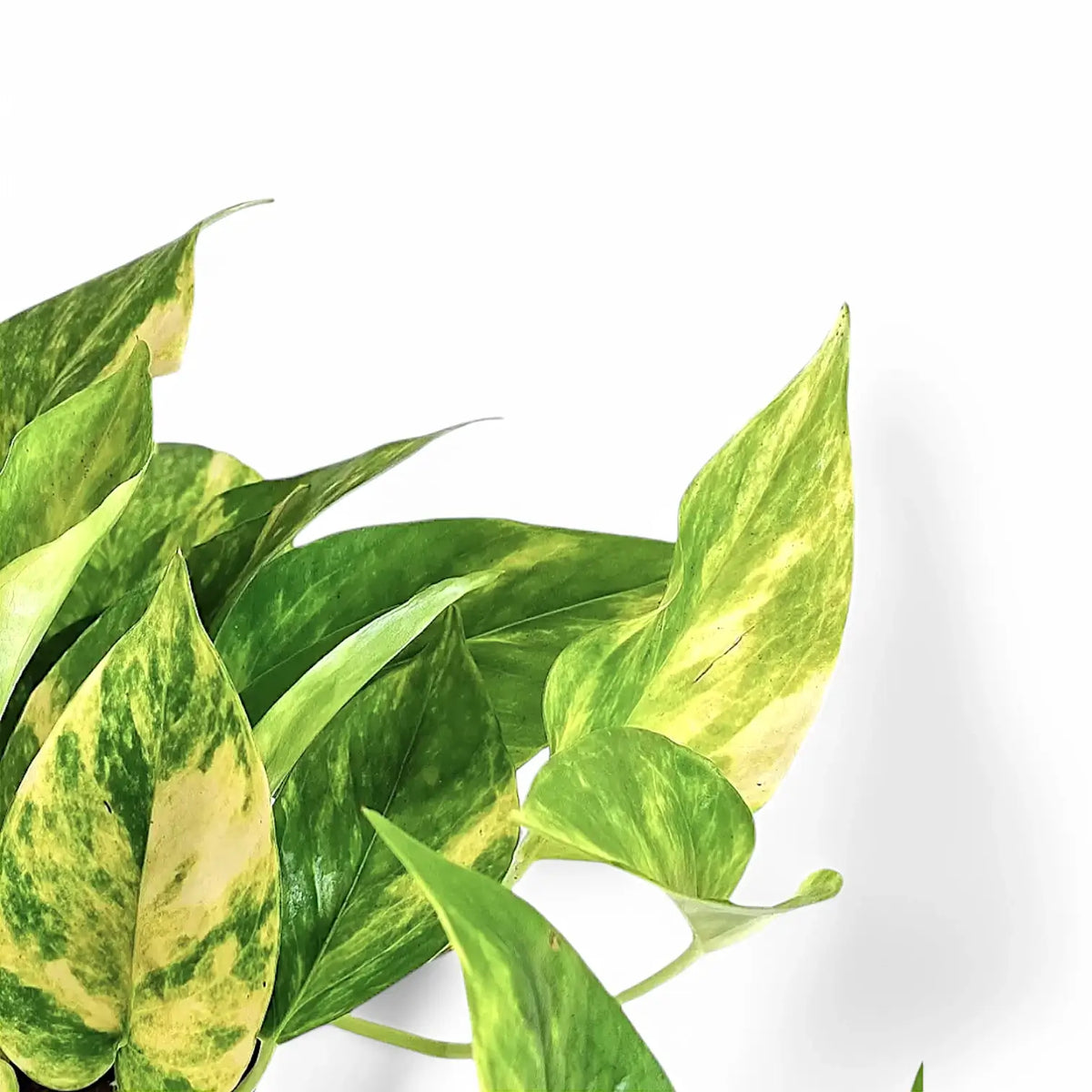
pothos one yellow leaf Epipremnum aureum 'HiColor' – Yellow-Splashed PothosEpipremnum aureum 'HiColor' bright yellow lime marbling on a vigorous indoor vine Epipremnum aureum 'HiColor' is grown for high contrast foliage in bright yellow green, lime, and softer green tones. Instead of the broad cream marbling seen in white variegated forms, this selection stays in a warmer, greener range and gives off a more saturated look overall. The leaves are glossy, heart shaped, and lively without looking as flatly coloured as 'Neon' or
Epipremnum aureum 'HiColor' – bright yellow-lime marbling on a vigorous indoor vine
Epipremnum aureum 'HiColor' is grown for high-contrast foliage in bright yellow-green, lime, and softer green tones. Instead of the broad cream marbling seen in white-variegated forms, this selection stays in a warmer, greener range and gives off a more saturated look overall. The leaves are glossy, heart-shaped, and lively without looking as flatly coloured as 'Neon' or as heavily marbled as 'Marble Queen'.
That makes it a useful middle ground within Epipremnum aureum cultivars. It has more colour impact than plain green or standard golden forms, but it keeps the easy growth and flexibility that make pothos so reliable indoors. Left alone, it trails freely. Given support, it climbs and gradually puts on stronger, better-sized foliage.
Where Epipremnum 'HiColor' stands out most
- Colour range: Leaves usually show bright yellow-lime and green in irregular marbling rather than solid colour or sharp white patterning.
- Leaf shape: Juvenile leaves are heart-shaped, smooth-edged, and slightly glossy, with a clean, even surface.
- Overall look: The pattern feels brighter and warmer than standard golden pothos, but more varied than a solid yellow-green cultivar such as 'Neon'.
- Growth style: Flexible stems can trail, hang, scramble, or climb depending on how the plant is grown.
- Indoor scale: With time, vines can grow well past 1 m indoors; supported plants usually build stronger growth than unsupported trailing ones.
- Texture: Foliage is smooth and lightly leathery rather than thin or delicate.
What is known about Epipremnum aureum behind the trade name 'HiColor'
- Accepted species: Epipremnum aureum, a member of Araceae
- Native origin of species: Mo'orea in French Polynesia
- Natural habit: Root-climbing tropical vine that uses aerial roots to move across trunks and other surfaces.
- Indoor character: In cultivation, most plants remain juvenile unless they are given height, support, and time to mature.
- Flowering: Indoors it is grown for foliage; flowering is extremely uncommon.
- Toxicity: Plant tissue contains insoluble calcium oxalate crystals and is not safe for pets or people to chew.
Indoor care that keeps 'HiColor' looking clean and strong
- Light: Bright, indirect light gives the best balance of compact growth and clear colour contrast. It will tolerate slightly dimmer placement, but stems tend to stretch more and the overall pattern reads less crisply.
- Watering: Drench the substrate, then wait until roughly the upper third has dried before watering again. Constant moisture around the roots leads to more trouble than a short dry pause.
- Substrate: Use a loose, breathable mix that drains fast but does not become bone dry immediately. A blend based on potting mix or coco coir with bark and perlite works well.
- Humidity: Ordinary indoor humidity is usually enough. Around 40–60% supports smoother leaf unfurling and tidier edges.
- Temperature: Keep it in a stable range of about 18–29°C and avoid cold drafts, chilled windowsills, or a wet root zone in cool conditions.
- Feeding: During active growth, a balanced liquid feed at low to moderate strength every 4–6 weeks is enough. More is not better; excess fertilizer often shows up as rough edges or dull foliage.
- Repotting: Repot when roots have filled the pot heavily or when the substrate has broken down and no longer dries evenly. Go only one pot size up.
How 'HiColor' behaves when trailing, climbing, or being cut back
- Trailing growth: In a hanging pot or on a shelf, stems lengthen into loose cascading vines that show off the marbling well.
- Climbing growth: On a pole, plank, or trellis, aerial roots can attach and the plant often responds with stronger upward growth and gradually larger leaves.
- Pruning: Cutting just above a node helps keep the plant denser and prevents long bare stretches from building up.
- Propagation: Stem cuttings with at least one node root easily in water or lightly moist substrate when kept warm.
- Water culture and mineral substrates: This form can be transitioned to water culture or inert mineral substrates if the change is gradual and nutrients remain consistent.
- Routine upkeep: Dust on bright foliage shows quickly, so wiping the leaves now and then keeps the colour looking clear rather than dull.
When Epipremnum 'HiColor' starts looking off
- Yellow leaves: Most often point to roots staying wet too long, poor drainage, or substrate that has become too dense.
- Brown tips or margins: Usually linked to prolonged dryness, irregular watering, fertilizer salts, or very dry air.
- Long, sparse vines: Most often a sign of weaker light, delayed pruning, or a plant that has been allowed to stretch too far without being cut back.
- Small, tired-looking new leaves: Commonly caused by low light, exhausted substrate, strong root congestion, or missed feeding over a long period.
- Soft stems or darkened nodes: Usually indicate rot after cold, wet conditions around the root zone.
- Pests: Mealybugs, spider mites, thrips, and scale can all appear, especially on stressed plants. Check nodes and leaf undersides first.
Why the name 'HiColor' makes sense
Epipremnum comes from Greek and refers to growth upon a trunk, which matches the species’ natural climbing habit. aureum means “golden,” pointing to the yellow-marked wild type. The trade name 'HiColor' suits this form because the foliage reads brighter and more saturated than standard golden pothos without shifting into cream-white variegation.
Epipremnum 'HiColor' for brighter foliage without fussy care
If you want an easy indoor climber with stronger yellow-lime marbling than standard golden pothos and a livelier look than plain green forms, Epipremnum aureum 'HiColor' is a strong option. Give it good indirect light, a free-draining mix, and a sensible watering rhythm, and it will reward you with fast, flexible growth and bright foliage that stays useful in many setups.
Shipping Notes
- Free Standard Shipping on $100+ Orders to the USA.
- Except Preorder products are shipped in 48 hours.
- Delivery to the USA:
- Standard Shipping : 3-10 business days
- If time is of the essence, please consider selecting expedited delivery for faster service.
Exchange/Return Notes
- We offer a 30-day return/exchange service after receiving.
- Final sale items are not eligible for returns or exchanges.
- To process your return/exchange, please contact us at [email protected]
- Please click here for more details>>> Return & Exchange Policy