SKU: 46745750305
ghost echeveria succulent

ghost echeveria succulent Shop 'Echeveria lilacina – Ghost Echeveria' Care & Growing Guide

Sale price$20.54 Regular price$22.82
Save 10%

Pay in installments of $5.71 with ShopPay, AfterPay and Klarna

Shipping Estimate
USA
  • USA
  • CAN

Ships within 48 hours · Estimated delivery Oct 27 - Nov 1

Promo Codes Available:

For Your Every Summer RSVP, with Code: SUMMER15

Description

ghost echeveria succulent Shop 'Echeveria lilacina – Ghost Echeveria' Care & Growing GuideThe Echeveria lilacina, known as Ghost Echeveria, is a strikingly beautiful succulent cherished for its soft, silvery gray leaves and elegant rosette form. This slow growing ghost succulent plant is prized for its resilience, low maintenance nature, and ability to thrive in arid conditions. Its muted coloration makes it a perfect complement to vibrant succulents or a sophisticated addition to minimalist plant arrangements. Ghost Echeveria is highly

The Echeveria lilacina, known as Ghost Echeveria, is a strikingly beautiful succulent cherished for its soft, silvery-gray leaves and elegant rosette form. This slow-growing ghost succulent plant is prized for its resilience, low-maintenance nature, and ability to thrive in arid conditions. Its muted coloration makes it a perfect complement to vibrant succulents or a sophisticated addition to minimalist plant arrangements. Ghost Echeveria is highly sought after by succulent collectors and gardeners due to its unique appearance and adaptability. 

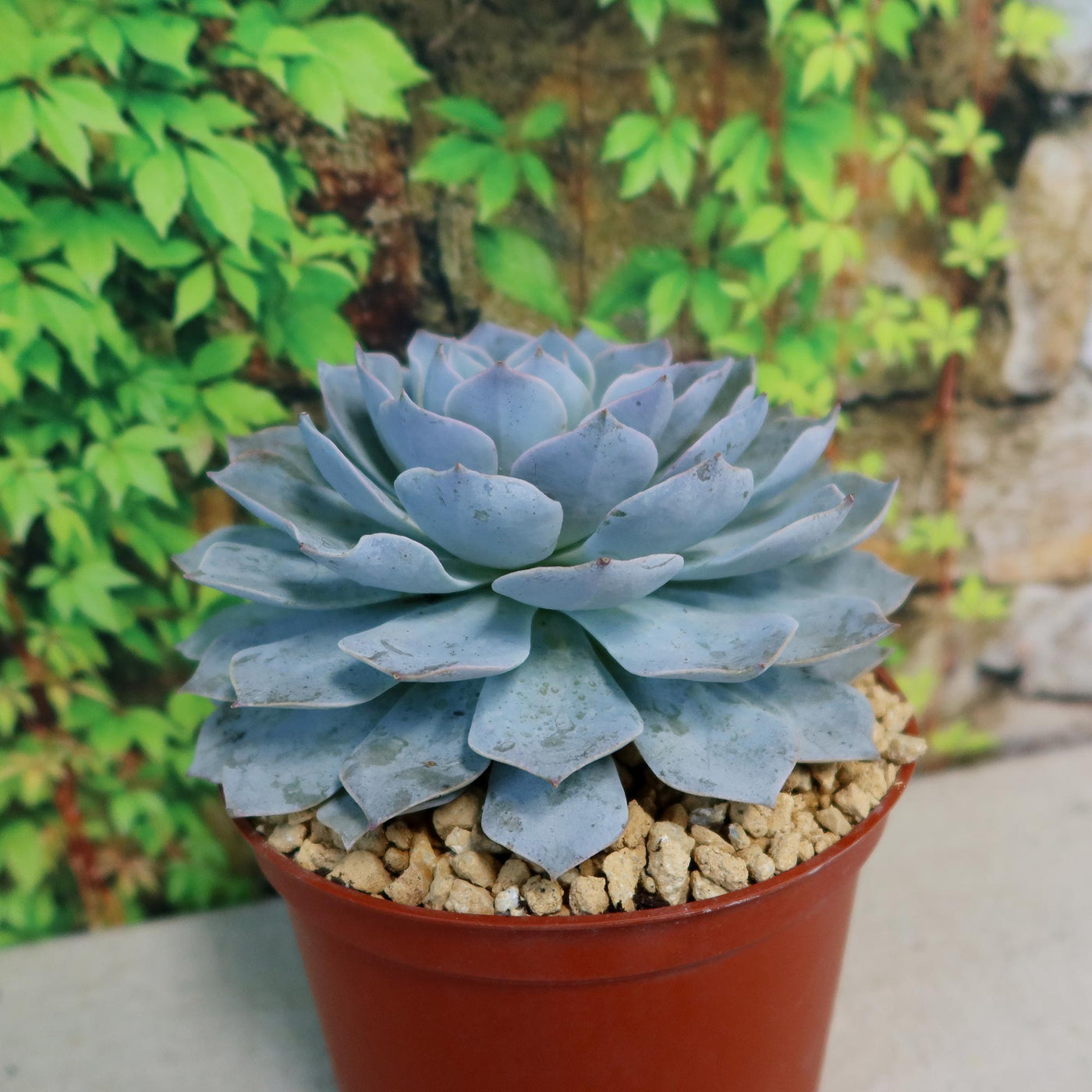
Native to Mexico, this plant gets its "Ghost Echeveria" name due to its pale, almost ghostly silver-blue foliage, which can develop a subtle lilac or pink blush in full sunlight. The powdery coating (farina) on its leaves gives it a frosted look, further enhancing its ethereal beauty. The species name, lilacina, reflects the plant’s slight lilac hue under certain conditions, adding to its aesthetic appeal. 

The Echeveria lilacina has a symmetrical rosette, which can reach up to 6 inches tall and spread up to 10 inches in diameter.

The thick, spoon-shaped leaves are slightly curved and coated with a fine layer of farina, providing protection against excessive sun and moisture loss.

Unlike some other succulents, Ghost Echeveria lacks prominent offsets, making it a solitary-growing species rather than forming clusters.

The Echeveria lilacina flowers bloom usually in late winter to early spring, and produce delicate pinkish-coral flowers on tall, slender stalks that rise above the foliage.

These blooms attract pollinators such as bees and hummingbirds, adding an ecological benefit to the plant’s aesthetic charm. The contrast between the soft-colored rosettes and the vibrant flowers creates a stunning visual display. 

An interesting aspect of this ghost succulent plant is its ability to change color based on environmental conditions. While it generally retains a pale silvery-gray tone, exposure to direct sunlight and cooler temperatures can bring out soft pink or lavender hues, making it even more visually appealing. This adaptability makes it a favorite among succulent enthusiasts who enjoy experimenting with lighting and placement to achieve different shades. 

When and How to Water Your Echeveria lilacina 

The Echeveria lilacina is a highly drought-tolerant succulent, making it an excellent choice for water-conscious gardeners. Its plump, silvery-lilac leaves store water efficiently, allowing it to survive extended dry spells. Like most succulents, it thrives on infrequent watering rather than a consistent schedule. Overwatering is the primary cause of root rot, so ensuring well-draining soil and proper watering techniques is crucial. 

In the spring and summer, during the growing season, Ghost Echeveria requires moderate watering. Water deeply when the soil is completely dry, approximately once every 10–14 days. If grown indoors, use the soak-and-dry method, allowing excess water to drain from the pot. Ensure there is no standing water in the saucer. Outdoor plants in hotter climates may need watering slightly more frequently, depending on the heat and humidity levels. 

In the fall and winter, during the dormant season, your Echeveria plant requires much less water. Reduce watering to once every 3–4 weeks, ensuring that the soil remains mostly dry. Overwatering during dormancy can lead to root rot or mushy leaves, as the plant’s growth slows down significantly. If the leaves start to wrinkle slightly, it’s a sign that it’s time to water. 

Light Requirements – Where to Place Your Echeveria  

When growing indoors, Ghost Echeveria thrives in bright, indirect sunlight.

Place it near a south- or west-facing window where it receives at least 6–8 hours of light daily.

If natural light is insufficient, supplement with a grow light to prevent stretching (etiolation).

Maintaining steady light exposure ensures compact and healthy growth, keeping its signature lilac color vibrant.

When grown outdoors, Ghost Echeveria flourishes in full sun to partial shade. In mild climates, provide at least 6 hours of direct sunlight daily for optimal growth and lovely lilac to coral pink blush coloration.

However, in hotter regions, some afternoon shade helps prevent sunburn. If transitioning from indoors to outdoors, gradually introduce the plant to full sunlight to avoid scorching its delicate leaves. 

Optimal Soil & Fertilizer Needs 

Ghost Echeveria requires well-drained soil to prevent root rot. A succulent mix with added perlite, sand, or pumice ensures adequate drainage. If using regular potting soil, amending it with 50% perlite or coarse sand helps improve aeration and water flow. Planting them in ordinary soil will result in compacted roots, stunted growth, and most likely root rot. Instead, make or buy a well-draining potting mix, or ideally use our specialized succulent potting mix, opens in a new tab that contains 5 natural substrates and mycorrhizae to promote the development of a strong root system that helps your Echeveria succulent to thrive.

The fertilization rate should be kept to a minimum of 5-10-5 (NPK). In the spring, during the active growing season, apply a diluted, low-nitrogen succulent fertilizer once a year. Avoid fertilizing in the dormant season, as excess nutrients can lead to weak or elongated growth. 

Hardiness Zones & More

When growing indoors, this Echeveria succulent thrives in temperatures between 65–80°F. It prefers low to moderate humidity and should be kept away from humid environments like bathrooms. Provide bright light for healthy growth, ensuring at least 6–8 hours of light daily through windows or grow lights. 

In the United States, this Echeveria lilacina mostly an indoor plant, but if you live in southern Florida or Hawaii then you can cultivate it outdoor in USDA zones 9-11.

In cooler climates, it should be grown in containers and brought indoors before frost.

It is known for its stunning silvery-blue leaves that can take on a pinkish hue when exposed to bright sunlight.

The unique coloration of the leaves makes this succulent a popular choice for indoor and outdoor gardens alike.  

Wildlife – Echeveria lilacina Attracts the Following Friendly Pollinators 

The Ghost plants delicate, coral-pink flowers attract a variety of friendly pollinators such as bees, butterflies, hummingbirds, and other birds when in bloom. These pollinators are drawn to the nectar-rich flowers, making it an excellent addition to a pollinator-friendly garden.

Butterflies
Bees
Hummingbirds
Lady Bugs
Multi Pollinators
Other Birds

According to the ASPCA, Echeveria lilacina is non-toxic to humans, cats, dogs, and other pets, making it a safe option for households with animals. It is safe to touch and handle, which makes it a popular friendly choice for indoor and outdoor gardens alike.  

How to propagate Ghost Echeveria

To propagate Ghost Echeveria, start by gently removing a healthy leaf from the plant, making sure to include the entire leaf and a small portion of the stem. Allow the leaf to callous over for a few days before placing it on top of well-draining soil in a bright, indirect light location. Mist the soil lightly every few days to keep it slightly moist, and within a few weeks, roots should begin to form followed by new growth at the base of the leaf. Transplant the new plant into its own pot once it has established roots and continue to care for it as you would an adult Ghost Echeveria.  

Key Takeaways 

  1. Echeveria lilacina produces delicate, pinkish-coral flowers on slender, arching stalks in late winter to early spring, attracting pollinators such as bees and hummingbirds.
  2. This succulent grows in a solitary, symmetrical rosette formation, reaching about 10 inches in diameter, with slow and steady growth that makes it a long-lasting addition to any garden or container.
  3. Its silvery-gray, spoon-shaped leaves are covered in a fine powdery coating (farina), giving it a ghostly, frosted look that enhances its soft, ethereal beauty.
  4. Echeveria lilacina is non-toxic to humans, cats, and dogs, making it a safe and pet-friendly choice for indoor and outdoor gardens.
  5. This Echeveria ghost plant is drought-tolerant and thrives in dry, well-drained soil, making it an ideal low-maintenance plant for arid environments.

The Bottom Line 

Overall, the Ghost Echeveria (Echeveria lilacina) is a stunning, low-maintenance succulent known for its silvery-lilac rosettes and drought tolerance. It thrives in bright light, needs minimal watering, and can be grown both indoors and outdoors in suitable conditions. Its ability to attract pollinators while remaining non-toxic to pets makes it an excellent choice for home gardens. With proper soil, watering, and lighting, this plant will flourish beautifully, making it a standout addition to any succulent collection. Order your very own Echeveria lilacina for sale today! 

Shipping Notes
  • Free Standard Shipping on $100+ Orders to the USA.
  • Except Preorder products are shipped in 48 hours.
  • Delivery to the USA:
  1. Standard Shipping : 3-10 business days
  • If time is of the essence, please consider selecting expedited delivery for faster service.
Exchange/Return Notes
  • We offer a 30-day return/exchange service after receiving.
  • Final sale items are not eligible for returns or exchanges.
  • To process your return/exchange, please contact us at [email protected]
  • Please click here for more details>>> Return & Exchange Policy
SKU: 46745750305

Discover Niche Categories That Outsell ghost echeveria succulent

Top-Converting Item to Boost Your Average Order

4.5 ★★★★★
Based on 26 reviews
Sort
Highest Rating
Newest First
Oldest First
Product Reviews
K
Verified Purchase
KK
Battle Creek, US
★★★★★ 1
Poor product
Blade was not sharp enough to remove hair. The raggedy blade scratched and but my face. Very disappointed. My granddaughter had a different brand of this item and it was so smooth removing the hair.
WAS THIS REVIEW HELPFUL?YesReportShare
Reviewed in the United States on January 24, 2026
B
Verified Purchase
Brian Johnson | Philosopher's Notes
West Palm Beach, US
★★★★★ 5
I absolutely loved this book.
Format: Paperback
“This book is about creativity, based on histories of contemporary people who know about it firsthand. It starts with a description of what creativity is, it reviews the way creative people work and live, and it ends with ideas about how to make your life more like that of the creative exemplars I have studied. There are no simple solutions in these pages and a few unfamiliar ideas. The real story of creativity is more difficult and strange than many overly optimistic accounts have claimed. For one thing, as I will try to show, an idea or product that deserves the label ‘creative’ arises from the synergy of many sources and not only from the mind of a single person. It is easier to enhance creativity by changing conditions in the environment than by trying to make people think more creatively. And a genuinely creative accomplishment is almost never the result of a sudden insight, a lightbulb flashing on in the dark, but comes after years of hard work.” ~ Mihaly Csikszentmihalyi from Creativity Creativity with a capital C—the type of Creativity that changes the world. How can we go about cultivating it in our lives? That’s what this book is all about. Our guide is Mihaly Csikszentmihalyi—one of the founders of the positive psychology movement. Csikszentmihalyi (pronounced “cheeks sent me high”) is a professor at Claremont Graduate University and the former Chair of the Department of Psychology at the University of Chicago who wrote the classic book Flow: The Psychology of Optimal Experience . This book features the wisdom gained from over three decades of research along with over one hundred interviews with extraordinary people—from scientists and business leaders to artists and poets. Warning: Although deeply insightful, it’s not an easy read. If you’re looking to understand creativity at a deeper level via one of the world’s leading (and legendary) psychologists then I think you’ll enjoy it as much as I did. Here are some of my favorite Big Ideas: 1. What is Creativity - Domain + field + person. 2. Attention - + Being kind weird 3. Complexity - + Resolving dischotomies. 4. Rhythms - Your ideal days? 5. Creativity + Flow - The 9 elements Well, there we go. That’s a super quick look at this great book. Time to get our flow on as we tap into our Creativity and optimize + actualize! More goodness— including PhilosophersNotes on 300+ books in our ​*OPTIMIZE*​ membership program. Find out more at brianjohnson . me.
WAS THIS REVIEW HELPFUL?YesReportShare
Reviewed in the United States on May 10, 2016
J
Verified Purchase
Julie S.
Lowell, US
★★★★★ 5
5 Stars – A Must-Read for Anyone Interested in Creativity!
Format: Paperback
Creativity: The Psychology of Discovery and Invention* by Mihaly Csikszentmihalyi is a brilliant exploration of the inner workings of creativity and the human mind. Whether you’re an artist, entrepreneur, or simply someone interested in understanding how creative breakthroughs happen, this book provides a fascinating blend of psychology, real-world examples, and deep insights. What sets this book apart is its comprehensive approach to creativity, going beyond the idea of it being a mysterious or innate trait. Csikszentmihalyi breaks down the creative process into digestible parts, showing how environment, discipline, curiosity, and flow all play a crucial role in fostering creative discovery. The interviews with a wide variety of highly creative people—including scientists, artists, and business leaders—add incredible depth and context to his theories. One of my favorite takeaways is how Csikszentmihalyi emphasizes the balance between freedom and structure in creative work, and how finding the "flow" state can lead to moments of true innovation. The book not only helped me better understand my own creative process but also offered practical advice for cultivating creativity in everyday life. This is an insightful, inspiring read for anyone who wants to dive deeper into the psychology behind creative genius. Highly recommend!
WAS THIS REVIEW HELPFUL?YesReportShare
Reviewed in the United States on September 10, 2024
M
Verified Purchase
M. Edwards
Lake Worth, US
★★★★★ 4
Personal Creativity does not equal Domain Transformation
This was a good if not a great book. Its greatest strength lies in the thesis introduced early on and supported throughout that the kind of creativity that leaves a trace in the cultural matrix rests not in the personal creativity of the individual, but in what Csikszentmihalyi tags the "systems approach " to creativity. To have any effect, a creative idea must be couched in terms that are understandable to others, pass muster with the experts in the field (i.e. the gatekeepers to the domain), and be included within the cultural domain (the set of symbolic rules or procedures) to which it belongs. In this systems view, the definition of a creative person is someone whose thoughts or actions change a domain or establish a new domain (pp. 27-28). This is no easy task, especially since he or she needs to learn the existing domain or domains first, and almost always necessitates being in the right place at the right time (e.g. studying quantum physics at the beginning of the 20th century or women seeking academic opportunities when WWII broke out). Having established this in the first 30 pages, if you didn't read the remaining 350 you wouldn't miss much. But I still enjoyed reading the stories and thoughts of selected individuals whom the author deemed as "creative" according to the definition above (However, I disagreed with the selection of a few of these and would have chosen at least one more person of faith in addition to the Quaker who was briefly highlighted. Also on the issue of faith, I found the author's grouping on page 371 of studying the bible with addictive behaviors such as cruising the internet and betting on horse races to be rather laughable!). Some additional personal nuggets I gleaned from this book include the following: 1. Those who persevere and succeed must be creative not only in their manipulation of symbols but maybe even more in shaping a career and a future for themselves that will enable them to survive while continuing to explore the strange universe in which they live (p. 199). 2. When seeking to allow your mind to make new connections in a beautiful setting, just sitting and watching is fine, but taking a leisurely walk seems to be even better. The shaping of one's personal space is also important. The Greek philosophers settled on the peripatetic method, preferring to discuss ideas walking up and down in the courtyards of the academy. When we participate in this kind of "semiautomatic activity" that uses a certain amount of attention, we allow the rest of it to be free to make connections among ideas, often from different domains, well below the threshold of conscious intentionality. "Devoting full attention to a problem is not the best recipe for having creative thoughts. "(p. 138) 3. Both creativity and innovation on the one hand and conservation and traditionalism on the other are both equally important. "Neither uncritical acceptance nor wholesale dismissal of human creativity will lead us far. " (p. 322) The final section deals with how to enhance personal creativity. Some of these ideas were helpful (e.g. to seek to be surprised and to seek to surprise another person at least once every day, to seek to look at problems from multiple perspectives instead of assuming you see the issue clearly from one perspective, etc.) but others just seem to be taking up space on the page. I'm afraid the phraseology of how to use psychic energy more effectively on page 356 and a few other places lost my interest almost completely.
WAS THIS REVIEW HELPFUL?YesReportShare
Reviewed in the United States on November 15, 2010
P
Verified Purchase
pepe
Louisville, US
★★★★★ 5
interesting analysis of what 'being creative' really means
This easy-to-read absorbing book is based on lengthy interviews with 91 creative individuals ranging from Nobel prize winners to artists to CEOs. Csikszentmihalyi starts by debunking the myth of 'the lone genius having a brilliant idea as if by magic' and defines three necessary ingredients for creativity ('with a capital "C"') - domain, field, and individual. Creativity must take place within a recognised domain (such as physics, painting and so forth); be recognised by experts in that domain (the field, although this may not happen in the individual's lifetime, eg, Van Gogh); and of course come from an individual, although he also adds the painstaking work that precedes and insight, the reality that all creativity builds on what has gone before, and the social elements of the creative process. The book also offers supporting evidence from the lives of the 91 interviewed, which also provides interesting insights into their lives. In many ways, this book is a biography of the creative individual. Also contains a chapter with quite practical guidance on how to live more creatively. Prescient advice for a book published in 1996 given the increasing profile creativity is getting in business and public life. HIghly recommended, one of the most interesting learning experiences i have had in a long while!
WAS THIS REVIEW HELPFUL?YesReportShare
Reviewed in the United States on February 5, 2013

recommand products