Pay in installments of $6.64 with
 ,
,
 and
and

Shipping Estimate
USA
- USA
- CAN
- USA
- CAN
Ships within 48 hours · Estimated delivery Oct 11 - Oct 16
 Promo Codes Available:
For Your Every Summer RSVP, with Code: SUMMER15
Description
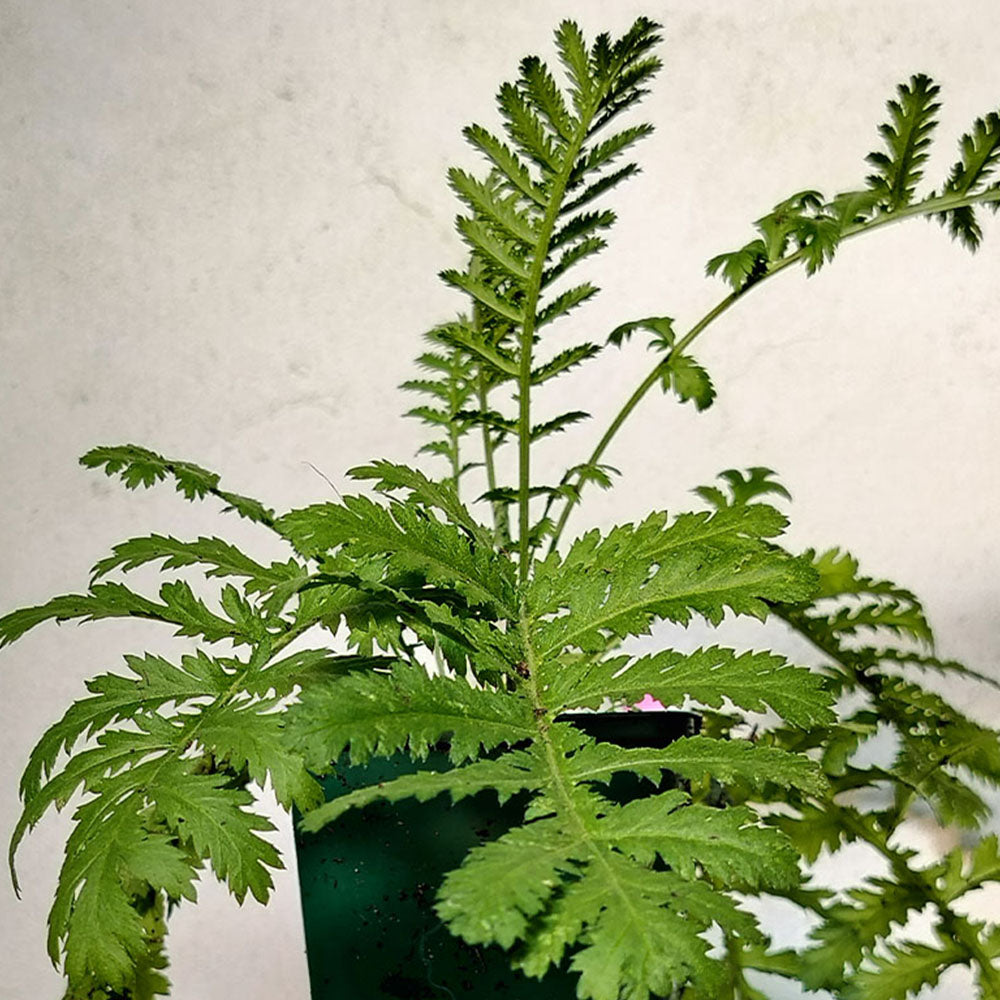
planta palma imperial Tanacetum vulgare – Tanaisie commune, vivace aromatique et répulsive naturelle – plant d'Avenir\n \n \n \n \n \nTanacetum vulgare is a hardy perennial with fragrant, feathery foliage and stunning clusters of yellow button like flowers. \n \nNative to Europe and Asia, this drought tolerant plant is perfect for wildflower gardens, pollinator friendly landscapes, and rewilded gardens. \n \n \n \nThe flowers of Tanacetum vulgare appear in the summer and take the form of small, yellow button like blooms. \n \nThe foliage is feathery and fragrant,
\n \nThe flowers of Tanacetum vulgare appear in the summer and take the form of small, yellow button-like blooms. \n \nThe foliage is feathery and fragrant, maintaining its fragrance once dried. \n \n
\n \n
👨🌾 GARDENING TIPS 👨🌾: Tanacetum vulgare
\n-
\n
-
\n
-
\n
- Most species thrive in full sun and well-drained soil; some tolerate partial shade. \n
- Regular pruning of spent flowers encourages bushy growth and prevents excessive self-seeding. \n
- Companion planting potential: repels pests in vegetable gardens (e.g., aphids, ants) and attracts beneficial insects. \n
- Because of their rhizomatous habit, containment may be necessary to prevent aggressive spreading. \n
- The best time to collect the leaves for drying, infusions, culinary uses is between April and July - just before Tansy begins to flower. \n
- Remove faded flowers to encourage fresh blooms; cut back in early spring to maintain shape. \n
- Human consumption of common tansy has been practiced for centuries with few ill effects, yet the toxic properties of the plants are cumulative and long term consumption of large quantities has caused convulsions and even death.
\n
-
\n
-
\n
-
\n
- So please don't eat too much of it. \n
\n
\n -
\n
\n
👩🍳 COOKING AND DYING TIPS 👩🍳
\nWhile edible uses are limited due to thujone and other bitter compounds, several species of Tanacetum have historical applications in:
\n \n-
\n
-
\n
-
\n
-
\n
Culinary flavoring of bitters, liqueurs, or herbal teas (in very small amounts).
\n \n-
\n
- Tanacetum balsamita- Leaves have a strong, aromatic scent reminiscent of mint. \n
- Tanacetum vulgare - add to liqueurs but sparingly \n
\n -
\n
Folk medicine for digestive, menstrual, and parasitic ailments.
\n \n-
\n
- Tanacetum parthenium - used historically for cramps/migraine prevention because the leaves contain parthenolide \n
\n -
\n
Dyeing: yellow and green tones can be obtained from leaves and flowers, sometimes enhanced with mordants like alum or iron salts.
\n \n-
\n
- Tanacetum vulgare - produces a strong yellow to greenish-yellow dye \n
\n
\n -
\n
-
\n
-
\n
-
\n
- ENG: Plant Dying with Tanacetum vulgare \n
- FR: Reussir un Jaune Intense
\n
\n
\n \n
\n
\n
\n \n
The Tales & The Botany : Tanacetum vulgare
\nIn the sixteenth century Tanacetum vulgare was considered to be "necessary for a garden" in England - a list compiled in or around 1525 by Thomas Fromond, a Surry landowner. \n \nThe plants were classified by species having a specific purpose or by species destined for a 'sophisticated pleasure garden'. \n \nIt was grown in the garden of Charlemagne the Great in the eighth century and in the herb gardens of Swiss Benedictine monks as a treatment for intestinal worms, rheumatism, fevers and digestive problems. \n \nAs it is also known for its pest-repellent properties, Tansy can help protect your garden from certain pests including: \n-
\n
-
\n
-
\n
-
\n
Aphids – Tansy’s strong aroma is a natural deterrent for aphids, which are commonly found on plants like roses, vegetables, and fruit trees.
\n
\n -
\n
Japanese Beetles/Ants/Caterpillars - especially those that are commonly found on plants or vegetables
\n
\n -
\n
Flies – Tansy has been historically used to keep flies at bay, especially in areas where food is stored or on animal pastures.
\n
\n -
\n
Moths – Known as the "moth plant," Tansy’s leaves have been used to repel moths and protect stored goods like wool and fabrics
\n
\n
\n -
\n
\n \n
🌸 Floral Morphology
\nThe flowers of Tanacetum species are typically small, tightly clustered, and range in color from bright yellow to pale cream or white.
\nThey are usually daisy-like or button-shaped, forming flat-topped inflorescences that attract pollinators such as bees, butterflies, and flies.
\nFruits are usually small achenes that are easily dispersed by wind.
\nLeaves are often pinnately divided, fern-like, and aromatic when crushed. Their fine texture contrasts beautifully with the dense flower clusters.
\nStems can be erect or spreading, depending on the species, and many Tanacetum plants spread via rhizomes, forming clumps or colonies in suitable habitats.
\n \n \n\n \n
🌱 Reproductive Biology
\nTanacetum species reproduce sexually via seeds and vegetatively via rhizomes. Flowers are usually insect-pollinated, supporting local pollinator populations.
\nSeed germination varies by species but generally occurs in spring, while rhizomatous growth allows rapid colonization of suitable habitats.
\nMost species are perennial and hardy in temperate climates, tolerating moderate drought once established.
\nFrom a botanical standpoint, the Tanacetum genus offers an intriguing mix of ornamental beauty, chemical utility, and historical significance.
\nIts diverse species connect horticulture, ethnobotany, and natural dyeing traditions, demonstrating the genus’s long-standing relationship with humans.
\n \n\n \n
Other Names
\n\n \n
Origin
\nEuropeShipping Notes
- Free Standard Shipping on $100+ Orders to the USA.
- Except Preorder products are shipped in 48 hours.
- Delivery to the USA:
- Standard Shipping : 3-10 business days
- If time is of the essence, please consider selecting expedited delivery for faster service.
Exchange/Return Notes
- We offer a 30-day return/exchange service after receiving.
- Final sale items are not eligible for returns or exchanges.
- To process your return/exchange, please contact us at [email protected]
- Please click here for more details>>> Return & Exchange Policy