SKU: 54388353504
anthurium nickname

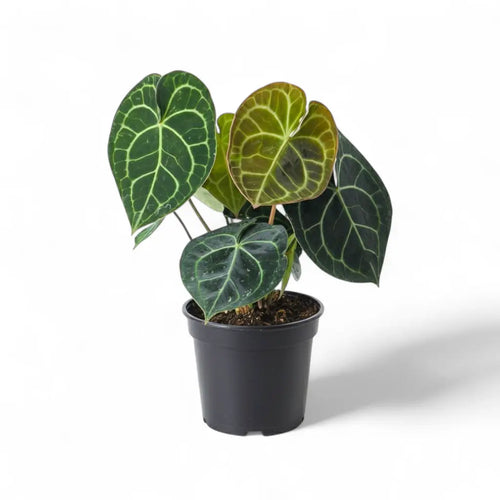
anthurium nickname Anthurium Clarinervium (Velvet Cardboard)

Sale price$21.05 Regular price$23.39
Save 10%

Shipping Estimate
USA
  • USA
  • CAN

Ships within 48 hours · Estimated delivery Jul 14 - Jul 19

Promo Codes Available:

For Your Every Summer RSVP, with Code: SUMMER15

Description

anthurium nickname Anthurium Clarinervium (Velvet Cardboard)The nickname says it all Velvet Cardboard Anthurium. Anthurium clarinervium is native to a single Mexican state, Chiapas, where it grows as an epiphyte on limestone karst and rocky outcroppings in the shaded forest. Its thick, almost leathery, heart shaped leaves have a dense velvety surface and a network of bold, bright white veins that stand out against the deep green with the clarity of chalk on a blackboard. The leaves feel as substantial as they

The nickname says it all — Velvet Cardboard Anthurium. Anthurium clarinervium is native to a single Mexican state, Chiapas, where it grows as an epiphyte on limestone karst and rocky outcroppings in the shaded forest. Its thick, almost leathery, heart-shaped leaves have a dense velvety surface and a network of bold, bright white veins that stand out against the deep green with the clarity of chalk on a blackboard. The leaves feel as substantial as they look — stiff, cardboard-like, built for endurance. At 40–65 cm it is compact enough for a shelf or tabletop and dramatic enough to anchor any room. One of the finest collector aroids for indoor growing.

💡 A Rock-Dweller, Not a Forest Floor Plant — Why Soil Matters In the wild, this Anthurium grows on limestone outcrops and tree surfaces, not in ground soil. Its roots are adapted to maximum air circulation and fast drainage — dense, moisture-retentive soil will kill it. A chunky, bark-heavy aroid mix is not optional here; it is the single most important factor in keeping this plant alive and thriving long-term.
☀️

Light

Bright indirect light — away from direct sun at all times. An east-facing window or 1–2 m back from a south-facing window with a sheer curtain is ideal. In autumn and winter, a little gentle direct morning sun is beneficial. The white veining dulls noticeably in low light — a reliable indicator that the plant needs more brightness. A grow light works very well.

💧

Watering

Allow the top third of the soil to dry before watering — then water thoroughly until it drains freely. Empty the saucer immediately. The chunky mix dries faster than standard potting soil; check by weight — a light pot means it's time to water. Reduce frequency in autumn and winter. Consistent overwatering is the leading cause of decline.

💦

Humidity

50–70% preferred — higher than average indoor humidity. Use a humidifier, pebble tray, or morning misting. Critically, ensure good air circulation alongside humidity — stagnant moist air encourages fungal issues on the velvety leaf surface. Do not mist in the evening. Keep away from radiators, AC vents, and heating sources.

🌱

Growing Media

Chunky, bark-heavy, extremely well-draining mix — this is non-negotiable. Use: 40% orchid bark, 25% perlite, 20% coco coir, 15% potting soil. pH 5.5–6.5. Can also grow in 100% sphagnum moss kept consistently moist but never sodden. Never use dense potting soil alone. Repot every 2–3 years in spring, one size up. A shallow, wide pot suits the root system better than a deep one.

🌾

Feeding

Balanced liquid fertilizer at half strength every 4–6 weeks in spring and summer only. Apply to moist soil. Flush soil every 3 months to prevent salt build-up. Do not feed in autumn or winter. Less is more — over-fertilizing causes root burn and brown tips.

🍂 Winter Rest — Cooler and Drier Is Better In winter, allow temperatures to drop slightly to 15–18°C and reduce watering further. This cooler, drier rest period mimics the plant's natural seasonal rhythm and promotes healthier, more vigorous growth the following spring. Do not stop watering entirely — just reduce frequency significantly.
🍊 Orange Berries — A Bonus on Mature Plants Mature Anthurium clarinervium occasionally produce flowers — a small green-white spathe, not particularly ornamental — followed by bright orange berries that are genuinely decorative. These appear on established plants only and are a sign of a thriving, well-cared-for specimen.
⚠️ Common Issues & Quick Fixes

Yellow Leaves

Overwatering or direct sun. Let the top third dry completely, check drainage, and move out of any direct light. Widespread yellowing with soggy soil means root rot — unpot, trim black roots, repot in fresh chunky mix, and water much less frequently.

Brown Tips or Crispy Edges

Low humidity or proximity to a heater, AC vent, or fan. Boost humidity and relocate away from drying air sources. Also check watering — prolonged dryness causes the same symptom. Existing brown tips are permanent; trim neatly.

Dull Veining or Small New Leaves

Insufficient light — the white vein pattern dims visibly in low light and new leaves grow smaller. Move to a brighter indirect position or add a grow light. Feed monthly during the growing season to support healthy leaf development.

New Leaves Look Rusty or Bronze

Completely normal — new leaves emerge in a rusty green-bronze colour before deepening to the rich dark green of mature leaves over 5–10 days. Do not mistake this for a deficiency or disease.

Spider Mites, Thrips or Mealybugs

Inspect leaf undersides and petiole bases regularly. Wipe with a soft damp cloth then spray with diluted neem oil or insecticidal soap every 5–7 days for 3 weeks. Good air circulation and maintaining 50%+ humidity reduce pest pressure significantly.

📋 Quick Plant Profile

Botanical Name Anthurium clarinervium Matuda
Common Names Velvet Cardboard Anthurium, White-Veined Anthurium
Family Araceae
Origin Chiapas, Mexico only — limestone karst and rocky epiphytic habitat
Signature Feature Thick, velvety, cardboard-like heart leaves with bold white veins
New Leaf Colour Rusty bronze-green → deepens to dark green over 5–10 days
Light Bright indirect; no direct sun; grow light effective
Watering Top third dry; empty saucer immediately; reduce in winter
Humidity 50–70%; good air circulation essential alongside humidity
Temperature 20°C–27°C growing; 15–18°C winter rest; no cold drafts
Soil Chunky bark-heavy aroid mix; pH 5.5–6.5; or 100% sphagnum moss
Pot Type Shallow and wide; always with drainage holes
Mature Height 40–65 cm; spread up to 1 m
Berries Bright orange; produced on mature plants after flowering
Propagation Root division in spring; stem cuttings rooted in water
Ideal For Collectors, Shelves, Tabletops, Bright Humid Rooms
Care Level Intermediate — chunky soil and air circulation are the keys
Shipping Notes
  • Free Standard Shipping on $100+ Orders to the USA.
  • Except Preorder products are shipped in 48 hours.
  • Delivery to the USA:
  1. Standard Shipping : 3-10 business days
  • If time is of the essence, please consider selecting expedited delivery for faster service.
Exchange/Return Notes
  • We offer a 30-day return/exchange service after receiving.
  • Final sale items are not eligible for returns or exchanges.
  • To process your return/exchange, please contact us at [email protected]
  • Please click here for more details>>> Return & Exchange Policy
SKU: 54388353504

Discover Niche Categories That Outsell anthurium nickname

Top-Converting Item to Boost Your Average Order

4.7 ★★★★★
Based on 416 reviews
Sort
Highest Rating
Newest First
Oldest First
Product Reviews
T
Verified Purchase
Tim Beaudet
Massapequa, US
★★★★★ 4
More Theory than Actionable Advice on Game Design
Format: Paperback
Not a bad book, but not what I expected going in. I read this for a bookclub like event on twitch. I thought there was going to be actionable advice. Like 'do X to make Y feel". The introduction points out that the book is not about the emotional feelings a player receives from games, and this is true. The book DOES provide a language for discussing game design at a more academic level. It is about the theory of how a game feels, and while I didn't agree with everything Steve wrote it was easy enough to follow the thoughts.
WAS THIS REVIEW HELPFUL?YesReportShare
Reviewed in the United States on June 16, 2025
A
Verified Purchase
asldkfjoewe
Louisville, US
★★★★★ 5
MUST HAVE for game devs
Format: Paperback
Fantastic book about the theories of what makes a game feel good and fun to play. I'd be doing the author a disservice if I attempted to explain it myself, just purchase the book and read it for yourself. Written very well and easy to understand even while going into very complex and intricate explanations. I'd say that this is a must have for any game developer. Hell, even for those who are just interested in learning more about games.
WAS THIS REVIEW HELPFUL?YesReportShare
Reviewed in the United States on May 17, 2017
D
Verified Purchase
Daniel
Louisville, US
★★★★★ 5
A must have
Format: Paperback
If you're into game development and design you'll definitely need to have this wisdom
WAS THIS REVIEW HELPFUL?YesReportShare
Reviewed in the United States on June 21, 2023
G
Verified Purchase
Grimrott
Massapequa, US
★★★★★ 5
Good for your smart friends who like games
Format: Paperback
Got this for a friend I flipped through it before I gave it to them I didn't understand what it was but they seem pretty happy to get it
WAS THIS REVIEW HELPFUL?YesReportShare
Reviewed in the United States on June 13, 2020
A
Verified Purchase
Anne Mills
Charlottesville, US
★★★★★ 5
Great Reading, Mind Opening
Format: Kindle
This is a terrifically interesting and entertaining book, which presented me with at least two blockbuster ideas that changed the way I think about the past. I'll get to those in a minute, but first a few general points. Charles Mann is a science journalist:who seems to specialize in BIG topics. His 2005 book ("1491", which argues that the pre-Columbian population of the Americas was much larger and more sophisticated than generally assumed), was very well received. I enjoyed it so much, and thought it so valuable a book, that I was very anxious to read "1493". "1493" lived up to my (high) expectations. Mann is remarkable writer, with an extraordinary ability to present very complex facts and ideas in way that's not just accessible to the lay reader, it's fun for the lay reader. This isn't to say that the book isn't carefully researched -- the text is followed by almost 100 pages of footnotes, and throughout he cites and acknowledges the scientists and others from whom he has drawn information. It's just that Mann manages to combine a myriad of facts and hypotheses into a compelling narrative. And he often puts this in very concrete terms, focussing on individual people, commodities or events. It adds up to a fascinating read. It is also a very important one, with implications for the future as well as about the past. Mann's subject in this book is the Columbian Exchange, the sudden movement of plants, microbes, animals and people between the eastern and western hemispheres after Columbus' voyage to the Americas in 1492. A well known effect of this was the eastern hemisphere adoption of western hemisphere foods (tomatoes, potatoes, chocolate, coffee, and on and on). Another effect that's only been recently come to be widely understood is the devastating impact on the pre-Columbian population of the Americas; as many as 80% died in the epidemics that followed the introduction of diseases to which they had no immunity. But the population die-off and the exchange of plant species are not the only effects of the Columbian Exchange. Mann's book explores the myriad ways in which the Exchange -- globablization -- has shaped the world of today. Two things I learned from the book struck me particularly. First, like most Americans of my generation (older) I learned in school that the colonization of the Americas was carried out by white people, who moved into a largely uninhabited continent. "1491" took care of the uninhabited: "1493" takes care of the white. Mann says that from 1500 to 1840, about 3.4 million white Europeans emigrated to the Americas. Over the same period, about 11.7 million captive Africans were sent to the Americas. Except for New England, much of the United States and most of Latin American was far more black than white. (And probably in 1840 still more Indian/Native American than anything else). The racial balance changed as white immigration ramped up and as millions upon millions of blacks died too young, but the picture of early America looks very different to me now. Secondly, Mann discussed at length the 19th century ecological disaster that engulfed China. I had always assumed that the floods that killed so many millions in China had always happened, and were the result of geography. There have indeed always been floods, but their severity and human cost grew logarithmically in the 19th century. New crops led to more food and to rising population growth, and at the same time to more potential cash crops, increasing the pressure on existing land holdings, and leading to vast land clearances. That made the floods far worse when they came, undermining the political structure and compounding China's problems. This was interesting not just a light on the past, but as a warning signal for the future. The review is already too long, so, to sum it up: Great book!! Read it!! Give it to friends and family!!
WAS THIS REVIEW HELPFUL?YesReportShare
Reviewed in the United States on December 6, 2013

recommand products