Shipping Estimate
USA
- USA
- CAN
- USA
- CAN
Ships within 48 hours · Estimated delivery Jul 13 - Jul 18
 Promo Codes Available:
For Your Every Summer RSVP, with Code: SUMMER15
Description
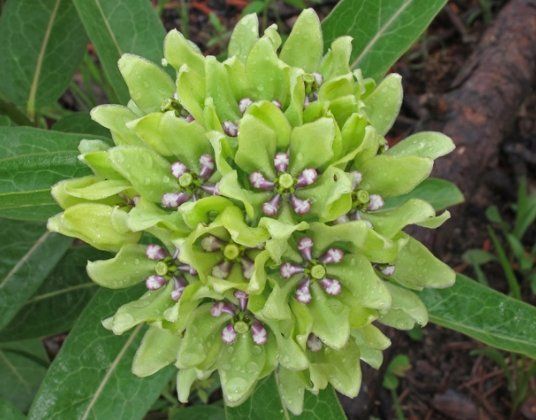
spider milkweed plant Spider Milkweed Green Antelopehorn Asclepias viridis SEEDSSpider Milkweed also called Green Antelopehorn or Green Milkweed Asclepias viridis Bloom Time: May July Bloom Color: Green with purple center Height: 1. 5 2. 5' Full Sun Dry to Medium soil Zone: 5 9 Spacing: 1 2' Planting depth: 1 4" Native Range: Southeastern North America Showy Flower *Seeds need to be Stratified for minimum 30 days. If you live in a colder climate plant in Fall so seeds overwinter in cold weather. If planting in Spring to Summer or
Spider Milkweed also called Green Antelopehorn or Green MilkweedAsclepias viridis
Bloom Time: May-July
Bloom Color: Green with purple center
Height: 1.5-2.5'
Full Sun
Dry to Medium soil
Zone: 5-9
Spacing: 1-2'
Planting depth: 1/4"
Native Range: Southeastern North America
Showy Flower
*Seeds need to be Stratified for minimum 30 days.
If you live in a colder climate plant in Fall so seeds overwinter in cold weather. If planting in Spring to Summer or mild winters you can stratify seeds in your refrigerator for 30 days before planting. Instructions on how to do this will be included with your purchase.
Asclepias viridis is a perennial that grows to 20-30" tall on usually upright stems with pale green leaves (to 2-5” long). It is native to glades, prairies, pastures, fields and roadsides from Ohio to Nebraska south to Florida and Texas. Tiny green flowers with purple hoods bloom from May to June. Flowers are a nectar source for many butterflies, and leaves are a food source for monarch butterfly larvae (caterpillars). Additional common names include green antelope horn (curved green seedpod resembles an antelope horn) and spider milkweed (due to a white crab spider that lives on this plant).
Easily grown in average, dry to medium, well-drained soils in full sun. Drought tolerant. Easily grown from seed. Once established, it is best to leave plants undisturbed because they develop deep taproots which make transplanting difficult. Plants will also spread by rhizomes, but are not considered to be invasive.
Native plant seeds in general do not have very high germination rates. Plant a few seeds per 1 plant desired
approx 10-15 seeds
USA Ship only
Shipping Notes
- Free Standard Shipping on $100+ Orders to the USA.
- Except Preorder products are shipped in 48 hours.
- Delivery to the USA:
- Standard Shipping : 3-10 business days
- If time is of the essence, please consider selecting expedited delivery for faster service.
Exchange/Return Notes
- We offer a 30-day return/exchange service after receiving.
- Final sale items are not eligible for returns or exchanges.
- To process your return/exchange, please contact us at [email protected]
- Please click here for more details>>> Return & Exchange Policy
4.6 ★★★★★
Based on 903 reviews
Sort
Product Reviews
★★★★★ 5
What a wonderful story about the history of our country
Format: Hardcover
I'm so glad that I brought this book for our home library! It is really fun to read for children and adults alike. I love the historical information shared and what a great jumping off point for more exploration about the topics described in the story.
WAS THIS REVIEW HELPFUL?YesReportShare
Reviewed in the United States on August 4, 2019
★★★★★ 5
Great children book
Format: Hardcover
It is a wonderful children's book .I will interest them in visits to to museums
WAS THIS REVIEW HELPFUL?YesReportShare
Reviewed in the United States on October 31, 2021
★★★★★ 5
Interesting book about the flag that inspired the National Anthem
Format: Hardcover
Our Flag Was Still There: The True Story of Mary Pickersgill and the Star-Spangled Banner, written and illustrated by Jessie Hartland, was released just last month. I requested it from the library months ago... Unfortunately, it didn't make it to my hands before I published my 4th of July booklist, but I have it now, and it's wonderful!
⠀⠀⠀⠀⠀⠀⠀⠀⠀
Our Flag Was Still There this tells the story of the flag that eventually our National Anthem. While I knew the story of Francis Scott Key’s inspiration, I didn’t know anything about the actual flag that he saw, nor did I realize that I’ve seen it myself. I didn't realize how big it was, how long it took to make, or that it was made largely by a group of women. And then I read this book!
⠀⠀⠀⠀⠀⠀⠀⠀⠀
But this story is about so much more than just a flag. Through her words and illustrations, Hartland gives a little information about America's independence and the War of 1812, which led to the commissioning of this extra-large flag. We meet the widow, Mary Pickersgill, and her family and indentured servant, who worked together to make this enormous symbol of our country. Hartland introduces the British attack of Fort McHenry in Baltimore. And then we see Key, who witnessed the attack from a boat and penned a poem in honor of the victory and the American flag that was still flying proudly over the city. Finally, we learn about how Key's poem eventually became our national anthem, as well as what happened to her famous flag between 1814 and present-day.
⠀⠀⠀⠀⠀⠀⠀⠀⠀
Yes, Our Flag Was Still There teaches a little bit of history, but it also honors hard work and women from a time in history from which we know mostly men. I appreciate the relative simplicity of the illustrations, as many historical picture books have so much going on in the illustrations that it's hard to know where to look. Like me, you may appreciate knowing the history of the flag behind the song and the realization that you've seen that flag before (in the Smithsonian Museums)!
WAS THIS REVIEW HELPFUL?YesReportShare
Reviewed in the United States on June 30, 2019
★★★★★ 5
The story of a very big flag that inspired a song and a nation
Format: Kindle, Format: Kindle
Major George Armistead wanted to send a big message to the British, on their way to capturing Baltimore. It was 1813 and once again America and Britain were at war. Major Armistead wanted to say to the British: This land belongs to America. He needed a flag, a big flag, a flag over forty feet across. But who could make such a huge flag?
Mary Pickersgill could. With the help of the women in her shop, Mary Pickersgill did.
This is the story of the enormous American flag that now hangs in the Smithsonian. It's a reminder of Major Armistead's desire for America to be free. It's a reminder of the Star-Spangled Banner, our national anthem inspired by this flag.
What a wonderful tribute to this flag and the flag makers. I love the storytelling and the illustrations of Jessie Hartland.
WAS THIS REVIEW HELPFUL?YesReportShare
Reviewed in the United States on June 15, 2019
★★★★★ 3
Not very detailed
Format: Hardcover
Cute illustrations, but I wished it would have went into a little more detail to be more informative for my kids. It was pretty simplistic.
WAS THIS REVIEW HELPFUL?YesReportShare
Reviewed in the United States on July 20, 2021