Pay in installments of $7.19 with
 ,
,
 and
and

Shipping Estimate
USA
- USA
- CAN
- USA
- CAN
Ships within 48 hours · Estimated delivery Oct 10 - Oct 15
 Promo Codes Available:
For Your Every Summer RSVP, with Code: SUMMER15
Description
herb plant seeds Culinary Herb Seed Packet CollectionOur culinary herb collection contains 12 individual packets of freshly harvested seeds. Included are popular varieties, such as Basil, Chives, Cilantro, Thyme, Oregano, Parsley and more. Theres nothing better than clipping your own fresh herbs to be added to your next meal. With the wide variety offered here, you will absolutely fall in love with cooking, or at least enjoy it a little more! Theres an herb for almost every dish, including Mexican
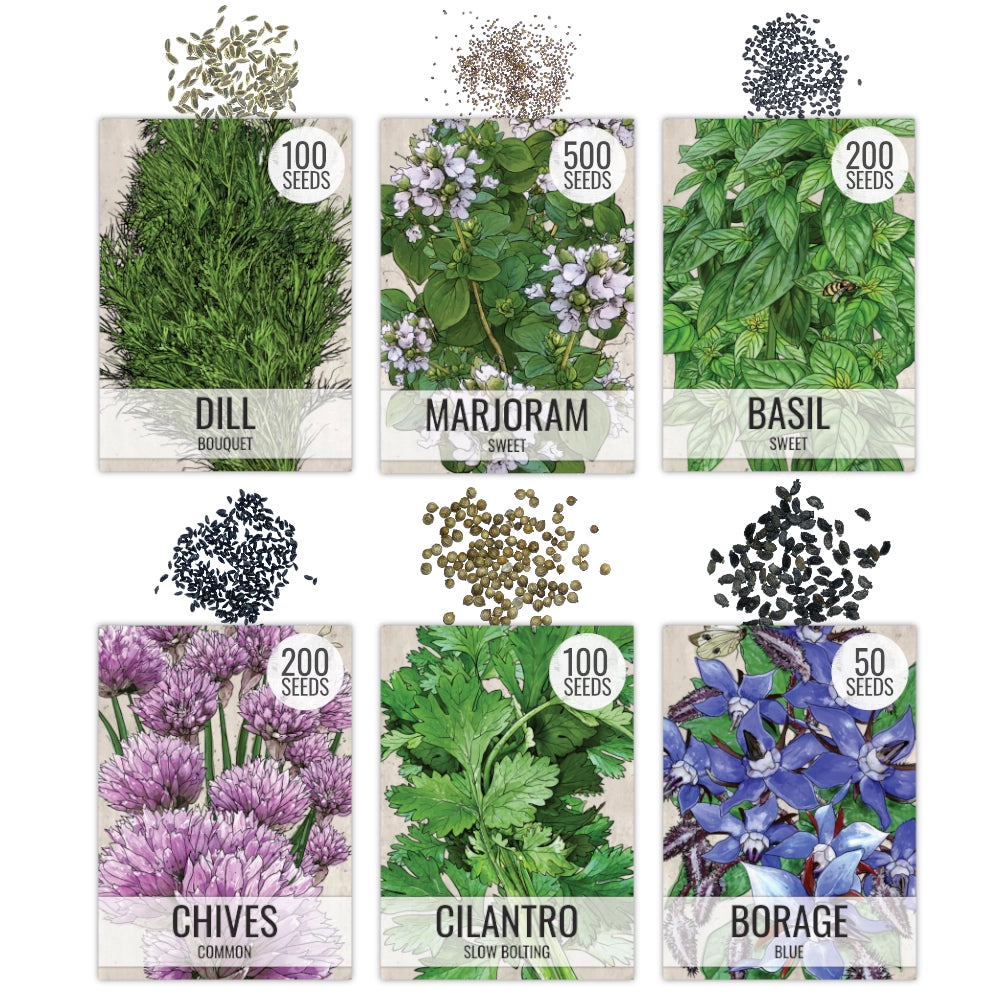
Our culinary herb collection contains 12 individual packets of freshly harvested seeds. Included are popular varieties, such as Basil, Chives, Cilantro, Thyme, Oregano, Parsley and more. There’s nothing better than clipping your own fresh herbs to be added to your next meal. With the wide variety offered here, you will absolutely fall in love with cooking, or at least enjoy it a little more! There’s an herb for almost every dish, including Mexican cuisines, Italian dishes and even herbs for flavoring seafood as well.
Not only are fresh herbs used in cooking, they smell great too! Most of the varieties described below will grow to short heights, displaying various light colored flowers through the warm months of the Summer season. Plant them indoors or outdoors, in pots and containers, or even in window boxes as well. Herbs are always a great selection for balcony gardens and those of you with little gardening space in apartments.
Sweet Basil Herb
Grow a garden filled with Sweet Basil, from freshly harvested Ocimum basilicum herb seeds. Sweet Basil produces large, tender green leaves that are both fragrant, as well as tasty. Often used in Italian pestos, this herb will grow to a mature height of roughly 36 inches tall, producing 3 inch leaves. It not only makes a great additive to pestos, but salads and tomato sauces as well. A great herb for use indoors or outdoors, Sweet Basil is popularly grown in pots & containers as well.
They are not only used in cooking, but also as an ornamental plant. Their short, bushy growth habit makes them a perfect addition to borders and flower beds too!
Sweet Basil herbs are categorized as annual plants. Annuals such as this will grow quickly from freshly harvested seeds. They produce many leaves for harvesting, through the summer months and will later flower at the end of the season. Fresh seeds can be collected from the spent flower heads before the Winter season arrives. Sweet Basil takes anywhere between 60 to 90 days for harvesting.
Common Chives Herb
Grow Common Chives from freshly harvested Allium schoenoprasum herb seeds. Common Chives will produce shoots that grow to a mature height of roughly 18 inches tall. Popularly used to flavor potatoes and salads, Chives are not only tasty, but are also attractive as well. Each plant displays fluffy, purple colored flowers atop slender stems / shoots. The shoots, once cut will add a slight onion flavor to any dish that they are added to. The flowers also add a mild onion flavor and can be used as a garnish.
Categorized as a perennial herb plant, common chives will establish a deep root system, later wilting on the surface with the first frost. The plants will then return the following year after all danger of frost passes. The plants can be harvested soon after they reach a few inches tall. Chives not only look great, smell great and taste great, but they also drive away pesky insects as well. Grow Common chives near any vegetables or herbs that are being tormented by unwanted insects to instantly drive them away.
Cilantro Herb
Grow Cilantro herbs from freshly harvested Coriandrum sativum herb seeds. There’s nothing like adding freshly cut herbs to a culinary dish. Cilantro is grown as an annual herb, serving its purpose for one growing season. The plants themselves will grow to a mature height of roughly 24 to 30 inches tall and about 12 inches wide. Cilantro is a must when it comes to making salsa’s and is popularly used in many Mexican dishes. Its flat, Parsley like leaves can be harvested in roughly 60 to 90 days.
If sown every two weeks this packet will provide enough plants to last all season long plus some. Plant these beauties indoors, or directly outdoors as well. They do well in pots and can be planted in window boxes and containers to save on gardening space too.
Dill Herb
Grow a garden filled with fresh Bouquet Dill herbs, from freshly harvested Anethum graveolens herb seeds. Dill produces fern like foliage that has a very strong and distinctive smell. Growing to a mature height of 30 inches tall, Bouquet Dill will take up a small amount of width and is easy to maintain. Its uses are both medicinal and culinary, although it is mainly used to add flavor to breads, sauces, dips and spreads as a culinary herb. Medicinally it can be used to relieve colic pain in babies and flatulence in young children.
Grown as an annual herb plant, Bouquet Dill will grow quickly the first year, later wilting and dying with the first frost. The plants produce yellow flowers that the black swallowtail butterfly will be attracted to because it is considered its primary food source. Dill not only attracts butterflies, but the ocassional bumblebee and other beneficial insects as well.
Sweet Marjoram Herb
Grow a garden filled with Sweet Marjoram, from freshly harvested Origanum majorana herb seeds. Sweet Marjoram is mainly used as a culinary herb, adding a sweet and spicy flavor to foods. The plants themselves reach a mature height of about 12 inches tall and can grow up to 18 inches wide. Not only are these herbs used to add flavoring to various foods, they also make a cute flower as well. They produce pink flowers atop their green foliage, attracting butterflies and bumblebees to the garden.
Categorized as a perennial herb, Sweet Marjoram will establish a deep root system, later wilting with the first frost. The plants will return the following growing season when all danger of frost has passed.
Italian Oregano
Grow a garden filled with Italian oregano, from freshly harvested Origanum vulgare seeds. Italian oregano is a very fragrant herb which displays its red-flushed, green leaves through the summer months. The plants will display clusters of pink flowers, above its many, 1 & 1/2 inch leaves. These beauties will attract not only your eye, but various butterflies, bumblebees, honeybees and hummingbirds as well. The plant stand to a mature height of only 12 to 18 inches tall.
Categorized as a perennial flowering herb, Italian oregano will establish a deep root system in its initial year of growth. The plants will use this root system to grow year after year, if the winter temperatures aren't too cold. The plants are often grown in small and medium-sized pots, and also directly in the garden as well. Because of their beautiful blooms, they can be sown in flower beds, or along borders such as fences, driveways and walkways too.
Italian oregano is one of the most important and popular herbs in Italian cuisine. The leaves are best used dry, and can be mixed with many bold flavors like onions, garlic, tomatoes, and beef. Many popular dishes in Italian cooking include Italian Oregano, such as spaghetti and lasagna. You might also be surprised to know that these herbs are not only used in cooking, but in many men's colognes as well.
Italian Parsley Herb
Italian Flat Leaf Parsley is a biennial plant that grows the first year and blooms the second. In cold climates, it is simply an annual, and can't winter over. Growing to a mature height of about a 15 to 18 inches tall, Italian Flat Leaf is a somewhat bushy herb. It develops sturdy, slender stems and its flat leaves are deeply serrated and dark green. At first glance, you might even mistake the leaves for that of Cilantro herbs.
You can grow Italian flat leaf parsley in your herb bed, in a window box, a container garden, or even indoors. It makes an attractive backdrop to shorter annual flowers in a flower garden and can be used as a border. Plant at least 18 inches apart; if they are too close, they can get mildew.
It likes rich, moist soil, and should be planted in sun to partial shade. In its second spring, when the white flowers appear, it will get bitter. Pull up the old plants and start new ones. It does best in temperate climates; it doesn't like serious heat and will freeze out in cold winters.
Parsleyworm caterpillars are brightly colored in green and black. They won't kill your parsley, but can quickly eat up the leaves. They grow into beautiful swallowtail butterflies. If you notice you have them but want the butterflies, just grow extra parsley. Less enjoyable pests could include aphids, armyworm, and army cutworm.
Flat leaf parsley has a stronger flavor than its curly cousin, which is used more often for decoration. Italian flat leaf parsley is one of the most widely used herbs in traditional Italian cooking. It is one of the chief herbs in bouquet garni.
The entire plant is edible. The leaves are soft and are good whole or chopped, and the stems are tasty anywhere you want a bit of crunch and flavor, and hold up better to longer cooking times.
Flat leaf parsley is delicious is soups, stews, salads, stocks, fish dishes, and vegetable dishes. Add it near the end of the cooking cycle in most recipes, as long times on heat can make it lose flavor. It makes a tasty herb butter. It is high in vitamins A, C, E, and has a high iron content. Chewed fresh, it makes a good breath freshener.
To harvest, clip the leaves back to the base of the plant at any time once plants are established. They will grow back even bushier. You can store it wrapped in a damp paper towel in your fridge for up to a week, or you can freeze it and keep in plastic bag in your freezer for longer. You can also dry it.
Rosemary Herb
Calling to mind the sea mist along the coastal cliffs of its native Mediterranean region that it is named for, Rosmarinus officinalus, or "Rosemary," is a versatile addition to your herb garden or yard. Easily growing to heights of 12 to 36+ inches tall and 3 feet wide, rosemary can make a beautiful hedge to set off your property lines, or you can grow it in containers that can be easily moved indoors in the coldest temperatures. With its crisp, pleasant odor, it is also the perfect border to sidewalks and walkways, releasing its fragrance when brushed in passing.
Rosemary has woody stems, gray-green needle-like leaves and bright blue flowers that last throughout the spring and summer. The plant grows slowly during its first year, but it will take off during the second. Like its relatives in the Lamiaceae (mint) family, it can become invasive if you don't use it often or prune it to keep it under control.
The plant requires no winter protection in USDA Hardiness Zones 8 and farther south; in northern zones, you can move the container-grown plants indoors. Rosemary is easy to grow, although it can be vulnerable to whiteflies, spider mites, scale, mealybug, powdery mildew and root rot.
Not only is rosemary a visually appealing and wonderfully fragrant plant in the garden, it has multiple uses in the kitchen and in herbal medicines, as well as being a traditional component of festival and wedding decorations, designed to ward off evil influences. Season meats and poultry, sauces, soups, and stews with the herb. Mix it with sea salt and a good-quality, fruity olive oil for a delicious bread dip, or combine it with oil, garlic, salt, pepper and balsamic vinegar for an outstanding marinade for meats, poultry or vegetables.
Herbal medicine practitioners also recommend rosemary as a good source of iron, calcium and Vitamin B6. It is also used to improve memory, relieve muscle aches, boost the immune system and even to help promote hair growth.
Sage Herb
Sage produces large, tender, green leaves under mauve colored flowers. Popularly used as a medicinal herb and a culinary herb, Sage is a staple in creating that famous Thanksgiving dressing. Not only is it tasty, but it is easy on the eyes as well. These herb plants make an attractive flower that can be used in all sorts of areas in the yard. Grow Sage in pots & containers, use it as a border plant, and even in rock gardens as well.
Sage herbs are attractive to many beneficial insects, and will lure in butterflies, bumblebees and honeybees. The uses of this popular herb are endless. You may even cut them for floral arrangements and bouquets, as well as wreaths and other crafty items too. Sage herbs are grown as perennial flowering herbs, meaning they will establish a deep root system, later wilting on the surface due to cold temperatures. After all danger of frost is gone, they will later return to life the following growing season.
Summer Savory Herb
Satureja hortensis, or Summer Savory, is an easy to grow herb that will delight the palette and provide an ample feast for your eyes. When this annual plant blooms from July to September, delightful lilac flowers emerge to enhance the aroma and color of any well-kept garden. As the plant swiftly extends its branches during the warm season, it can grow to 12 to 18 inches in height and approximately 1 foot in width.
The Summer Savory herb is quite popular around the world due to its thyme and pepper flavor. To capitalize on the summer savory's unique taste, use it in dishes that normally call for sage, such as flavoring meats, stuffing, and cornbread. Other optimal recipes enhanced by this spice are soups, salads, beans, dressings, and tomato based cuisine.
Despite the Summer Savory's scrumptious taste it does not have many pests. The only known insects a gardener will have to protect the Summer Savory from are aphids and spider mites. As of date, there are no known diseases that ail the summer savory herb.
According to WebMD, Summer Savory has medicinal uses that treat throat irritations, such as tenderness, cough, and the "phantom thirst" that plagues those with diabetes. Other internal treatments the summer savory plant offers include alleviating indigestion, nausea, cramps, diarrhea, and loss of appetite. The beneficial oils of summer savory work decently well as an antibacterial and anti-fungal. Utilize these traits as a treatment for less invasive insect bites and stings.
Thyme Herb
Grow a garden filled with Thyme, from freshly harvested Thymus vulgaris herb seeds. Thyme is a popular herb that produces 16 inch plants with small pink flowers. The leaves are harvested to add flavor to all sorts of culinary dishes, including fish, chowders, sauces, stuffings, soups, meats and poultry. Thyme's pretty pink flowers will attract an array of beneficial insects to the garden, such as butterflies, bumblebees and hummingbirds too.
Grown as a perennial herb, the Thyme plant will grow the first year, establishing a deep root system. The plants will later wilt on the surface due to harsh frosts, later returning back to life the following growing season. Because thyme is a vigorous grower, its small seeds can oftentimes fall to the bare ground beneath to establish a collection of new plants the following year as well.
Blue Borage Herb
Borage is an attractive herb that is often grown for its deep blue, star shaped blooms. It reaches a mature height of about 12 to 24 inches tall. Borage is not only sought after for its beauty, but also its cucumber flavored leaves and attractive flowers. Both of which are often used in salads, to add flavor and color. Grown as an annual herb, Borage will grow quickly, bloom profusely and then die soon after with the first frost. Plants can return the following year if seeds drop to the earth under it, or if they are collected for resowing.
Borage herb plants will attract an array of bumblebees and are also great to grow near vegetable gardens. It is recommended to harvest the leaves of Borage herb early as they will be much more flavorful. Matured leaves begin to get tough and hairy. The flowers of Borage however can be harvested at any time. Try cutting the plants to use in a decorative vase as well!
Shipping Notes
- Free Standard Shipping on $100+ Orders to the USA.
- Except Preorder products are shipped in 48 hours.
- Delivery to the USA:
- Standard Shipping : 3-10 business days
- If time is of the essence, please consider selecting expedited delivery for faster service.
Exchange/Return Notes
- We offer a 30-day return/exchange service after receiving.
- Final sale items are not eligible for returns or exchanges.
- To process your return/exchange, please contact us at [email protected]
- Please click here for more details>>> Return & Exchange Policy