Pay in installments of $6.38 with
 ,
,
 and
and

Shipping Estimate
USA
- USA
- CAN
- USA
- CAN
Ships within 48 hours · Estimated delivery Sep 20 - Sep 25
 Promo Codes Available:
For Your Every Summer RSVP, with Code: SUMMER15
Description
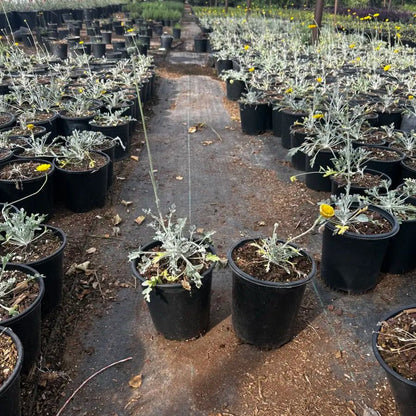
potted marigold plants for sale Buy Desert Marigold Phoenix, AZ | Baileya multiradiataPhoenix's Best Native Yellow Wildflower Desert Marigold Desert Marigold (Baileya multiradiata) is one of the most beloved wildflowers native to the Sonoran Desert, and one of the longest blooming plants available for Phoenix Valley landscapes. Its brilliant golden yellow daisy flowers rise above silvery gray woolly foliage from spring through fall, creating a continuous display of color that requires almost no care. Whether you're brightening a dry
Phoenix's Best Native Yellow Wildflower — Desert Marigold
Desert Marigold (Baileya multiradiata) is one of the most beloved wildflowers native to the Sonoran Desert, and one of the longest-blooming plants available for Phoenix Valley landscapes. Its brilliant golden-yellow daisy flowers rise above silvery-gray woolly foliage from spring through fall, creating a continuous display of color that requires almost no care. Whether you're brightening a dry slope in Scottsdale, naturalizing a border in Chandler, creating a wildflower meadow in Gilbert, or adding low-maintenance color to a front yard in Mesa — Desert Marigold is the cheerful native that delivers season after season.
Desert Marigold Plant Details
| Attribute | Detail |
|---|---|
| Scientific Name | Baileya multiradiata |
| Common Names | Desert Marigold, Paper Daisy, Wild Marigold |
| Mature Height | 1–2 feet |
| Mature Width | 1–2 feet |
| Growth Rate | Fast — blooms within first season from 1-gallon container |
| Sun | Full sun (6+ hrs). Thrives in reflected heat from walls and pavement. |
| Water | Very low once established. Highly drought-tolerant native. |
| USDA Zones | 7–11 (Phoenix is Zone 9b–10a) |
| Soil | Well-draining, rocky, or sandy. Adapts to Arizona caliche soils. |
| Foliage | Semi-evergreen — silvery-gray woolly leaves; may die back after hard frost |
| Bloom Color | Bright golden-yellow; blooms spring through fall (March–November) |
Desert Marigold Uses in Phoenix Landscapes
Low-Water Color Border
Desert Marigold is the go-to plant for adding months of bright color to borders, pathways, and edges with minimal irrigation. Mass plant 18–24 inches apart for a sweeping golden display. In a 10-foot border: 5–6 plants. In a 20-foot run: 10–12 plants. Pairs beautifully with Brittlebush, Globemallow, and Purple Ruellia.
Native and Pollinator Garden
As an Arizona native, Desert Marigold supports an impressive variety of native bees and butterflies. Its pollen-rich flowers bloom from spring through fall — covering peak butterfly and bee season in Phoenix. Combine with Flattop Buckwheat, Turpentine Bush, and Autumn Sage for a multi-season pollinator haven.
Slope Naturalization and Erosion Control
Desert Marigold's deep taproot and drought tolerance make it ideal for rocky slopes, berms, and disturbed soils. It self-seeds readily in the right conditions, gradually naturalizing an area with minimal intervention — perfect for large, difficult-to-irrigate spaces.
Wildflower Meadow and Informal Garden
Desert Marigold is one of the best plants for creating informal meadow-style plantings that look natural and intentional at the same time. Plant in drifts of 5–10 plants alongside Brittlebush, Globemallow, and Desert Lavender for a naturalistic Arizona wildflower effect.
Best Time to Plant Desert Marigold in Phoenix
Fall (October–November) is ideal — the warm soil and cooler air allow strong root establishment, and plants are ready to bloom by the following spring. Spring (February–March) is the second-best option. Avoid midsummer planting in Phoenix's extreme heat.
How to Plant Desert Marigold
- Dig wide, not deep — 2x the root ball width, same depth as the container
- Check for caliche — break through hardpan to ensure drainage; Desert Marigold will not tolerate wet roots
- Backfill with native soil — no amendments needed; lean soil is preferred
- Spacing — 18–24 inches apart for mass plantings; 24–30 inches for naturalized groupings
- Water basin — build a 2–3 inch earthen ring to direct initial watering
- Mulch — 1–2 inches of decomposed granite; avoid heavy organic mulch near the crown
Watering Desert Marigold in Phoenix
First Year Watering Schedule
- Weeks 1–2: Every 1–2 days, deep and slow
- Month 1–2: Every 3–4 days
- Month 3–6: Every 7–10 days (5–7 days in peak summer)
- After Year 1: Every 14–21 days in summer; rainfall only in winter
Drip Irrigation
Place a 0.5 GPH emitter 12 inches from the base. One emitter per plant is sufficient. Once established, Desert Marigold can survive on Phoenix's natural rainfall and requires very little supplemental irrigation to maintain continuous blooming.
How long does Desert Marigold bloom in Phoenix?
Desert Marigold is one of the longest-blooming native plants in the Sonoran Desert — typically flowering from March through November in Phoenix, with peak bloom in spring and again after summer monsoons. It's rarely without at least a few open flowers during the growing season.
Does Desert Marigold come back every year?
Yes — Desert Marigold is a perennial that returns each spring from its root system. In Phoenix's mild winters, it often stays semi-evergreen, only dying back briefly after a hard frost before regrowing quickly. It also self-seeds readily, gradually spreading in the garden.
Is it toxic to pets?
Desert Marigold foliage contains compounds that can cause skin irritation in some animals if ingested in large quantities. It is generally considered low-toxicity but should be kept away from areas where dogs or horses regularly graze on foliage.
Does it need deadheading to keep blooming?
No — Desert Marigold blooms prolifically without deadheading. However, removing spent flowers can encourage a slightly denser flush of new blooms. A light trim after the spring bloom peak can rejuvenate the plant for a strong summer-fall show.
Can it handle Phoenix summer heat?
Yes — Desert Marigold is native to the Sonoran and Chihuahuan Deserts and is adapted to Phoenix's extreme summer heat. It may slow blooming slightly during the hottest July weeks but rebounds strongly after the monsoon rains arrive in August.
You May Also Like
- Brittlebush — A spring-blooming native with golden daisy flowers that pairs perfectly with Desert Marigold in wildflower plantings.
- Globemallow — A low-spreading native with orange blooms that creates vivid color contrast with Desert Marigold's yellow flowers.
- Flattop Buckwheat — A summer and fall native bloomer that extends the pollinator season alongside Desert Marigold.
- Purple Ruellia — A low-water native with purple trumpet flowers that creates a striking yellow-purple contrast with Desert Marigold.
- Turpentine Bush — A late-season native with golden fall blooms that carries color after Desert Marigold's main season ends.
How Many Desert Marigold Do I Need?
Desert Marigold matures at 1 to 2 feet wide, so space plants 18 to 24 inches apart for a solid drift of golden color. Use this table to estimate plant counts for a mass planting or border:
| Bed Size | Plants Needed (at 20 in spacing) |
|---|---|
| 10 sq ft | 4 to 5 plants |
| 25 sq ft | 9 to 11 plants |
| 50 sq ft | 18 to 22 plants |
| 100 sq ft | 36 to 44 plants |
For a naturalized wildflower look, space plants 24 to 30 inches apart and let them self-seed to fill in over time.
Desert Marigold Season-by-Season in Phoenix
- Spring (Feb to Apr): Peak bloom. Golden daisies blanket the silvery foliage, and it is the second-best planting window after fall.
- Summer (May to Sep): Handles full reflected heat. Bloom may pause in the hottest weeks of July, then surges again with monsoon rains in August and September.
- Fall (Oct to Nov): Prime planting season and a strong second bloom flush as temperatures ease.
- Winter (Dec to Jan): Stays semi-evergreen in mild Valley winters. A hard frost below about 20°F can knock it back, but it regrows quickly from the root in spring.
At a Glance
✔ Arizona Native ✔ Pollinator-Friendly ✔ Heat-Loving (Reflected-Heat Tolerant) ✔ Drought-Tolerant ✔ Low-Maintenance ✔ Deer & Rabbit-Resistant ✔ Cold-Hardy to 10°F
Plant It With
- Brittlebush: another golden-flowered Sonoran native for a layered wildflower drift.
- Globemallow: orange blooms that pop against the marigold's yellow.
- Desert Ruellia: purple trumpet flowers for a striking yellow-and-purple contrast.
- Damianita: a low mounding native daisy that echoes the yellow and stretches the bloom season.
Is Desert Marigold Right for Your Yard?
Desert Marigold thrives in full sun and reflected heat with fast-draining, lean, rocky or sandy soil. Break through any caliche hardpan so water never pools at the roots. It is ideal for low-water borders, slopes, and naturalized desert beds. It is not a fit if you want a tidy, static planting: it is short-lived, self-seeds freely, and looks its best when allowed to reseed and roam.
Shipping Notes
- Free Standard Shipping on $100+ Orders to the USA.
- Except Preorder products are shipped in 48 hours.
- Delivery to the USA:
- Standard Shipping : 3-10 business days
- If time is of the essence, please consider selecting expedited delivery for faster service.
Exchange/Return Notes
- We offer a 30-day return/exchange service after receiving.
- Final sale items are not eligible for returns or exchanges.
- To process your return/exchange, please contact us at [email protected]
- Please click here for more details>>> Return & Exchange Policy