SKU: 58565802144
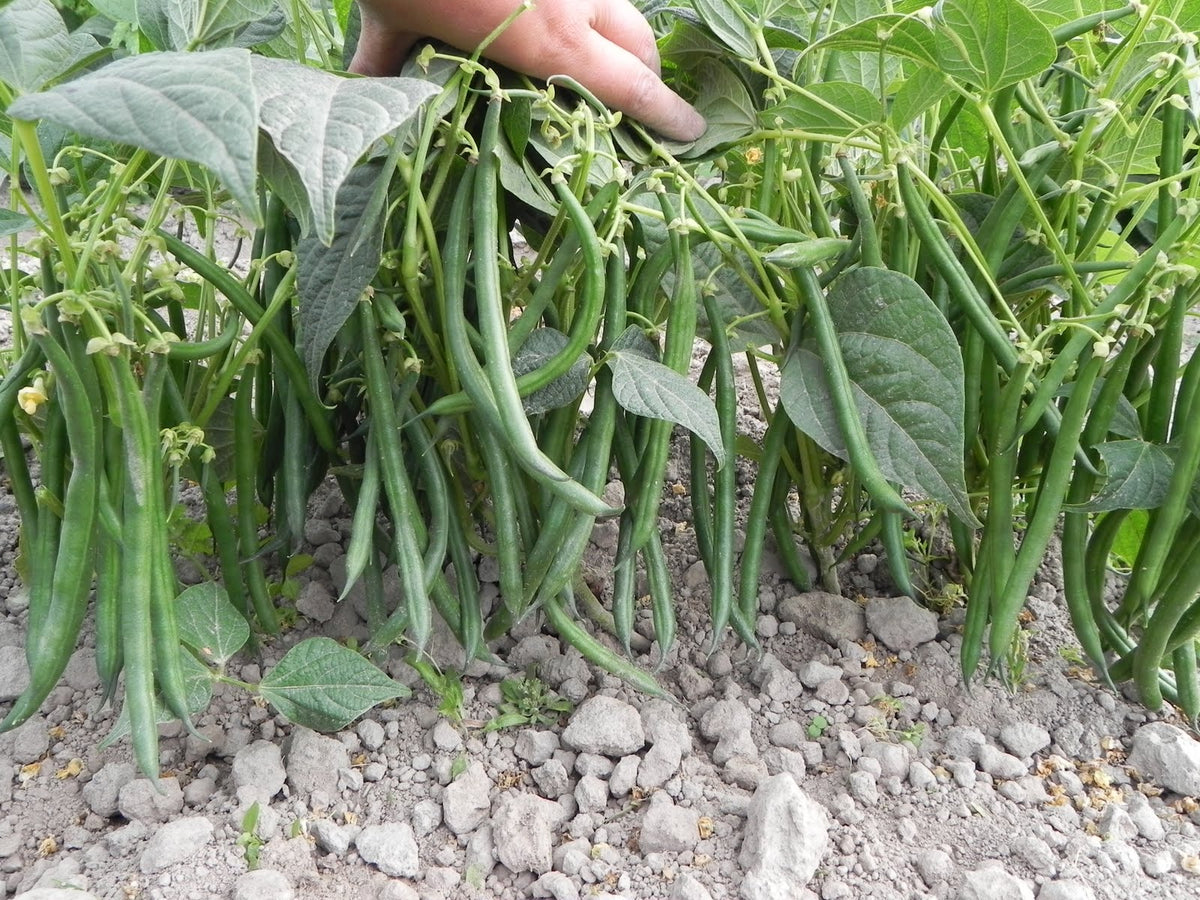
jade bush bean plant

jade bush bean plant Jade Green Bean

Sale price$18.13 Regular price$20.15
Save 10%

Pay in installments of $5.04 with ShopPay, AfterPay and Klarna

Shipping Estimate
USA
  • USA
  • CAN

Ships within 48 hours · Estimated delivery Oct 23 - Oct 28

Promo Codes Available:

For Your Every Summer RSVP, with Code: SUMMER15

Description

jade bush bean plant Jade Green BeanJade Green Bean is a top tier variety known for its exceptional flavor, smooth texture, and robust plant growth. This variety produces high quality slender 6 7 inch snappy dark jade green beans! The plants are highly productive, offering an abundant harvest of long, straight pods that are easy to pick and require minimal care. These delicate beans are made to be shown off! Jade beans rarely curl or curve and are sweet for snacking right off the bush.

Jade Green Bean is a top-tier variety known for its exceptional flavor, smooth texture, and robust plant growth. This variety produces high-quality slender 6-7-inch snappy dark jade-green beans! The plants are highly productive, offering an abundant harvest of long, straight pods that are easy to pick and require minimal care. These delicate beans are made to be shown off! Jade beans rarely curl or curve and are sweet for snacking right off the bush. Whether grown in the garden or containers, this variety thrives in various conditions and is known for its impressive yield. The beans maintain their vibrant color and texture making them a favorite in stir-fries, salads, or simply steamed. With their consistent performance, delicious taste, and ease of care, Jade Green Beans are a must-have for any gardener seeking a reliable, high-quality green bean variety.

Also Known As: Jade Bean, Jade 2 Bush Bean, Jade Snap Bean, Jade Stringless Bean, Jade Green Bush Bean.

Plant Name: Bean, Jade
Latin Name: Phaseolus vulgarus
Days to Germinate: 6-10
Days to Harvest: 55
Plant Height: 18 - 24 Inches
Spread: 12 - 18 Inches
Growth Habit: Bush
USDA Zones: 3-11
Lifespan: Annual
Brand: TomorrowSeeds
Sunlight: Full Sun, Partial Shade
Pollination: Heirloom, Open-Pollinated
GMO: No
Fungicide-Treated Seeds*: No
Seeds Packed For**: 2026
*Fungicide-treated seeds protect the seedlings from diseases until they are up and growing. Do not eat treated seeds.
**Seeds are freshly packed for the growing season of the year listed. Seeds are still viable beyond pack date. Store in a cool and dry location such as the refrigerator or basement to best preserve germination rates.


Planting Instructions:

Soil Preparation:

Choose an area with heavy, well-draining soil that receives at least 6 hours of sunlight each day. Remove weeds, large rocks, and litter from the planting area. Leave small weeds and dead grass, they will enrich the soil when turned under. Spade or till the soil 8-12 inches deep. Loosening the soil will help the plant establish strong roots.

Plants grow best in soil with lots of organic matter. You may optionally add fertilizer or organic material such as compost, leaves, or rotted hay to mix into the soil at this point. For small gardens, scatter 2-3 tablespoons of a low-nitrogen fertilizer evenly and work into the top 2-3 inches of soil for each hill or 2 foot by 2 foot planting area. For larger gardens, scatter 2-3 pounds of a low-nitrogen fertilizer for each 100 square feet of planting area. Work fertilizer or organic material into the soil and leave the surface smooth.

Form rows of soil beds 4-6 inches high and at least 18 inches apart. This formation of ridges will help with drainage.

Planting:

Green beans grow best in temperatures between 65F-85F. Direct-sowing is recommended. Plant green beans in the spring after all danger of frost has passed and the soil temperature reaches at least 60F. For fall crops, direct sow seeds outdoors 7-9 weeks before the first frost. To plant, make holes 1 inch deep and spaced 4 inches apart down the rows of raised beds. Plant 1 seed per hole. If choosing to thin to the strongest plant, plant 2-3 seeds per hole, determine the strongest and healthiest plant, then remove all other plants, narrowing to a single plant per hole. Cover seeds thinly with soil and water after planting.


Planting Depth: 1 inch
Within-Row Spacing: 4 inches
Between-Row Spacing: 18-24 inches


Care During the Season:

Watering: Water the plants deeply, soaking the soil to a depth of 6-8 inches, once a week. If there is no rainfall, water 2-3 times a week. Water especially during flowering and pod formation. Sandy soils may need to be watered more often than heavy clay soils. Mulching around plants can help retain moisture.

Weeding: Keeping plants weed-free improves production. If plowing or hoeing, do not dig deeper than 1 inch to prevent from cutting the feeder roots.

Fertilizing: Once plants start forming pods, you may optionally apply 2 tablespoons of a low-nitrogen fertilizer around each hole, or 1-2 pounds per 100 square feet, without letting the fertilizer touch the plants. Water plants after fertilizing.

Insecticides: Insecticides may be used to protect plants. Bt-based insecticides and sulfur are organic options that can be used for prevention. Sulfur also has fungicidal properties and helps in controlling many diseases. Before using a pesticide, read the label and follow cautions, warnings and directions.

Diseases: If spots or mold appear, treat plants with an approved fungicide. Neem oil, sulfur, and other fungicides may be used. When using fungicides always follow label directions.

Harvesting:

Green Beans can be harvested when the pods are firm, well-filled, and still tender, but before they become too mature and tough, about 50-60 days after planting. For the best flavor and texture, harvest green beans when they are young and the seeds inside have not yet fully developed. The beans should be bright and crisp, and the pods should snap easily when bent. To harvest, gently pick the beans by hand or use garden shears to cut the stem, leaving the pod intact. Be sure to harvest regularly, as this encourages the plant to continue producing more beans. If beans are left too long on the plant, they can become tough and stringy. Green beans can be eaten fresh, frozen for later use, or preserved through canning.

Shipping Notes
  • Free Standard Shipping on $100+ Orders to the USA.
  • Except Preorder products are shipped in 48 hours.
  • Delivery to the USA:
  1. Standard Shipping : 3-10 business days
  • If time is of the essence, please consider selecting expedited delivery for faster service.
Exchange/Return Notes
  • We offer a 30-day return/exchange service after receiving.
  • Final sale items are not eligible for returns or exchanges.
  • To process your return/exchange, please contact us at [email protected]
  • Please click here for more details>>> Return & Exchange Policy
SKU: 58565802144

Discover Niche Categories That Outsell jade bush bean plant

Top-Converting Item to Boost Your Average Order

4.7 ★★★★★
Based on 26 reviews
Sort
Highest Rating
Newest First
Oldest First
Product Reviews
R
Verified Purchase
Russell P. Hills
Carnegie, US
★★★★★ 5
BEST BOOK IN 20 YEARS
Format: Hardcover
BEST BOOK that I have read in 20 years. This should be required reading in Christian schools. Every Christian who has graduated from high school should read this book. As one who has studied Church History, Hebrew, Aramaic and Greek myself, I had become very disappointed in what passes as scholarship, even among Ivy Leage graduates, in the 21st century. HOWEVER, Dr. Pitre's book is a great encouragement that there really are people "out-there" that display genuine scholarship. With Appreciation, Russ Hills, Ph.D.
WAS THIS REVIEW HELPFUL?YesReportShare
Reviewed in the United States on January 13, 2026
A
Verified Purchase
A
Carnegie, US
★★★★★ 5
A Case for Jesus' Divine Self-Conception
Format: Kindle
This is a very meticulously reasoned argument attempting to show that Jesus had a Divine self-conception. That is, Jesus believed, and claimed, that he was God. Pitre begins by posing C.S. Lewis’ famous “trilemma” to the reader. If Jesus claimed to be God, we have three ways to respond – he was either a Liar, Lunatic, or Lord. Pitre’s work in this book strives to bring us back, face to face, with this trilemma. To accomplish this, Pitre needs to defeat another popular notion in the modern mind – that Jesus, or at least much of the Gospel material about him, was a “Legend.” If Pitre can show that Jesus did, in fact, historically claim Divinity, we will be forced to respond to his claim and answer Jesus’ own question for ourselves – “Who do you say that I am?” To accomplish this Pitre first attempts to show that the Gospels are historically reliable. He believes that, contrary to modern scholarly opinion, the Gospels were indeed written by the authors they have been attributed to (Matthew, Mark, Luke, and John), that they were intended to portray historically accurate biographical pictures of Jesus, and that they were written much more closely to the time of Jesus than liberal scholars assume (Pitre tentatively dates the synoptic Gospels all before the destruction of the Temple in AD 70). These three pieces of evidence – authorship, intent, and dating – all lead Pitre to the conclusion that the Gospels give us historically accurate information about Jesus. After setting the stage by arguing for the accuracy of our sources, Pitre delves into the synoptic Gospels (Matthew, Mark, and Luke) and tries to show that although it is not always explicit (i.e. Jesus doesn’t say “I am God, worship Me.”) even the synoptics portray Jesus as claiming Divinity. Using evidence such as Jesus’ use of the titles “Son of Man” and “I Am,” prophesy from the book of Daniel, Jesus’ “stilling of the storm,” the transfiguration, the pronouncement of the forgiveness of the parlytic’s sins, the riddle about the Son of David being David’s “Lord,”, the crucifixion, and the resurrection, Pitre makes his case. In the end, he believes that not only do the Gospel authors portray Jesus as Divine, but that these claims came from Jesus himself. Thus we are led, full circle, back to the trilemma. We can call Jesus Liar, Lunatic, or Lord, but not, according to Pitre, a Legend. This was a really interesting read from a conservative scholar. His exegesis of many Gospel passages illuminate how the Hebrew Scriptures provide a much needed backdrop for understanding each story. The Gospels are much more nuanced than we might first think and oftentimes one saying or image may evoke whole passages or concepts from the Old Testament that would have been apparent to early Jewish readers. As Pitre argues, understanding the Jewish context of the synoptic authors helps in understanding their Christology. In the end, I agree with Pitre that the Gospels are generally more historically accurate than “mainstream” scholars give them credit for. I think it’s plausible that the Gospel titles reveal their true authors and that they were written fairly early after Jesus’ death (before the fall of Jerusalem). I also agree that the Synoptics may implicitly ascribe Divinity to Jesus – although I don’t think that is an open and shut case. If there were more explicit cases in the synoptic Gospels where Jesus claimed Divinity, it would help his case. It still seems to me the only explicit sayings we have come from the Gospel of John, which even Pitre doesn’t seem to argue is historically reliable (at least he doesn’t focus on this in the book). It’s probably outside the scope of this book, but I would have loved to see Pitre address the idea of Jesus as Apocalyptic Prophet. He interacts with several scholars who accept this notion (EP Sanders, Dale Allison, Bart Ehrman, John Meier) and it’s a viable option in the world of Historical Jesus scholarship. I think it’s a relevant topic in all discussions surrounding a Historical Jesus and can be a large factor in how one answers the question of Jesus’ identity. This study is worth reading regardless of your theological persuasion, and Pitre’s arguments deserve serious consideration.
WAS THIS REVIEW HELPFUL?YesReportShare
Reviewed in the United States on February 3, 2016
S
Verified Purchase
ShopWeez
Massapequa, US
★★★★★ 5
Relief for dry mouth without gum irritation
Big improvement for users with sensitive gums. These relieve dry mouth during the night almost as well as the regular tabs. Some complained about a residual gel left on the gums. 🙄Just wipe it off. It’s a small thing.
WAS THIS REVIEW HELPFUL?YesReportShare
Reviewed in the United States on May 4, 2026
B
Verified Purchase
Bronx Mike
Fort Morgan, US
★★★★★ 5
An easy fix for dry mouth
Excellent for dry mouth.
WAS THIS REVIEW HELPFUL?YesReportShare
Reviewed in the United States on May 6, 2026
D
Verified Purchase
Discerning Buyer
Lowell, US
★★★★★ 1
This version doesn’t work
I used these 2 nights in a row. I was hoping Oracoat found a solution to the problem people like me have with the regular Xylimelts: irritation of gums. As others have noted the “sensitive” version doesn’t melt and the goo that remains can be difficult to remove. I didn’t have too much trouble after the first night. However, the second day after use, it was so hard to get the remains out, I wound up with a very sore spot from digging it out. I will toss the rest. It’s too bad this effort fizzled. I hope Oracoat will find a solution For sensitive mouths. In the b meantime, I will use the original for a few nights and then stop before repeating. The idea behind the original product is fantastic. Unfortunately this attempt to make it usable for people with sensitive mouths hasn’t worked. Please try again.
WAS THIS REVIEW HELPFUL?YesReportShare
Reviewed in the United States on March 25, 2025

recommand products