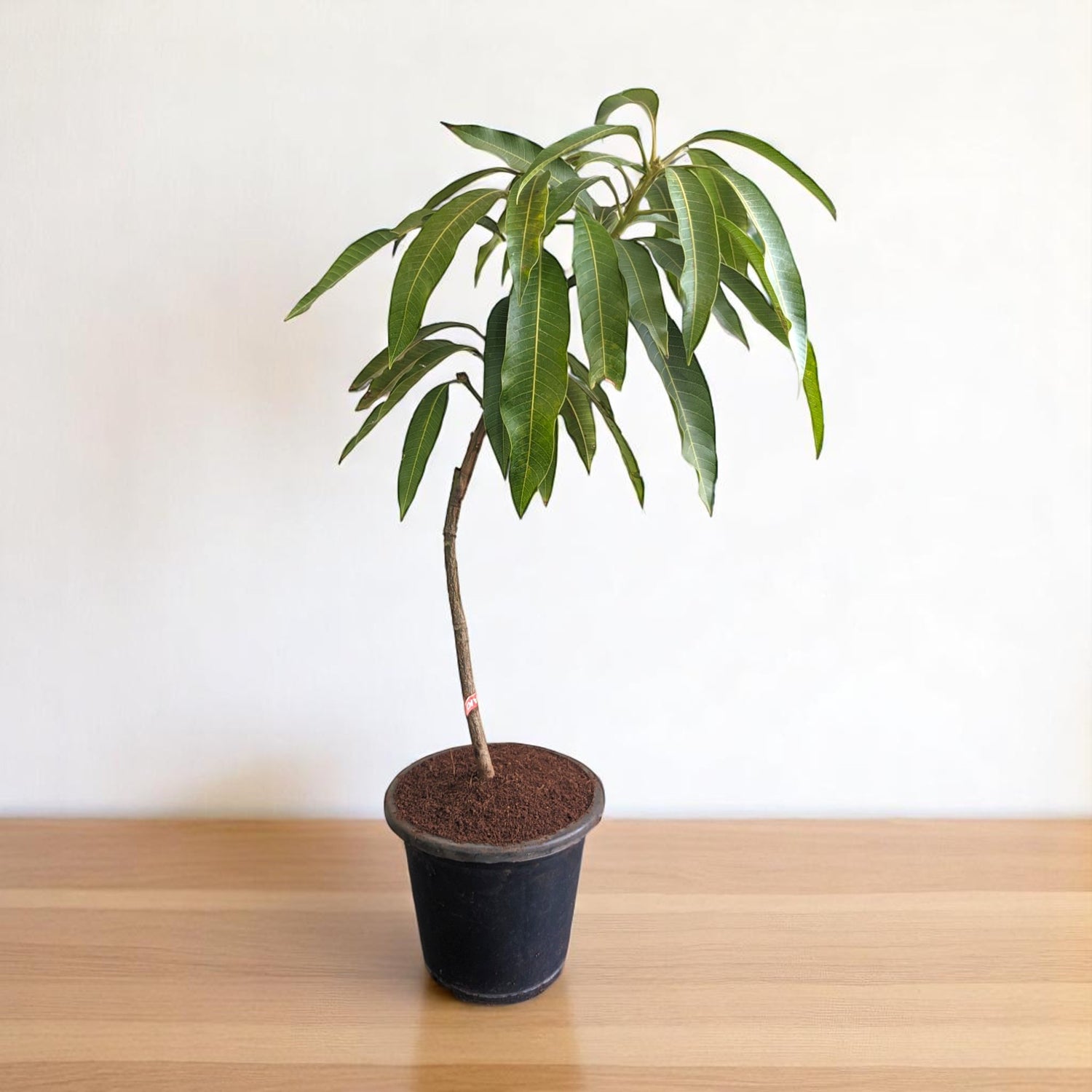
SKU: 61450979103
mango plant indoor

mango plant indoor Buy grafted mango hapus (alphonso) plant online at low price

Sale price$23.91 Regular price$26.57
Save 10%

Pay in installments of $6.64 with ShopPay, AfterPay and Klarna

Shipping Estimate
USA
  • USA
  • CAN

Ships within 48 hours · Estimated delivery Aug 18 - Aug 23

Promo Codes Available:

For Your Every Summer RSVP, with Code: SUMMER15

Description

mango plant indoor Buy grafted mango hapus (alphonso) plant online at low priceMango Hapus Plant (Grafted) Alphonso Plant The Mango Hapus Plant, also known as the Alphonso Mango or Ratnagiri Hapus, is India's most celebrated mango variety known for its unmatched sweetness, rich aroma, and smooth, fiberless texture. This grafted version ensures quicker fruiting, true to type fruit quality, and vigorous growth. Perfect for home orchards and farm spaces, this tropical fruit tree delivers the king of mangoes straight from your

Mango Hapus Plant (Grafted) - Alphonso Plant

The Mango Hapus Plant, also known as the Alphonso Mango or Ratnagiri Hapus, is India's most celebrated mango variety known for its unmatched sweetness, rich aroma, and smooth, fiberless texture. This grafted version ensures quicker fruiting, true-to-type fruit quality, and vigorous growth. Perfect for home orchards and farm spaces, this tropical fruit tree delivers the king of mangoes straight from your garden.

What You’ll Receive

Plant Height: 18–30 inches (grafted sapling in grow pot)
Pot Size: 5–6 inch nursery pot
Soil Type: Well-drained loamy soil enriched with organic compost

Features and Characteristics

Growth Habit

  • Compact, dwarf mango tree suitable for small spaces.
  • Ideal for pot cultivation, terrace gardens, or small orchards.

Leaves & Flowers

  • Glossy dark green, long, leathery leaves.
  • Produces fragrant yellowish flowers during flowering season.

Fruits

  • Medium to large-sized, oval mangoes with smooth, thin skin.
  • Rich, sweet, and fiberless pulp, perfect for fresh consumption and culinary use.
  • Distinctive aroma that makes it stand out as one of the best varieties.

Uses of Alphonso Mango

Culinary Uses

  • Enjoyed as fresh, ripe fruit for its unbeatable sweetness.
  • Ideal for making smoothies, milkshakes, and desserts.
  • Perfect for making mango pulp, juices, and jams.
  • Can be used for pickles and chutneys in the raw stage.

Nutritional & Health Benefits

  • High in Vitamin C, boosting immunity.
  • Rich in fiber, promoting digestive health.
  • Contains antioxidants that contribute to overall wellness.

Harvesting and Farming Details

Farming

Climate Requirements
  • Thrives in warm, tropical, and subtropical climates.
  • Requires adequate sunlight and moderate humidity for optimal fruit production.
Soil
  • Prefers well-draining, sandy-loamy soil with good organic content.
  • Avoid waterlogged or clay-heavy soil.
Planting Season
  • Best planted in spring or monsoon season.
Spacing
  • Maintain a 6-8 feet distance between plants for optimal growth.

Harvesting

  • Fruits typically appear within 3-4 years for grafted varieties.
  • Harvest when the mangoes turn golden yellow and release their signature fruity aroma.
  • Handle carefully to prevent bruising during harvest.

Care Tips

Light

  • Requires full sunlight (at least 8 hours a day) for proper growth and fruiting.

Watering

  • Water deeply but allow the soil to dry out slightly between waterings.
  • Reduce watering during the winter or rainy season.

Fertilizer

  • Use organic compost and a balanced NPK fertilizer every month.
  • Supplement with micronutrients like potassium and magnesium for better fruiting.

Pruning

  • Regularly prune to remove dead branches and enhance air circulation.
  • Helps improve tree structure and fruit yield.

Pest Control

  • Can be affected by mango hoppers, mealybugs, and fungal infections.
  • Use neem oil or organic pesticides for effective pest control.

Benefits of Growing Alphonso Mango

Health & Wellness Benefits

  • Chemical-free homegrown mangoes, rich in nutrients and antioxidants.
  • Supports immune health and digestive functions.

Economic Benefits

  • High-demand premium mango variety, perfect for commercial cultivation.
  • Consistent yields, making it a profitable choice for growers.

Environmental Benefits

  • Acts as a natural air purifier, improving air quality.
  • Supports biodiversity by attracting beneficial pollinators like bees and butterflies.

Placement Suggestions

  • Ideal for home gardens, terraces, and backyards.
  • Can be grown in large pots (at least 15-20 inches wide) on balconies or patios.
  • Suitable for commercial orchards and large-scale farming.

Common Questions and Answers About Alphonso Mango

How long does it take for the Alphonso Mango plant to bear fruit?

Being a grafted variety, it starts producing fruit within 3-4 years with proper care.

Can Alphonso Mango be grown in pots?

Yes, it can thrive in large pots with sufficient sunlight and care.

How often should I water the plant?

Water once a week, ensuring the soil remains moist but not waterlogged.

Does Alphonso Mango need full sunlight?

Yes, the plant requires at least 8 hours of direct sunlight daily for healthy growth and fruiting.

When is the best time to harvest Alphonso Mango?

Harvest when the mangoes turn golden yellow and release their characteristic sweet aroma.

Is Alphonso Mango seedless?

No, it contains a single seed but is known for its fiberless pulp, making it easy to eat.

How do I prevent pests on my mango plant?

Use neem oil spray or mild organic pesticides to manage common pests.

What is the best fertilizer for Alphonso Mango?

Use organic compost, balanced NPK fertilizers, and micronutrient supplements for healthy growth and fruiting.

Can I grow Alphonso Mango indoors?

While it’s best grown outdoors in full sunlight, it can be placed near a bright window if necessary.

Why are my mango leaves turning yellow?

Yellowing leaves may be caused by overwatering, nutrient deficiencies, or insufficient sunlight. Ensure proper drainage, fertilization, and sunlight exposure.

The Mango Hapus (Grafted) Plant is a high-quality fruiting tree, perfect for both home and commercial cultivation. Order now and enjoy delicious Alphonso mangoes straight from your garden!

Shipping Notes
  • Free Standard Shipping on $100+ Orders to the USA.
  • Except Preorder products are shipped in 48 hours.
  • Delivery to the USA:
  1. Standard Shipping : 3-10 business days
  • If time is of the essence, please consider selecting expedited delivery for faster service.
Exchange/Return Notes
  • We offer a 30-day return/exchange service after receiving.
  • Final sale items are not eligible for returns or exchanges.
  • To process your return/exchange, please contact us at [email protected]
  • Please click here for more details>>> Return & Exchange Policy
SKU: 61450979103

Discover Niche Categories That Outsell mango plant indoor

Top-Converting Item to Boost Your Average Order

4.7 ★★★★★
Based on 25 reviews
Sort
Highest Rating
Newest First
Oldest First
Product Reviews
E
Eric Chabot
Whiting, US
★★★★★ 5
Very Extensive Overview of Major Ethical Issues
Format: Hardcover
Anyone familiar with Wayne Grudem’s Systematic Theology knows how extensive his work tends to be. At 1,328 pages, Christian Ethics: An Introduction to Biblical Moral Reasoning follows that same comprehensive approach, offering a systematic guide to Christian moral reasoning. Grudem’s goal is to help Christians live lives pleasing to God by obeying Scripture and making wise moral choices. His ethical framework is rooted in God’s character and the authority of Scripture, with careful attention to the relationship between Old and New Testament ethics. While many ethical themes are drawn from the Ten Commandments, Grudem argues that the moral law remains applicable today, while the ceremonial and civic laws have passed away with the coming of Christ. Readers will notice that his chapter on civil government is adapted from his earlier work, Politics—According to the Bible: A Comprehensive Resource for Understanding Modern Political Issues in Light of Scripture. Grudem argues that moral right and wrong are grounded in who God is—not in human consensus. God’s attributes (holiness, love, justice, and truthfulness) define what is good. As such, Grudem holds to a form of Divine Command Theory: God’s commands flow from God’s nature. God does not command arbitrarily, because his moral will reflects his unchanging, holy, loving, and just character. God’s nature is the ultimate standard of goodness, and the Good is not external to God (contra Plato). Therefore, Grudem stands within the theological voluntarist tradition associated with Augustine, Calvin, and Reformed orthodoxy. For Grudem, ethics is ultimately about imitating God (Eph. 5:1), which stands in direct opposition to moral relativism and situation ethics. He devotes chapters to honoring God through avoiding idolatry, truthfulness in speech, and faithfulness in Sabbath observance and devotion. Grudem also addresses the moral obligation to protect life, engaging debated issues such as abortion, euthanasia, suicide, war and self-defense, racial discrimination, and substance use and health decisions. He presents arguments alongside counterarguments, seeking to ground his conclusions biblically. Regarding authority, Grudem argues that God exercises authority through parents, societal structures, civil government, and the local church. Christians are called to obey civil authorities, though civil disobedience is justified when the state commands what God forbids. Grudem defends a just war position, arguing that war can be morally justified under certain conditions and that governments are authorized by God to use force to restrain evil. In his view, failing to stop evil can itself become immoral. As a result, he rejects Christian pacifism as an absolute position. Jesus’ commands regarding non-retaliation (e.g., “turn the other cheek”) apply to individual Christians, not to the state’s responsibility to uphold justice. The book also addresses marriage and related ethical questions, including marriage and divorce, birth control, IVF and reproductive technologies, pornography, and contemporary debates surrounding homosexuality and transgenderism—all discussed within a biblical framework. Grudem affirms that divorce is permitted in limited biblical cases (sexual immorality and abandonment), though never ideal. I would add that abuse should also be considered legitimate grounds for divorce. He rejects divorce based on incompatibility, unhappiness, or a “loss of love.” Additional topics include private property, work and rest, wealth and poverty, personal stewardship, debt, business ethics, and environmental care. As in his previous writings, Grudem maintains a complementarian view of gender roles, arguing that God designed men and women for distinct but complementary roles, particularly in the home and the church. Throughout the book, Grudem emphasizes human responsibility, freedom, and moral accountability. Our choices carry real moral weight and real consequences. One of the book’s strengths is its emphasis on the heart in ethical reasoning, serving as a corrective to purely external, rule-based moral frameworks. For Grudem, genuinely Christian ethics begins internally and works outward—a point with which I agree. Drawing from Jesus’ teaching in the Sermon on the Mount (Matt. 5–7), he argues that ethics without heart transformation inevitably becomes legalism. Overall, readers will likely find Grudem’s positions conservative. While he does not dismiss natural law arguments, he clearly adopts a “Scripture-first” approach. This book is especially well suited for pastors, as congregants regularly wrestle with complex ethical questions and need biblically grounded guidance.
WAS THIS REVIEW HELPFUL?YesReportShare
Reviewed in the United States on January 25, 2026
J
Jfarris
Los Angeles, US
★★★★★ 3
What one Would Come to Expect
Format: Hardcover
It is typically what you would come to expect from Wayne Grudem. Those familiar with his Systematic Theology will find the material here familiar. Of course, he is dealing with a new set of topics by applying his theological rationale to a set of ethical issues. There a wide set of issues covered here. The reasoning is typical mediocre and the theological development is fine, fair, just ok. Theologically it is a bit thin, but its a nice handy resource, and if you're inclined theologically in a similar direction, then its not a bad collection of essays on important issues that evangelicals need to think about more carefully and critically.
WAS THIS REVIEW HELPFUL?YesReportShare
Reviewed in the United States on December 17, 2024
D
Verified Purchase
Delaney Salazar
Belleville, US
★★★★★ 1
Bad Manufacturing
Format: Paperback
When I got my package. It was in perfect condition, not showing any signs of it being damaged. But then when I started to go through the pages, a couple pages were stained. One page was completely ripped. I thought I could probably just tape it back together, but it was literally missing a chunk of the text. Then I came to the realization I shouldn't have to pay $40 - $50 dollars, and then have to try to fix it and deal with it.
WAS THIS REVIEW HELPFUL?YesReportShare
Reviewed in the United States on March 5, 2026
A
Verified Purchase
Adorable123
New York, US
★★★★★ 5
Worth pvery penny!!
Format: Paperback
I love this book so much because it has rationales!!!, which are very important in knowing why you got a question wrong or right. There are practice questions that helped me a lot as well. I passed my peds exam because of this book, so if you are a NEW nursing student or one about to take a peds class make sure you get this book and practice after every lecture.
WAS THIS REVIEW HELPFUL?YesReportShare
Reviewed in the United States on December 30, 2022
P
Verified Purchase
Peachyki 💗
Houston, US
★★★★★ 5
Used this a lot!
Format: Paperback
This was a Peds staple for my RN bridge program! Book helped me out a lot! Read those rationales! They are amazing!
WAS THIS REVIEW HELPFUL?YesReportShare
Reviewed in the United States on August 6, 2023

recommand products