SKU: 6198501417
mimosa sensitive plant seeds

mimosa sensitive plant seeds Mimosa pudica (Sensitive Plant) 0.25 oz (~1100 Seeds)

Sale price$24.75 Regular price$27.50
Save 10%

Pay in installments of $6.88 with ShopPay, AfterPay and Klarna

Shipping Estimate
USA
  • USA
  • CAN

Ships within 48 hours · Estimated delivery Sep 21 - Sep 26

Promo Codes Available:

For Your Every Summer RSVP, with Code: SUMMER15

Description

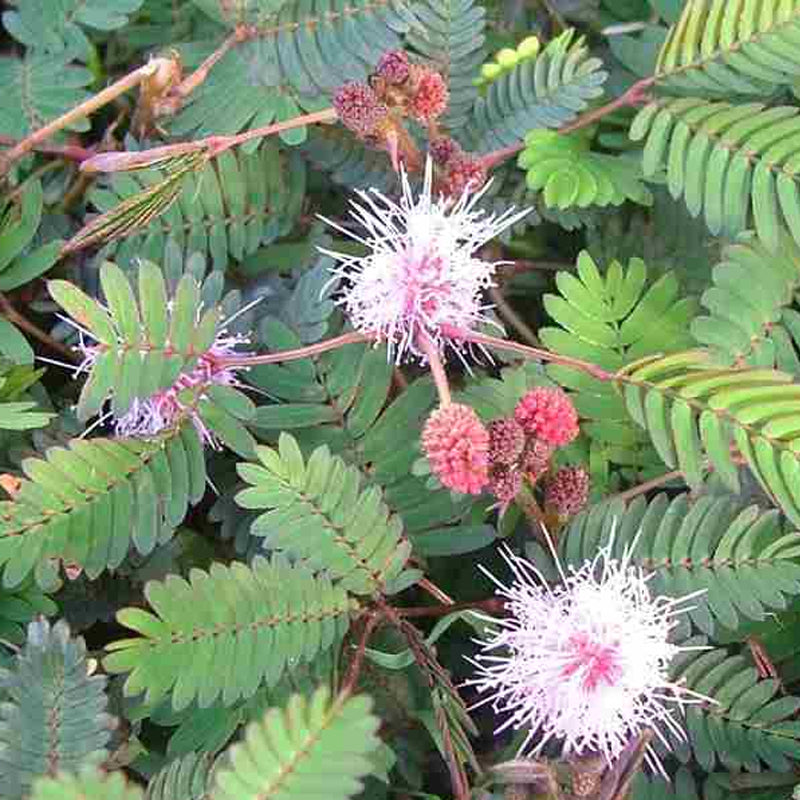
mimosa sensitive plant seeds Mimosa pudica (Sensitive Plant) 0.25 oz (~1100 Seeds)Mimosa pudica (Sensitive Plant) is a fascinating and unique plant species belonging to the Fabaceae family. It is known for its intriguing response to touch, as its leaves fold inward or droop when stimulated. The Sensitive Plant is a small, herbaceous perennial that typically grows to a height of about 1 to 2 feet (30 to 60 centimeters). It has delicate compound leaves that are fern like in appearance, consisting of numerous small leaflets. The

Mimosa pudica (Sensitive Plant) is a fascinating and unique plant species belonging to the Fabaceae family. It is known for its intriguing response to touch, as its leaves fold inward or droop when stimulated. The Sensitive Plant is a small, herbaceous perennial that typically grows to a height of about 1 to 2 feet (30 to 60 centimeters). It has delicate compound leaves that are fern-like in appearance, consisting of numerous small leaflets. The leaflets are arranged along the stems, and each leaflet is sensitive to touch.

Leaf Movements: One of the most distinctive features of the Sensitive Plant is its ability to respond to touch or physical disturbance. When touched, the leaflets of the plant fold inward or droop, creating a noticeable change in leaf position. This response is a defense mechanism that helps protect the plant from potential threats.

Flowers: The Sensitive Plant produces small, fluffy, globe-shaped flower heads that are typically pink or purple in color. The flowers are pom-pom-like and are composed of multiple tiny individual flowers. They have a sweet fragrance and attract pollinators like bees and butterflies.

Seed Pods: After flowering, the Sensitive Plant develops small, elongated seed pods. These pods contain seeds that can be collected for propagation. When the pods mature, they split open, releasing the seeds for dispersal.

Habitat: Mimosa pudica is native to South America but has been naturalized in many other tropical and subtropical regions around the world. It typically grows in open areas, including grasslands, meadows, and disturbed habitats. It prefers warm climates and well-drained soils.

Cultivation: The Sensitive Plant can be cultivated as a houseplant or grown outdoors in suitable climates. It prefers a sunny location and well-drained soil. Regular watering is necessary to keep the soil moist but not waterlogged. It can also be grown from seeds collected from the mature seed pods.

The Sensitive Plant (Mimosa pudica) is a captivating and interactive plant that captivates with its leaf movements. Whether used as an educational plant or simply enjoyed for its unique characteristics, it continues to intrigue and delight plant enthusiasts around the world.

Shipping Notes
  • Free Standard Shipping on $100+ Orders to the USA.
  • Except Preorder products are shipped in 48 hours.
  • Delivery to the USA:
  1. Standard Shipping : 3-10 business days
  • If time is of the essence, please consider selecting expedited delivery for faster service.
Exchange/Return Notes
  • We offer a 30-day return/exchange service after receiving.
  • Final sale items are not eligible for returns or exchanges.
  • To process your return/exchange, please contact us at [email protected]
  • Please click here for more details>>> Return & Exchange Policy
SKU: 6198501417

Discover Niche Categories That Outsell mimosa sensitive plant seeds

Top-Converting Item to Boost Your Average Order

4.7 ★★★★★
Based on 15 reviews
Sort
Highest Rating
Newest First
Oldest First
Product Reviews
S
Verified Purchase
Southern gal
Massapequa, US
★★★★★ 5
Great summary of space exploration
Format: Hardcover
This was a gift for a family member & far as I know they were very impressed with the knowledge available in this book.
WAS THIS REVIEW HELPFUL?YesReportShare
Reviewed in the United States on December 14, 2025
D
Verified Purchase
Debra
Waukegan, US
★★★★★ 5
I wish I was an astronaut
Format: Hardcover
Fantastic book. A detailed history of Space Exploration beginning with the history of flight. The descriptions allowed me to visualize how it all began and how it continued to move forward through the years and into the future. The illustrations, concept art, and photography opened up a world of knowledge I did not possess. I really hope I can find more books of this caliper.
WAS THIS REVIEW HELPFUL?YesReportShare
Reviewed in the United States on February 14, 2024
C
Verified Purchase
CaptainMaxwell7
Omaha, US
★★★★★ 5
Seems good.
Format: Hardcover
My sister bought this. She didn't complain about it.
WAS THIS REVIEW HELPFUL?YesReportShare
Reviewed in the United States on March 10, 2023
P
Verified Purchase
Peter M.
Massapequa, US
★★★★★ 5
Great and balanced history of space exploration.
Format: Hardcover
An amazing coffee-table book that goes in depth telling the full history of space exploration, not leaving out the achievement of the Soviets and other pioneers. The print, photo quality and writing is top-notch with an unbeatable price. Just fantastic.
WAS THIS REVIEW HELPFUL?YesReportShare
Reviewed in the United States on March 12, 2019
T
Tanya McHenry
Pawtucket, US
★★★★★ 4
Interesting Material For The Space Inclined
Format: Hardcover
Okay, so I should start by saying that I am not a space exploration expert or really enthusiast. I am curious though. What this means is I don't have a lot of books on space exploration, and I haven't spent large amount of time looking at that kind of information. This review is from someone who is, well as I said, curious about it. So let's kind of start with what this book covers, very early theory kind of things, lie Greek BCE space models all the way through possible future exploration and challenges with future development. It's very dry, very factual. It reminds me of kind of a textbook approach where it takes ideas like thee Space Lab, spy satellites (Corona Reconnaissance), and launch vehicles from Asia and just lays out what happened and key facts about the topic. These are not stories persay. They're not meant to grip someone not already interested and while I am sure someone deep into the topic might feel perfectly adequate to some, I wish I had more incentive to read it from start to end. Instead I largely jumped around looking at specific topics like the the First Flight, Columbia, which I had a basic foundation of information for already. This made it an easy read. In that same section, there is a topic called out about New Astronauts where women, diversity and non-military personnel like engineers and scientists became astronauts. For sections like these I wish there was... well more. So it took me a really long time to go through the book because it consist of several topics that didn't draw me in and several that did but didn't provide as much information as I wanted. The book promises the history of the space exploration, from ancient time and to the future, and largely it delivers on the promise, in brief snippets, and maybe it the ambition of that massive amount of time that it left me feeling wanting about topics I already had interest in, like Mining the Solar system. Think of this is a way to touch on nearly every topic, an tiny introduction to each one because very few topics have more than one or two pages covering it which means if you really want to know who is wants to go mine those 2 to 3k mineral rich asteroids, for what, and what the challenges are.. you'll need to find another book. Finally, I'll touch on the pictures. Yes, you can find a lot of these online, probably even bigger ones, but have them all in one place. There are so many of them that you really could just thumb through the pages and see iconic as well as pleasantly surprising ones, and each one has a caption that gives some key details, like one that is the Boeing made shuttle main engine you can find at, well one of the museums of course! There was also a basic schematic for one of the engines which I was not expecting, and the same thing for a voyager probe. It won't bee something I will ever browse again for casual reading, but for a space lover, this might be just thing they want to start with.
WAS THIS REVIEW HELPFUL?YesReportShare
Reviewed in the United States on February 5, 2019

recommand products