SKU: 63595717638
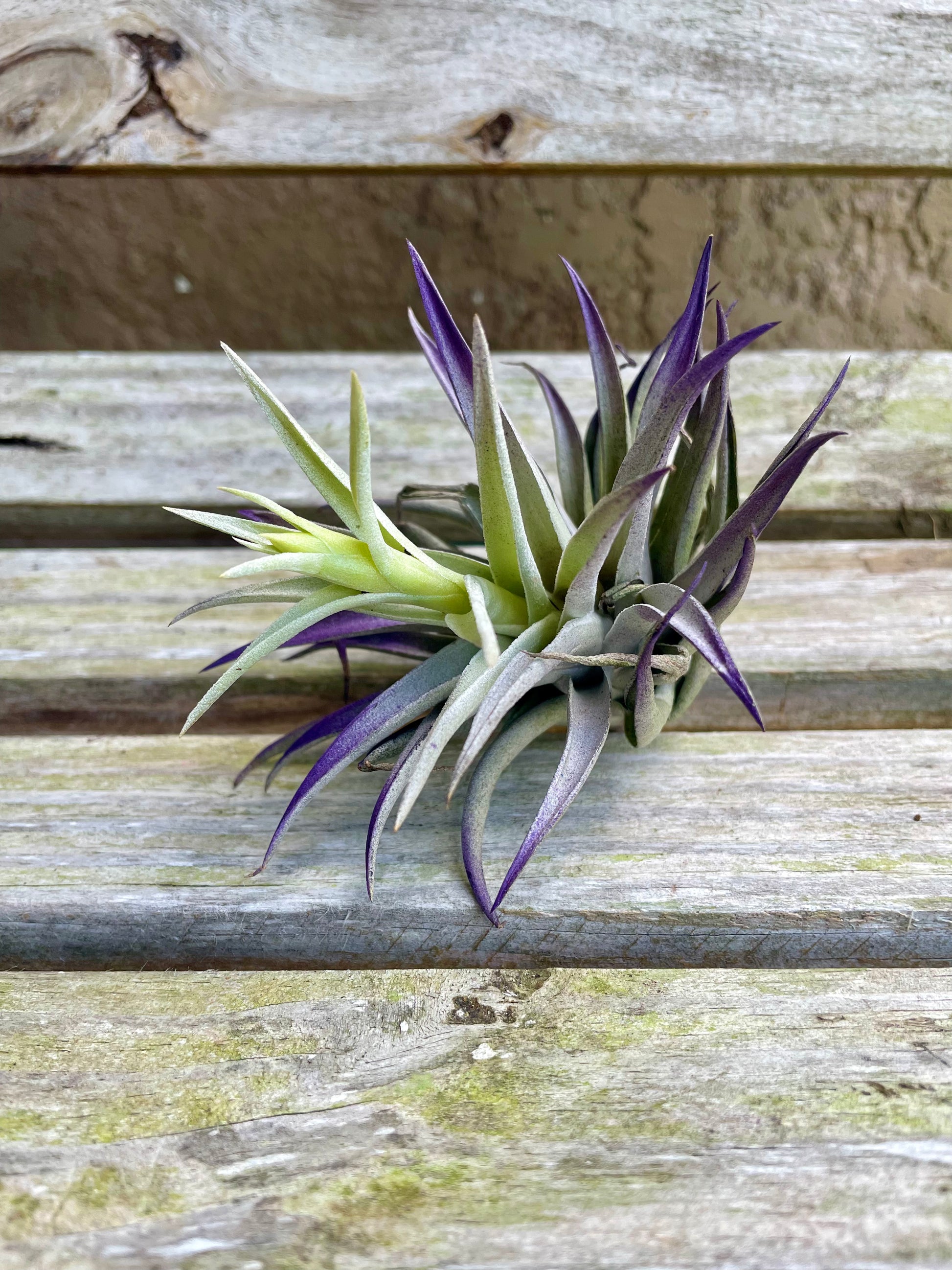
tillandsia harrisii air plant

tillandsia harrisii air plant Harrisii – Lovehopegrow

Sale price$18.39 Regular price$20.43
Save 10%

Pay in installments of $5.11 with ShopPay, AfterPay and Klarna

Shipping Estimate
USA
  • USA
  • CAN

Ships within 48 hours · Estimated delivery Oct 9 - Oct 14

Promo Codes Available:

For Your Every Summer RSVP, with Code: SUMMER15

Description

tillandsia harrisii air plant Harrisii – Lovehopegrow**Harissi Air Plant** **A Unique and Hardy Tillandsia** The Harissi air plant, scientifically known as Tillandsia harissi, is a captivating and resilient member of the Tillandsia genus. Native to the tropical forests of Central and South America, the Harissi air plant is renowned for its distinctive appearance and relatively easy care requirements, making it a popular choice among both novice and experienced plant enthusiasts. **Description:** The

**Harissi Air Plant**

**A Unique and Hardy Tillandsia**

The Harissi air plant, scientifically known as Tillandsia harissi, is a captivating and resilient member of the Tillandsia genus. Native to the tropical forests of Central and South America, the Harissi air plant is renowned for its distinctive appearance and relatively easy care requirements, making it a popular choice among both novice and experienced plant enthusiasts.

**Description:**
The Harissi air plant boasts a striking visual appeal with its silvery-green, densely clustered leaves that form a rosette-like arrangement. The leaves are covered in fine trichomes, which give the plant its distinctive silvery appearance and serve to absorb moisture and nutrients from the air. As the plant matures, it may produce delicate and vibrant violet blooms on thin, wiry stems. The contrast between the plant's silver foliage and the violet blossoms creates a captivating and artistic display.

**Care Guide:**

*1. Light:*
Harissi air plants thrive in bright, indirect light. They should be placed near a window with filtered sunlight, or they can also be grown under fluorescent lights if natural light is insufficient. Avoid exposing the plant to direct sunlight for prolonged periods, as this can lead to sunburn.

*2. Watering:*
One of the unique aspects of Harissi air plants is their ability to draw moisture and nutrients directly from the air. Mist your air plant 2-3 times a week with a fine spray of water, ensuring that all parts of the plant receive moisture. Alternatively, you can submerge the plant in room-temperature water for about 20-30 minutes every 1-2 weeks. After watering, make sure to shake off excess water to prevent rot. If you live in a humid environment, you may need to water less frequently.

*3. Humidity:*
Harissi air plants appreciate higher humidity levels. If the air in your home is particularly dry, consider using a humidity tray or misting the plant more often. Avoid placing the plant in areas with constant drafts or extremely low humidity.

*4. Air Circulation:*
Good air circulation is essential for the health of Harissi air plants. Ensure that the plant has proper ventilation to prevent stagnant air, which can lead to fungal issues. A gentle fan or open windows can help maintain healthy airflow.

*5. Temperature:*
Harissi air plants thrive in temperatures ranging from 50°F to 90°F (10°C to 32°C). Protect them from extreme cold and sudden temperature fluctuations.

*6. Fertilization:*
Feed your Harissi air plant with a diluted, balanced, water-soluble fertilizer once a month during the growing season (spring through early fall). Avoid over-fertilizing, as air plants are sensitive to excess nutrients.

*7. Display:*
Harissi air plants can be displayed in a variety of creative ways. They can be placed in glass terrariums, on decorative rocks, or mounted on driftwood or other interesting surfaces. Ensure that the chosen display method allows for proper air circulation and drainage.

By following these care guidelines, you'll be able to enjoy the beauty and uniqueness of the Harissi air plant as it grows and thrives in your indoor environment. Remember that each plant is unique, so closely monitor its condition and adjust care routines as needed.


Shipping Notes
  • Free Standard Shipping on $100+ Orders to the USA.
  • Except Preorder products are shipped in 48 hours.
  • Delivery to the USA:
  1. Standard Shipping : 3-10 business days
  • If time is of the essence, please consider selecting expedited delivery for faster service.
Exchange/Return Notes
  • We offer a 30-day return/exchange service after receiving.
  • Final sale items are not eligible for returns or exchanges.
  • To process your return/exchange, please contact us at [email protected]
  • Please click here for more details>>> Return & Exchange Policy
SKU: 63595717638

Discover Niche Categories That Outsell tillandsia harrisii air plant

Top-Converting Item to Boost Your Average Order

4.5 ★★★★★
Based on 21 reviews
Sort
Highest Rating
Newest First
Oldest First
Product Reviews
D
Verified Purchase
Dejah
Draper, US
★★★★★ 5
Good!
Format: Paperback
In great condition, shipping took a few days though.
WAS THIS REVIEW HELPFUL?YesReportShare
Reviewed in the United States on February 9, 2023
A
Verified Purchase
Amazon Customer
Los Angeles, US
★★★★★ 3
Disappointed
Format: Paperback
Two chapters in the book are upside down.
WAS THIS REVIEW HELPFUL?YesReportShare
Reviewed in the United States on January 12, 2022
A
Verified Purchase
Adagg
Cuba, US
★★★★★ 1
Awful textbook
Format: Paperback
I think this is the most poorly written textbook I have ever used. The JBL site for this book is garbage. So many spelling mistakes and publishing errors. Rent this book do not buy, your program will most likely not keep this crap around for long.
WAS THIS REVIEW HELPFUL?YesReportShare
Reviewed in the United States on December 20, 2021
A
Verified Purchase
alexandria
San Leandro, US
★★★★★ 1
Beware there are no page numbers.
Format: Kindle, Format: Kindle
it is not mentioned anywhere for E-textbook kindle version. Only displays location. If you need this for a class it will be impossible to know what exactly needs to be read.
WAS THIS REVIEW HELPFUL?YesReportShare
Reviewed in the United States on June 11, 2023
T
Verified Purchase
Thaumagnost
New York, US
★★★★★ 5
An Informative Introduction Based on Current Academic Studies of Western Esotericism
Format: Hardcover
This introductory text is the fruit of a fairly new field of recognized academic studies which developed as a result of the pioneering literary efforts of scholars such as D. P. Walker (1914 - 1985) and Frances A. Yates (1899 - 1981) who took the subject of Western esotericism seriously rather than denigrate it as an area filled with superstition and irrationalism as many earlier scholars in different specialized fields had done. Other scholars of esotericism who have contributed to this growing field include but are not limited to Henry Corbin, Francois Secret, Antoine Faivre, Arthur Versluis, Joscelyn Godwin, and Wouter Hanegraaff, the last being the senior editor of the landmark Dictionary of Gnosis and Western Esotericism (2005), a collaborative effort by many scholars. Goodrick-Clarke is also a recognized scholar in this field and introduces it to the reader in his own introduction which also addresses the question of how esotericism is defined by those dedicated to studying it. As clarified in the introduction, Western esotericism is rooted in the Hellenistic philosophy of classical paganism as expressed in Alexandrian Hermeticism, Neoplatonism, and Gnosticism which have syncretized with the three Abrahamic religions of Judaism, Christianity and Islam, leaving vital traces within each. Through the Italian Renaissance, a Hermetic revival occurred as a result of the rediscovery of ancient texts which further resulted in the development of magic, astrology, alchemy, and Cabala through prominent individuals such as Marcilio Ficino, Pico della Mirandola, Johannes Reuchlin, Johann Trithemius, Henry Cornelius Agrippa, John Dee, and Paracelsus, each given significant attention. The development of German Naturphilosophie, Christian theosophy through Jacob Boehme and his followers (such as Gichtel, Pordage and Law), and Pietism are also covered before thoroughly introducing us to Rosicrucianism in the early 17th century, high-grade Freemasonry and Illuminism in the 18th century, and the ideas and practices of Emanuel Swedenborg and Franz Anton Mesmer which significantly impacted esotericism. Within the context of Rosicrucianism, the content of the manifestos are discussed along with Johann Valentin Andreae and the Tubingen Circle; in England, Michael Maier, Robert Fludd, and Comenius and the Origins of the Royal Society are covered. The impact of Rosicrucianism and theosophy on Freemasonry are explored as well as the following types of Freemasonry: "Scottish" and Chivalric, German Templar, and Egyptian. Within the context of Freemasonry and Illuminism, the following are also discussed: Martines de Pasqually and the Elect Coens, Louis Claude de Saint-Martin, Martinesism, Martinism, Willermozism, The Illumines of Avignon, and Count Cagliostro. Not only are the ideas of Swedenborg and Mesmer presented but also how they contributed to spiritualism and healing movements in the 19th century, including the United States which birthed Andrew Jackson Davis as the main theologian for spiritualism; Phineas Parkhurst Quimby, Warren Felt Evans and others who developed the New Thought Movement; and Mary Baker Eddy who founded Christian Science. A separate chapter is dedicated to ritual magic from 1850 to the present. Within this chapter, one is introduced to Eliphas Levi and the French Occult Revival, the Hermetic Order of the Golden Dawn and its members, and special attention is given to the contributions of A. E. Waite, Aleister Crowley and Thelemic magick, and Dion Fortune and the Inner Light. I was, however, disappointed to see the section on Crowley end with the following: "Gerald Gardner (1884 - 1964), the founder of modern witchcraft, introduced Crowleyan magick into the neopagan Wiccan movement." For a better understanding of the influential role of Crowley and ritual magic, including the grimoires, on Wiccan practices, I recommend Wicca: Magickal Beginnings (2008) by Sorita d'Este and David Rankine. Helena Blavatsky and her Theosophical Society are given a separate chapter which expounds on her influences, travels, developing doctrines, and legacy. The last chapter titled "Modern Esotericism and New Paradigms" discusses theosophical heirs such as Annie Besant, Charles W. Leadbeater, and Rudolph Steiner (who developed his own religious system called "Anthroposophy"). It also has a section on Fourth Way Groups, introducing Gurdjieff and Ouspensky. Additionally, it covers the scientization of esotericism, New Age science, and Carl Jung's influence on esotericism. One individual I would have liked to see introduced within the context of Steiner is Valentin Tomberg who anonymously wrote Meditations on the Tarot: A Journey into Christian Hermeticism which is recognized by some, including esoteric scholar Antoine Faivre, as a masterpiece of 20th century esoteric/mystical literature. Goodrick-Clarke's book not only includes valuable footnotes and recommendations for further reading for each chapter, but also includes a helpful index as well as over 30 illustrations comprised of portraits, diagrams, plates, charts and other relevant pictures to supplement the text. This historical introduction to Western esotericism deserves wide readership.
WAS THIS REVIEW HELPFUL?YesReportShare
Reviewed in the United States on February 26, 2009

recommand products