Pay in installments of $7.36 with
 ,
,
 and
and

Shipping Estimate
USA
- USA
- CAN
- USA
- CAN
Ships within 48 hours · Estimated delivery Sep 20 - Sep 25
 Promo Codes Available:
For Your Every Summer RSVP, with Code: SUMMER15
Description
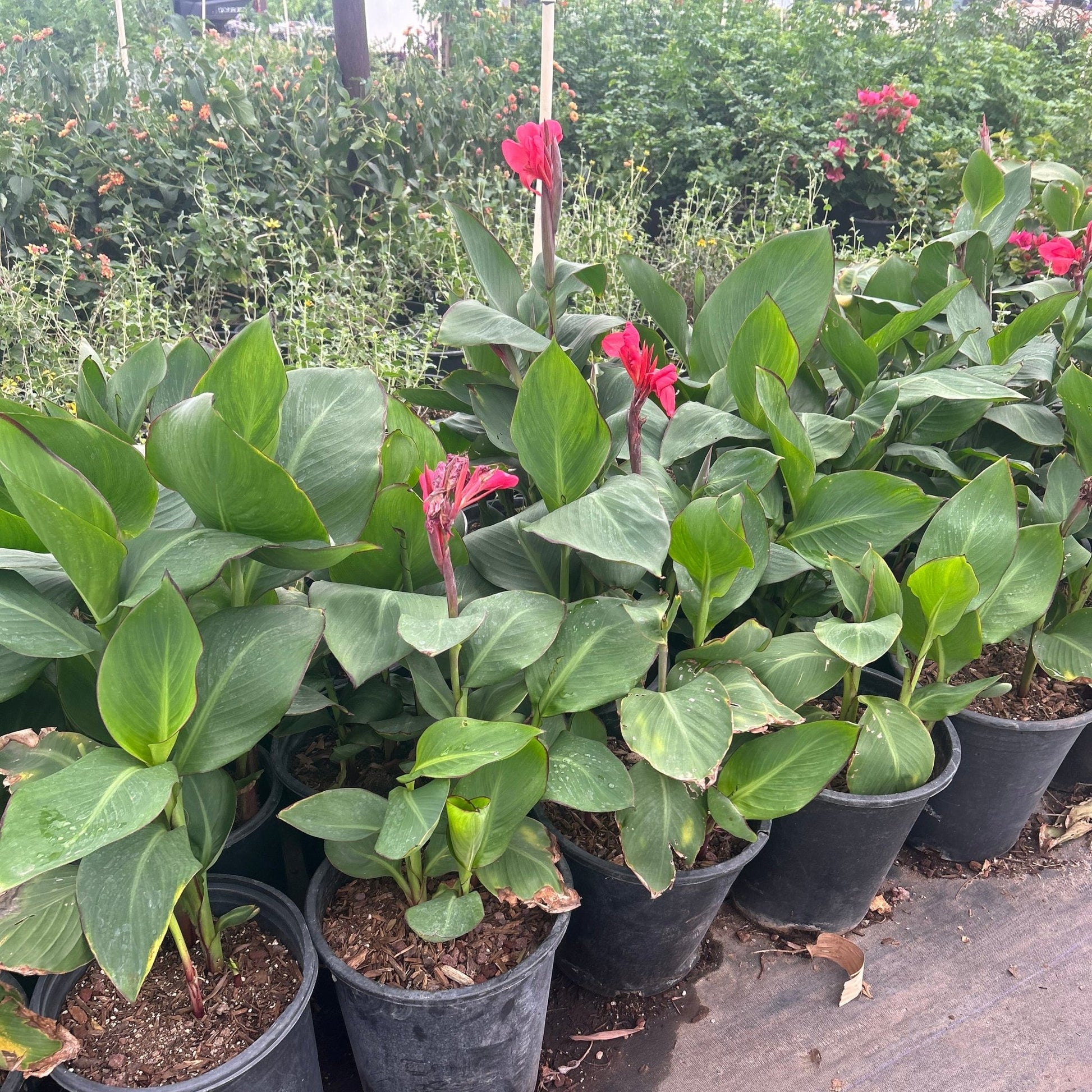
are canna lilies indoor plants Buy Red Canna Lily Phoenix, AZ | Canna sppThe Boldest Tropical Perennial for Phoenix Red Canna Lily Red Canna Lily (Canna spp.) is Phoenix's most fiery, high impact flowering perennial a fast growing tropical powerhouse that delivers bold red blooms and lush paddle shaped foliage from spring through fall. With its deep red flowers rising dramatically above rich green leaves, Red Canna creates an instant resort garden atmosphere in any Phoenix or Scottsdale landscape. Whether you're building a
The Boldest Tropical Perennial for Phoenix — Red Canna Lily
Red Canna Lily (Canna spp.) is Phoenix's most fiery, high-impact flowering perennial — a fast-growing tropical powerhouse that delivers bold red blooms and lush paddle-shaped foliage from spring through fall. With its deep red flowers rising dramatically above rich green leaves, Red Canna creates an instant resort-garden atmosphere in any Phoenix or Scottsdale landscape. Whether you're building a tropical border in Chandler, a poolside showstopper in Mesa, or a dramatic focal point in Tempe or Gilbert — Red Canna Lily delivers striking color with minimal effort and investment.
Red Canna Lily Plant Details
| Attribute | Detail |
|---|---|
| Scientific Name | Canna spp. |
| Common Names | Red Canna Lily, Canna, Indian Shot |
| Mature Height | 2–6 feet (varies by variety) |
| Mature Width | 1.5–2 feet per clump (spreads by rhizomes over time) |
| Growth Rate | Fast — can grow 2–4 feet in a single Phoenix season |
| Sun | Full sun to partial shade. Produces the most blooms in full sun (6+ hours daily). |
| Water | Moderate — regular deep watering for best bloom production. Tolerates brief dry periods once established. |
| USDA Zones | 7–11 (Phoenix is Zone 9b–10a — cannas thrive year-round with minimal dieback) |
| Soil | Rich, moist, well-draining preferred. Adapts to Arizona native soils with organic amendment. |
| Foliage | Semi-evergreen in Phoenix — large tropical paddle-shaped leaves; may die back in frost but resprouts vigorously |
| Bloom Color | Deep, vivid red flowers blooming spring through fall in Phoenix |
| Wildlife Value | Top hummingbird attractor; also draws butterflies and native bees |
Red Canna Lily Uses in Phoenix Landscapes
Tropical Focal Point and Bold Accent
Red Canna Lily is the undisputed scene-stealer of any Phoenix garden. Planted in groups of 3–5, its deep red blooms create a dramatic focal point that commands attention from spring through fall. The rich red color pops against neutral stucco walls, grey decomposed granite, and the green foliage of surrounding plants — making it a top choice for modern desert landscapes in Scottsdale and Paradise Valley. Pair with Yellow or Orange Canna for a stunning tropical color gradient, or use Red Canna alone as a bold monochromatic statement planting.
Poolside and Water Feature Borders
Red Canna Lily thrives near pools and water features in Chandler, Peoria, and Glendale. Its love of consistent moisture makes it ideal for the extra humidity near water features, and its lush tropical look transforms ordinary pool areas into resort-quality retreats. Plant 2–3 feet from pool edges for a dramatic framing effect. The deep red blooms also create a stunning color contrast against blue water — one of the most eye-catching poolside color combinations in Phoenix landscape design.
Hummingbird and Wildlife Gardens
Red Canna Lily is one of the most effective hummingbird plants available for Phoenix landscapes. The deep red tubular flowers are irresistible to Anna's Hummingbirds (Phoenix's year-round residents) and migrating species throughout the spring and fall. Plant near a seating area or patio to enjoy regular hummingbird visits all season long. Red Canna pairs beautifully with Firecracker Bush and Ruellia for a hummingbird-and-butterfly garden that provides color and wildlife from early spring through late fall.
Mixed Tropical Border and Mass Planting
Red Canna grows beautifully in mixed tropical borders with Elephant's Food, Tropical Bird of Paradise, and Plumeria. In mass plantings, groups of 7–10 plants create a dense, weed-suppressing tropical groundcover that fills in quickly and requires minimal upkeep. For a stunning Phoenix-appropriate color combination, plant Red Canna with Yellow Canna and Orange Canna for a bold sunset-themed tropical bed that delivers season-long color with very little water.
Best Time to Plant Red Canna Lily in Phoenix
Spring (March–May) is the ideal planting time. As temperatures warm and frost risk passes, Cannas begin the explosive growth phase that produces their first blooms within weeks. Fall planting (October–November) is also viable — rhizomes establish through the cool months and burst into growth each spring. In Phoenix's mild climate, established Canna clumps typically stay in the ground year-round, expanding and producing larger displays each season without replanting.
How to Plant Red Canna Lily
- Choose the sunniest spot available — full sun (6+ hours) produces the most flowers. Partial shade gives more foliage but fewer blooms.
- Amend the soil generously — mix 30–40% compost or aged organic matter into the planting area. Canna Lily thrives in richer soil than most Arizona natives.
- Check for caliche — break through hardpan caliche to ensure drainage. Cannas want consistent moisture but not standing water.
- Plant rhizomes 4–6 inches deep — with growing eyes facing up, spaced 18–24 inches apart for group plantings.
- Water thoroughly after planting — keep soil consistently moist during the first 4–6 weeks as shoots emerge.
- Mulch generously — apply 3–4 inches of organic mulch to retain soil moisture, keep roots cool in Phoenix summers, and protect rhizomes from temperature extremes.
Watering Red Canna Lily in Phoenix
First Year Watering Schedule
Red Canna Lily needs consistent moisture — think tropical, not desert-adapted:
- Weeks 1–4: Water every 1–2 days during establishment, keeping soil consistently moist
- Month 1–3: Water every 2–3 days; daily during heat waves above 110°F
- Peak Summer: Every 2–3 days — never let the soil completely dry out
- Fall/Winter: Reduce to every 7–10 days as plants slow; water sparingly during dormancy
Drip Irrigation
Use 2 GPH emitters placed 12 inches from the base, running 20–30 minutes every 2–3 days in summer. A moisture-retentive mulch layer dramatically reduces irrigation needs. More consistent moisture equals more blooms — water is the #1 driver of Red Canna Lily's dramatic flower production in Phoenix's hot climate.
Do Red Canna Lilies come back every year in Phoenix?
Yes — in Phoenix's Zone 9b–10a climate, Canna rhizomes typically survive in the ground year-round. The foliage may die back in a cold winter, but the roots resprout vigorously in spring. Over time, established clumps expand into impressive masses that produce more and more blooms each season without replanting.
How does Red Canna Lily perform in Phoenix's summer heat?
Red Canna Lily thrives in Phoenix's summer heat — it's native to tropical and subtropical regions and appreciates the warmth. The key is consistent moisture. During heat waves above 110°F, growth may slow slightly, but plants rebound strongly in fall. Never let the soil dry out completely during summer for best performance.
What's the difference between Red, Yellow, and Orange Canna Lily?
They are the same species (Canna spp.) with different flower colors. All have the same growth habit, care requirements, and tropical appearance. The main difference is bloom color — red, yellow, or orange. Planting all three together creates a stunning rainbow border effect, or choose a single color for a bold monochromatic statement.
Can Red Canna Lily grow in containers in Phoenix?
Absolutely. Red Canna thrives in large containers (10–20 gallon pots) with good drainage. Use a rich, moisture-retentive potting mix and water more frequently than in-ground plants, as containers dry out faster in Phoenix's heat. Container Cannas are perfect for patios, balconies, and courtyards where in-ground planting isn't an option.
You May Also Like
Canna Lily - Yellow — The same bold tropical presence in a bright yellow variety — stunning when planted alongside Red Canna for a dramatic two-tone border.
Canna Lily - Orange — A vibrant orange-blooming Canna that bridges the gap between Red and Yellow for a warm, tropical sunset color palette.
Canna Lily Tropicanna — A dramatic variety with striped, multicolored foliage in addition to bold orange blooms — the showiest Canna variety available.
Firecracker Bush (Hamelia patens) — A hummingbird-magnet shrub with orange-red tubular flowers that complements Red Canna in a wildlife-friendly tropical border.
Tropical Bird of Paradise (Strelitzia reginae) — An exotic South African perennial with bold orange and blue flowers that pairs beautifully with Red Canna in a lush tropical Phoenix garden.
How Many Red Canna Lily Do I Need?
Red Canna forms upright clumps roughly 1.5 to 2 ft wide that spread by rhizome into a fuller mass each season. For a bold color band or mass planting, set plants on 2 ft centers so they knit together into a dense tropical drift within a couple of warm seasons. Use this as a starting guide for a single run:
| Border / run length | Plants needed (2 ft spacing) |
|---|---|
| 10 ft | 5 to 6 plants |
| 20 ft | 10 to 11 plants |
| 30 ft | 15 to 16 plants |
| 40 ft | 20 to 21 plants |
For a tight, fast-filling mass count roughly one plant per 2 sq ft of bed; for a few focal clumps, plant in odd-numbered groups of 3 to 5.
Red Canna Lily Season-by-Season in Phoenix
- Spring (Feb to Apr): Rhizomes break dormancy and shoots rocket up, with the first red blooms opening by late spring. This is the prime planting window once frost risk passes.
- Summer (May to Sep): Full bloom right through the hottest months. Growth may pause briefly above 110°F, then rebounds. Monsoon humidity (Jul to Sep) keeps the foliage lush. The one rule: never let the root zone dry out completely.
- Fall (Oct to Nov): A strong second flush of blooms in the cooler weather, and an excellent secondary planting window.
- Winter (Dec to Jan): Often holds its leaves in mild Valley winters but can die back on hard frost nights below about 28°F. Cut spent stalks to the ground and the rhizomes resprout vigorously in spring.
At a Glance
✔ Pollinator-Friendly ✔ Hummingbird-Friendly ✔ Heat-Loving (Reflected-Heat Tolerant) ✔ Low-Maintenance
Plant It With
- Canna Lily - Yellow: identical height and care in bright yellow for a two-tone border.
- Canna Lily - Orange: bridges red and yellow into a warm sunset-toned tropical bed.
- Canna Lily Tropicanna: striped multicolor foliage that adds a showy backdrop to the solid red.
- Tropical Bird of Paradise: bold orange and blue blooms for a layered resort look beside the Canna.
Is Red Canna Lily Right for Your Yard?
Red Canna is the right pick for a full-sun bed with improved, moisture-holding soil where you want season-long tropical color and regular hummingbird traffic. It rewards consistent water and room to spread by rhizome. It is not a fit if you want a true low-water desert look or a tidy non-spreading plant: Canna wants more moisture than a desert native, drops large spent leaves, and will travel underground, so give it a defined, irrigated bed rather than a gravel xeriscape.
Shipping Notes
- Free Standard Shipping on $100+ Orders to the USA.
- Except Preorder products are shipped in 48 hours.
- Delivery to the USA:
- Standard Shipping : 3-10 business days
- If time is of the essence, please consider selecting expedited delivery for faster service.
Exchange/Return Notes
- We offer a 30-day return/exchange service after receiving.
- Final sale items are not eligible for returns or exchanges.
- To process your return/exchange, please contact us at [email protected]
- Please click here for more details>>> Return & Exchange Policy