Shipping Estimate
USA
- USA
- CAN
- USA
- CAN
Ships within 48 hours · Estimated delivery Jul 15 - Jul 20
 Promo Codes Available:
For Your Every Summer RSVP, with Code: SUMMER15
Description
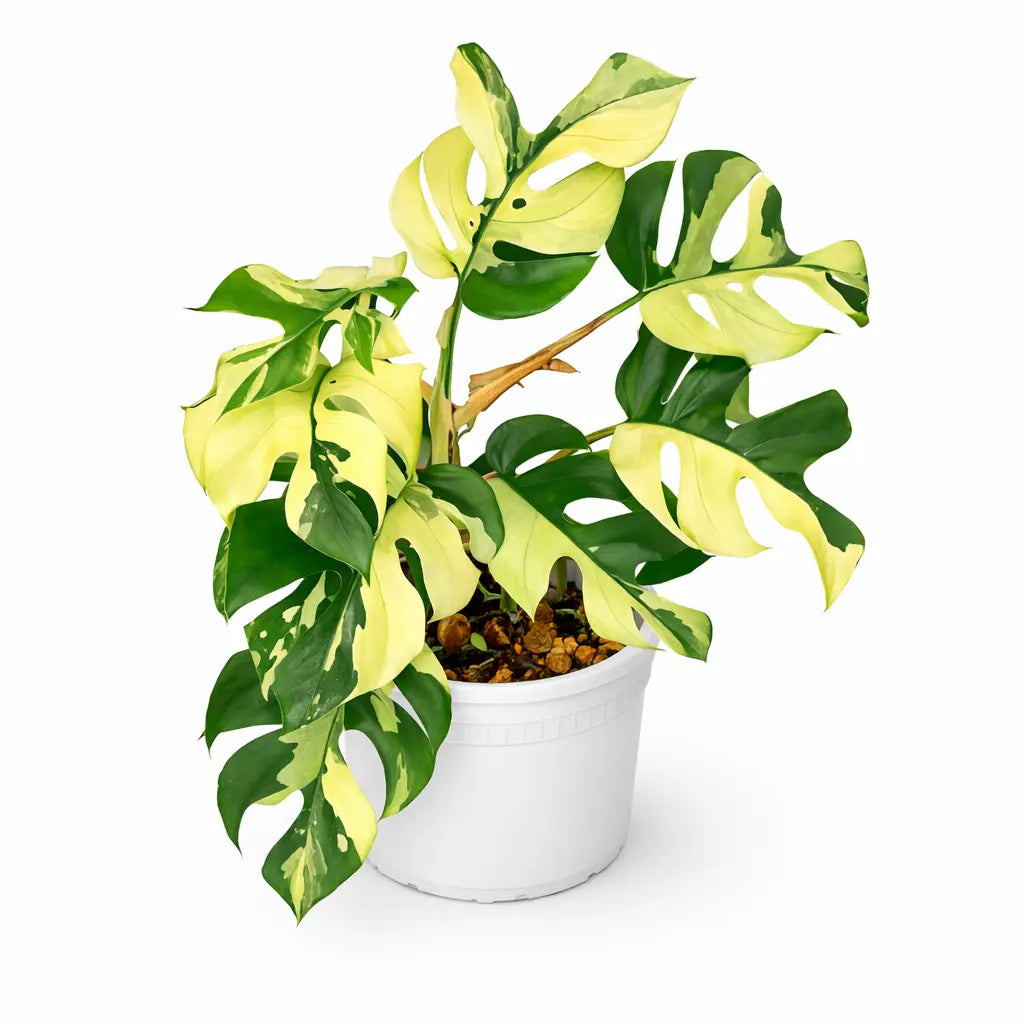
mini monstera yellow leaves Rhaphidophora Tetrasperma Variegated (Mini Monstera)Everyone calls it the Mini Monstera. It is not a Monstera. The Rhaphidophora Tetrasperma Variegated is its own genus entirely native to the rainforests of Southern Thailand and Malaysia, named for the needle like calcium oxalate crystals in its stems (rhaphs = needle; phros = bearing) and its distinctive four sided seeds (tetrasperma = four seeded). What it shares with Monstera is the look: deeply split, fenestrated leaves on a vigorous climbing vine
Everyone calls it the Mini Monstera. It is not a Monstera. The Rhaphidophora Tetrasperma Variegated is its own genus entirely — native to the rainforests of Southern Thailand and Malaysia, named for the needle-like calcium oxalate crystals in its stems (rhaphís = needle; phóros = bearing) and its distinctive four-sided seeds (tetrasperma = four-seeded). What it shares with Monstera is the look: deeply split, fenestrated leaves on a vigorous climbing vine — but at a compact, indoor-friendly scale of 15–30 cm per leaf. In its variegated form, those leaves carry splashes, streaks, and blotched sections of cream to white across the green, in a pattern that varies unpredictably from leaf to leaf. It is among the most collectible aroids in the world — a variegated specimen sold at auction in New Zealand in 2021 for over NZ$27,000 — and one of the fastest-growing variegated aroids available.
Light
▾
Bright indirect light — essential for the variegated form. The cream and white sections cannot photosynthesise, making more light more important than for the plain green. An east or west-facing window is ideal; a south-facing window with a sheer curtain works well. Gentle morning direct sun is fine and beneficial. This is not a low-light plant — in low light, variegation fades, growth stalls, and leaves emerge small without fenestrations. A grow light at 12–14 hours is excellent.
Watering
▾
Allow the top 2–3 cm of the mix to dry before watering thoroughly. The variegated form is more sensitive to overwatering than the plain green — a consequence of reduced photosynthesis and slower water uptake. Use room-temperature filtered or rainwater. Empty the saucer after watering. In winter reduce to every 2–3 weeks. When in doubt, wait — this plant recovers better from underwatering than overwatering.
Humidity
▾
50–70% preferred. More adaptable than most collector aroids — India's tropical indoor climate is generally adequate without a humidifier, though one is beneficial in AC-heavy environments. Keep away from AC vents and fans. Morning misting of the aerial roots (not the leaves) is beneficial and encouraged — the roots absorb moisture actively. Maintain good air circulation around the foliage.
Growing Media
▾
Chunky, airy aroid mix — 40% orchid bark, 25% perlite, 20% coco coir, 15% potting soil. pH 5.5–7.0. The mix must drain freely and dry moderately between waterings — dense soil is the leading cause of root rot in this species. Can also be grown in semi-hydro (LECA or coarse perlite). Repot annually in spring — the plant's roots expand quickly. Always use a pot with drainage holes.
Feeding
▾
Balanced liquid fertilizer at half strength every 3–4 weeks in spring and summer. Apply to moist substrate — never dry. Flush every 3 months to prevent salt build-up. Stop feeding entirely in winter. The variegated form benefits from consistent feeding during the growing season to maintain vigorous growth despite reduced chlorophyll.
Leaves Losing Fenestrations or Getting Smaller
▾
Almost always caused by trailing instead of climbing. Ensure the plant has a moss pole and is actively climbing — aerial roots must be in contact with the support. Also check light levels; insufficient light produces smaller, less split leaves regardless of support.
Yellow Leaves or Root Rot
▾
Overwatering — the most common issue with the variegated form. Allow the top 2–3 cm to dry before watering, ensure the mix is chunky and drains freely, and never let the pot sit in standing water. If soil is persistently soggy: unpot, trim black roots, repot in fresh airy mix.
Variegation Fading or New Leaves Mostly Green
▾
Insufficient light is the primary cause — move to a brighter indirect position or add a grow light. The variegated form is not stable like a Thai Constellation; the pattern fluctuates with conditions. Consistent bright light produces the most vivid and generous variegation.
Thrips or Spider Mites
▾
Both are common. Thrips leave silver streaking and distorted new growth — treat with spinosad spray every 5–7 days for 4 weeks and quarantine immediately. Spider mites appear as fine webbing in low humidity — boost humidity and treat with neem oil or insecticidal soap every 5–7 days for 3 weeks.
Brown Tips or Crispy Edges
▾
Low humidity or tap water mineral build-up. Switch to filtered water, boost humidity above 50%, and move away from AC vents or fans. Flush soil to clear accumulated salts. Existing brown tips are permanent; trim neatly at an angle.
📋 Quick Plant Profile
| Botanical Name | Rhaphidophora tetrasperma Hook.f. 'Variegated' |
| Name Meaning | Rhaphidophora = needle-bearing (needle-like crystals in stem); tetrasperma = four-seeded |
| Common Names | Variegated Mini Monstera — not a true Monstera or Philodendron |
| Family | Araceae — genus Rhaphidophora, not Monstera |
| Origin | Southern Thailand and Malaysia; tropical rainforest climber |
| Variegation | Cream to white blotches, streaks, and speckles; variable leaf to leaf; not fully stable |
| Collector Note | A variegated specimen sold at auction in New Zealand in 2021 for over NZ$27,000 |
| Cardinal Rule | Climbing only — trailing causes leaves to shrink and lose fenestrations; moss pole essential |
| Light | Bright indirect; not low-light tolerant in variegated form; grow light excellent |
| Watering | Top 2–3 cm dry; more root rot prone than plain green; filtered water preferred |
| Humidity | 50–70%; adaptable; mist aerial roots (not leaves); good air circulation |
| Temperature | 18°C–30°C; no cold drafts; thrives in Indian tropical conditions |
| Soil | Chunky aroid mix; pH 5.5–7.0; semi-hydro suitable; repot annually |
| Growth Rate | Fast for a variegated aroid — one of its standout qualities |
| Propagation | Stem cutting with node + aerial root in water or sphagnum — aerial root greatly improves success |
| Ideal For | Collectors, Moss Poles, Bright Rooms, Aroid Enthusiasts, Statement Indoor Climbers |
| Care Level | Intermediate — climbing support, bright light, and careful watering are the three essentials |
Shipping Notes
- Free Standard Shipping on $100+ Orders to the USA.
- Except Preorder products are shipped in 48 hours.
- Delivery to the USA:
- Standard Shipping : 3-10 business days
- If time is of the essence, please consider selecting expedited delivery for faster service.
Exchange/Return Notes
- We offer a 30-day return/exchange service after receiving.
- Final sale items are not eligible for returns or exchanges.
- To process your return/exchange, please contact us at [email protected]
- Please click here for more details>>> Return & Exchange Policy