Pay in installments of $5.04 with
 ,
,
 and
and

Shipping Estimate
USA
- USA
- CAN
- USA
- CAN
Ships within 48 hours · Estimated delivery Jul 17 - Jul 22
 Promo Codes Available:
For Your Every Summer RSVP, with Code: SUMMER15
Description
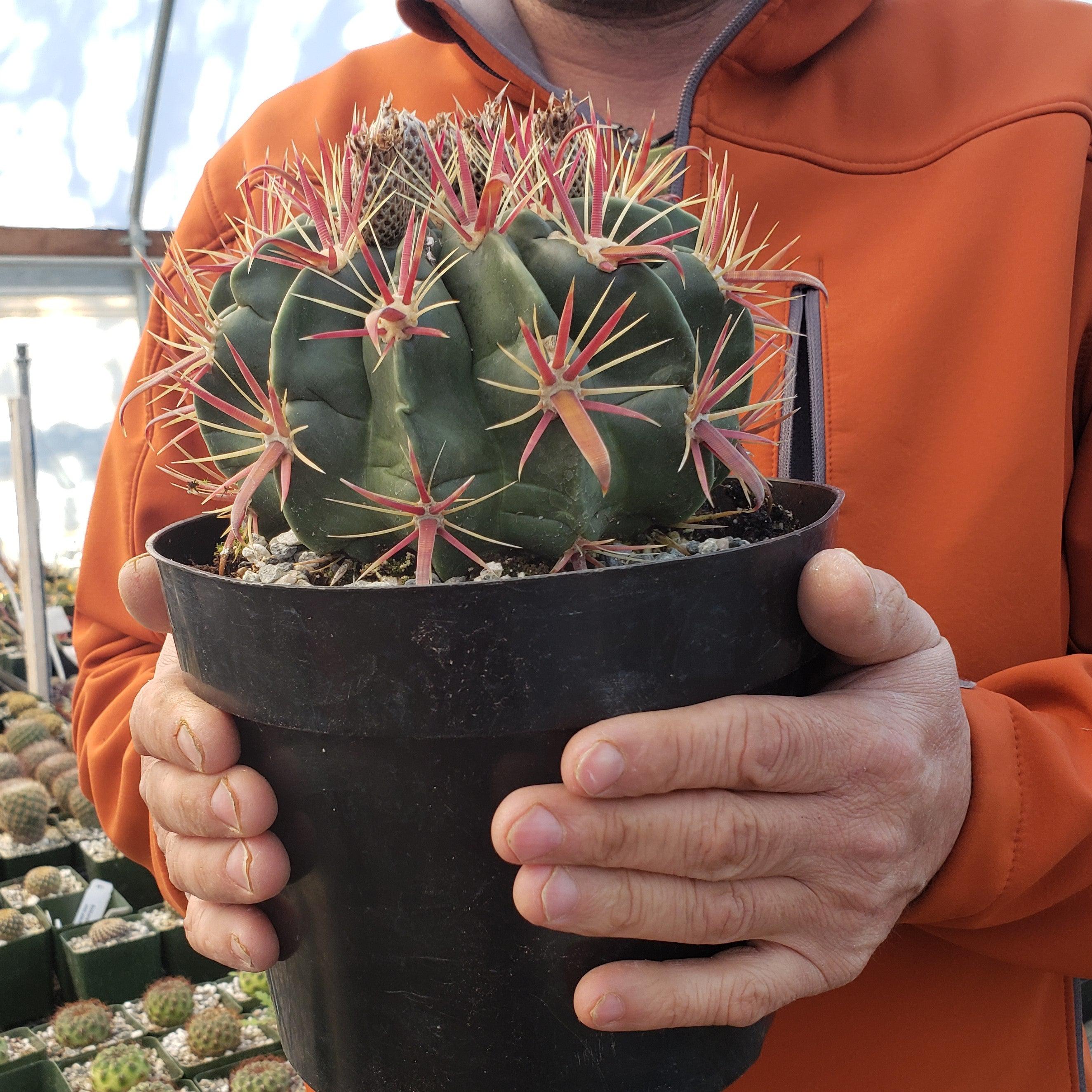
devil's tongue succulent Devil's Tongue 'Ferocactus latispinus' 2 GalThe Devil's tongue, also known as Ferocactus latispinus is a unique and eye catching species of barrel cactus in the Ferocactus genus! With its prickly red spikes sticking out like a tongue, it's hard not to do a double take when you come across this spiky wonder. But don't let its common name fool you this plant is totally friendly and perfect for any type of gardener, whether they're an experienced green thumb or just starting out. This devil's
The Devil's tongue, also known as Ferocactus latispinus is a unique and eye-catching species of barrel cactus in the Ferocactus genus!
With its prickly red spikes sticking out like a tongue, it's hard not to do a double-take when you come across this spiky wonder. But don't let its common name fool you – this plant is totally friendly and perfect for any type of gardener, whether they're an experienced green thumb or just starting out.
This devil's tongue plant blooms in autumn and early winter and lasts for about two weeks, which is one of the reasons it is a popular plant. The funnel-shaped flowers are simply stunning, with rich hues of rose, purple, mauve, and purple-blue, and their eye-catching flower buds stand out against the plant's green foliage.
Native to the Southwestern united states, this form of devil's tongue cactus, with its cylindrical or spherical shape, can reach heights of up to 6.6 ft and boasts an impressive array of spines that start out bright red before maturing into a striking gray color.
But those spines aren't just for show – they actually serve multiple purposes like radiating excess heat, collecting moisture from the environment, and protecting the plant from pesky predators who might want to take a bite out of this beauty.
These cacti are slow-growing, especially at the start of new growth. If well taken care of, they have healthy growth. This solitarily growing cactus can be propagated from seeds and stem cuttings.
The fruit of Ferocactus plants, including Devil's Tongue, is generally edible and has a sweet, juicy flavor. The fruit is typically red or yellow when ripe and the fruits can be eaten raw or cooked. However, the fruit is covered in spines and can be difficult to harvest. In addition, some people may be allergic to the fruit or experience digestive issues after eating it. While the fruit is edible, it is not commonly consumed and is not widely available in stores.
So, if you're looking for new plants or something fun and exciting to add to your garden collection, look no further than the devil's tongue barrel cactus -Ferocactus latispinus!
Watering Needs
Desert plants, such as cacti, are adapted to grow with minimal water. Devil's tongue store water throughout their stems, and as a result they are one of the ultimate drought-resistant plants. Cactus are like Camels; they drink up a lot of water quickly and then can last a long time before needing water again.
In comparison to an older plant, a young devil's tongue cactus will require a bit more water and attention. During the growing season, which is between early spring and autumn, water them once every two or three weeks. Its watering requirements drastically decrease to once a month in the winter when temperatures drop.
As a general rule, water the plant only after the top layer of soil has completely dried out. If the Ferocactus doesn't receive enough moisture for an extended period of time, discoloration, pale stems, and browning can occur, leading to stunted growth. In contrast, overwatering can cause root rot and fungal infection.
Light Requirements
The devil's tongue needs a lot of sunshine - either full sun or partial shade. If you're starting with a new plant that you recently bought from a nursery, don't expose it to too much direct light all at once. Gradually increases its exposure to bright light so that it doesn't get burned by the intense rays.
When grown in full sun, the foliage of the devil's tongue plant turns almost grayish-green, and the cactus spines turn a reddish-brown, which adds a lot of interest to your outdoor space.
Keep an eye on your plant's leaves - if they start looking burnt, consider investing in a sunshade or moving it somewhere shadier. And guess what? You can even grow these beauties indoors! Just make sure to position them near southern and western windows for optimal sunlight exposure.
Don't leave them languishing in dim light though - move them outdoors from time to time when natural light is scarce (like during winter). With proper care and attention paid to their light requirements, this barrel cactus is sure to be a statement piece wherever they grow!
Optimal Soil & Fertilizer Needs
The devil's tongue prefers sandy, well-drained soil, as excess moisture in dry soil can promote root and stem rot. Planet Desert specializes in cactus and has specialized cactus potting soil that includes an organic substrate with mycorrhizae to help with the growth of a healthy root system to help your cactus thrive. As an okay alternative, you can create your own potting mix by combining equal portions of perlite, coarse sand, and good natural potting soil.
And let's not forget about fertilizing! Your cactus only needs a tiny bit applied once a year in springtime with a natural organic fertilizer that has lower doses of NPK (5-10-5). No harsh chemicals here, folks - just pure, natural goodness that lasts longer and encourages nutrient absorption, so your blooming cactus stays happy as a clam. Remember, excessive fertilizer can cause fungal infections.
So, go ahead and give your little guy some love with a good natural fertilizer because when it comes to soil and fertilizers, through experience, we know what works best!
Hardiness Zones & More
The adorable devil's tongues are not frost-hardy and can thrive in warm and humid conditions, making them perfect for cozy indoor spaces. It can be grown outdoors in USDA zones 10–11.
In cooler zones, it can be kept outdoors during the heat pack in the summer and brought in as the temperature drops. Ferocactus latispinus typically becomes dormant when temperatures drop below 50 °F.
During dormancy, the plant's roots will stop growing and conserve its energy until temperatures warm up again. It is important to avoid overwatering the plant during dormancy, as this can lead to root rot.
We think you will love this plant – order your very own Ferocactus latispinus devil's tongue today and start enjoying its beauty in no time!
Shipping Notes
- Free Standard Shipping on $100+ Orders to the USA.
- Except Preorder products are shipped in 48 hours.
- Delivery to the USA:
- Standard Shipping : 3-10 business days
- If time is of the essence, please consider selecting expedited delivery for faster service.
Exchange/Return Notes
- We offer a 30-day return/exchange service after receiving.
- Final sale items are not eligible for returns or exchanges.
- To process your return/exchange, please contact us at [email protected]
- Please click here for more details>>> Return & Exchange Policy