Pay in installments of $6.61 with
 ,
,
 and
and

Shipping Estimate
USA
- USA
- CAN
- USA
- CAN
Ships within 48 hours · Estimated delivery Oct 27 - Nov 1
 Promo Codes Available:
For Your Every Summer RSVP, with Code: SUMMER15
Description
caring for an philodendron rugosum Philodendron rugosum – Thick, Bullate 'Pig Skin' LeavesPhilodendron rugosum Bogner and G. S. Bunting rare leathery leaf aroid from Ecuador Philodendron rugosum, known as the Pigskin Philodendron, is a hemiepiphytic climber native to Ecuadors humid premontane forests. Described in 1977 by Josef Bogner and George Bunting, it is valued for its thick, textured, heart shaped foliage and its steady vertical growth on textured supports. Classified as Near Threatened by the IUCN, it is a plant of both ornamental
Philodendron rugosum Bogner and G.S. Bunting – rare leathery-leaf aroid from Ecuador
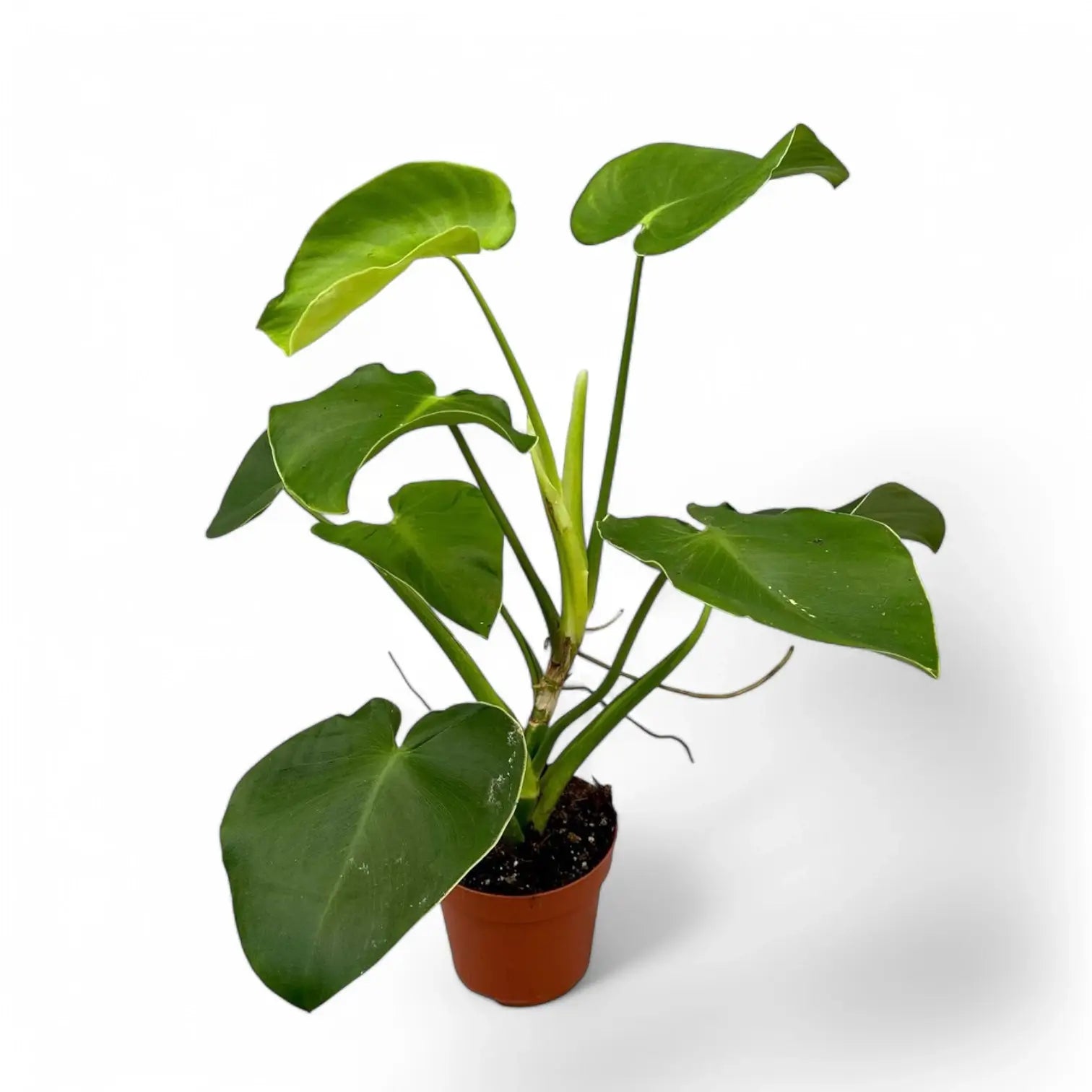
Philodendron rugosum, known as the “Pigskin Philodendron,” is a hemiepiphytic climber native to Ecuador’s humid premontane forests. Described in 1977 by Josef Bogner and George Bunting, it is valued for its thick, textured, heart-shaped foliage and its steady vertical growth on textured supports. Classified as Near Threatened by the IUCN, it is a plant of both ornamental and conservation interest.
Standout features of Philodendron rugosum
- Signature texture: Deeply coriaceous blades with a grainy “pigskin” surface and pronounced primary venation.
- Leaf form: Juvenile leaves are smoother and rounder; mature foliage develops heavier texture and a firmer cuticle.
- Growth habit: Appressed climbing with short internodes on a moss or fibre pole produces larger leaves and better surface quality.
- Collector status: Rare in cultivation, sought after for its tactile foliage and compact yet architectural habit.
Native range and ecology
- Distribution: Endemic to Ecuador, primarily in Pastaza province and neighbouring areas.
- Elevation: 800 – 1 200 m in premontane wet forest.
- Microhabitat: Shaded, humid slopes and stream margins with organic-rich soils and high year-round moisture.
- Associated flora: Grows among mosses, epiphytes, and tree ferns in the lower canopy and understory.
Leaf development and anatomy
The species epithet rugosum refers to the wrinkled, textured surface created by bullate lamina and a thick cuticle. Juvenile foliage is softer and less textured; as the plant matures, blades become more rigid, surface texture deepens, and venation stands out more clearly.
Care guide – replicating its natural habitat
- Light: Bright, indirect light maintains compact nodes and leaf integrity; avoid harsh direct sun.
- Water: Water when the top 2 – 3 cm of substrate are dry; fully saturate, then drain.
- Humidity: Prefers 60 – 75% RH; 70%+ enhances texture and reduces leaf-edge browning.
- Temperature: Ideal 18 – 27 °C; protect from drafts and avoid rapid fluctuations.
- Substrate: Airy aroid mix (~35% fine orchid bark, 25% coco coir, 20% perlite/pumice, 10% compost, 10% horticultural charcoal).
- Feeding: Balanced liquid fertiliser at 25 – 50% label rate every 4 – 6 weeks in active growth; adjust to growth speed.
- Support: Secure stems to a moss or fibre pole at each node to encourage appressed climbing and larger foliage.
Propagation and alternative culture
- Stem cuttings: Use one-node cuttings; root in moist sphagnum or an airy substrate before potting up.
- Semi-hydro: Adaptable if transitioned gradually; maintain nutrient balance and root oxygenation.
- Pruning: Remove leggy or damaged growth to maintain form and encourage branching.
Common problems and solutions
- Yellow leaves: Usually overwatering or compacted media; refresh substrate and adjust watering rhythm.
- Browning tips: Low humidity or irregular moisture; raise RH and stabilise watering.
- Leaf curl: Underwatering or excess heat/light; check moisture and move to filtered light.
- Slow growth: Increase bright, indirect light and keep feeding consistent.
- Pests: Monitor for spider mites, thrips, and mealybugs; treat early with targeted controls.
Inflorescence description
Produces a cream to green spathe with a pale green spadix. Flowering is uncommon indoors and mainly of botanical interest; the plant is grown primarily for foliage.
Conservation status and background
Listed as Near Threatened due to habitat destruction in its native range. The combination of unique texture and conservation value makes Philodendron rugosum both a horticultural prize and a reminder of the importance of preserving Andean foothill forests.
Order Philodendron rugosum
Add Philodendron rugosum to your collection for its rare texture and bold vertical habit. With bright filtered light, high humidity, and a textured support, it rewards careful growers with rugged, unforgettable foliage.
Shipping Notes
- Free Standard Shipping on $100+ Orders to the USA.
- Except Preorder products are shipped in 48 hours.
- Delivery to the USA:
- Standard Shipping : 3-10 business days
- If time is of the essence, please consider selecting expedited delivery for faster service.
Exchange/Return Notes
- We offer a 30-day return/exchange service after receiving.
- Final sale items are not eligible for returns or exchanges.
- To process your return/exchange, please contact us at [email protected]
- Please click here for more details>>> Return & Exchange Policy