Pay in installments of $6.44 with
 ,
,
 and
and

Shipping Estimate
USA
- USA
- CAN
- USA
- CAN
Ships within 48 hours · Estimated delivery Aug 18 - Aug 23
 Promo Codes Available:
For Your Every Summer RSVP, with Code: SUMMER15
Description
spiky succulent with red flower Shop 'Red Dragon Flower - Huernia schneideriana' Care & InfoThe Red Dragon Flower, botanically known as Huernia schneideriana, is a fascinating and increasingly popular flowering succulent admired for its unusual dragon like blooms and sculptural stems. The stems usually grow upright when young but gradually begin to spread, trail, or droop as the plant matures, making it especially attractive in hanging baskets, shallow pots, and decorative containers. Despite its cactus like appearance, the Red Dragon Flower
The Red Dragon Flower, botanically known as Huernia schneideriana, is a fascinating and increasingly popular flowering succulent admired for its unusual dragon-like blooms and sculptural stems. The stems usually grow upright when young but gradually begin to spread, trail, or droop as the plant matures, making it especially attractive in hanging baskets, shallow pots, and decorative containers.
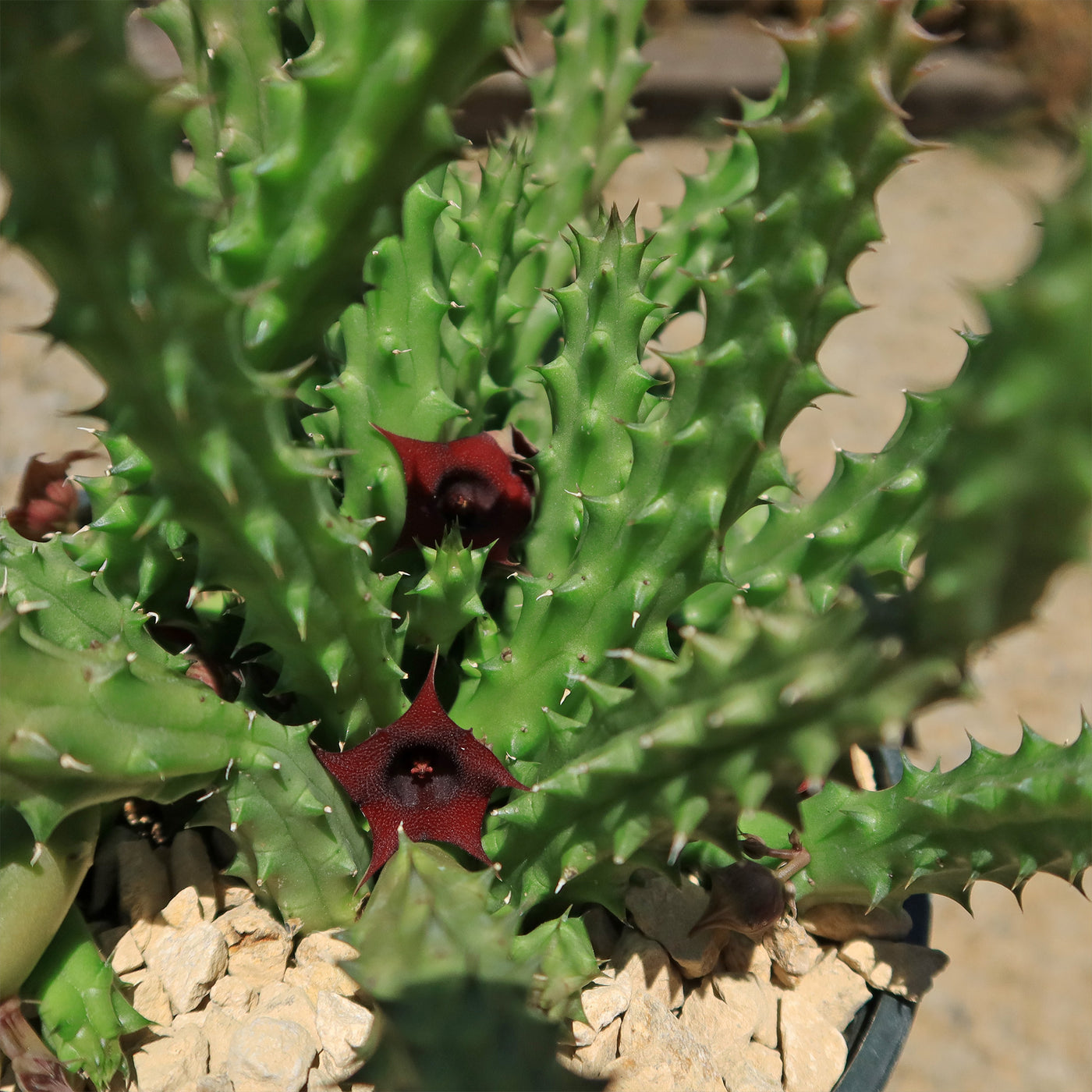
Despite its cactus-like appearance, the Red Dragon Flower is not a true cactus. It is a soft-stemmed succulent with fleshy, water-storing stems that help it thrive in dry conditions. Its common name, “Dragon Flower,” comes from its dramatic, deep red, star-shaped flowers, whose textured petals and bold colors resemble the scales or open mouth of a mythical dragon.
Like many desert-adapted succulents, Huernia schneideriana has evolved to thrive in hot, arid, rocky environments.
Its thick green stems typically grow 12 inches tall and feature soft, tooth-like ridges that resemble tiny thorns, giving the plant its distinctive cactus-like look without the sharp spines.
The true highlight of this plant is its extraordinary flowers. The blooms are relatively small, usually 1 to 2 inches wide, but incredibly eye-catching and unforgettable.
Each flower displays a deep purple-black center surrounded by a velvety reddish-black interior and brownish-red exterior, creating a dramatic, almost otherworldly effect.
Its natural drought tolerance and resilient growth habit make it an excellent choice for both beginners and experienced growers seeking a hardy, low-maintenance succulent.
Unlike many other members of the Huernia genus and carrion flower relatives, whose blooms can produce a strong, unpleasant odor, Huernia schneideriana has a much milder scent, making it far more suitable and enjoyable as an indoor houseplant.
When and How to Water Your Red Dragon Flower
The Red Dragon plant prefers light and infrequent watering, much like the dry conditions of its native Eastern African habitat. This succulent grows best when watered using the “soak and dry” method, where the soil is watered thoroughly and then allowed to dry out completely before the next watering.
Water your Red Dragon Flower about every 2 to 3 weeks during the active growing season, then reduce watering once a month in dormant season.
In the spring and summer, you may need to water your red dragon flower more frequently as it actively grows. Always use a pot with drainage holes and allow the soil to fully dry between waterings to keep the plant healthy.
In the fall and winter, you should reduce the frequency of watering to prevent overwatering and potential root issues. Wrinkled or slightly soft stems are common signs that it may need watering.
Remember, it's always better to underwater than to overwater Huernia succulents like the red dragon flower. This will help ensure the health and longevity of your Huernia schneideriana.
Light Requirements - Where to Place Your Red Dragon Succulent
When growing indoors, place the red dragon flower on a sunny windowsill or near a south facing window where it can receive around 4 to 6 hours of sunlight daily.
If the stems start turning yellow or brown, it may be getting too much direct sun.
Move it slightly away from the window or provide light shade during the hottest part of the day.
When growing outdoors, it thrives in bright sunlight or partial shade and grows best with around 4 to 6 hours of direct morning sunlight daily.
Since intense afternoon sun can be too harsh for its delicate stems, place it in a location with bright, filtered light during the hottest part of the day.
If your Red Dragon Flower is not receiving enough light, it may become leggy and pale in color. In areas with limited natural sunlight, you can use a grow light to provide the extra light needed for healthy and compact growth.
Optimal Soil & Fertilizer Needs
The red dragon flowers favor very airy, sandy soil that drains well. Planting them in ordinary soil will result in compacted roots, stunted growth, and most likely root rot. Ideally, you can use our specialized succulent potting mix that contains 5 natural substrates with organic mycorrhizae to support healthy root development and stronger growth.
When it comes to fertilizing your red dragon flower, it's best to do so sparingly. You can use a diluted, low nitrogen fertilizer or a balanced succulent fertilizer with an NPK ratio such as 5-10-5. Avoid over fertilizing, as too much fertilizer can damage the roots and lead to weak or leggy growth.
Hardiness Zone & More
In the United States, the red dragon flower is mostly an indoor plant, but if you live in southern Florida or Hawaii, then you can cultivate it outdoors in USDA zones 9 to 11.
It prefers warm temperatures between 65°F and 80°F and thrives in warm, dry conditions, but should be protected from temperatures below 50°F.
As for humidity, it is well-adapted to dry and arid environments. It can tolerate low humidity levels, making it a great choice for drier climates or indoor environments with lower humidity.
How to Grow as an Indoor Houseplant
The Red Dragon Flower can adapt very well as an indoor houseplant when given enough light and warmth. Place it near a bright window where it can receive several hours of sunlight daily, preferably gentle morning sun combined with bright indirect light. East or south facing windows are usually the best spots.
Keep the plant in a warm area with temperatures between 65°F and 80°F, and protect it from cold drafts or temperatures below 50°F. It prefers low humidity and dry conditions, making it well suited for typical indoor environments.
Wildlife – Red Dragon Flowers Attract the Following Friendly Pollinators
The Red Dragon Flower can attract pollinators such as bees, butterflies, moths, hummingbirds, flies and small gnats. These insects help pollinate the blooms in nature. The flowers may also attract tiny beetles and other beneficial insects that are curious about the plant’s unique appearance.
According to ASPCA, Huernia schneideriana is considered mildly toxic to pets and humans. It is best to keep the plant out of reach of curious pets and small children. Wearing gloves while pruning or propagating can also help prevent skin irritation.
How to Propagate Your Red Dragon Flower
You can propagate your plant through stem cuttings. The best time to propagate is during spring or summer when the plant is actively growing.
Use a clean, sharp knife or scissors to cut a healthy stem from the parent plant. Let the cutting dry and callous for 1 to 2 days before planting to help prevent rot. Place the cutting in a warm spot with bright indirect light while it develops roots. Within a few weeks, new roots and growth should begin to appear.
Key Takeaways
- The Red Dragon Flower is a unique succulent prized for its exotic, velvety blooms that instantly stand out in any plant collection.
- It is a low maintenance plant that thrives with minimal watering, making it perfect for busy plant owners and beginners.
- Its compact, trailing stems make it a beautiful choice for decorative pots, shelves, and hanging baskets.
- The plant grows well indoors with bright light and can reward you with eye catching blooms during the warmer months.
- It can thrive both indoors and outdoors making it a versatile succulent for many growing spaces.
Final Thoughts
Overall, the Red Dragon Flower (Huernia schneideriana) is truly a captivating and unique succulent. With its vibrant red color, dragon-like flower shape, and fascinating history, it's no wonder why it's a favorite among succulent enthusiasts. Whether you choose to grow it indoors or outdoors, providing it with the right conditions, such as well-draining soil, bright indirect sunlight, and temperatures within its preferred range, will help it thrive. With its low maintenance needs and stunning appearance, the red dragon flower is sure to add a touch of beauty and intrigue to any succulent collection!
Shipping Notes
- Free Standard Shipping on $100+ Orders to the USA.
- Except Preorder products are shipped in 48 hours.
- Delivery to the USA:
- Standard Shipping : 3-10 business days
- If time is of the essence, please consider selecting expedited delivery for faster service.
Exchange/Return Notes
- We offer a 30-day return/exchange service after receiving.
- Final sale items are not eligible for returns or exchanges.
- To process your return/exchange, please contact us at [email protected]
- Please click here for more details>>> Return & Exchange Policy