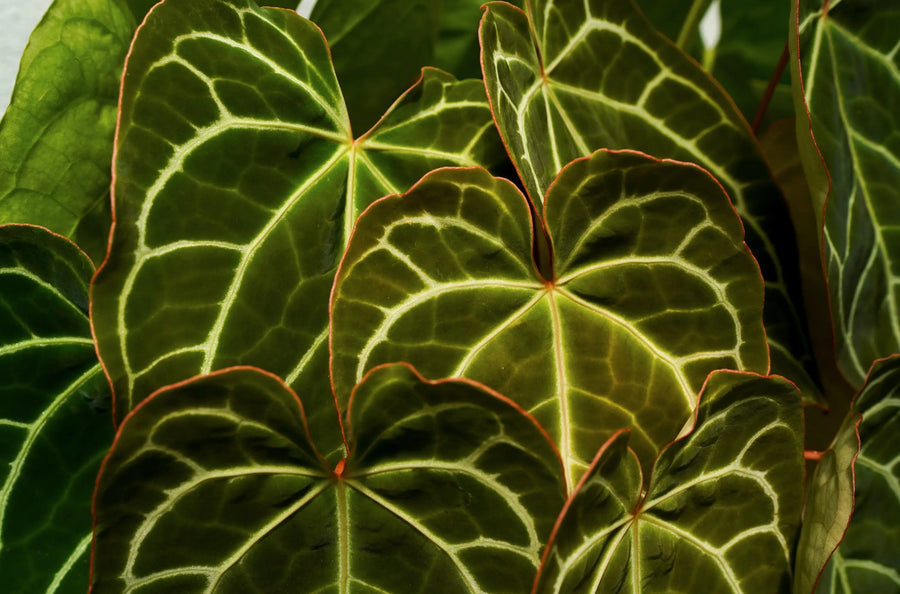
anthurium pedatum care Anthurium pedatum – Wildly Lobed Upright Species
SKU: 7531301574
anthurium pedatum care

anthurium pedatum care Anthurium pedatum – Wildly Lobed Upright Species

Sale price$18.29 Regular price$20.32
Save 10%

Shipping Estimate
USA
  • USA
  • CAN

Ships within 48 hours · Estimated delivery Jul 8 - Jul 13

Promo Codes Available:

For Your Every Summer RSVP, with Code: SUMMER15

Description

anthurium pedatum care Anthurium pedatum – Wildly Lobed Upright SpeciesAnthurium pedatum Anthurium pedatum is a Colombian Anthurium with deeply divided leaves that spread from the petiole into narrow, finger like lobes. The leaf shape gives the plant an open, finely segmented outline with glossy green surfaces and long petioles. This species is native to wet tropical forest in Colombia, where steady moisture, warmth and filtered light shape its growth. In a pot, it develops as a compact divided leaf Anthurium, with

Anthurium pedatum

Anthurium pedatum is a Colombian Anthurium with deeply divided leaves that spread from the petiole into narrow, finger-like lobes. The leaf shape gives the plant an open, finely segmented outline with glossy green surfaces and long petioles.

This species is native to wet tropical forest in Colombia, where steady moisture, warmth and filtered light shape its growth. In a pot, it develops as a compact divided-leaf Anthurium, with attention on new leaves opening smoothly, an airy root zone and stable humidity.

Divided Colombian foliage

  • Leaf shape: Mature leaves are deeply palmatifid, with multiple narrow lobes radiating from the blade.
  • Leaf colour: The foliage is green and glossy, with detail concentrated in the narrow lobes and open outline.
  • Growth habit: It develops from a compact stem, with long petioles carrying divided blades above the base.
  • Origin: The species is native to Colombia and associated with wet tropical forest conditions.
  • Leaf development: New leaves can open with softer, less defined division before the blade firms and spreads.
  • Pot behaviour: Long petioles need room around the plant so the divided blades can open freely.

Pot growth and leaf expansion

The leaf blade of Anthurium pedatum is deeply split. Mature foliage can carry many narrow lobes, giving each leaf a hand-shaped outline with fine segmentation. Because the leaves are held on petioles above a compact base, the plant benefits from a steady position where new growth has space to expand clearly.

The root zone should stay lightly moist while still draining freely. A dense, compact substrate can stay wet too long around Anthurium roots, while a chunky aroid mix keeps air moving through the pot after watering.

Growing conditions for Anthurium pedatum

  • Substrate: Use an airy aroid mix with bark, coarse fibre and mineral drainage material so air returns around the roots after watering.
  • Watering: Water when the upper layer of substrate starts to lose moisture, then let excess water drain away fully.
  • Light: Give bright filtered light. Direct sun can mark the divided leaf lobes, especially while new growth is still soft.
  • Humidity: Moderate to high humidity helps new divided leaves open without sticking or tearing at the lobes.
  • Temperature: Keep it warm and stable. Cold wet substrate can damage roots and slow new leaf development.
  • Pot choice: Use a pot that balances the long petioles and gives the root system enough air after watering.
  • Leaf care: Wipe the lobes gently with a soft damp cloth when dust collects along the divisions.
  • Feeding: Feed lightly during active growth with a balanced fertiliser. Flush the pot occasionally if mineral salts collect in the substrate.

Leaf problems on Anthurium pedatum

  • Torn new leaves: Dry air or friction around the emerging blade can leave divided lobes damaged before they harden.
  • Brown lobe tips: Check for dry roots, mineral build-up, direct sun or irregular watering.
  • Yellowing lower leaves: Wet, compact substrate can reduce oxygen around the roots and lead to yellowing.
  • Weak or smaller leaves: Very low light or root stress can reduce leaf size and make division less pronounced.
  • Pests: Check the underside of the lobes and petiole bases for thrips, spider mites and scale.

Safe handling for Anthurium pedatum

Anthurium pedatum is not pet-safe. Like other Anthurium species, it contains insoluble calcium oxalate crystals that can irritate the mouth, throat and digestive tract if chewed. Keep it away from pets and small children, and wash your hands after pruning or handling sap.

Botanical notes on Anthurium pedatum

Anthurium pedatum is an accepted species in Araceae and is native to Colombia. The name was published in 1841. The plant has deeply divided, palmately arranged foliage on long petioles above a compact base.

As each leaf matures, Anthurium pedatum forms an airy crown of glossy green lobes on long petioles.

Shipping Notes
  • Free Standard Shipping on $100+ Orders to the USA.
  • Except Preorder products are shipped in 48 hours.
  • Delivery to the USA:
  1. Standard Shipping : 3-10 business days
  • If time is of the essence, please consider selecting expedited delivery for faster service.
Exchange/Return Notes
  • We offer a 30-day return/exchange service after receiving.
  • Final sale items are not eligible for returns or exchanges.
  • To process your return/exchange, please contact us at [email protected]
  • Please click here for more details>>> Return & Exchange Policy
SKU: 7531301574

Discover Niche Categories That Outsell anthurium pedatum care

Top-Converting Item to Boost Your Average Order

4.2 ★★★★★
Based on 1067 reviews
Sort
Highest Rating
Newest First
Oldest First
Product Reviews
M
Verified Purchase
Micky Earnshaw
Charlottesville, US
★★★★★ 5
Compelling!
Format: Paperback
I loved this book. It is a personal, honest, beautiful account of walking the Camino, and I didn’t want it to end. The actual reality of walking the Camino is aptly portrayed in this open-hearted story. Angela’s unique turn of phrase, her outrageous humor, her vulnerability, the unrelenting pain, and the lessons learned are beautifully expressed, and are a testament to her endurance and to her Love. Angela has the true heart of a pilgrim, showing us that seeing with eyes of Love is all that matters. Bronwen Diana
WAS THIS REVIEW HELPFUL?YesReportShare
Reviewed in the United States on March 22, 2019
S
Verified Purchase
Superior.Shores
Lake Worth, US
★★★★★ 4
Enjoyable and Uplifting
Format: Kindle
After reading this book, it came to me that this is different and maybe far more uplifting than the prior books I’ve read. It should have been my first book to read but alas, I’ve been reading about the Camino for over a decade. I enjoyed Angel’s perspective on the Camino but also how it affected her life. If you’ve ever considered the Camino, read this one before you go, and then GO!
WAS THIS REVIEW HELPFUL?YesReportShare
Reviewed in the United States on May 23, 2024
G
Verified Purchase
george jacobs
West Palm Beach, US
★★★★★ 5
A Vicarious Adventure
Format: Kindle
I’ve read numerous books about the Camino, and most have been excellent, as was this one. The author captured the emotions during interactions with fellow pilgrims insightfully. Ranging from petty squabbles to jealousy to shared misery to elation—you were part of the experience. Easy to read, hard to put down, entertaining.
WAS THIS REVIEW HELPFUL?YesReportShare
Reviewed in the United States on May 4, 2022
A
Verified Purchase
Amazon Customer
Lexington, US
★★★★★ 5
A Very Enjoyable Camino Pilgrimage
Format: Kindle
A detailed 40 day journal format of one pilgrims experience upon the Camino Frances. She revisits the various personalities she encountered along the way and discribes the tough terrain and weather challenges which in turn push her to the limits of her physical abilities. In the end, she perseveres and eventually finds a change in the hardness of her heart ...the Camino is known to do this. Great book and I enjoyed it thoroughly...I purchased both the text and audio versions to read along. I highly recommend it for any potential pilgrims or for anyone seeking to enjoy a 800km hike in Northern Spain. Thanks for bringing me along!
WAS THIS REVIEW HELPFUL?YesReportShare
Reviewed in the United States on March 9, 2021
C
Verified Purchase
Clint Pachl
Grantham, US
★★★★★ 5
Well Presented Concepts and Implementations (5th ed.)
Format: Paperback
Foreword: I have been running my own DNS servers on OpenBSD and FreeBSD for about 4 years. All of my previous DNS knowledge was obtained from the man pages and online tutorials. The book is great because the example network used throughout the book is built upon, showing you how to "grow" your DNS with your expanding network. The design and implementation presented is priceless and covers some of my favorite topics: placement of slaves, hidden primaries, building root servers, split views, daisy-chaining, forwarders, partial-slaves, address maintenance issues, etc. The pros and cons of each setup are weighed and best practices are suggested. If you like a generous helping of diagrams, examples, and tables as a learning aid, you won't be disappointed. One specific example of weighing the pros and the cons is presented on page 479 as follows: "Could we have saved a few bucks on hardware by using our external authoritative nameservers as forwarders, too? Sure, but that would have presented a risk." After that statement, they proceed into all the details of "why." There is adequate coverage on security. The authors preach defense in depth. An implementation example includes hiding your masters and only exposing bastion slaves. Securing communications between the masters and slaves is also covered in the security chapter using DNSSEC and TSIG. I think IPSec is another way to add a security layer, but that is probably another book. After reading the book, I started to implement my new DNS infrastructure and found myself referring to the index often. It is fairly consummate, however, I found a few things missing, such as the $GENERATE statement. Also, some of the configuration details were lacking slightly. For example, the order in which ACL elements are processed and how negated elements affect the processing outcome. Another question I had was, what would happen if an ACL name is negated, and what if that ACL contained some negated elements. Well I found my answer by actually trying it and verifying with the canonical reference docs on isc.org. I gave this book five stars because of its effectiveness in presenting the concepts and implementations of DNS using examples, good writing style, tables, and diagrams. If you're looking for the last 4 percent of the diminutive details of DNS, you will find it on isc.org.
WAS THIS REVIEW HELPFUL?YesReportShare
Reviewed in the United States on August 22, 2006

recommand products