SKU: 77380852705
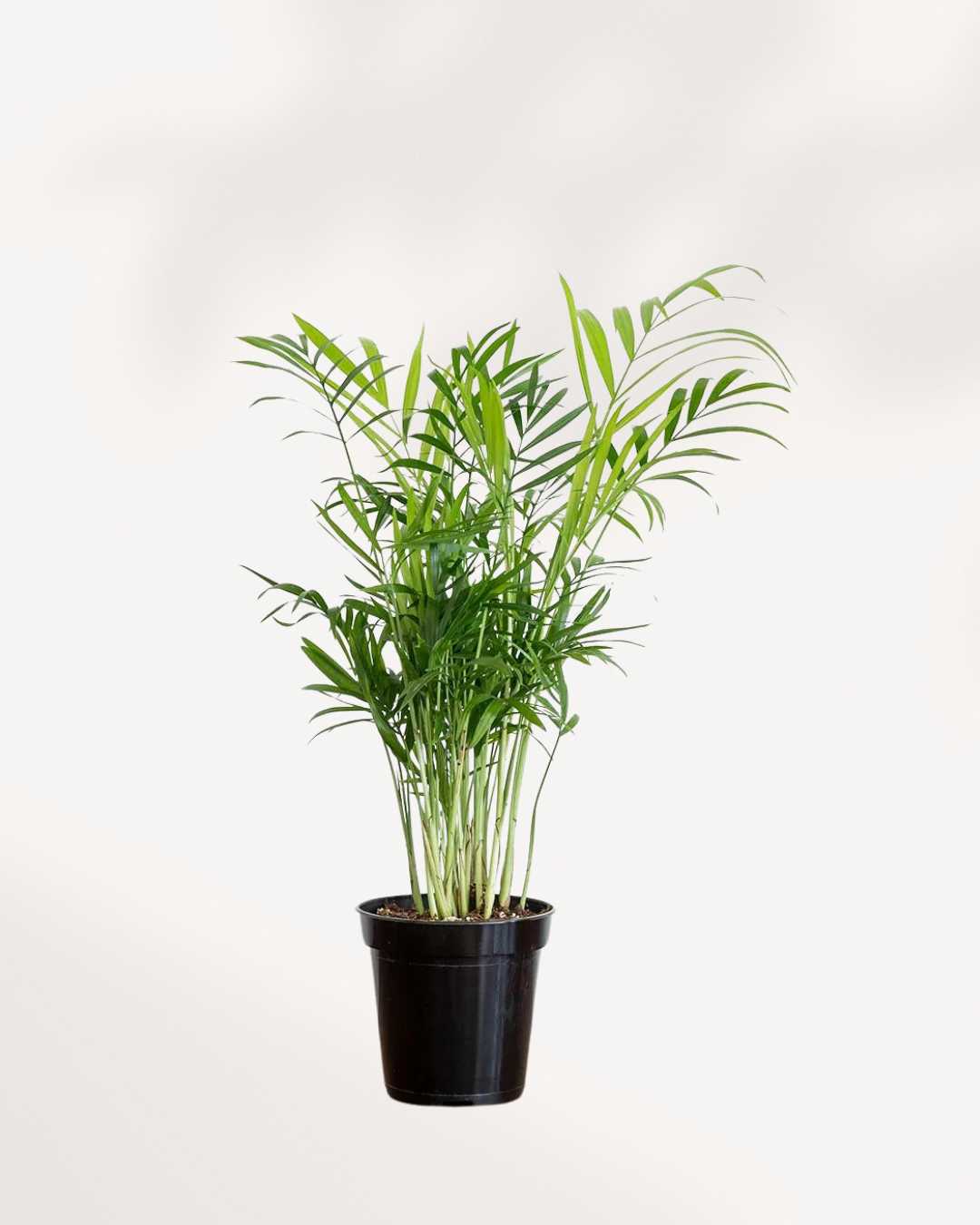
areca palm mini

areca palm mini Areca Palm | Buy Online - Lush Indoor Palm for Elegant Spaces | Mygreenscape

Sale price$18.05 Regular price$20.06
Save 10%

Pay in installments of $5.01 with ShopPay, AfterPay and Klarna

Shipping Estimate
USA
  • USA
  • CAN

Ships within 48 hours · Estimated delivery Oct 9 - Oct 14

Promo Codes Available:

For Your Every Summer RSVP, with Code: SUMMER15

Description

areca palm mini Areca Palm | Buy Online - Lush Indoor Palm for Elegant Spaces | MygreenscapeButterfly Palm: Transform Your Indoor Space with Tropical Elegance The Areca Palm (Dypsis lutescens) is a beloved indoor palm renowned for its lush, feathery fronds and its ability to create a tropical ambiance in any space. Ideal for both homes and offices, this elegant palm not only beautifies your interiors but also helps purify the air. Why You'll Love Areca Palm Lush, feathery fronds that evoke a tropical vibe Excellent air purifying qualities

Butterfly Palm: Transform Your Indoor Space with Tropical Elegance

The Areca Palm (Dypsis lutescens) is a beloved indoor palm renowned for its lush, feathery fronds and its ability to create a tropical ambiance in any space. Ideal for both homes and offices, this elegant palm not only beautifies your interiors but also helps purify the air.

Why You'll Love Areca Palm

  • 🌴 Lush, feathery fronds that evoke a tropical vibe
  • 🏠 Excellent air-purifying qualities
  • 🌞 Thrives in bright, indirect light and adapts well to indoor conditions
  • 🌿 Low-maintenance and versatile for various interiors
Add to Cart

What’s in a Name?

  • Areca Palm
  • Dypsis lutescens
  • Butterfly Palm

Meet the Family

  • Kingdom: Plantae
  • Order: Arecales
  • Family: Arecaceae
  • Genus: Dypsis
  • Species: D. lutescens

Where It Comes From

Native to Madagascar, the Areca Palm thrives in tropical climates and has become a popular choice for indoor environments worldwide.

A Tropical Classic

With its graceful fronds and air-purifying benefits, the Areca Palm is a timeless addition to modern homes and offices. Its elegant appearance makes it a favorite among interior designers and plant enthusiasts alike.

Why It’s So Popular

  • Enhances indoor spaces with its tropical charm
  • Improves air quality by filtering out pollutants
  • Easy to care for, making it ideal for busy lifestyles
  • A versatile plant suited for both residential and commercial settings
What Does It Look Like?

Appearance

The Areca Palm features arching fronds with feathery, green leaves that create a lush, tropical canopy. Its slender trunks support clusters of fronds that sway gracefully, adding a natural elegance to any space.

Structure

Typically, the palm develops multiple stems that form a clumping growth habit. Over time, it creates a dense, bushy silhouette perfect for enhancing both indoor and outdoor environments.

Popular Plant Varieties

Calathea Beauty Star

  • Known for its striking green leaves with pink and white stripes.

Philodendron Prince of Orange

  • Bright orange new leaves that transition to green as they mature.

Dracaena Lemon Lime

  • Features bright green and yellow striped leaves, adding vibrancy to any space.

Monstera Deliciosa

  • Famous for its large, split leaves, creating a dramatic tropical look.

Pothos Golden

  • Easy-care vine with heart-shaped, golden-green leaves.
Common Pests

Spider Mites

Spider mites can cause yellow spots and webbing on leaves. Increase humidity and rinse leaves to deter them. Learn More

Mealybugs

Mealybugs form white, cotton-like masses on leaves. Treat with insecticidal soap or rubbing alcohol. Learn More

Frequently Asked Questions

How much light does the Areca Palm require?

It thrives in bright, indirect light. Direct sunlight may scorch its fronds, so place it where it can receive ample filtered light.

How often should I water it?

Water when the top inch of soil feels dry. Ensure proper drainage to prevent root rot.

Is the Areca Palm pet-friendly?

Yes, it is generally non-toxic to pets, though it’s best to keep any houseplants out of reach of curious animals.

Can it be grown outdoors?

In warm, tropical climates, it can be grown outdoors. In cooler regions, it’s best enjoyed as an indoor plant.

Learn More About Areca Palm Care

For detailed care instructions and tips to keep your Areca Palm thriving, visit our Areca Palm Care Guide.

Ready to Bring Home Areca Palm?

Add this lush, tropical Areca Palm to your collection and enjoy its beauty and air-purifying benefits.

Shop Now
Shipping Notes
  • Free Standard Shipping on $100+ Orders to the USA.
  • Except Preorder products are shipped in 48 hours.
  • Delivery to the USA:
  1. Standard Shipping : 3-10 business days
  • If time is of the essence, please consider selecting expedited delivery for faster service.
Exchange/Return Notes
  • We offer a 30-day return/exchange service after receiving.
  • Final sale items are not eligible for returns or exchanges.
  • To process your return/exchange, please contact us at [email protected]
  • Please click here for more details>>> Return & Exchange Policy
SKU: 77380852705

Discover Niche Categories That Outsell areca palm mini

Top-Converting Item to Boost Your Average Order

4.5 ★★★★★
Based on 18 reviews
Sort
Highest Rating
Newest First
Oldest First
Product Reviews
D
Verified Purchase
Dejah
Alexandria, US
★★★★★ 5
Good!
Format: Paperback
In great condition, shipping took a few days though.
WAS THIS REVIEW HELPFUL?YesReportShare
Reviewed in the United States on February 9, 2023
A
Verified Purchase
Amazon Customer
Birmingham, US
★★★★★ 3
Disappointed
Format: Paperback
Two chapters in the book are upside down.
WAS THIS REVIEW HELPFUL?YesReportShare
Reviewed in the United States on January 12, 2022
A
Verified Purchase
Adagg
Port Orchard, US
★★★★★ 1
Awful textbook
Format: Paperback
I think this is the most poorly written textbook I have ever used. The JBL site for this book is garbage. So many spelling mistakes and publishing errors. Rent this book do not buy, your program will most likely not keep this crap around for long.
WAS THIS REVIEW HELPFUL?YesReportShare
Reviewed in the United States on December 20, 2021
A
Verified Purchase
alexandria
San Leandro, US
★★★★★ 1
Beware there are no page numbers.
Format: Kindle, Format: Kindle
it is not mentioned anywhere for E-textbook kindle version. Only displays location. If you need this for a class it will be impossible to know what exactly needs to be read.
WAS THIS REVIEW HELPFUL?YesReportShare
Reviewed in the United States on June 11, 2023
T
Verified Purchase
Thaumagnost
Port Orchard, US
★★★★★ 5
An Informative Introduction Based on Current Academic Studies of Western Esotericism
Format: Hardcover
This introductory text is the fruit of a fairly new field of recognized academic studies which developed as a result of the pioneering literary efforts of scholars such as D. P. Walker (1914 - 1985) and Frances A. Yates (1899 - 1981) who took the subject of Western esotericism seriously rather than denigrate it as an area filled with superstition and irrationalism as many earlier scholars in different specialized fields had done. Other scholars of esotericism who have contributed to this growing field include but are not limited to Henry Corbin, Francois Secret, Antoine Faivre, Arthur Versluis, Joscelyn Godwin, and Wouter Hanegraaff, the last being the senior editor of the landmark Dictionary of Gnosis and Western Esotericism (2005), a collaborative effort by many scholars. Goodrick-Clarke is also a recognized scholar in this field and introduces it to the reader in his own introduction which also addresses the question of how esotericism is defined by those dedicated to studying it. As clarified in the introduction, Western esotericism is rooted in the Hellenistic philosophy of classical paganism as expressed in Alexandrian Hermeticism, Neoplatonism, and Gnosticism which have syncretized with the three Abrahamic religions of Judaism, Christianity and Islam, leaving vital traces within each. Through the Italian Renaissance, a Hermetic revival occurred as a result of the rediscovery of ancient texts which further resulted in the development of magic, astrology, alchemy, and Cabala through prominent individuals such as Marcilio Ficino, Pico della Mirandola, Johannes Reuchlin, Johann Trithemius, Henry Cornelius Agrippa, John Dee, and Paracelsus, each given significant attention. The development of German Naturphilosophie, Christian theosophy through Jacob Boehme and his followers (such as Gichtel, Pordage and Law), and Pietism are also covered before thoroughly introducing us to Rosicrucianism in the early 17th century, high-grade Freemasonry and Illuminism in the 18th century, and the ideas and practices of Emanuel Swedenborg and Franz Anton Mesmer which significantly impacted esotericism. Within the context of Rosicrucianism, the content of the manifestos are discussed along with Johann Valentin Andreae and the Tubingen Circle; in England, Michael Maier, Robert Fludd, and Comenius and the Origins of the Royal Society are covered. The impact of Rosicrucianism and theosophy on Freemasonry are explored as well as the following types of Freemasonry: "Scottish" and Chivalric, German Templar, and Egyptian. Within the context of Freemasonry and Illuminism, the following are also discussed: Martines de Pasqually and the Elect Coens, Louis Claude de Saint-Martin, Martinesism, Martinism, Willermozism, The Illumines of Avignon, and Count Cagliostro. Not only are the ideas of Swedenborg and Mesmer presented but also how they contributed to spiritualism and healing movements in the 19th century, including the United States which birthed Andrew Jackson Davis as the main theologian for spiritualism; Phineas Parkhurst Quimby, Warren Felt Evans and others who developed the New Thought Movement; and Mary Baker Eddy who founded Christian Science. A separate chapter is dedicated to ritual magic from 1850 to the present. Within this chapter, one is introduced to Eliphas Levi and the French Occult Revival, the Hermetic Order of the Golden Dawn and its members, and special attention is given to the contributions of A. E. Waite, Aleister Crowley and Thelemic magick, and Dion Fortune and the Inner Light. I was, however, disappointed to see the section on Crowley end with the following: "Gerald Gardner (1884 - 1964), the founder of modern witchcraft, introduced Crowleyan magick into the neopagan Wiccan movement." For a better understanding of the influential role of Crowley and ritual magic, including the grimoires, on Wiccan practices, I recommend Wicca: Magickal Beginnings (2008) by Sorita d'Este and David Rankine. Helena Blavatsky and her Theosophical Society are given a separate chapter which expounds on her influences, travels, developing doctrines, and legacy. The last chapter titled "Modern Esotericism and New Paradigms" discusses theosophical heirs such as Annie Besant, Charles W. Leadbeater, and Rudolph Steiner (who developed his own religious system called "Anthroposophy"). It also has a section on Fourth Way Groups, introducing Gurdjieff and Ouspensky. Additionally, it covers the scientization of esotericism, New Age science, and Carl Jung's influence on esotericism. One individual I would have liked to see introduced within the context of Steiner is Valentin Tomberg who anonymously wrote Meditations on the Tarot: A Journey into Christian Hermeticism which is recognized by some, including esoteric scholar Antoine Faivre, as a masterpiece of 20th century esoteric/mystical literature. Goodrick-Clarke's book not only includes valuable footnotes and recommendations for further reading for each chapter, but also includes a helpful index as well as over 30 illustrations comprised of portraits, diagrams, plates, charts and other relevant pictures to supplement the text. This historical introduction to Western esotericism deserves wide readership.
WAS THIS REVIEW HELPFUL?YesReportShare
Reviewed in the United States on February 26, 2009

recommand products