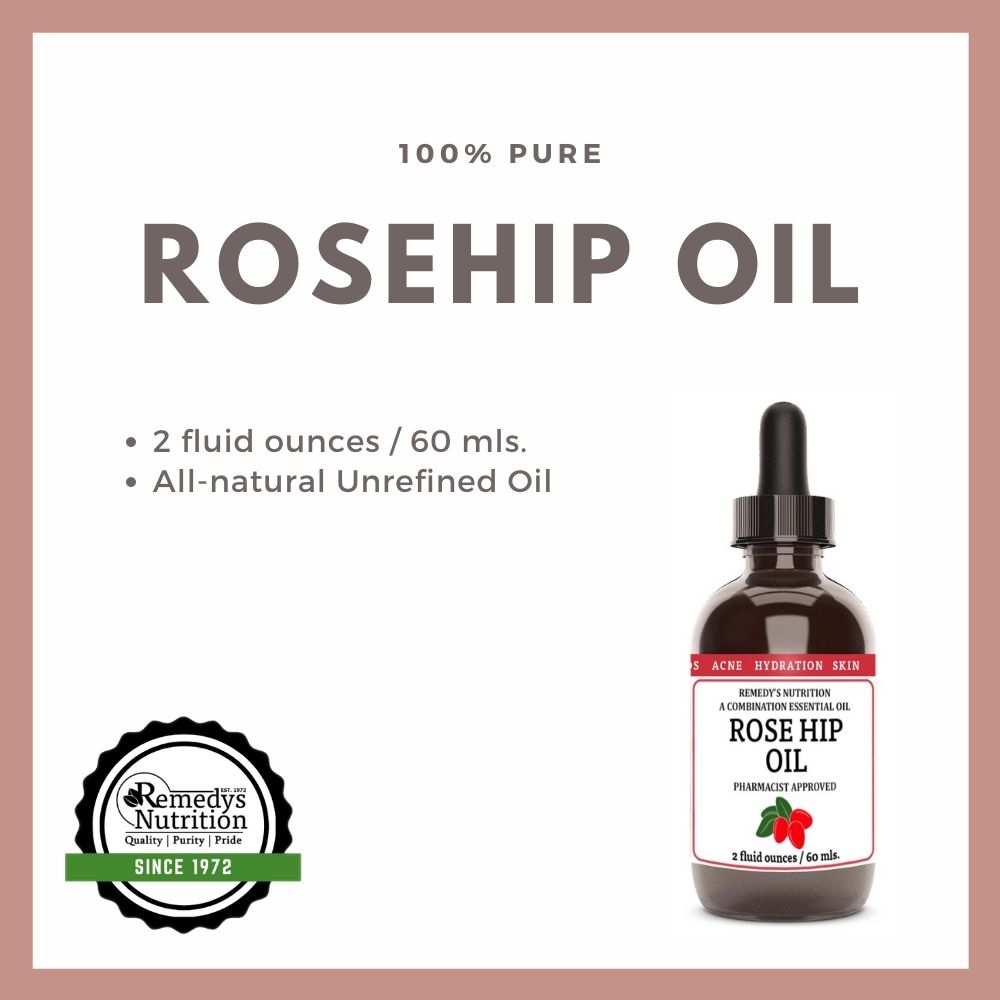
SKU: 84065985633
is rose hip seed oil good for acne

is rose hip seed oil good for acne Organic Rose Hip Seed Oil

Sale price$25.19 Regular price$27.99
Save 10%

Pay in installments of $7.00 with ShopPay, AfterPay and Klarna

Shipping Estimate
USA
  • USA
  • CAN

Ships within 48 hours · Estimated delivery Oct 26 - Oct 31

Promo Codes Available:

For Your Every Summer RSVP, with Code: SUMMER15

Description

is rose hip seed oil good for acne Organic Rose Hip Seed OilWhat Is Rose Hip Oil? Rose hip oil is a cold pressed seed oil extracted from the fruit of wild rose species most commonly Rosa canina or Rosa rubiginosa. The deep orange red color is the first indicator of quality: it comes from natural lycopene and beta carotene content, both of which are destroyed by heat during refining. A pale, colorless rosehip oil has been stripped of these compounds. Unlike most plant oils, rose hip contains naturally occurring


What Is Rose Hip Oil?

Rose hip oil is a cold-pressed seed oil extracted from the fruit of wild rose species — most commonly Rosa canina or Rosa rubiginosa.

The deep orange-red color is the first indicator of quality: it comes from natural lycopene and beta-carotene content, both of which are destroyed by heat during refining. A pale, colorless rosehip oil has been stripped of these compounds.

Unlike most plant oils, rose hip contains naturally occurring precursors to trans-retinoic acid — the active form of vitamin A used in prescription retinoids. These precursors, along with an exceptionally high linoleic acid content of 40 to 50%, make rose hip one of the most studied botanical oils for anti-aging, scar reduction, and hyperpigmentation.

Remedy—s Rose Hip Oil is bottled in a 2 oz format — the ideal size given that rose hip oxidizes more quickly than heavier carrier oils. A 2 oz bottle used consistently lasts approximately 2 to 3 months, keeping the oil within its optimal freshness window.

Rose Hip Oil Benefits: Evidence Summary

Rose hip oil has been evaluated in more than a dozen published clinical trials. Most studies use concentrations of 100% cold-pressed oil applied topically once or twice daily over 6 to 12 weeks.

Benefit Key Finding Typical Use
Scar reduction A 12-week RCT found a 45% improvement in post-surgical scar appearance vs. untreated control Daily application on healed scars
Hyperpigmentation Retinoic acid precursors inhibit tyrosinase; visible lightening in 6 to 8 weeks of consistent use Dark spots, sun damage, melasma
Anti-aging / wrinkle reduction Collagen synthesis stimulated by retinoic acid precursors; 8-week study showed measurable reduction in periorbital wrinkle depth Eye area, forehead lines
Skin barrier repair Linoleic acid (40—50%) replenishes ceramide-deficient skin; improves TEWL scores by up to 20% after 4 weeks Dry, eczema-prone, or post-procedure skin
UV damage recovery Beta-carotene and lycopene provide antioxidant support; reduces oxidative stress markers after sun exposure Evening application after sun exposure
Stretch mark prevention A 2013 study (n=80) found rose hip oil users showed significantly less stretch mark formation vs. placebo during pregnancy Abdomen and thighs during pregnancy
Overall complexion evenness Combined retinoic precursor and vitamin C ester precursor activity; 70% of participants in 1 study reported improved skin tone after 8 weeks Daily face serum

How Rose Hip Oil Works

The skin-renewing reputation of rose hip oil traces back to 3 active mechanisms working simultaneously. First, its retinoic acid precursors — particularly all-trans retinoic acid formed metabolically from the oil—s beta-carotene fraction — stimulate fibroblast activity and accelerate cell turnover at a rate comparable to low-dose topical retinoids, but without the irritation associated with prescription tretinoin.

Second, the high linoleic acid content (40 to 50%) directly addresses the ceramide deficiency found in aged and photo-damaged skin. Ceramides are the glue of the skin barrier; when linoleic acid is applied topically, it integrates into lamellar body structures and helps restore proper barrier function within 2 to 4 weeks of daily use.

Third, the vitamin C precursors and carotenoids contribute antioxidant protection that slows the oxidative degradation of existing collagen. Together, these 3 mechanisms — cell turnover, barrier restoration, and antioxidant defense — explain why rose hip oil produces more visible skin improvements than most single-mechanism botanical oils.

Rose Hip Oil for Anti-Aging and Hyperpigmentation

Anti-aging is the most researched application of rose hip oil. For wrinkle reduction, apply 3 to 4 drops to clean dry skin each evening, focusing on the forehead, around the eyes, and nasolabial folds. The retinoic acid precursors work overnight during the skin—s natural repair cycle. Expect initial results — softer texture and slightly more even tone — within 3 to 4 weeks. Measurable wrinkle depth reduction typically appears at 8 weeks.

For hyperpigmentation, the same nightly routine applies, but patience is required: tyrosinase inhibition is gradual. Most users see visible lightening of dark spots over 6 to 12 weeks of consistent use. Pairing rose hip oil with frankincense essential oil (2 drops per 30 ml rose hip) enhances the anti-inflammatory component, which is relevant when hyperpigmentation has a post-inflammatory origin.

Blending with lavender essential oil at 1% (6 drops per 30 ml) adds calming and mild antibacterial properties, making the blend useful for post-acne marks as well as sun-induced pigmentation.

Rose Hip Oil for Scars and Dry or Mature Skin

Scar reduction is perhaps the most documented benefit of rose hip oil. The key is application timing: begin using rose hip oil only after the wound has fully closed and epithelialized — typically 2 to 4 weeks post-injury or post-surgery. Applying to open or partially healed wounds is contraindicated.

Once the skin is fully closed, apply 2 to 3 drops directly to the scar tissue and massage gently in circular motions for 60 seconds twice daily. The combination of cell turnover stimulation and barrier repair accelerates scar remodeling. Studies report the most significant improvements in hypertrophic and surgical scars; results on older keloid scars are more variable.

For dry or mature skin, rose hip oil is exceptional as a standalone serum or blended 50/50 with almond oil for a lighter, more affordable daily moisturizer. Mature skin particularly benefits from the combined retinoic precursor activity and the emollient properties that reduce the appearance of dry, crepey texture.

Adding clary sage at 1% to a rose hip base creates a targeted blend for hormonal skin changes — useful for mature skin experiencing increased sensitivity and uneven texture during perimenopause.

Why Choose Remedy—s Rose Hip Oil

What You Get Why It Matters
Cold-pressed, unrefined Preserves retinoic acid precursors, beta-carotene, and linoleic acid — refining destroys all 3 within the first 30 minutes of heat exposure
Deep orange-red color Visual confirmation of intact lycopene and carotenoid content; pale oil has been depleted
2 oz bottle Rose hip oxidizes within 12 months of opening; 2 oz ensures you use the full bottle at 2 to 3 drops/day before rancidity
No added fragrance or carriers 100% pure concentration means each drop delivers full therapeutic potency — diluted products require larger doses to achieve the same effect
Dark glass packaging UV light degrades beta-carotene and retinoic precursors within weeks in clear containers; dark glass provides essential protection
Sourced from Rosa canina This species consistently yields the highest trans-retinoic acid precursor content in independent analyses — up to 3x more than Rosa mosqueta in some comparisons

How to Use Rose Hip Oil

Goal Amount Method Notes
Anti-aging night serum 3 to 4 drops Apply to clean dry face; gently press in Use in the evening; retinoid precursors can increase photosensitivity — always use SPF 30+ in the morning
Hyperpigmentation treatment 2 to 3 drops Apply to spots after cleansing nightly Visible results in 6 to 12 weeks; continue through the full cycle
Scar massage 2 to 3 drops Circular massage for 60 seconds; 2x daily Begin only on fully closed skin — wait at least 2 to 4 weeks post-wound
Under-eye treatment 1 drop per eye Pat (do not rub) the orbital bone area Avoid direct contact with the eye; if irritation occurs, dilute 50/50 with almond oil
Body moisturizer blend 50% rose hip + 50% almond oil Mix in palm; apply after shower Extends shelf life and reduces cost while maintaining active benefits
EO anti-aging blend 30 ml rose hip + 6 drops frankincense Mix in dark glass bottle; use nightly 1% frankincense concentration — safe and effective for fine lines

Sun Sensitivity: Rose hip oil—s retinoic acid precursors can mildly increase photosensitivity. Always apply at night or use SPF 30 or higher sunscreen during the day when using rose hip oil as part of your routine.

Patch Test First: Despite being natural, rose hip oil is bioactive. Apply a small amount to the inner forearm for 24 hours before applying to the face. Those with rosacea or highly reactive skin should start every other night to assess tolerance.

Shelf Life: Refrigerate after opening. Discard within 12 months of opening or if the oil develops a fishy or rancid odor — degraded rose hip oil is pro-inflammatory and should not be used on skin.

Rose Hip Oil FAQ

What does rose hip oil do for skin?+

Rose hip oil delivers 3 primary skin benefits: it accelerates cell renewal through retinoic acid precursors, repairs the skin barrier through its 40 to 50% linoleic acid content, and reduces oxidative stress through beta-carotene and lycopene. Clinical studies show consistent improvements in wrinkle depth, skin tone evenness, and scar appearance after 8 to 12 weeks of daily use. It is particularly effective for dry, mature, or sun-damaged skin.

Does rose hip oil reduce scars?+

Yes, with documented evidence. A randomized controlled trial measuring 80 patients found rose hip oil applied twice daily reduced post-surgical scar redness and texture by approximately 45% over 12 weeks compared to untreated control. The results are strongest on post-surgical and post-acne scars. Keloid scars — raised fibrous tissue — respond less predictably and may require 6 or more months. Begin application only after the wound is fully closed — at least 2 to 4 weeks post-injury.

How long until I see results with rose hip oil?+

Most users notice improved skin texture and hydration within 2 to 3 weeks of daily use. Hyperpigmentation and dark spots typically require 6 to 12 weeks of consistent nightly application before visible lightening appears, since tyrosinase inhibition is a gradual process tied to the 28-day skin cell turnover cycle. Wrinkle depth improvements measured in clinical studies appear at the 8-week mark. Patience and consistency are more important than the amount applied.

Can I apply rose hip oil under eyes?+

Yes — the under-eye area is 1 of the most popular applications for rose hip oil. Use just 1 drop per eye, applied by gentle patting along the orbital bone rather than rubbing. Avoid direct contact with the eye itself. If you experience stinging or redness in the first 3 to 5 days, dilute 50/50 with sweet almond oil and allow a 1 to 2 week adjustment period before transitioning to undiluted use. Most people tolerate it well after the initial adjustment.

Does rose hip oil clog pores?+

Rose hip oil has a comedogenic rating of 1 on a 0 to 5 scale — among the lowest of any plant oil — primarily because of its high linoleic acid content. Linoleic-rich oils are generally non-comedogenic, unlike oleic-heavy oils. However, a small number of users with very oily or congestion-prone skin may react. Start with every-other-night application for the first 2 weeks and observe. If no new breakouts appear in that 14-day window, daily use is likely safe for your skin type.

How do I store rose hip oil?+

Refrigerate rose hip oil after opening. Cold temperature slows oxidation and extends useful life by 3 to 6 months beyond what room-temperature storage allows. Keep it in its original dark glass bottle — UV light degrades the active carotenoids within a few weeks in clear containers. An opened bottle stored in the refrigerator is best used within 12 months. Warming the bottle between your palms for 30 seconds before use makes it easier to dispense and apply.

How long does a 2 oz bottle last?+

A 2 oz (60 ml) bottle used at 3 to 4 drops per day for the face lasts approximately 2 to 3 months. At that rate, you use about 0.5 to 1 ml per day, and the bottle holds roughly 60 ml total. This aligns well with rose hip oil—s 12-month post-opening shelf life — you are very unlikely to waste product to oxidation. If you use it on face and under eyes daily, budget for a new bottle every 8 to 10 weeks.

What makes Remedy—s rose hip oil different?+

Remedy—s Rose Hip Oil is cold-pressed, unrefined, and 100% pure — no dilution with cheaper soybean or sunflower oil, which is common in the market. The deep orange-red color confirms intact beta-carotene and lycopene levels. The 2 oz bottle is a deliberate formulation choice: rose hip oil oxidizes significantly by 12 months post-opening, and 2 oz at 3 to 4 drops per day allows you to complete the bottle 2 to 3 times over within a year, ensuring every drop you use is at peak potency.

In-Depth Reading

Shipping Notes
  • Free Standard Shipping on $100+ Orders to the USA.
  • Except Preorder products are shipped in 48 hours.
  • Delivery to the USA:
  1. Standard Shipping : 3-10 business days
  • If time is of the essence, please consider selecting expedited delivery for faster service.
Exchange/Return Notes
  • We offer a 30-day return/exchange service after receiving.
  • Final sale items are not eligible for returns or exchanges.
  • To process your return/exchange, please contact us at [email protected]
  • Please click here for more details>>> Return & Exchange Policy
SKU: 84065985633

Discover Niche Categories That Outsell is rose hip seed oil good for acne

Top-Converting Item to Boost Your Average Order

4.2 ★★★★★
Based on 29 reviews
Sort
Highest Rating
Newest First
Oldest First
Product Reviews
K
Verified Purchase
Ken
Massapequa, US
★★★★★ 5
Great frother/stirrer especially for the price.
Color: Black, Size: Rechargeable
Best one available. Have used cheap ones from the store that work pretty good, but batteries are a pain. This is rechargeable and it has a push button that allows you to start it right away without having to turn it on to start it kind of like a power drill. If you start to press it it goes slow the harder you press the faster it goes. The different attachments are great. We use it for both coffee frothing as well as mixing up electrolyte drinks with water with the included mixing attachment. Crazy powerful and easy to use.
WAS THIS REVIEW HELPFUL?YesReportShare
Reviewed in the United States on May 9, 2026
T
Verified Purchase
Techie
Bozeman, US
★★★★★ 5
Strong motor. Works great
Color: Black, Size: Rechargeable
I really like this frother. The fact that it’s variable speed, rechargeable, and can spin at a high rate are all great features. I use it to blend collagen powder and cream into my coffee every morning. Also sometimes use it to Blend drinks. Strong motor. Like that the whisks are removable for cleaning and that it comes with different ones.
WAS THIS REVIEW HELPFUL?YesReportShare
Reviewed in the United States on April 9, 2026
J
Verified Purchase
John Wagner
Waukegan, US
★★★★★ 4
Works well, long use on single charge, high torque - be careful when starting
Color: Black, Size: Rechargeable
Not the most inexpensive powered whisker bur I've used other Typhor products and found them reliable for the task designed. I fell they don't cheap out on the rechargeable battery so I don't fell they will catch fire, as we are hearing about from other cheaper rechargeable items. I liked 2 things about this model the speed control is by a pressure single switch which I can control, not just pick speed 1,2,3. The swappable tips allow for different uses. I don't drink coffee but use the item to whisk eggs for an omelets and it has the torque to mix them without effort. In Fact need to only use half power else it will splatter out of my mixing vessel.
WAS THIS REVIEW HELPFUL?YesReportShare
Reviewed in the United States on June 7, 2026
J
Verified Purchase
Jenna
Carnegie, US
★★★★★ 5
Stop complaining about the size and review the actual product! (Rant, Review, & Recipe)
Flavor Name: Culinary, Size: 1.06 oz (Pack of 1), Flavor Name: Culinary, Size: 1.06 oz (Pack of 1)
I was a little hesitant at first to buy this starter size pouch because of the price. I wanted good quality but kept asking myself, "What if I don't like it?" The company offers a 100% refund on their product so I went for it. Problem solved! RANT: The biggest complaint I see from people on here is in regards to the amount you are getting for the price. They are not reviewing the quality of the item within the packaging or the flavor, etc. If you don't review the actual product and focus only on the quantity or packaging, the review is mostly worthless. As consumers, we get enough worthless reviews that are paid for, we don't need more worthless reviews because people only want to focus on the quantity and packaging and not review the quality. All are important in a review but the quality should be what is focused on. Why is that that because it is a smaller size, people feel entitled to receive it for next to nothing? These are probably the same people that pay almost $2 for a 20 oz bottle of soda while the 2 liter bottle is only $1 and they don't bat an eyelash. What they fail to understand is that making smaller sizes like this is not very cost effective for them to make. It probably costs them the same, or close to the same amount of money to purchase the bags they use for this size as it does for a larger size. These sampler sizes don't sell as well either. Unlike the bottle of soda that is "personalized" in size for the consumer to grab and go, this is a product that takes time and effort for the consumer to prepare. It is not meant to be a personalized size. If it were, people would have no problem paying for the convenience. Consumers are so spoiled and don't understand the costs associated with what it takes to import, pay the farmers a fair wage, the manpower and materials it takes to package the product, etc. I can guarantee you however, if a fair wage is not paid, someone is bound to call the 5:00 news! If you want sample sizes, fair wages, and the like, the consumer is going to have to pay for them or the company will go out of business really fast. How many people have purchased an actual vanilla bean? Or saffron? Or truffles? No one seems to have a problem paying a high price for these items but complain about $10 for 30g of quality culinary matcha. Just like those items, a little matcha goes a long way. It depends on how you plan to use it. If you are going to bake with it, buying a starter size is not cost effective for you. If you are using it to make a tea latte, which is why I bought it, this is still gives you enough for 15 lattes that are 16 oz in size making them roughly $1.63 each (my recipe for this is below). Costs will vary depending on your ingredients of choice, and the area you live in. My numbers are based on $10 for 15 servings of this matcha and $0.08 per oz of organic vanilla almond milk in Austin, TX. Go to a coffee shop and you will pay at least $5 for a matcha latte of the same size, which is yet another thing buyers won't complain about. OK, RANT OVER...ON TO THE REVIEW! REVIEW/COMPARISON: I used to hate the taste of Matcha but after years of taste bud readjustment, I decided to give it another try at Starbucks. They use Teavana brand for their lattes which is like Jade Leaf and does not use fillers and is organic. I try to avoid dairy so I used almond milk for my iced latte instead. Neither their tea or almond milk is sweetened so I added 3 pumps of vanilla to their venti size (they usually use 6 if you want it sweetened). Something about their almond milk leaves a bad aftertaste but before that hit, it was really good. Like most people, I can't afford $5 a day for one of these so I decided to buy the powder to make on my own at home (I was a barista in a former life so I often do this with my coffee concoctions too). What I don't like about the Teavana brand is that it is much more expensive ($25 for 40g) and they claim it is ceremonial grade and yet, it looks and tastes exactly like Jade Leaf's culinary grade. In the brief research I did before buying, not a single self-proclaimed matcha aficionado EVER said to use ceremonial grade for a latte. They all very plainly stated that it was NOT for culinary use and that the taste is quite different. It is also higher in chlorophyll so it is a much brighter green color. That begs the question as to why Teavana, which looks and tastes the same as Jade Leaf is labeled ceremonial grade and being used for lattes when it is clearly the same culinary grade. This morning, I made my first iced latte with this stuff from Jade Leaf. Using an organic, vanilla (sweetened) almond milk I found it was perfectly sweet and still had the very slight hint of the bitterness that comes from green tea. No weird almond milk aftertaste like the one from Starbucks. Needless to say, in the end, I will be buying this again in a larger size. It does say to store it in the fridge so that is where mine went when I was done with it. I plan to do a juice fast soon and a few recipes I have seen call for green tea for an extra metabolic and antioxidant boost. I plan to use this instead since it is so much more nutritionally dense than regular tea leaves. RECIPE: They offer some recipe options on their Amazon listing and also on their website, but this was my super simple one that I threw together and was delicious. Iced Matcha Vanilla Almond Latte: 4 oz (1/2 c) hot water (not boiling but barely steaming to help dissolve the matcha easily) 1 tsp Jade Leaf Organic Matcha 12 oz (1-1/2 c) cold vanilla flavored almond milk, or other milk of choice Sweetener of choice, to taste (optional, I don't use any because my almond milk is already sweetened) Ice cubes NOTE: Sweetening options will have to be done at different steps depending on what you are using. If you are using liquid sugars like Torani or homemade simple syrups, those can go in at any time. Honey, agave, coconut nectar, sugar, and artificial sweeteners, should be blended in when you whisk the matcha into the hot water otherwise they will not dissolve properly and will settle at the bottom of the cup. 1. In a glass measuring cup, add 4 oz hot water. 2. Add 1 tsp of matcha powder and whisk together (see note for adding optional sweeteners) 3. Pour into a 16-20 oz cup over a few ice cubes to cool it. 4. Top off with the 12 oz vanilla almond milk (or other milk of choice) and stir to blend. Add more ice if desired. ENJOY Y'ALL!
WAS THIS REVIEW HELPFUL?YesReportShare
Reviewed in the United States on July 24, 2017
K
Verified Purchase
KoKo
Dallas, US
★★★★★ 5
Matcha Powder
Flavor Name: Culinary, Size: 1.06 oz (Pack of 1)
Jade Leaf Matcha has become my go-to matcha powder, and I keep coming back to it time and time again. The quality is consistently great, with a fresh flavor and vibrant green color that mixes well into drinks and recipes. I use it regularly for matcha lattes, smoothies, and even baking, and it always delivers great results. For a culinary-grade matcha, I think the flavor is excellent—not overly bitter and smooth enough to enjoy daily. It blends easily and provides the perfect matcha taste without breaking the budget. I’ve tried other brands over the years, but this is the one I continue to repurchase. If you’re looking for a reliable, high-quality matcha for everyday use, I highly recommend giving this one a try.
WAS THIS REVIEW HELPFUL?YesReportShare
Reviewed in the United States on June 7, 2026

recommand products