Pay in installments of $6.43 with
 ,
,
 and
and

Shipping Estimate
USA
- USA
- CAN
- USA
- CAN
Ships within 48 hours · Estimated delivery Oct 17 - Oct 22
 Promo Codes Available:
For Your Every Summer RSVP, with Code: SUMMER15
Description
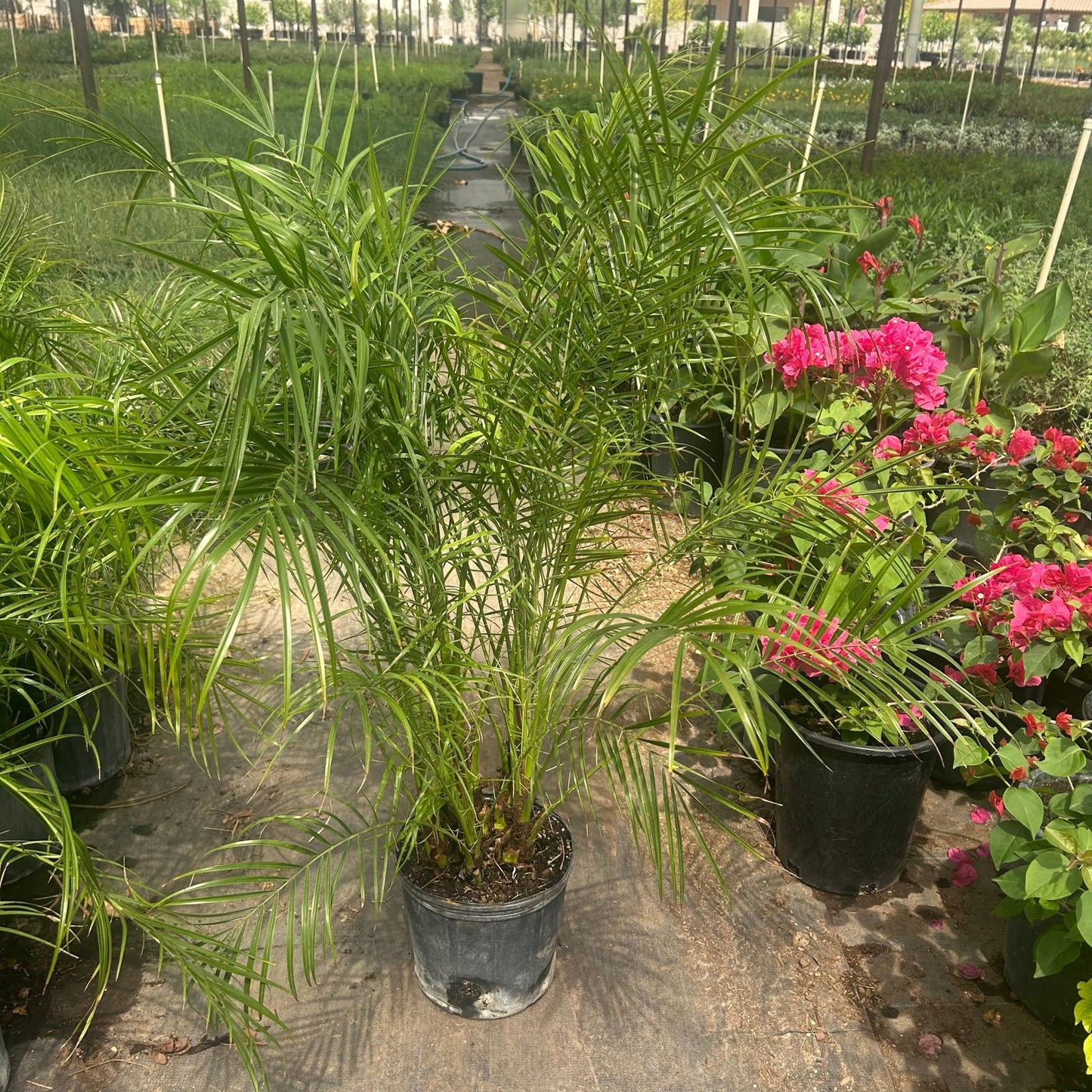
planting pygmy date palm outdoors Buy Pygmy Date Palm Phoenix, AZ | Phoenix roebeleniiThe Perfect Patio Palm for Phoenix Compact Tropical Beauty That Handles the Heat Pygmy Date Palm (Phoenix roebelenii) is the most popular small palm in the Phoenix Valley and for good reason. This compact, graceful palm delivers a lush tropical look without taking over your yard. With its soft, arching fronds and slender textured trunk, the Pygmy Date Palm adds instant resort style elegance to any space. Whether you're framing a Scottsdale pool,
The Perfect Patio Palm for Phoenix — Compact Tropical Beauty That Handles the Heat
Pygmy Date Palm (Phoenix roebelenii) is the most popular small palm in the Phoenix Valley — and for good reason. This compact, graceful palm delivers a lush tropical look without taking over your yard. With its soft, arching fronds and slender textured trunk, the Pygmy Date Palm adds instant resort-style elegance to any space. Whether you're framing a Scottsdale pool, flanking a Chandler entryway, or creating a tropical courtyard oasis in Gilbert — this versatile palm does it all in sizes ranging from tabletop containers to 25-gallon statement plants.
Pygmy Date Palm Plant Details
| Attribute | Detail |
|---|---|
| Scientific Name | Phoenix roebelenii |
| Common Names | Pygmy Date Palm, Miniature Date Palm, Dwarf Date Palm, Roebelenii Palm |
| Mature Height | 6–10 feet |
| Mature Width | 5–7 feet (frond spread) |
| Growth Rate | Slow to moderate — 6–12 inches per year in Phoenix |
| Sun | Full sun to partial shade. Performs well in dappled light and east-facing exposures. |
| Water | Moderate. More water than desert-native palms, but far less than tropical houseplants. |
| USDA Zones | 9–11 (Phoenix is Zone 9b–10a) |
| Soil | Well-draining. Adapts to Arizona caliche soils with some organic amendment. |
| Foliage | Evergreen — soft, feathery fronds stay green year-round |
| Cold Tolerance | Hardy to 25–28°F. May need frost protection during rare hard freezes. |
| Trunk | Slender, textured — attractive diamond pattern on mature specimens |
Pygmy Date Palm Uses in Phoenix Landscapes
Pool-Side Tropical Accent
Pygmy Date Palm is one of the best poolside palms for Phoenix. Its compact size won't overwhelm the pool area, the soft fronds create gentle filtered shade, and the minimal leaf drop means less pool maintenance. Plant a matched pair flanking a pool entry or group three at staggered heights for a resort-style vignette. Pair with Mediterranean Fan Palm or Queen Palm for a multi-height tropical paradise in Scottsdale, Mesa, or Tempe.
Entryway & Courtyard Focal Point
Nothing says "welcome" like a pair of Pygmy Date Palms flanking a front door or courtyard entry. The symmetrical, elegant form works beautifully in Mediterranean, Spanish Colonial, and modern desert designs. Use 10/15-gallon or 25-gallon specimens for instant impact at Chandler and Gilbert homes. These palms look stunning in decorative pots or planted directly in the ground.
Container & Patio Palm
Unlike larger palms, the Pygmy Date Palm thrives in containers — making it perfect for patios, balconies, covered porches, and small courtyard gardens. Choose a 3/5-gallon size for a tabletop or accent pot, or a 7-gallon for a medium floor planter. Container-grown Pygmy Dates can also be moved under cover during rare hard freezes for extra protection.
Tropical Foundation Planting
Use Pygmy Date Palms along a house foundation, below windows, or in landscape beds to create a lush, layered tropical look. They stay compact enough to plant under eaves and near structures without growing into the roofline. Space 4–6 feet apart for a continuous tropical border along a Peoria or Glendale home.
Best Time to Plant Pygmy Date Palm in Phoenix
Spring (March–May) is the ideal planting window for Pygmy Date Palms. Warm soil temperatures promote fast root establishment, and the long growing season gives the palm months to settle in before winter. Fall (October–November) is the second-best option. Avoid planting in winter — Pygmy Date Palms are somewhat frost-sensitive, and cold soil slows root development significantly.
How to Plant Pygmy Date Palm
- Dig wide, not deep — excavate 2–3x the root ball width at the same depth as the container. Do not bury the trunk.
- Check for caliche — break through any hardpan layer to ensure proper drainage. Pygmy Dates don't tolerate soggy roots.
- Amend lightly — mix 20–30% organic compost into the backfill. Pygmy Dates appreciate slightly richer soil than desert-native palms.
- Spacing — 5–6 feet apart for grouped plantings; 4+ feet from walls and structures for frond clearance.
- Water basin — build a 3–4 inch soil ring around the root zone to direct water to the roots.
- Mulch — spread 2–3 inches of bark or gravel mulch to retain moisture and regulate soil temperature.
Watering Pygmy Date Palm in Phoenix
First Year Watering Schedule
- Weeks 1–2: Every 1–2 days, deep and slow (20–30 minutes per session)
- Months 1–2: Every 2–3 days
- Months 3–6: Every 4–7 days (every 3–4 days during peak summer)
- After Year 1: Every 5–7 days in summer; every 10–14 days in winter
Drip Irrigation Tips
Place two 2-GPH emitters 12–18 inches from the trunk on opposite sides. Pygmy Date Palms need more regular water than desert-native palms — the soil should stay consistently moist but never waterlogged. Increase watering frequency during Phoenix's hottest months (June–September) and reduce in winter. Yellowing lower fronds are often a sign of underwatering.
How fast does Pygmy Date Palm grow in Phoenix?
Slow to moderate — expect 6–12 inches of new height per year. A 3/5-gallon palm will take several years to reach its full 6–10 foot mature height. For instant impact, choose a 10/15-gallon or 25-gallon specimen with an established trunk.
Can Pygmy Date Palm handle Phoenix summer heat?
Yes — it handles full sun in Phoenix, though it actually looks its best with some afternoon shade during the hottest months. East-facing or north-facing exposures, dappled light under trees, or partially shaded patios are ideal for maintaining the richest green color on the fronds.
Is Pygmy Date Palm frost tolerant?
It's hardy to about 25–28°F, which means it survives most Phoenix winters without issue. During rare hard freezes (below 25°F), cover the crown with frost cloth overnight. Container-grown palms can be moved under a patio cover for extra protection.
Can Pygmy Date Palm grow in a pot?
Absolutely — it's one of the best palms for container growing. Use a well-draining pot at least 2–4 inches larger than the root ball, with a quality potting mix. Container palms need more frequent watering than in-ground specimens, especially during Phoenix summers.
Does Pygmy Date Palm have thorns?
Yes — the lower frond stems (petioles) have small sharp spines near the trunk. These are easily managed by trimming lower fronds as needed. Keep this in mind when planting near high-traffic walkways.
You May Also Like
- Mediterranean Fan Palm — Hardy fan-shaped fronds, cold-tolerant, and a classic choice for Arizona landscapes.
- Pineapple Palm — Dramatic pineapple-shaped crown for a bold tropical statement.
- Sago Palm — Compact, prehistoric-looking cycad that pairs perfectly with Pygmy Dates in container groupings.
- Queen Palm — Tall, graceful fronds for a dramatic tropical canopy above Pygmy Date groundcover.
- Mexican Fan Palm — Iconic towering palms for height contrast behind shorter Pygmy Dates.
How Many Pygmy Date Palms Do I Need?
Pygmy Date Palm is a compact specimen palm with a 5 to 7 foot frond spread, so it is grouped or set as an accent rather than run as a hedge. Use these layouts:
- Single accent or matched pair: one in a courtyard or patio pot, or a symmetrical pair flanking a door or pool entry, set 4 feet off walls for frond clearance.
- Staggered cluster: group 3 at different heights 4 to 5 feet on center for a layered resort vignette.
- Tropical border: for a continuous foundation row, space 5 to 6 feet on center: a 20 foot bed takes about 4 palms, a 40 foot bed about 7 to 8.
The lower frond stems carry small spines, so keep the crown 3 to 4 feet back from walkways and seating where people brush past.
Pygmy Date Palm Season-by-Season in Phoenix
- Spring (Mar–May): the prime planting and growth window; new feathery fronds flush as soil warms and the palm settles in fast.
- Summer (May–Sep): takes full sun but holds its richest green with some afternoon shade and steady moisture; this is a thirstier palm than desert natives, so do not let it dry out in peak heat. Monsoon humidity is welcome.
- Fall (Oct–Nov): a solid second planting window as temperatures ease; growth continues while nights stay mild.
- Winter (Dec–Jan): evergreen but frost-sensitive, hardy only to about 25 to 28°F. On hard-freeze nights cover the crown with frost cloth, or move container palms under a patio cover.
At a Glance
✔ Heat-Loving (Reflected-Heat Tolerant) ✔ Evergreen ✔ Pool-Friendly (Low-Litter) ✔ Low-Maintenance
Plant It With
- Mediterranean Fan Palm: a tough multi-trunk fan palm that adds height and a hardier cold tolerance behind the Pygmy.
- Queen Palm: a taller feather palm for a multi-height tropical layering above the compact Pygmy.
- Sago Palm: a stiff, sculptural cycad that pairs beautifully in container groupings.
- Pineapple Palm: the full-size cousin whose bold crown towers over a Pygmy understory.
Is Pygmy Date Palm Right for Your Yard?
Pygmy Date Palm thrives in Phoenix sun with a little afternoon shade, suits small courtyards, poolsides, patios, and containers, and stays in scale where larger palms would overwhelm. It is not a fit if you want a fully drought-tough, plant-and-forget palm or a hard-freeze-proof one: it wants more regular water than desert natives, and it needs frost protection on the coldest Valley nights.
Shipping Notes
- Free Standard Shipping on $100+ Orders to the USA.
- Except Preorder products are shipped in 48 hours.
- Delivery to the USA:
- Standard Shipping : 3-10 business days
- If time is of the essence, please consider selecting expedited delivery for faster service.
Exchange/Return Notes
- We offer a 30-day return/exchange service after receiving.
- Final sale items are not eligible for returns or exchanges.
- To process your return/exchange, please contact us at [email protected]
- Please click here for more details>>> Return & Exchange Policy