Pay in installments of $5.34 with
 ,
,
 and
and

Shipping Estimate
USA
- USA
- CAN
- USA
- CAN
Ships within 48 hours · Estimated delivery Sep 11 - Sep 16
 Promo Codes Available:
For Your Every Summer RSVP, with Code: SUMMER15
Description
succulent translucent leaves Buy 'Haworthia Cooperi' OnlineI ntroducing Haworthia cooperi, also known as Cooper's Haworthia, which is a small and compact succulent plant that belongs to the Asphodelaceae family. Haworthia cooperia is named after its discoverer, William Cooper, who first identified and described the Haworthia cooperi. The name "Haworthia" is derived from the British botanist Adrian Hardy Haworth, who made significant contributions to the study of succulent plants. It has several other common
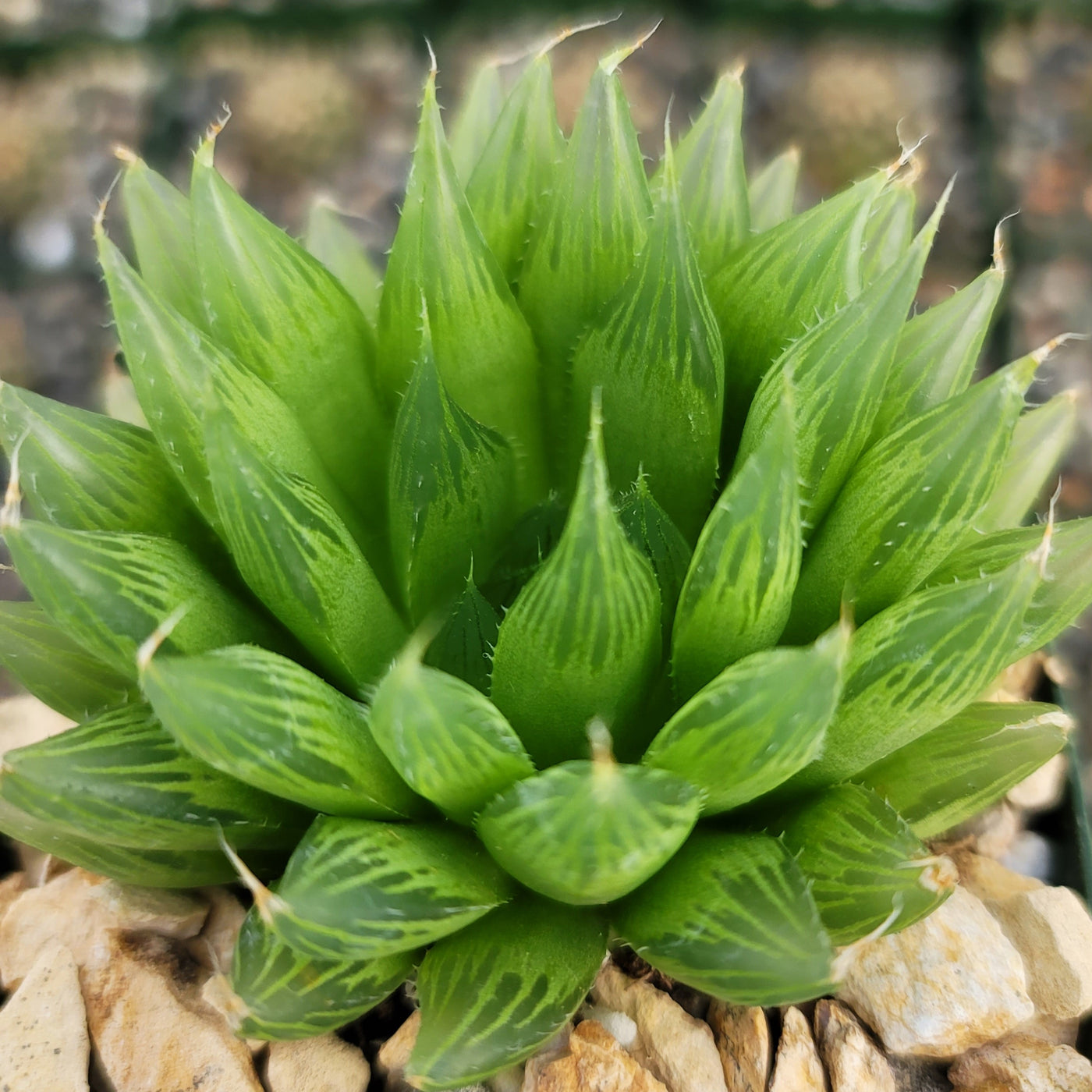
I ntroducing Haworthia cooperi, also known as Cooper's Haworthia, which is a small and compact succulent plant that belongs to the Asphodelaceae family. Haworthia cooperia is named after its discoverer, William Cooper, who first identified and described the Haworthia cooperi. The name "Haworthia" is derived from the British botanist Adrian Hardy Haworth, who made significant contributions to the study of succulent plants. It has several other common names as Bristle Haworthia, Pussy Foot, Window Haworthia, Catevala vittata, and Haworthia cooperi var. Cooperi.
The Haworthia cooperi is a slow-growing and compact plant with triangular, blue-green leaves that grow in attractive rosette clumps. The leaves are thick and have transparent tips that allow light to pass through, giving them a beautiful window-like appearance. The leaves' fleshy tips are usually green or completely transparent, but some highly variable species may have a tinge of reddish-brown or translucent streaks. In the wild, the direct sun is very bright, and Haworthia cooperi grows mostly buried by sand, with only these transparent tips above the ground. The Haworthia cooperi plant grows between 3-5 inches tall and 4 inches wide.
When it comes to Haworthia cooperi flowering, it produces slender, tubular flowers on long stalks during the spring and summer. The Haworthia cooperi flowers are typically white or pale pink in color and can add a lovely touch to the plant's overall aesthetic. However, it's important to note that flowering in Haworthia cooperi is relatively rare when compared to other succulents.
For propagating Haworthia cooperi it can be done by using offsets, which are small baby plants that grow from the base of the parent plant. These offsets can be carefully separated and planted in their own pots to establish new plants. Leaf cuttings can also be taken, where a healthy leaf is removed and allowed to callus before being placed in well-draining soil.
Additionally, the Haworthia cooperi is generally considered friendly to both humans and pets. However, it's always a good idea to keep succulents out of the reach of curious pets or small children just to be on the safe side.
Watering Needs
Native to South Africa, Haworthia cooperi prefer infrequent watering rather than being constantly soaked. Like other succulents, Haworthia cooperi can survive in dry environments by storing water in its leaves, so overwatering is advised to prevent root rot and other issues.
In the spring and summer, during the growing season, your Haworthia cooperi will be more active and may require slightly more frequent watering. You'll want to water it when the top inch or so of the soil feels dry. Just make sure not to overwater it, as succulents like the Haworthia cooperi prefer to be on the drier side.
In the winter, when your Haworthia cooperi plant enters its dormant season, the watering needs of your Haworthia cooperi will decrease. During this time, Haworthia cooperi growth slows down, and it requires less water. You'll want to reduce the frequency of watering to allow the soil to dry out more between waterings. Aim to water it only when the soil is completely dry, which may mean watering every 3-4 weeks or even less, depending on your specific conditions.
Remember, the key is to avoid overwatering, as it can lead to root rot and other problems. Always check the moisture level of the soil before watering and adjust accordingly based on the season and the plant's needs.
Light Requirements
When growing Haworthia cooperi plant indoors, it thrives in bright, indirect light. Place it near a window where it can receive plenty of bright, filtered sunlight throughout the day. Avoid placing it in direct sunlight, as the intense rays can scorch the leaves. If you notice the leaves turning reddish or brown, it may be a sign that your Haworthia cooperi is getting too much direct light.
When growing your Haworthia cooperi outdoors, it's important to choose a location that provides partial shade. These succulent plants prefer bright, indirect light, so a spot with filtered sunlight or a few hours of morning or late afternoon sun would be ideal. Avoid exposing your Haworthia cooperi to intense, direct sunlight for extended periods, as it can cause sunburn and damage the leaves.
Remember, when it comes to light requirements, finding the right balance is key. Haworthia cooperi enjoys bright light, but it's important to protect it from intense, direct sunlight to prevent any harm to the plant.
Optimal Soil & Fertilizer Needs
When it comes to the soil, Haworthia cooperi prefers a well-draining mix that mimics its natural habitat. Planting them in ordinary soil mixed with coarse sand will result in compacted roots, stunted growth, and, most likely, root rot. Instead, make or buy a well-draining potting mix, or ideally, use our specialized succulent potting mix that contains 5 natural substrates and mycorrhizae to promote the development of a strong root system that helps your Haworthia cooperi succulent to thrive.
When it comes to fertilizer, Haworthia cooperi is not a heavy feeder. During the growing season, use a balanced (5-10-5) diluted succulent fertilizer once a year in the spring. Follow the instructions for the correct dilution ratio and frequency of application. Remember, it's always better to under-fertilize than to over-fertilize, as succulents like the Haworthia cooperi are sensitive to excessive nutrients.
During the dormant season, you can reduce or even halt fertilization altogether as the plant's growth slows down. This mimics the natural cycle of the Haworthia cooperi and allows it to rest.
Hardiness Zone & More
When growing indoors, Haworthia cooperi prefers warmer temperatures between 65°F to 75°F. It can tolerate slightly cooler temperatures during the winter months, but it's important to avoid exposing it to temperatures below 50°F for extended periods. As for humidity, your Haworthia cooperi is quite adaptable and can handle average indoor humidity levels. You don't need to worry too much about specific humidity requirements.
If you are living in USDA zones 9-11, you can grow your Haworthia cooperi outdoors year-round. These zones generally have mild winters and warm to hot summers. Haworthia cooperi plants can tolerate a wide range of temperatures, from temperatures as low as 30°F to as high as 90°F. However, it's important to protect them from extreme temperature fluctuations and frost. If you live in a region with colder winters, it's best to bring your outdoor Haworthia cooperi indoors or provide them with some form of protection during the colder months.
Remember, Haworthia cooperi is a resilient plant, but it's always a good idea to provide it with the optimal temperature conditions and protect it from extreme temperatures, whether it's indoors or outdoors.
The Bottom Line
Overall, the Haworthia cooperi is a captivating succulent that showcases a unique blend of beauty and simplicity. With its rosette-like arrangement of fleshy, triangular leaves and transparent tips, it's a true showstopper. Although flowering may be rare, the delicate tubular flowers add an extra touch of elegance to this plant. Propagation is relatively easy through offsets or leaf cuttings, making it a great choice for succulent enthusiasts. Plus, it's non-toxic, so you can enjoy its charm worry-free. Whether you're a seasoned plant lover or just starting your succulent journey, Haworthia cooperi is a must-have addition to any collection.
Shipping Notes
- Free Standard Shipping on $100+ Orders to the USA.
- Except Preorder products are shipped in 48 hours.
- Delivery to the USA:
- Standard Shipping : 3-10 business days
- If time is of the essence, please consider selecting expedited delivery for faster service.
Exchange/Return Notes
- We offer a 30-day return/exchange service after receiving.
- Final sale items are not eligible for returns or exchanges.
- To process your return/exchange, please contact us at [email protected]
- Please click here for more details>>> Return & Exchange Policy