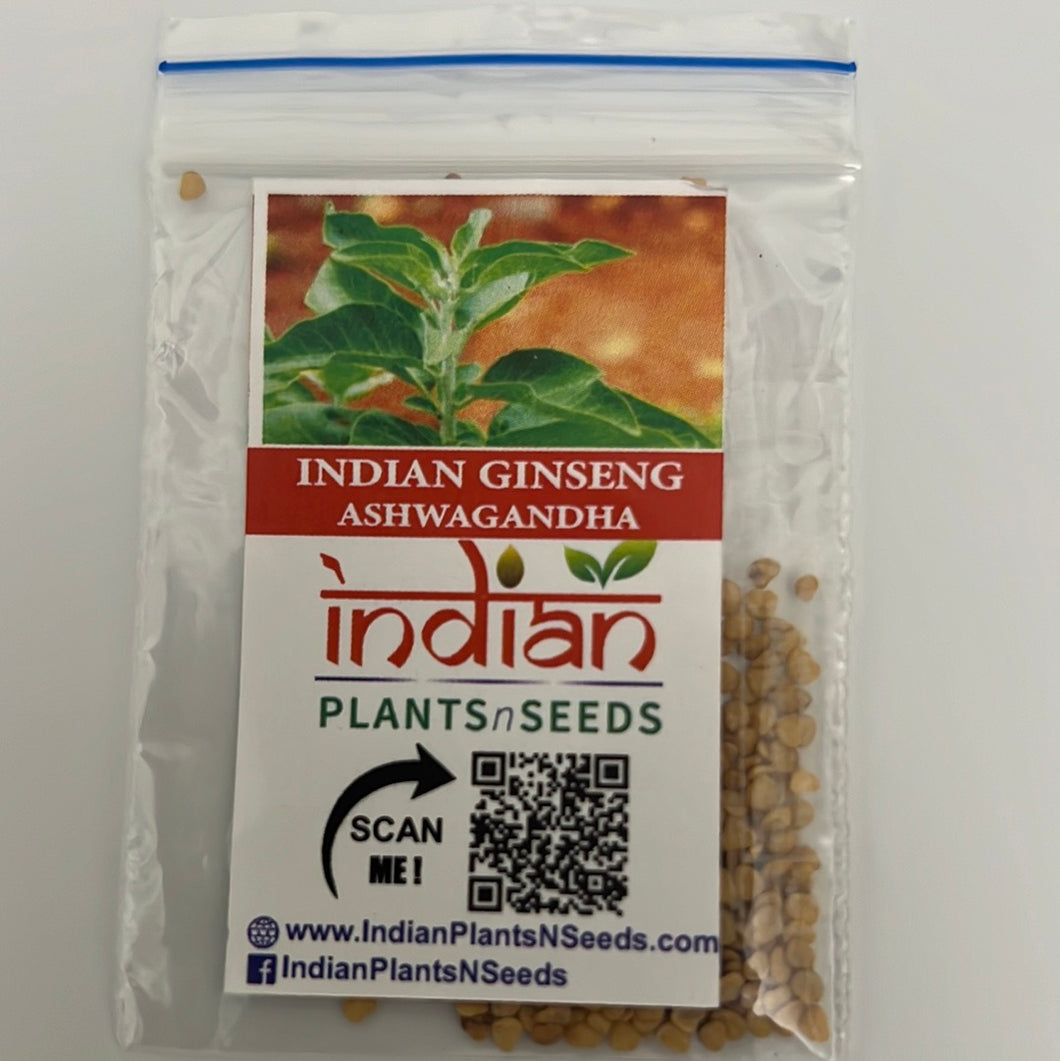
ashwagandha plant seeds IPS104
SKU: 91728439720
ashwagandha plant seeds

ashwagandha plant seeds IPS104

Sale price$26.04 Regular price$28.93
Save 10%

Shipping Estimate
USA
  • USA
  • CAN

Ships within 48 hours · Estimated delivery Jul 9 - Jul 14

Promo Codes Available:

For Your Every Summer RSVP, with Code: SUMMER15

Description

ashwagandha plant seeds IPS104INDIAN ASHWAGANDHA Seeds Heirloom Medicinal Herb Non GMO American Grown Seeds Perennial USDA Zone: 8 11 Step aside, stress and anxietyAshwagandha, also known as Indian Ginseng (Withania somnifera), is here. This ancient medicinal herb is renowned for its adaptogenic qualities, helping your body manage stress better. But that's not all. With its bright green leaves, small, bell shaped flowers, and red berries, it's also an attractive addition to any

INDIAN ASHWAGANDHA Seeds

• Heirloom Medicinal Herb
• Non-GMO
• American Grown Seeds
• Perennial
• USDA Zone: 8-11

Step aside, stress and anxiety—Ashwagandha, also known as Indian Ginseng (Withania somnifera), is here. This ancient medicinal herb is renowned for its adaptogenic qualities, helping your body manage stress better. But that's not all. With its bright green leaves, small, bell-shaped flowers, and red berries, it's also an attractive addition to any garden. Cultivate your very own stress-buster and add a touch of tranquility to your garden with Ashwagandha.

GROWING INSTRUCTIONS:

Plant Ashwagandha seeds in a location with full sun to light shade. Sow the seeds 1/4 inch deep and space the plants 18-24 inches apart. Water moderately, ensuring the soil remains consistently moist but not waterlogged. Ashwagandha prefers well-draining soil with a pH between 6.0 and 7.5.

What Is Ashwagandha?

One of the most valuable plants in the Ayurvedic pharmacopoeia is ashwagandha. Because of its exceptional capacity to hydrate the entire body, it is referred to as the top Ayurvedic tonic. It increases the body's capacity to deal with stress, allowing it to store and maintain important energy all day while encouraging sound, peaceful sleep at night. As an adaptogen, it not only ranks well among Ayurveda's top medicines for energy but also promotes mental calmness. 

Optimal Growing Conditions For Ashwagandha

Ashwagandha is an easy-to-grow indoor plant that requires little upkeep. It doesn't mind using soil and fertilizers, although it does appreciate a dry, sunny environment. What you need to know about addressing its optimal growing demands is provided here.

Light & Temperature

Ashwagandha thrives in full sun, so put it where there is at least six hours of direct sunlight each day in your garden. It can handle some partial shade, but it will grow more slowly and mature more slowly. Between 68°F and 95°F is the best temperature range for ashwagandha cultivation. 

Frost is not tolerated by this plant. In USDA zones 7 to 12, you can grow it as a perennial, while in zones 4 to 8, you can grow it as a summer annual. If you reside in a lower climate, start Ashwagandha seeds indoors, then when the temperature reliably rises over 59°F, transplant the plant to your garden.

How To Grow Ashwagandha From Seeds

Early in the spring, sow ashwagandha seeds indoors. The plants might take up to 180 days to reach maturity, and the soil temperature must be at least 70°F for the seeds to germinate. The easiest approach to ensure a lengthy growing season is to start them inside.

  • Fill many plastic pots or a seed propagation tray with organic, nutrient-rich soil that drains well.
  • After planting the seeds in the pots, give them plenty of water and a thin layer of dirt to cover them with.
  • Place the seed pots ideally on a windowsill in a warm, sunny area.
  • It can take 10 to 14 days for ashwagandha seeds to sprout. Up until the seedlings emerge, make sure the soil is kept consistently moist.
  • When you see seedlings, you can gradually cut down on watering, but never allow the soil to totally dry out.
  • When the baby ashwagandha plants are at least 4 inches tall, you can transplant them into the garden soil.

Common Ashwagandha Pests & Diseases

Aphids and spider mites are two common pests that may affect ashwagandha plants. When the plant is young, check it frequently, and pay great attention to the newest shoots because they are more susceptible to be attacked by pests. To get rid of aphids, use an insecticidal soap solution, and to get rid of spider mites, combine water and isopropyl alcohol.

The Ashwagandha plant is most frequently afflicted by Alternaria leaf spot. Yellowing of the leaves is one sign, followed by brown patches on the foliage, is another. The best fungicides to use to treat this kind of leaf spot are those that include copper or sulphur. Bordeaux combination is the best option if you're seeking an organic fungicide.

Harvesting Ashwagandha

It can take up to 6 months for ashwagandha to mature because to its slow development rate. It is time to harvest when the papery husk that protects the berries starts to dry up. You can easily harvest this plant by hand in your backyard. Give the dirt a good soak before grabbing the plant from the base of the stem and pulling it out to make harvesting simpler. To loosen the soil, you can also use a trowel, but take care not to harm the roots.

Use a sharp blade to cut through the Ashwagandha's roots and stem, then wash the plant to remove the soil. Cut each root into smaller, 2 to 3 inch long parts after trimming the roots from the root ball. Set up a drying rack and equally distribute the roots throughout the surface. Until the roots are totally dry, keep the rack in a dry, shaded, and well-ventilated area.

Shipping Notes
  • Free Standard Shipping on $100+ Orders to the USA.
  • Except Preorder products are shipped in 48 hours.
  • Delivery to the USA:
  1. Standard Shipping : 3-10 business days
  • If time is of the essence, please consider selecting expedited delivery for faster service.
Exchange/Return Notes
  • We offer a 30-day return/exchange service after receiving.
  • Final sale items are not eligible for returns or exchanges.
  • To process your return/exchange, please contact us at [email protected]
  • Please click here for more details>>> Return & Exchange Policy
SKU: 91728439720

Discover Niche Categories That Outsell ashwagandha plant seeds

Top-Converting Item to Boost Your Average Order

4.6 ★★★★★
Based on 1463 reviews
Sort
Highest Rating
Newest First
Oldest First
Product Reviews
M
Verified Purchase
Mama N
New York, US
★★★★★ 5
The most important book a parent will ever read
Format: Hardcover
I have so much I want to say about this book and how it changed my perspective to parenting for the better. There are so many books about what to expect when you first find out you’re pregnant and how to go about the next newborn/infant stage. There’s not enough talk about needing to read parenting books beyond the first 12 months. To be honest, I found this book the most motivating, inspiring and HELPFUL Of them all. This book is definitely geared towards the toddler and beyond years, and I really wish I had read this earlier. Please do yourself a favor and read this book prior to toddler years. Even if you think you know how to go about helping foster your on childs independent, appropriate, and emotional development, as well as sibling/ friendship hardship in the correct manner, I challenged you to read this book to make sure what you’re doing (or plan to do) is truly right. This book helped me develop the tools (actions and word choices) that I needed to improve my reactions towards undesirable words or actions by my toddler. This in turn has reduced her outbursts (Both physical and verbal) and has given her anymore independent and an emotionally stable/strong relationship with herself and everyone else. This is especially for those strong willed and emotionally intelligent/ sensitive children. To be honest, I even learned a lot about how to navigate adult relationships better. I learned a little bit (maybe more than I want to admit) about myself too. 10/10.
WAS THIS REVIEW HELPFUL?YesReportShare
Reviewed in the United States on June 11, 2025
L
Verified Purchase
Louis Liu
Omaha, US
★★★★★ 5
After all, chidren are good inside.
Format: Kindle
Parenting is about how parents treat their kids. One important aspect of what counts for good parenting is how we face the kids’ negative behaviors. When we were children, our parents did not respect our emotional needs. They only scolded us when we were naughty. After we become parents, we treat our kids the way our parents treated us. Dr Becky proposes in this book, contrary to what our parents thought, children are all good inside and thus we should treat children’s bad behaviors as if their misbehaviors are signs that they don’t know how to express their needs. With this assumption, there are three implications for parenting. First, as children are good inside, what they do outside should not be our focus. Whether it is emotional tantrums, not listening, aggressive tantrums, sibling rivalry, rudeness and defiance, whining, lying, food habits, parents should not pay too much attention to it. Instead, parents should see the cause that contributes to the resulting negative behavior. Take whining as an example. Whining, according to a Cambridge dictionary, means ‘to make a long, high, sad sound’. As parents we are easily annoyed by whining and we quickly think that kids are disrespectful. In Dr Becky’s view, whining=strong desire+powerlessness. Children whine because they feel helpless and ‘indicate they feel alone and unseen in their desires’ (p.188), rather than because they are arrogant. What does this imply? Do we have to give in, knowing that they are desperate for connection and feeling powerful? The answer is no. Dr Becky said ‘while our job as parents is to make decisions that we feel are right for our kids even in the face of protest, we can still practice understanding and connecting’. While saying no, which they probably know they do need, at the same time we can give them the sympathy they also need. Thinking that kids are bad inside often leads to power struggles or arguments when we request them to request in an appropriate tone again. Kids are good inside, and thus we should focus our attention on how to respond to their helplessness rather than their whines. Secondly, not only should we not focus on their outside behavior, we should also be aware that what is on the surface often contrasts with what the kid feels inside. One of the most-feared emotions we are afraid to see children have is anger, also known as tantrums. When children are angry, they display undesirably violent behaviors such as hitting others. Dr Becky points out that they hit not because they are angry, but because they are scared. When we adults are afraid, we may also kill people if we are irrational. Children have not yet developed their prefrontal cortex which is responsible for logic and language, and so the most severe reaction they can possibly express is through tantrums. We may wonder why children are afraid: they are “terrified of the sensations, urges, and feelings coursing inside their body” (p.158) such as frustration and anxiety. These feelings which adults are used to feel scary to kids. Naming the right emotion is the first step to solving the problem and helping kids to cope with it. Only after we identify correctly the emotion the children are experiencing can we as parents exert the right method to deal with the out-of-control behavior. Clearly we know reprimanding our kids is not correct because “they are good inside”. To stop the kid's aggressive tantrums effectively, parents should assert their authority. Parents should show the confidence that they are in charge of the situation. Then, the next critical step is to maintain the kid's safety. Regardless of how the kid feels, the parent should stop the dangerous behavior the kid is engaging in, which Dr Becky calls containment. She says it best: “kids don’t feel good when they are out of control”. That we assert our authority and contain even though kids are not happy on the surface is an act of love, maturity, and responsibility. If we don't, not only will it cause injury, it will make children think we evade responsibility, thus making them feel more overwhelmed. To conclude, as parents we need to know our roles and our kids’ roles. Our job is to keep our children safe, both physically and psychologically. We need to remember that a gap exists between kids’ abilities to feel and their abilities to regulate their feelings, and the gap manifests as deregulated behavior. While it is children’s job to explore and express their feelings, it is our job to help them regulate them by setting physical boundaries, validating their emotions, and being empathetic to their feelings. We are our kids’ role models. We are demonstrating to our kids the emotion regulation skills. As our kids are allowed to shout and protest because they are doing their jobs, we are also allowed to upset them when we set boundaries. We just need to remember that to do our job well, we must learn to connect with and understand them more because after all, children are good inside.
WAS THIS REVIEW HELPFUL?YesReportShare
Reviewed in the United States on February 4, 2025
R
Verified Purchase
RICHARD MERCER
Boise, US
★★★★★ 4
Good read
Very good basic subjective author. Some modern therapist offer a different perspective on rewards and child behavior, but to be expected in academia. As with any behavioral psychology observable or behavioral science documents - measure the subjective amount against the scientific controlling evidence being offerred. If no evidence - it is just subjective opinion.
WAS THIS REVIEW HELPFUL?YesReportShare
Reviewed in the United States on March 7, 2026
C
Verified Purchase
Courtney
Battle Creek, US
★★★★★ 5
Not JUST a Parenting Book
Format: Hardcover
Good Inside and Dr. Becky are everything the world needs now. A strong, sturdy perspective that truly, wholeheartedly believes in the good inside us all. That is truly not cheap talk. It. is. the. real. deal. This book is a parenting book that covers big picture philosophical understandings of parenthood AND the more practical, day-to-day implementation of said philosophies. Dr. Becky is incredible about explaining the underlying reasons for why kids do what they do and why WE respond as we do and then she talks us through exactly how to apply the "most generous interpretation" so that we can do better for the next generation AND for ourselves. Good Inside is also a REparenting book and a leadership book. She will teach you how to show up for the realness of your own life for yourself and for the kids that you love most dearly. Truly, there is not a better way to spend your money. Maybe go ahead and stock up on highlighters and your favorite pens too because, if you're like me, you will be highlighting and underlining left and right. It's truly that game-changing. Get ready to finally understand your job description as a parent and your kids' job descriptions as wonderful, little growing humans in the world. And if you yourself need healing from your own childhood, this will open the door for that too. I know that you, dear Amazon review reader, do not know me but I am not really prone to hyperbole. I do not feel it is an exaggeration to say that Dr. Becky and Good Inside is game-changing. This purchase is truly an investment in yourself and the kind of parent and person you want to be and an investment in your kids and their future.
WAS THIS REVIEW HELPFUL?YesReportShare
Reviewed in the United States on September 14, 2022
A
Verified Purchase
Amazon Customer
Carnegie, US
★★★★★ 5
Good advice overall
Format: Paperback
This is an interesting read to help with your child’s self esteem and behavior. The first several chapters on the psychology behind behavior were more helpful and interesting than the second half of the book that addresses specific behaviors. Also, if you follow Dr Becky on social media, most of her advice is already in her content. However, I’m glad I read this book, even it wasn’t life changing.
WAS THIS REVIEW HELPFUL?YesReportShare
Reviewed in the United States on March 20, 2026

recommand products