Pay in installments of $6.25 with
 ,
,
 and
and

Shipping Estimate
USA
- USA
- CAN
- USA
- CAN
Ships within 48 hours · Estimated delivery Oct 27 - Nov 1
 Promo Codes Available:
For Your Every Summer RSVP, with Code: SUMMER15
Description
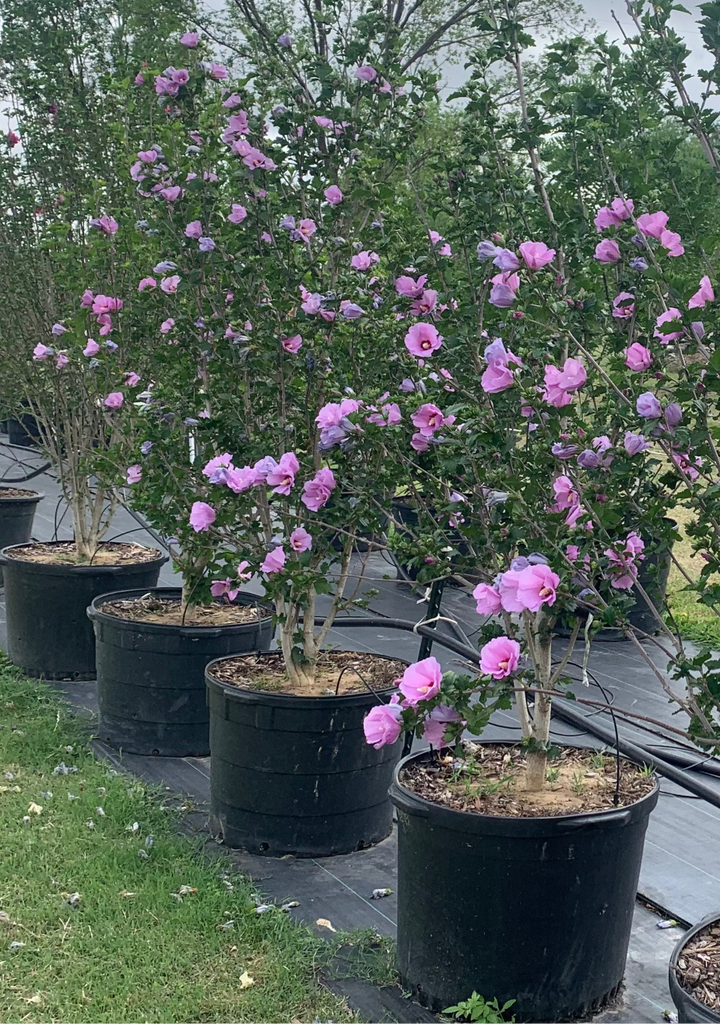
rose of sharon lavender chiffon tree Althea Rose of Sharon – Texas Tree FarmsAlthea, more commonly known as the Rose of Sharon (Hibiscus syriacus), is a multi stemmed shrub that typically grows upright with a vase shaped or rounded habit. It features attractive green foliage that may turn yellow in fall before dropping. The most notable feature of Althea is its large, showy flowers, which resemble hibiscus blooms. These flowers come in a variety of colors, including white, pink, purple, and blue often with a contrasting
Althea, more commonly known as the Rose of Sharon (Hibiscus syriacus), is a multi-stemmed shrub that typically grows upright with a vase-shaped or rounded habit. It features attractive green foliage that may turn yellow in fall before dropping. The most notable feature of Althea is its large, showy flowers, which resemble hibiscus blooms. These flowers come in a variety of colors, including white, pink, purple, and blue often with a contrasting throat. They bloom profusely from mid- to late summer and continue into fall, attracting bees, butterflies, and hummingbirds. This variety of rose is highly sought after due to its thornless nature! It can add color to your backyard without the worry of children or pets getting cut by thorns.
| Scientific Name |
Hibiscus syriacus |
| Foliage: Deciduous |
Leaves: Medium green, often three-lobed, and have a "toothed" edge. They are usually one of the last plants to leaf out in the spring (don't worry if it looks dead in April!) Will lose its leaves in the winter. Flowers: Large, trumpet-shaped flowers (2–4 inches wide) come in shades of white, pink, red, purple, or blue, often with a contrasting "eye" in the center. Capsules: Dull green pods during the growing season and mature into a papery, grayish-brown color in the fall. They are egg shaped and about 0.75 to 1 inch long. They split open along 5 seams and release the seeds in the winter. Seeds: Located in the capsules and are medium, flat, kidney shaped. Dark brown to dull black in color. Known for having a distinctive ring of fine, brownish-tan hairs on the edges. Canes: Young canes are light grayish-green and are thin and flexible. Mature canes turn smooth, light ash-ray to dark gray-brown. The canes have no thorns! |
| Lifespan: Perennial | The average lifespan of is 20 to 30 years. A well-maintained Rose of Sharon can sometimes survive up to 40 years! |
| Mature Height | 8-12 feet |
| Mature Width (Spread) | 6-10 feet |
| Growth Rate | Moderate (typically 1-2 feet per year) |
| USDA Zone | Zone 5-9 |
PLANT CARE & CHARACTERISTICS
Light Requirements: Full Sun to Partial Shade. It blooms most prolifically in full sun (6+ hours). In hotter climates (Zone 9), it appreciates a little afternoon shade to keep the flowers from wilting.
Water Requirements: Moderate. It prefers consistently moist, well-drained soil. While it is somewhat tolerant of wet soil, it does not like to sit in a swamp.
Drought Resistance: Moderate. Once established, it can handle short dry spells, but its flowering will be significantly reduced, and it may drop flower buds if it becomes too thirsty. Althea benefits from regular watering during dry periods, especially in hot weather.
Soil Type: Adaptable. It thrives in rich, loamy soil but is quite tolerant of various types, including clay and sandy soils, as long as they drain well. It prefers a slightly acidic to neutral pH. Adding organic matter, such as compost, to the soil can improve its fertility and drainage.
Deer Resistance: Moderate. Deer may eat the flower buds or young leaves, so it may need protection if you have a high deer population.
PEST/DISEASE RESISTANCE
| Pest/Disease | Resistance |
| Verticillium Wilt: Soil borne fungal disease that kills many other ornamental trees and shrubs. | High |
| Aphids: Insects that suck sap, causing distorted leaf growth. They also create a sticky fluid called honeydew, which can attract ants and lead to black sooty mold. | Low |
| Leaf Spots & Blights: Occasional cosmetic spotting occurs during humid, rainy spells, but it rarely threatens the plant's survival. | Moderate |
| Japanese Beetles: Feed heavily on the blooms and skeletonize the foliage during mid-to-late summer. | Low |
| Canker: On older or poorly pruned specimens, fungal cankers can occasionally develop on the main trunks and branches, causing localized dieback. | Moderate |
| Rust (Cerotelium malvicola): A fungus causes yellow-brown pustules on the surfaces of the leaves and premature leaf drop. Regular cleanup and leaf inspection easily manages it. | Moderate |
| Root Rot: High vulnerability to waterlogged or stagnant soils; roots easily suffocate, leading to leaf drop and rot. | Low |
POLLINATION
Rose of Sharon features a highly distinctive, fused central structure known as a staminal column. Because both male and female structures are on the same flower, Rose of Sharon is physically capable of self-pollination, but it is primarily designed for cross-pollination facilitated by insects (entomophily).
- The Female Structure (Pistil): Protruding straight out from the very tip of that same column is the style, which splits into five distinct, rounded stigmas.
- The Male Structure (Stamen): The central white-to-cream column is packed with dozens of small anthers that shed large amounts of heavy, sticky, cream-colored pollen.
The pollen grains of the Rose of Sharon are exceptionally large, heavy, and covered in tiny spines. Because it isn't light or powdery, it cannot be carried by the wind. It requires heavy-duty pollinators to move it. The primary pollinators are bumblebees, honeybees, and hummingbirds.
Common varieties of Rose of Sharon are notorious for producing a massive amount of seeds that sprout everywhere in the garden. If you want to avoid weeding out hundreds of "babies," look for sterile cultivars such as the 'Chiffon' series or the 'Satin' series (e.g., 'Blue Satin'), which produce few to no seeds.
PRUNING SUMMARY
| Pruning Aspect | Ideal Timing | Step-by-Step Actions |
| Annual Maintenance: Routine shaping, improving airflow, and cleaning up winter damage. | Late Winter / Early Spring (Late Feb–March, before buds break) | Cut out the 3 D's: any Dead, Damaged, or Diseased canes down to their base. Remove weak, spindly, or crossing branches from the center to maximize light penetration. To get fewer but much larger blooms, cut the previous year's stems back to leave just 2–3 buds. |
| Tree Training: Developing a formal, single-trunk "patio tree" shape instead of a wide bush. | Late Winter / Early Spring (Ongoing during early years of growth) | Select the single straightest, most vigorous cane to serve as your central trunk. Prune all other competing ground canes completely down to the dirt. Gradually remove lower side branches up the bottom third to half of the main trunk as it grows. Prune away ground suckers every spring. |
| Deadheading: Eliminating seed pods to prevent aggressive self-seeding and garden weeds. | Late Summer / Early Autumn (Right after blooms fade) | Snip or snap off spent flowers before the green, 5-valved capsules turn brown and split open. |
| Rejuvenation (Renewal): Revitalizing old, bare-bottomed, or declining shrubs reaching the end of their lifespan. | Late Winter / Early Spring (Spread sequentially over 3 years) | Year 1: Cut the oldest, thickest one-third of the main trunks down to 6–12 inches from the ground. Year 2: Cut half of the remaining old trunks (another third of the original total) down to the base. Year 3: Cut the final original old trunks down, leaving a fully renewed, high-producing root system. |
Shipping Notes
- Free Standard Shipping on $100+ Orders to the USA.
- Except Preorder products are shipped in 48 hours.
- Delivery to the USA:
- Standard Shipping : 3-10 business days
- If time is of the essence, please consider selecting expedited delivery for faster service.
Exchange/Return Notes
- We offer a 30-day return/exchange service after receiving.
- Final sale items are not eligible for returns or exchanges.
- To process your return/exchange, please contact us at [email protected]
- Please click here for more details>>> Return & Exchange Policy