SKU: 92900561128
stake jade plant

stake jade plant Botany Bay Jade Plant

Sale price$21.28 Regular price$23.64
Save 10%

Pay in installments of $5.91 with ShopPay, AfterPay and Klarna

Shipping Estimate
USA
  • USA
  • CAN

Ships within 48 hours · Estimated delivery Oct 27 - Nov 1

Promo Codes Available:

For Your Every Summer RSVP, with Code: SUMMER15

Description

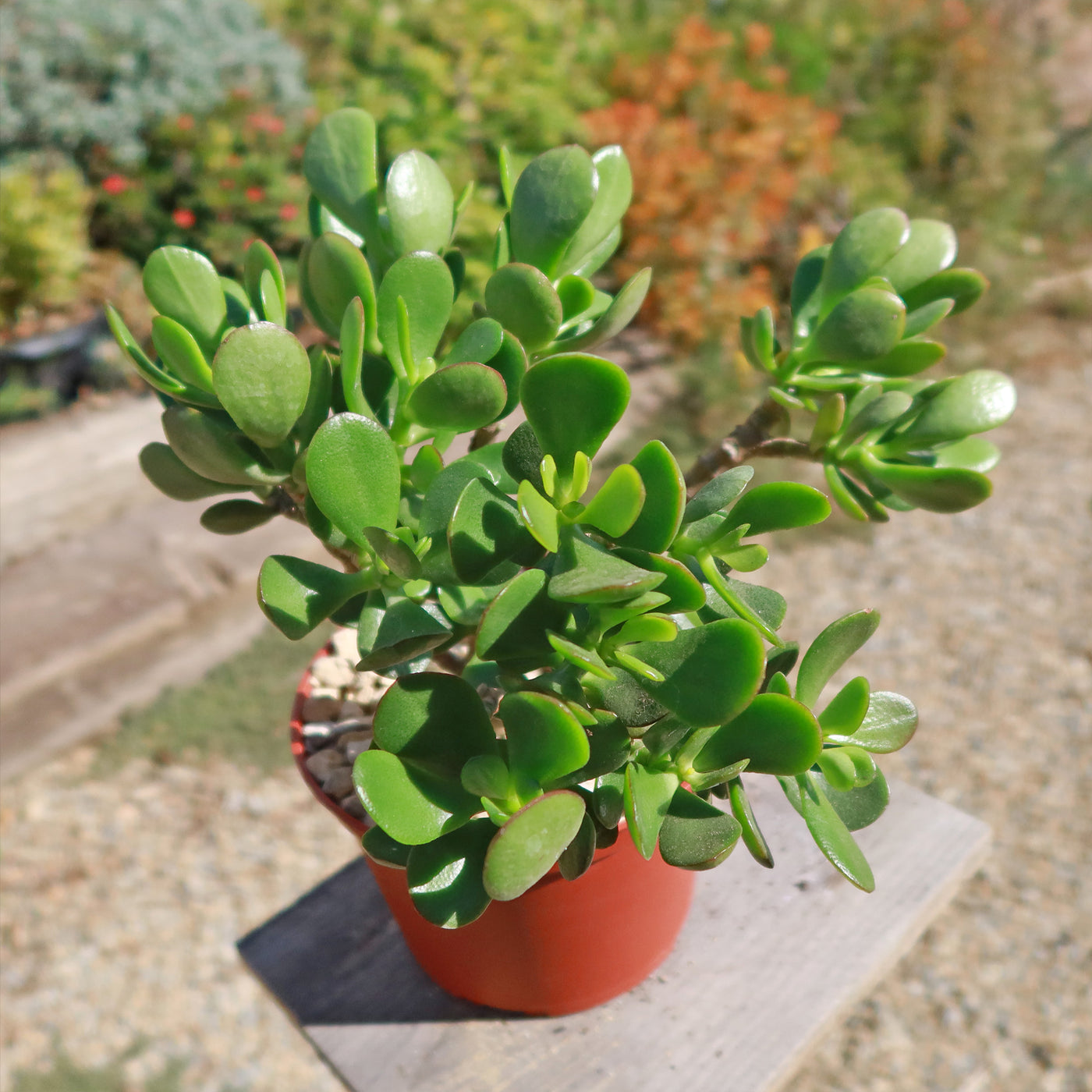
stake jade plant Botany Bay Jade PlantThe Botany Bay Jade plant, known as the Crassula ovata 'Botany Bay', is a popular Jade plant known for its unique foliage and low maintenance care. This Crassula succulent is one of the most widely distributed flowering succulents out there. Additionally, "Botany Bay" is the name of a location in Australia where significant botanical discoveries were made. This image features a lush, mature Botany Bay Jade plant with tightly packed, glossy green

The Botany Bay Jade plant, known as the Crassula ovata 'Botany Bay', is a popular Jade plant known for its unique foliage and low-maintenance care. This Crassula succulent is one of the most widely distributed flowering succulents out there. Additionally, "Botany Bay" is the name of a location in Australia where significant botanical discoveries were made.

This image features a lush, mature Botany Bay Jade plant with tightly packed, glossy green leaves forming a dense, bonsai-like canopy.

In Chinese culture, Crassula ovata is known as the "money tree" or "feng shui money tree" and is believed to bring good luck and financial prosperity to those who grow it.

This money plant is often given as a gift during the Chinese New Year or other auspicious occasions.

Native to South Africa and Mozambique, this evergreen beauty can grow up to 3 feet tall and 2 feet wide, depending on its conditions (so make sure you give it plenty of root space!).

During summertime, those glossy green tubular leaves shine brightly, but as we head into cooler temperatures, those edges start turning red - talk about stunning! 

The star-shaped flowers of the jade plant bloom in late winter to early spring with white flowers that create an eye-catching contrast between open blossoms and closed buds. These pollinated flowers produce seeds enclosed in these buds.

Money tree plants are exceptionally easy to propagate by leaf or stem cuttings, so you can quickly grow your collection with just a few simple steps.

The jade succulents typically go dormant during the winter months, from late fall to early spring. During this period, the plant will stop growing and may lose some of its leaves. This is a natural process and is not harmful to the plant. To encourage its growth during dormancy, the plant should be kept in a cool, dark location and reduced watering. 

So, whether you call it a jade plant, lucky plant, or money tree, Crassula ovata is definitely worth adding to your collection! 

When and How to Water Your Botany Bay Jade Plant 

The Botany Bay Jade plant succulent is naturally drought-tolerant, having evolved to store water in its thick, fleshy leaves. This makes it particularly well-suited to indoor environments where frequent watering isn’t ideal. Like most succulents, it thrives when watered using the soak-and-dry method, thoroughly saturating the soil and allowing it to dry out completely before the next watering. The Crassula ovata ‘Botany Bay’ prefers watering 10-14 days once every growing season, and once every 3-4 weeks in the dormant season.

In spring and summer, during the active growing season, the jade plant will appreciate slightly more frequent watering once every 10 to 14 days. Always check the soil moisture before watering. If the top 2 inches are dry and the pot feels noticeably lighter, it’s time to water again. Bright, indirect light and warm indoor temperatures will also cause the plant to use water more quickly during this time.

In fall and winter, during the dormant season, growth slows considerably, and so should your watering routine. Watering once every 3 to 4 weeks is often sufficient, especially in cooler homes where evaporation is slower. Be extra cautious during this period; moist, cold soil is a recipe for root rot. Reduce watering frequency and avoid misting or adding humidity, as this succulent prefers dry air year-round.

Light Requirements - Where to Place Your Jade Plant 

When grown indoors, place your Jade plant in the brightest sunny place in your house, where it gets 4-6 hours of bright light daily.

Direct sunlight can scorch the new leaves off, so placing them near a window that receives filtered or indirect light is best. 

The amount of light the plant receives can affect the color of its leaves. The money tree grown in bright light will have more vibrant, deep green leaves, while the foliage of those grown in lower light conditions may have a lighter, yellow-green color.  

When grown outdoors, the jade plant thrives best in full sun to partial shade, for at least six hours of strong light each day to survive. However, partial shade in the afternoon is often preferable - especially in hotter climates where the plant might become stressed by the intense heat of the afternoon sun.  

The red coloration on the margins of the leaves of a Jade plant is a sign of stress; it's usually not harmful to the plant and will often disappear once the plant is returned to the bright sunlight.  

Optimal Soil & Fertilizer Needs 

The Botany Bay jade plant prefers sandy, well-drained soil and should be fertilized once a year in the spring. Planet Desert specializes in succulents and has specialized succulent potting soil that includes an organic substrate with mycorrhizae to help with the growth of a healthy root system to help your new plants and succulents thrive. 

When it comes to fertilizing your Crassula ovata, it only needs a small amount of fertilizer applied once a year in spring. Succulent plants prefer a fertilizer with lower doses of NPK, with a maximum ratio of 5-10-5, higher in phosphorus than nitrogen.

Hardiness Zone & More

In the United States, this Botany Bay Jade Plant is mostly an indoor plant, but if you live in southern Florida or Hawaii, then you can cultivate it outdoors in USDA zones 9-11.

The jade plant, on the other hand, cannot handle frost, cold, or freezing temperatures, so make sure it doesn't get below 45 degrees F in its environment. 

As desert dwellers, the jade plant enjoys hot temperatures and high humidity, but can tolerate lower humidity as well. They prefer constant temperatures above 70 degrees Fahrenheit and can tolerate triple digits in the summer, so don't worry if your succulents get too hot.

In terms of coloration, Jade plants can display different colors depending on the temperature. When the plants are exposed to cooler temperatures, the leaves may turn reddish or purplish in color. This reddish tint on smooth, fleshy leaves is a natural response to cooler temperatures and is not harmful to the plant.

How to Grow Best Botany Bay Jade Plant Indoors 

Botany Bay Jade plants thrive in temperatures between 65-75°F during the day and slightly cooler temperatures at night. Make sure to place them in a bright, indirect light location to encourage healthy growth. Avoid overwatering by allowing the soil to dry out between waterings to prevent root rot.

Wildlife - Jade Plant Flowers Attract the Following Friendly Pollinators

Jade plant flowers are known to attract a variety of friendly pollinators, including bees, butterflies, and hummingbirds. These creatures are drawn to the sweet nectar and vibrant colors of the flowers, helping to facilitate pollination and promote the growth of new plants. Additionally, the presence of these pollinators can contribute to a healthy ecosystem and biodiversity in the surrounding area.

Butterflies
Bees
Hummingbirds
Lady Bugs
Multi Pollinators
Other Birds

According to ASPCA, the Crassula ovata 'Botany Bay' jade plant is considered mildly toxic to pets and humans. However, it is safe to touch and handle, making it a popular choice for indoor houseplants.

How to Propagate Your Crassula ovata 'Botany Bay' Jade Plant

To propagate your Crassula ovata 'Botany Bay' Jade Plant, you can take stem cuttings from a healthy, mature plant. Make sure the cutting is at least 3-4 inches long and allow it to dry for a few days before planting it in well-draining soil. Water sparingly until roots develop, then gradually increase watering as the plant establishes itself.

Key Takeaways

  1. Botany Bay Jade has a compact, upright growth habit, forming dense clusters of fleshy green leaves with reddish edges in bright light.
  2. This variety is considered a symbol of prosperity and good luck, often used as a Feng Shui “money plant” in homes and offices.
  3. It is highly drought-tolerant, storing water in its thick leaves and requiring only infrequent watering.
  4. The plant responds well to pruning and shaping, making it a popular choice for bonsai-style training and container displays.
  5. Its low-maintenance nature and attractive form make it an excellent choice for beginners or busy plant lovers.

The Bottom Line

Overall, the Botany Bay Jade Plant is a resilient, slow-growing succulent prized for its compact shape and dense clusters of bright green, fleshy leaves that often develop red margins in full sun. Its tidy growth habit makes it ideal for containers, small spaces, or bonsai training. With its drought tolerance, low-maintenance needs, and ornamental appeal, Botany Bay is a reliable and attractive choice for both beginner and experienced plant owners looking to add a touch of structure and vibrant greenery to their indoor collection.

Shipping Notes
  • Free Standard Shipping on $100+ Orders to the USA.
  • Except Preorder products are shipped in 48 hours.
  • Delivery to the USA:
  1. Standard Shipping : 3-10 business days
  • If time is of the essence, please consider selecting expedited delivery for faster service.
Exchange/Return Notes
  • We offer a 30-day return/exchange service after receiving.
  • Final sale items are not eligible for returns or exchanges.
  • To process your return/exchange, please contact us at [email protected]
  • Please click here for more details>>> Return & Exchange Policy
SKU: 92900561128

Discover Niche Categories That Outsell stake jade plant

Top-Converting Item to Boost Your Average Order

4.9 ★★★★★
Based on 26 reviews
Sort
Highest Rating
Newest First
Oldest First
Product Reviews
M
Verified Purchase
***moviemaker***
Omaha, US
★★★★★ 5
BLU RAY is the 132 minute Original U.S. Theatrical Cut FINALLY!!!!
] On this Blu-ray for the first time ever we get the ORIGINAL 132 minute version of the film as was shown in U.S. theaters. (Note: This is NOT the "Love Conquers All" Sheinberg/TV Edit.) All the DVD releases before this have been the European Version/Director's Cut of the film. Even the original Universal DVD release that said Theatrical Cut on the box actually had the European Version/Director's Cut. Unfortunately, Universal didn't really spend any time cleaning up the negative for Hi-Definition (there is very noticeable instances of dirt and debris on the negative) but it still beats the image quality found on the Universal SD DVD, and they do include an amazing DTS-HD Master 5.1. We'll just have to wait for the Criterion Blu-ray of Brazil for image perfection but serious fans of Brazil will want to get this Blu-ray edition just to have this version of the film as it was originally seen in theaters in 1985. I actually find this 132-minute version is in many ways a superior cut of the film. Here are the differences in detail: *In the 132-minute version you cut from Sam in bed with Jill, police sack goes over head, then CUT TO Pull off police sack to reveal Sam in Torture Chamber/Interrogation chair. This one cut is simply brilliant and very powerful. In the Criterion Version you have the added scene of Mr. Helpman as Father Christmas (completely out of charcater from the rest of the film) and the whole interrogation scene of Sam hanging from the rack inside the police/mail pouch which becomes narratively redundant and dilutes the impact of the final scene. *To end it with cooling tower/interrogation room fade to clouds was a great Gilliam wink of subversion and irreverence to the cliche Hollywood Ending. As opposed to the European cut of just credits over cooling tower/interrogation room. *The Samurai Scene is divided into 3 separate scenes in the 132-minute version versus 1 LONG scene in the European cut. And you know what? Like most things, it works better in 3's. *The 132-minute version cuts straight to the Dinner Scene with Ida (his mother) ordering numero deux, trois, etc. while the European version has the entrance to the restaurant of going through the metal detector which really doesn't add anything and is again a bit redundant when the bomb does eventually go off in the restaurant. With the scene, you're signaling to the audience we are looking for a bomb, so we expect a bomb. Without the added scene, the bombing is unexpected and it actually shocks you so you're both horrified and laughing. The unexpectedness also works as it builds upon the bomb motif from the first explosion at the beginning of Brazil during the Ducts advert. *And finally I just love that the 132-minute version opens on those clouds (outtakes from The Never-Ending Story) then goes to the Central Services advert about Ducts: "Are your ducts old-fashioned, out-of-date... " Now the Criterion version also has the clouds opening (The Original European Cut didn't) but it's funny because the Studio asked Gilliam to start off with the clouds for the US Cut and he actually prefers it as quoted in his Director's commentary. Hilarious. Little changes that add up to a tighter and overall, better film.
WAS THIS REVIEW HELPFUL?YesReportShare
Reviewed in the United States on July 12, 2011
W
Verified Purchase
W.P.
Fort Morgan, US
★★★★★ 5
Great cast; well directed
Great movie; lives up to its reviews
WAS THIS REVIEW HELPFUL?YesReportShare
Reviewed in the United States on March 25, 2026
B
Verified Purchase
Basket Case
West Palm Beach, US
★★★★★ 5
An ageless classic !
I hadn't re-watched this movie since the first time I saw it, when it came out in 1985. Back then, it had stricken the public with its fatalistic and pessimistic view of an overwhelming bureacracy, a suggested characteristic of fully-centralised power in a controlled society in the future. Today, we can still admire some of its validity and premonitory qualities (and the sarcastic humour !). The dream-like scenes and symbols used in the film are also ageless. Ever-growing computer systems govern today the relationships we hold with banks, government departments, utilities, phone companies, etc. Who hasn't experienced the frustration of dealing with their 'machines' and/or incompetent & robotic bureaucrats when problems or errors arise in their service? 'Brazil' will seem so familiar! The omni-presence of screens in our lives, everywhere and incessantly offering us products or services, or used to control our movements and behaviour, is also a well-guessed futuristic scenario by Gilliam & co. And what to say about the 'terrorism' and the 'permanent state of fear' portrayed back then? Sounds familiar today? I recommend this movie to anyone interested in the threats of an unbridled, arrogant and all-powerful bureaucracy in human society. The film can be a bit 'heavy' at times, though. Not everyone's cup of tea. Watch it first, before sharing with friends or family.
WAS THIS REVIEW HELPFUL?YesReportShare
Reviewed in the United States on February 19, 2012
J
Verified Purchase
johnf
Grantham, US
★★★★★ 5
The music is lovely, Catherine Deneuve is beautiful and the story will tear you apart.
The word "Masterpiece" is thrown about often in the worlds of film and music but in this case this is the real thing. The Umbrellas of Cherbourg is one of those rare instances where everything came together in a film in a serendipitous way that would never be duplicated. Not only that, but made by two up and coming young men who had only done two films before with a cast of mostly unknowns. Then, to top it all off, it would not just be a musical, but a film sung completely through like opera, something completely unique and untried. Try selling a concept like that to one of today's studios. Fortunately the early sixties was a much looser time with many movie studios and open minds willing to try new things. The director was Jacques Demy, whose first film, Lola (1961) included music but was shot in the more usual black and white. His co-creator was Michel Legrand, already known as a jazz pianist who had had hit albums and even toured America. The music would be light,, but not operetta; it would be updated to include strong influences of chanson, pop and jazz with a little Baroque counterpoint thrown in (Legrand had been classically trained). This time the film would be shot in super-saturated color with sets painted vibrant, almost expressionist colors. And it all would center around a young and virtually unknown Catherine Deneuve and Nino Castelnuovo as Genevieve and Guy, the very personification of young love in a rainy Spring. The resulting film is completely transporting. The story is very old, the treatment very new and the end result is something to be experienced. The singing somehow seems completely natural, more natural in a way, than films with spoken dialogue that break into songs from time to time. Here in a world of continuous music, love has turned everything into a dizzily colored poem that peaks when Guy is to be sent away to fight in the war in Algeria. Fate takes a big hand in the consequences creating unforseen results. The supporting cast are as good as the principals, with Anne Vernon (Madame Emery) the veteran of many films and Marc Michel (Roland Cassard) coming in having played the same character in Lola, a signature quirk of the director. The music produced two early sixties hits, I Will Wait For You and Watch What Happens. Mr. Legrand's familiarity with the worlds of pop and jazz kept everything fresh-sounding and up to date. You also note subtle touches like the opening jazzy music set in 1957 is very brassy and big band sounding while in the 1963 final scene it's the cool jazz of that time. The colors are so captivatingly brilliant that when establishing shots of the actual Cherbourg are shown it seems like another world. If you like romances, this is one of the classics. If you are open to musicals you will have no trouble with the fact that the entire film is sung. This is a most memorable and worthy film.
WAS THIS REVIEW HELPFUL?YesReportShare
Reviewed in the United States on January 31, 2016
T
Verified Purchase
Todd7
Cuba, US
★★★★★ 5
My favorite movie musical
The Umbrellas of Cherbourg (1964, Jacques Demy, Director) is a very straightforward love story that’s fairly predictable, but that doesn’t take away from its absorbing allure. In fact, I love this film so much that I’m willing to overlook some of the minor flaws in the blu ray transfer from Criterion. This transfer is somewhat grainy/hazy in picture quality, and the sound isn’t exactly clear; in fact, it can be slightly muffled at times. However, I’m not going to dwell on these few minor imperfections. Now, for the heart of the review: The Umbrellas of Cherbourg is so unique in that all of the dialogue is sung. This is definitely an acquired taste, but about 15-20 minutes in, I was used to it and all-in. The next thing that becomes obvious is its rich color; it’s sort of pastel-like, with some backgrounds that are quite striking. Finally, the last thing that jumps out is the continuous upbeat music in the film, with the exception of the main theme, which is an emotionally-charged melancholy number by Michel Legrand that is the heartbeat of the film. This film is really a heartfelt love story where fate is the prevailing narrative and force. It’s a film about important decisions and their outcomes. Along the way, there are familial issues, death, rebuilding with emotional crutches, and some humor injected at just the right times. Some of the dialogue is cliched, but I guess that’s par for the course in a love story? Finally, while watching this film, I could definitely see where the 2016 film, La La Land took so much inspiration from, especially the ending sequence and the upbeat musical numbers. Overall, The Umbrellas of Cherbourg is a masterpiece of a film that’s essential to your blu ray collection. The Criterion Collection usually does a stellar job with resorting older films, but for some reason this isn’t their best work. I was expecting better quality. The blu ray also contains some nice special features.
WAS THIS REVIEW HELPFUL?YesReportShare
Reviewed in the United States on July 22, 2025

recommand products